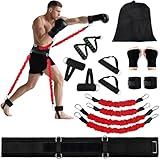
Ever dream of having the lean physique of a boxer, the kind that screams power and agility? You’re not alone! Boxing workouts offer a fantastic blend of cardio, strength training, and mental toughness, and the best part is you can do them from the comfort of your own home. Forget expensive gym memberships and rigid schedules. With a little space and the right guidance, you can transform your fitness journey.
This guide is designed for everyone, from absolute beginners to those with some experience. We’ll cover everything from the basic punches to creating a full-body workout. We’ll look at the equipment you’ll need, the exercises, and how to structure your training for optimal results. Get ready to sweat, build confidence, and sculpt a body you’ll be proud of. Let’s get started!
The Benefits of Boxing Workouts at Home
Boxing workouts aren’t just about throwing punches; they’re a comprehensive approach to fitness. They offer a multitude of benefits that extend far beyond physical conditioning. Let’s explore some of the key advantages of embracing boxing training from your home.
Cardiovascular Health
Boxing is an exceptional cardio workout. The constant movement, footwork, and punching generate a high-intensity interval training (HIIT) effect, which is incredibly effective for burning calories and improving cardiovascular health. This type of training strengthens your heart, lowers blood pressure, and improves overall endurance. You’ll find yourself breathing easier and feeling more energized in your daily life.
The rapid bursts of activity followed by brief recovery periods characteristic of boxing workouts are particularly beneficial. This type of training helps your body efficiently utilize oxygen, leading to increased stamina and a reduced risk of heart disease.
Strength and Muscle Building
Boxing isn’t just about cardio; it’s a full-body workout that builds strength and muscle. Throwing punches engages your core, shoulders, back, and arms. Footwork and defensive movements work your legs and glutes. Regular boxing workouts help build lean muscle mass, improve your strength-to-weight ratio, and tone your entire body.
The resistance from punching bags or shadow boxing provides a challenging stimulus for muscle growth. Over time, you’ll notice improved definition and a more sculpted physique. The constant engagement of your core muscles also leads to improved posture and stability.
Improved Coordination and Agility
Boxing demands excellent hand-eye coordination, balance, and agility. The constant need to react to imaginary opponents or a punching bag sharpens your reflexes. Boxing workouts improve your ability to move quickly, change direction, and react effectively to stimuli.
Footwork drills, such as shuffling, pivoting, and side-stepping, enhance your agility and balance. This translates to improved performance in other sports and everyday activities. You’ll become more aware of your body in space and better able to control your movements.
Stress Relief and Mental Toughness
Boxing is a fantastic stress reliever. The physical exertion releases endorphins, which have mood-boosting effects. Boxing provides a healthy outlet for pent-up energy and frustration. It can help you clear your mind, improve your focus, and enhance your mental resilience.
The discipline and focus required in boxing training also contribute to mental toughness. You’ll learn to push yourself, overcome challenges, and develop a stronger sense of self-confidence. The mental benefits of boxing are just as significant as the physical ones.
Weight Loss
Boxing workouts are highly effective for weight loss. The high-intensity nature of the workouts burns a significant number of calories in a short amount of time. Boxing can help you create a calorie deficit, which is essential for losing weight. Moreover, the muscle-building aspect of boxing helps boost your metabolism, which further supports weight loss.
The combination of cardio and strength training in boxing workouts is particularly beneficial for burning fat and preserving muscle mass. You’ll likely see results quickly as you incorporate boxing into your routine.
Essential Equipment for Home Boxing Workouts
Before you begin your boxing journey at home, you’ll need a few essential pieces of equipment. The good news is, you don’t need a lot to get started, and you can often find affordable options. Here’s a breakdown of what you’ll need:
Boxing Gloves
Boxing gloves are arguably the most crucial piece of equipment. They protect your hands and wrists from injury while providing padding for your punching bag or sparring partner (if you have one). Choose gloves that fit snugly but comfortably. Consider the weight of the gloves; heavier gloves offer more protection and are often recommended for beginners. For home workouts, 12-16 oz gloves are a good starting point. Make sure to wrap your hands before putting on your gloves for added protection.
Hand Wraps
Hand wraps are essential for protecting your hands and wrists. They provide extra support and cushioning, reducing the risk of sprains, fractures, and other injuries. Wrap your hands carefully, ensuring that your knuckles, wrists, and the base of your thumbs are adequately protected. There are many online tutorials demonstrating proper hand-wrapping techniques; take the time to learn the correct method.
Punching Bag (heavy Bag or Speed Bag)
A punching bag is a great tool to develop your punching technique and power. Heavy bags are typically used for power training and conditioning. They come in various weights, and you should choose one that is appropriate for your size and strength. A good rule of thumb is to choose a bag that weighs half your body weight. Speed bags are smaller and designed for developing hand speed, coordination, and rhythm. (See Also: How To Learn Shadow Boxing At Home )
If you have limited space, consider a free-standing punching bag that doesn’t require hanging. Alternatively, you can hang a heavy bag from a sturdy ceiling mount or door frame. Ensure the mounting is secure and can withstand the force of your punches.
Jump Rope
A jump rope is a fantastic tool for warming up, improving footwork, and building cardiovascular endurance. Choose a jump rope that is the correct length for your height. Stand on the middle of the rope and the handles should reach your armpits. Jump rope regularly as part of your boxing workout to enhance your overall fitness. Practice different jump rope variations, such as high knees, butt kicks, and double unders, to add variety and challenge.
Workout Mat
A workout mat provides a comfortable and safe surface for floor exercises, such as shadow boxing, core work, and stretching. It helps to absorb impact, protect your joints, and prevent slipping. Choose a mat that is thick enough to provide adequate cushioning but not so thick that it compromises your balance. A yoga mat or a general-purpose exercise mat works perfectly.
Optional Equipment
While the above equipment is essential, there are a few optional items that can enhance your home boxing workouts:
- Focus Mitts: If you have a training partner, focus mitts are excellent for practicing punches and combinations.
- Ankle Weights: Add extra resistance to your footwork and agility drills.
- Resistance Bands: Use resistance bands to enhance your strength training exercises and add variety.
- Timer: A timer is essential for interval training and keeping track of rounds. You can use a smartphone app or a dedicated boxing timer.
Getting Started: Your Home Boxing Workout Routine
Now that you have your equipment, let’s create a sample home boxing workout routine. Remember to warm up before each workout and cool down afterward. Adjust the intensity and duration of the exercises to match your fitness level.
Warm-Up (5-10 Minutes)
The warm-up prepares your body for the workout and helps prevent injuries. Focus on dynamic stretching and light cardio. Here’s a sample warm-up:
- Jumping jacks: 1 minute
- High knees: 30 seconds
- Butt kicks: 30 seconds
- Arm circles (forward and backward): 30 seconds each direction
- Wrist rotations: 30 seconds
- Ankle rotations: 30 seconds
- Shadow boxing: 2 minutes. Start with light punches, focusing on your form.
Workout Structure (30-45 Minutes)
This is a sample workout structure. You can adjust the exercises and the number of rounds based on your fitness level and available time.
- Round 1-3: Shadow Boxing (3 minutes per round, 1-minute rest)
- Focus on proper technique. Use a mirror to monitor your form.
- Practice different punches: jab, cross, hook, uppercut.
- Incorporate footwork: shuffle, pivot, and move around your space.
- Round 4-6: Heavy Bag Work (3 minutes per round, 1-minute rest)
- Focus on power and technique.
- Alternate between punching combinations and individual punches.
- Maintain good footwork and head movement.
- Round 7-9: Jump Rope (3 minutes per round, 1-minute rest)
- Focus on consistency and rhythm.
- Vary your jump rope techniques: high knees, double unders, etc.
- Round 10-12: Core Exercises (3 minutes per round, 1-minute rest)
- Crunches: 20-30 reps
- Plank: 30-60 seconds
- Russian twists: 20-30 reps
- Leg raises: 15-20 reps
Cool-Down (5-10 Minutes)
The cool-down helps your body recover and reduces muscle soreness. Focus on static stretching.
- Hold each stretch for 30 seconds:
- Triceps stretch
- Shoulder stretch
- Hamstring stretch
- Quadriceps stretch
- Calf stretch
- Chest stretch
Boxing Techniques: Mastering the Fundamentals
Before you jump into a full workout, it’s essential to learn the basic boxing techniques. Proper form is crucial for maximizing your results and preventing injuries. Here’s a breakdown of the key punches and defensive movements.
The Stance
Your stance is the foundation of your boxing technique. It provides balance, power, and the ability to move quickly. Here’s how to set up your stance:
- Foot Placement: Stand with your feet shoulder-width apart, one foot slightly ahead of the other (typically your non-dominant foot).
- Knee Bend: Bend your knees slightly to lower your center of gravity.
- Weight Distribution: Distribute your weight evenly between both feet, with a slight emphasis on your front foot.
- Body Position: Turn your body slightly to the side, protecting your chin with your shoulder.
- Hand Position: Keep your hands up, near your face, to protect your chin.
The Jab
The jab is a fundamental punch, thrown with your lead hand. It’s used for setting up other punches, controlling distance, and scoring points. Here’s how to throw a jab:
- Starting Position: From your stance, bring your lead hand (the one in front) straight out towards your target.
- Rotation: As you extend your arm, rotate your fist so that your palm faces down at the end of the punch.
- Snap: Snap your punch out, extending your arm fully.
- Return: Quickly retract your hand back to its guard position.
The Cross
The cross is a powerful punch thrown with your rear hand (the one in the back). It’s often used after the jab. Here’s how to throw a cross:
- Starting Position: From your stance, rotate your back foot and your hips toward the target.
- Power Generation: Transfer your weight from your back foot to your front foot as you punch.
- Punching Motion: Extend your rear arm straight towards the target, rotating your fist so that your palm faces down at the end of the punch.
- Return: Quickly retract your hand back to its guard position.
The Hook
The hook is a powerful punch thrown with a bent arm, targeting the side of your opponent’s head. Here’s how to throw a hook:
- Starting Position: From your stance, bend your elbow and bring your fist up towards your shoulder.
- Rotation: Rotate your body, pivoting on your front foot, and throwing your fist around your opponent’s guard.
- Impact: Aim to hit with the knuckles of your fist.
- Return: Quickly retract your hand back to its guard position.
The Uppercut
The uppercut is a punch thrown from a low position, targeting the chin or body. Here’s how to throw an uppercut:
- Starting Position: From your stance, lower your hand slightly.
- Upward Motion: Bring your fist up towards the target, keeping your elbow close to your body.
- Power Generation: Use your legs and hips to generate power.
- Impact: Aim to hit with the knuckles of your fist.
- Return: Quickly retract your hand back to its guard position.
Defensive Movements
Defense is just as important as offense in boxing. Here are some key defensive movements:
- Blocking: Use your gloves to block punches.
- Slipping: Move your head slightly to the side to avoid punches.
- Rolling: Duck under punches.
- Footwork: Move your feet to avoid punches and create angles.
Creating a Boxing Workout Plan: Consistency and Progression
To get the most out of your home boxing workouts, you need a plan. Consistency and progression are key to achieving your fitness goals. Here’s how to create a boxing workout plan: (See Also: Can Shadow Boxing Be Cardio )
Set Realistic Goals
Start by setting realistic and achievable goals. Don’t try to do too much too soon. Begin with a few workouts per week and gradually increase the frequency and intensity as your fitness improves. Consider both short-term and long-term goals. For example, a short-term goal might be to complete a 30-minute workout three times a week. A long-term goal might be to lose a certain amount of weight or to improve your punching power.
Schedule Your Workouts
Treat your boxing workouts like appointments. Schedule them in your calendar and stick to your schedule as much as possible. This will help you stay consistent and make exercise a habit. Choose times that work best for you, whether it’s early in the morning, during your lunch break, or in the evening. Try to workout at the same time and days each week to build consistency.
Warm-Up and Cool-Down
Never skip the warm-up and cool-down. They are essential for preventing injuries and improving your performance. Spend 5-10 minutes warming up before each workout and 5-10 minutes cooling down afterward. Include dynamic stretching in your warm-up and static stretching in your cool-down.
Vary Your Workouts
To prevent boredom and keep your body challenged, vary your workouts. Alternate between different types of workouts, such as shadow boxing, heavy bag work, and jump rope. Incorporate different punch combinations and footwork drills. Change your routine every few weeks to keep things interesting and prevent plateaus.
Track Your Progress
Track your progress to stay motivated and see how far you’ve come. Keep a workout journal to record your workouts, including the exercises you did, the duration, and the intensity. Monitor your weight, body measurements, and fitness levels. Celebrate your achievements and don’t get discouraged by setbacks. Use apps to track your fitness and progress.
Listen to Your Body
It’s important to listen to your body and rest when needed. Don’t push yourself too hard, especially when you’re first starting out. Take rest days to allow your muscles to recover. If you experience any pain, stop the exercise and consult with a doctor or physical therapist. Incorporate rest days into your workout plan.
Nutrition and Hydration
Combine your boxing workouts with a healthy diet and adequate hydration for optimal results. Eat a balanced diet that includes plenty of fruits, vegetables, lean protein, and whole grains. Drink plenty of water throughout the day, especially before, during, and after your workouts. Avoid processed foods, sugary drinks, and excessive amounts of unhealthy fats.
Find a Training Partner (optional)
If possible, consider finding a training partner. Working out with a friend or family member can provide motivation, accountability, and support. You can take turns holding focus mitts, sparring (if you’re comfortable), or simply encourage each other. If you don’t have a training partner, don’t worry! There are plenty of resources available online, such as workout videos and tutorials, that can guide you through your training.
Adjust and Adapt
Be prepared to adjust and adapt your workout plan as needed. If you’re not seeing results, change your routine. If you’re experiencing plateaus, increase the intensity or duration of your workouts. Don’t be afraid to experiment with different exercises and techniques. The key is to find a workout plan that you enjoy and that fits your lifestyle. Consistency is the most important factor for success.
Advanced Boxing Techniques and Drills
Once you’ve mastered the basic techniques and established a solid workout routine, you can explore more advanced boxing techniques and drills to further enhance your skills and fitness. Here are some examples:
Advanced Punching Combinations
Move beyond the basic jab-cross combination and experiment with more complex combinations. Combine punches in various sequences to create different angles of attack and keep your opponent guessing. Here are a few examples:
- Jab-cross-hook
- Jab-cross-hook-cross
- Hook-cross-hook
- Uppercut-cross-hook
- Body shot-head shot combinations
Focus on fluidity and speed when executing these combinations. Practice them slowly at first, then gradually increase your speed as you become more comfortable. Pay attention to your footwork and head movement while throwing combinations.
Footwork Drills
Advanced footwork drills are essential for improving your agility, balance, and defensive skills. These drills help you move around the ring with precision and quickly change direction. Try these footwork drills:
- The Shuffle: Shuffle forward, backward, and laterally, keeping your feet close to the ground.
- The Pivot: Pivot on your feet to change your angle of attack or defense.
- The Step-Around: Step around your opponent to create a new angle.
- The Triangle Step: Move in a triangular pattern to improve your footwork.
- The Shadow Box with Footwork: Combine punches with various footwork patterns.
Practice these drills regularly to improve your footwork and your overall boxing performance. Use a mirror to monitor your form and ensure you’re executing the drills correctly.
Defense Drills
Advanced defense drills help you improve your ability to avoid punches and protect yourself in the ring. These drills involve practicing various defensive techniques. Here are some examples:
- The Slip Bag Drill: Practice slipping punches by using a slip bag (a hanging bag designed for slipping).
- The Bob and Weave Drill: Practice bobbing and weaving to avoid punches.
- The Blocking Drill: Practice blocking punches with your gloves.
- The Parrying Drill: Practice parrying punches to deflect them away from your head.
Focus on timing and precision when practicing these defense drills. Use a partner or a mirror to help you refine your technique. Combine defensive drills with offensive techniques to create a well-rounded boxing style. (See Also: Can You Lose Weight Just Doing Shadow Boxing )
Power and Conditioning Drills
These drills are designed to increase your punching power, speed, and endurance. Incorporate these drills into your workout routine to take your boxing to the next level. Examples include:
- Heavy Bag Work with Power Punches: Focus on throwing powerful punches on the heavy bag.
- Medicine Ball Drills: Improve core strength and power with medicine ball exercises.
- Plyometric Exercises: Incorporate plyometric exercises, such as box jumps and jump squats, to increase your explosive power.
- Interval Training: Use interval training to improve your cardiovascular endurance.
Make sure to warm up properly before these drills and cool down afterward. Gradually increase the intensity and duration of the drills as your fitness improves. Pay attention to your body and rest when needed.
Sparring (if Applicable)
If you have a training partner and are comfortable with it, sparring is an excellent way to apply your techniques and skills in a real-world setting. Sparring helps you develop your timing, distance, and ring awareness. However, sparring can be dangerous, so it’s essential to follow these guidelines:
- Wear protective gear: Use boxing gloves, headgear, and mouthguards.
- Sparring with a partner you trust: Choose a partner who is experienced and knows how to spar safely.
- Start slowly and gradually increase the intensity: Don’t try to go all-out right away.
- Focus on technique and control: Don’t try to knock out your partner.
- Listen to your coach or trainer: If you have one, follow their instructions and advice.
Sparring can be a great way to improve your boxing skills and confidence. However, it’s not essential for home boxing workouts. If you don’t have a sparring partner, you can still make excellent progress by focusing on shadow boxing, heavy bag work, and other drills.
Common Mistakes to Avoid in Home Boxing Workouts
Even with the best intentions, it’s easy to fall into some common traps when starting home boxing workouts. Avoiding these mistakes will help you stay safe, maximize your results, and avoid frustration.
Poor Form
One of the most common mistakes is using incorrect form when throwing punches or performing other exercises. This not only reduces the effectiveness of your workout but also increases your risk of injury. Always prioritize proper form over speed or power. If you’re unsure about your form, watch tutorials, and consider filming yourself to identify areas for improvement. Focus on the basics, and build a solid foundation before adding complexity.
Neglecting Warm-Up and Cool-Down
Skipping the warm-up and cool-down is a recipe for injury. The warm-up prepares your body for the workout by increasing blood flow to your muscles and improving flexibility. The cool-down helps your body recover and reduces muscle soreness. Always include a 5-10 minute warm-up and cool-down in your routine. Dynamic stretching before your workout and static stretching after is a good approach.
Overtraining
Overtraining is a common mistake that can lead to fatigue, injury, and a decrease in performance. It’s essential to listen to your body and allow for adequate rest and recovery. Don’t train every day, and incorporate rest days into your workout plan. If you’re feeling overly tired or experiencing persistent pain, take a break. Over time, your body adapts, and you can gradually increase the intensity and frequency of your workouts.
Lack of Consistency
Consistency is the key to success in any fitness program. It’s easy to get discouraged and skip workouts, especially when you’re training at home. Create a schedule and stick to it as much as possible. Treat your workouts like appointments, and make them a non-negotiable part of your routine. Find ways to make your workouts enjoyable, and don’t be afraid to adjust your plan if necessary. Consistency will help you achieve your goals.
Ignoring Nutrition and Hydration
Your diet and hydration play a crucial role in your overall fitness and performance. If you’re not eating a balanced diet and drinking enough water, you won’t be able to recover properly from your workouts or reach your full potential. Eat plenty of fruits, vegetables, lean protein, and whole grains. Drink plenty of water throughout the day, especially before, during, and after your workouts. Avoid processed foods, sugary drinks, and excessive amounts of unhealthy fats.
Using Incorrect Equipment or Not Using Equipment Properly
Make sure you’re using the right equipment and that it fits properly. Using the wrong size gloves or not wrapping your hands correctly can increase your risk of injury. Read instructions carefully, and watch tutorials to learn how to use your equipment safely and effectively. Invest in quality equipment that will last. Correct usage is just as important as having the right gear.
Focusing Solely on Punches
Boxing is more than just throwing punches. It involves footwork, defense, and core strength. Don’t neglect these other aspects of boxing. Incorporate footwork drills, defensive movements, and core exercises into your routine. This will help you become a more well-rounded boxer and improve your overall fitness.
Setting Unrealistic Goals
Setting unrealistic goals can lead to frustration and disappointment. Don’t try to do too much too soon. Start slow and gradually increase the intensity and duration of your workouts. Set realistic goals that are achievable and that you can maintain over time. Celebrate your progress, and don’t get discouraged by setbacks. Break larger goals into smaller, more manageable steps.
Final Verdict
Embracing boxing workouts at home offers an incredible opportunity to transform your fitness. We’ve gone over the benefits, from cardiovascular health and strength building to stress relief and weight loss. We’ve also covered the essential equipment, how to structure your workouts, and some common mistakes to avoid.
By incorporating the techniques and routines described in this guide, you can create a powerful, effective, and enjoyable fitness journey. Remember to prioritize proper form, listen to your body, and most importantly, be consistent. With dedication and the right approach, you can achieve your fitness goals and experience the incredible benefits of boxing. So, grab your gloves, get moving, and enjoy the journey to a fitter, stronger you!