Shadow boxing. The very name conjures images of powerful athletes, sculpted physiques, and lightning-fast combinations. It’s a fundamental aspect of boxing training, but you don’t need a gym or a coach to get started. You can absolutely learn shadow boxing at home, and it’s a fantastic way to improve your fitness, coordination, and boxing skills.
This guide is designed to walk you through everything you need to know. We’ll cover the basics, from stance and footwork to punching techniques and workout routines. Whether you’re a complete beginner or have some experience, you’ll find valuable information to enhance your shadow boxing practice. Get ready to transform your living room into your personal boxing arena!
Shadow boxing offers a multitude of benefits, from improving your cardiovascular health to sharpening your mental focus. It’s a full-body workout that’s accessible and adaptable to any fitness level. Let’s get started and see how you can learn shadow boxing at home and reap the rewards!
What Is Shadow Boxing?
Shadow boxing is essentially boxing against an imaginary opponent. It’s a solo exercise where you mimic the movements of a boxing match, practicing punches, footwork, and defensive maneuvers. It’s a crucial part of a boxer’s training regimen, used to refine technique, build muscle memory, and improve cardiovascular fitness.
Shadow boxing allows you to focus on your form without the pressure of a live opponent. You can concentrate on perfecting your punches, refining your footwork, and developing your defensive skills. It’s also a great way to warm up before a workout, cool down afterward, or simply get in a quick and effective exercise session. It’s a versatile tool that can be used by anyone, regardless of their boxing experience.
Why Learn Shadow Boxing at Home?
There are numerous advantages to learning shadow boxing at home:
- Convenience: You can train anytime, anywhere, without needing to travel to a gym.
- Cost-Effective: No need for expensive gym memberships or equipment.
- Privacy: Train in the comfort of your own home, without feeling self-conscious.
- Personalized Training: Focus on your specific weaknesses and strengths.
- Improved Fitness: Shadow boxing is a great cardio and strength-training workout.
Essential Equipment for Shadow Boxing at Home
While shadow boxing requires minimal equipment, having a few key items can significantly enhance your training experience:
- Boxing Gloves (Optional): Although not essential for shadow boxing, using boxing gloves can get you accustomed to the feel of them and add a bit of resistance. Choose gloves that fit comfortably and provide good wrist support. For shadow boxing at home, 12-14oz gloves are generally suitable.
- Hand Wraps (Highly Recommended): Hand wraps are crucial for protecting your hands and wrists. They absorb sweat and help stabilize your joints. Learn how to properly wrap your hands before you start shadow boxing to avoid injuries.
- Mirror (Highly Recommended): A full-length mirror is invaluable for observing your form and making corrections. It allows you to see your technique and identify areas for improvement.
- Workout Area: A clear space of at least 6×6 feet is ideal. Make sure the floor is relatively even.
- Comfortable Clothing: Wear loose-fitting, breathable clothing that allows for a full range of motion.
- Water Bottle: Staying hydrated is essential during any workout. Keep a water bottle nearby to replenish fluids.
- Timer: A timer helps you structure your workouts and track your rounds. Use a timer app on your phone or a dedicated interval timer.
Getting Started: The Fundamentals
Before you start throwing punches, it’s important to understand the basics of stance, footwork, and fundamental punches.
The Boxing Stance
The boxing stance is the foundation of all your movements. It provides balance, power, and protection. Here’s how to adopt a proper boxing stance: (See Also: Does Shadow Boxing Really Work )
- Foot Placement: Stand with your feet shoulder-width apart. If you’re right-handed, your left foot should be slightly forward; if you’re left-handed, your right foot should be forward. This is your lead foot.
- Knee Bend: Bend your knees slightly, keeping your weight evenly distributed.
- Body Angle: Turn your body slightly to the side, with your lead foot pointing towards your opponent (imaginary in this case) and your rear foot at a 45-degree angle.
- Hand Position: Keep your hands up, near your face, to protect your chin and head. Your lead hand should be slightly in front of your face, while your rear hand is near your cheek. Your elbows should be tucked in, protecting your ribs.
- Chin Down: Keep your chin tucked down towards your chest to protect it from punches.
- Eyes Forward: Focus your eyes on your imaginary opponent.
Practice maintaining this stance and feeling comfortable in it. This is your base, and it is where all your movements will originate.
Footwork Drills
Footwork is crucial for both offense and defense. It allows you to move around your opponent, control the distance, and set up your punches. Here are some essential footwork drills:
- The Shuffle: Slide your feet along the floor, keeping your feet shoulder-width apart. If you move your front foot, move your back foot the same distance.
- The Step: Step forward, backward, or to the side with your lead foot, and then bring your rear foot to meet it. Maintain your boxing stance throughout.
- The Pivot: Rotate your body on the balls of your feet, pivoting on your lead foot to change your angle.
- The Cross Step: This is used to quickly close the distance. Step across your lead foot with your rear foot to move towards the opponent.
Important Tip: Always keep your feet moving. Avoid crossing your feet, as this can throw you off balance.
Fundamental Punches
There are four basic punches in boxing, each with a specific purpose:
- Jab: A straight punch thrown with your lead hand. It’s used to measure distance, set up other punches, and score points. Extend your arm fully, keeping your elbow slightly bent, and snap your hand back to your face after impact.
- Cross: A straight punch thrown with your rear hand. It’s a power punch that generates force from the rotation of your hips and shoulders. Rotate your body and pivot on your rear foot as you throw the punch.
- Hook: A punch thrown with a bent arm, targeting the side of the head or body. Pivot on your lead foot (if throwing a left hook) and rotate your body to generate power. Keep your elbow high.
- Uppercut: A punch thrown from a low position, targeting the chin. Bend your knees slightly and drive upwards, keeping your elbow close to your body.
Practice these punches individually, focusing on proper form and technique.
Putting It All Together: Shadow Boxing Routines
Now that you know the basics, let’s put them together into effective shadow boxing routines. Start with short rounds and gradually increase the duration as you improve your endurance.
Beginner Routine (3 Rounds)
This routine is designed for beginners to build a foundation. Each round is 3 minutes long with a 1-minute rest between rounds.
- Round 1: Focus on the jab. Throw 10 jabs, then 10 more with footwork (shuffle forward, shuffle back). Mix in some footwork drills.
- Round 2: Combine the jab and cross. Throw a jab, followed by a cross. Practice pivoting and moving around.
- Round 3: Add hooks and uppercuts. Throw a jab, cross, hook, uppercut. Focus on proper form and generating power. Include some defensive movements, like slipping and rolling.
Intermediate Routine (5 Rounds)
This routine increases the intensity and complexity. Each round is 3 minutes long with a 1-minute rest between rounds. (See Also: Are Boxing Classes Worth It )
- Round 1: Jab and footwork. Focus on different footwork patterns while throwing jabs.
- Round 2: Jab-cross combinations. Practice different combinations of jabs and crosses, incorporating pivots.
- Round 3: Hook and uppercut combinations. Focus on hooks and uppercuts, incorporating head movement.
- Round 4: Combination round. Practice various combinations of all four punches, mixing in footwork and defensive movements.
- Round 5: Speed round. Focus on throwing punches as fast as possible, while maintaining proper form.
Advanced Routine (8 Rounds)
This routine is for those who are more experienced and want a challenging workout. Each round is 3 minutes long with a 1-minute rest between rounds.
- Round 1: Warm-up with light jabs and footwork.
- Round 2: Jab-cross combinations with power.
- Round 3: Hook and uppercut combinations with power.
- Round 4: Defensive drills. Focus on slipping, rolling, and blocking.
- Round 5: Combination round with a focus on head movement.
- Round 6: Body shots. Practice punches targeting the body.
- Round 7: Speed and power round. Mix speed and power punches.
- Round 8: Cool-down and shadow boxing freestyle.
Example Combination Drills
Here are some example punch combinations you can incorporate into your routines:
- Jab-Cross-Jab
- Jab-Cross-Hook
- Jab-Cross-Hook-Uppercut
- Jab-Jab-Cross
- Hook-Cross-Hook
- Jab-Slip-Cross
- Jab-Cross-Slip-Hook
Tip: Vary your combinations to keep your workouts engaging and challenging.
Adding Intensity and Variety
To keep your shadow boxing workouts effective and prevent boredom, incorporate these techniques:
Adding Resistance
Increase the challenge by adding resistance. This can be achieved through:
- Using Light Dumbbells: Hold light dumbbells (2-5 pounds) in each hand to increase the resistance. Start with lighter weights and gradually increase as you get stronger.
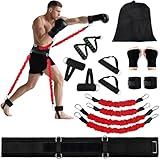
- Resistance Bands: Loop resistance bands around your wrists or ankles to add resistance to your punches and footwork.
Important: Always prioritize proper form over speed and weight. If you feel your form is suffering, reduce the weight or resistance.
Focusing on Speed and Power
Vary the speed and power of your punches to challenge different aspects of your fitness:
- Speed Drills: Focus on throwing punches as fast as possible, maintaining proper form.
- Power Drills: Concentrate on generating maximum power with each punch.
- Combination Drills: Mix speed and power punches within the same combination.
Incorporating Defensive Movements
Defense is crucial in boxing. Practice these defensive techniques during your shadow boxing sessions: (See Also: Does Boxing Classes Help With Weight Loss )
- Slipping: Move your head to the side to avoid punches.
- Rolling: Duck under punches by bending your knees and rotating your body.
- Blocking: Use your gloves to block incoming punches.
- Parrying: Deflect punches with your gloves.
Adding Interval Training
Interval training can significantly boost your cardiovascular fitness. Use a timer to structure your workouts:
- Work/Rest Ratio: Experiment with different work/rest ratios. For example, 30 seconds of work followed by 30 seconds of rest, or 60 seconds of work followed by 30 seconds of rest.
- Tabata Training: A popular form of interval training involving 20 seconds of intense work followed by 10 seconds of rest.
Creating Your Own Routines
Once you’re comfortable with the basics, create your own shadow boxing routines to keep your workouts fresh and engaging. Experiment with different combinations, footwork patterns, and defensive movements. Don’t be afraid to try new things and push yourself.
Common Mistakes to Avoid
Here are some common mistakes to avoid when learning to shadow box at home:
- Poor Form: Prioritize proper form over speed and power. Bad form can lead to injuries and hinder your progress.
- Not Keeping Your Hands Up: Always keep your hands up to protect your face.
- Dropping Your Chin: Keep your chin tucked down to protect it from punches.
- Crossing Your Feet: Avoid crossing your feet during footwork, as this can throw you off balance.
- Not Warming Up: Always warm up before you start shadow boxing to prepare your muscles for activity.
- Overtraining: Don’t overdo it, especially when you’re starting. Rest and recovery are crucial for preventing injuries and allowing your body to adapt.
Tracking Your Progress
Tracking your progress is essential for staying motivated and seeing results. Here are some ways to track your progress:
- Keep a Training Journal: Write down your workouts, including the rounds, combinations, and any specific drills you practiced.
- Record Your Shadow Boxing Sessions: Video yourself shadow boxing periodically. This allows you to see your form and identify areas for improvement.
- Measure Your Fitness: Track your progress by measuring your heart rate, endurance, and strength.
- Set Goals: Set realistic goals for yourself, such as increasing the duration of your rounds or improving your punch speed.
Staying Motivated and Consistent
Consistency is key to seeing results. Here are some tips for staying motivated and sticking to your shadow boxing routine:
- Set Realistic Goals: Start with achievable goals and gradually increase the intensity and duration of your workouts.
- Create a Routine: Schedule your shadow boxing sessions into your weekly routine.
- Find a Training Partner (Optional): If possible, train with a friend or family member for motivation and accountability.
- Listen to Music: Create a playlist of upbeat music to keep you energized during your workouts.
- Vary Your Workouts: Mix up your routines to prevent boredom and keep things interesting.
- Reward Yourself: Celebrate your achievements and reward yourself for staying consistent.
Advanced Techniques and Drills
Once you’ve mastered the basics, you can explore more advanced techniques and drills to further enhance your shadow boxing skills.
Advanced Footwork Drills
- The Angle Step: Step at an angle to your opponent to cut off their escape and create an opening for your own attacks.
- The Weave: Use your footwork to move in a weaving motion, avoiding punches and creating angles.
- The Circle Step: Move in a circular motion around your opponent, maintaining your stance and positioning.
Advanced Punching Drills
- Feinting: Use fake punches to draw out your opponent’s reactions and create openings.
- Counter-Punching: Practice throwing punches in response to your opponent’s attacks.
- Body Shots: Practice targeting the body with hooks and uppercuts.
Combining Advanced Techniques
- Combine advanced footwork with advanced punching techniques. Practice slipping a punch and immediately countering with a hook.
- Practice setting up combinations. Feint a jab, then throw a cross.
Shadow Boxing with a Heavy Bag (optional)
If you have access to a heavy bag, incorporate it into your training. Shadow box for a few rounds, then hit the heavy bag for a few rounds. This helps you translate your shadow boxing skills into real-world power and technique.
Troubleshooting Common Issues
Even with the best intentions, you might encounter some common issues during your shadow boxing journey. Here’s how to troubleshoot them:
- Problem: Feeling tired quickly.
- Solution: Reduce the intensity or duration of your workouts. Focus on building your endurance gradually.
- Problem: Poor form.
- Solution: Slow down and focus on technique. Watch videos of professional boxers and compare their form to yours.
- Problem: Boredom.
- Solution: Vary your routines. Try different combinations, footwork patterns, and defensive movements.
- Problem: Lack of motivation.
- Solution: Set realistic goals. Find a training partner. Listen to music. Reward yourself for your progress.
- Problem: Pain or injury.
- Solution: Stop immediately and rest. Consult a doctor or physical therapist if the pain persists.
Conclusion
Learning shadow boxing at home is an incredibly rewarding endeavor. It’s a fantastic way to improve your fitness, develop your boxing skills, and have fun. By following the guidance in this article, you can build a solid foundation in boxing fundamentals, create effective workout routines, and stay motivated on your fitness journey. Remember to prioritize proper form, stay consistent, and enjoy the process. With dedication and practice, you can transform your living room into your personal boxing gym and achieve your fitness goals. The journey to becoming a better boxer starts right here, right now.