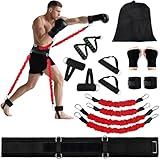
Ever wondered if you could get a killer workout without needing a punching bag or a sparring partner? The answer, my friend, is a resounding yes! Shadow boxing, the art of throwing punches and combinations at an imaginary opponent, is a fantastic way to build fitness, hone your boxing skills, and boost your overall well-being. It’s a workout you can do anywhere, anytime, making it incredibly accessible. Whether you’re a seasoned boxer looking to sharpen your technique or a complete beginner aiming to get in shape, shadow boxing offers a wealth of benefits.
This guide will explore everything you need to know about shadow boxing. We’ll examine the specific physical benefits, from cardiovascular improvements to muscle building, and delve into the technical aspects, such as proper form and common mistakes to avoid. I’ll also walk you through sample workouts and provide tips on how to incorporate shadow boxing into your routine for maximum impact. By the end, you’ll have a clear understanding of how shadow boxing can become your go-to fitness solution.
The Fundamentals of Shadow Boxing
Before we jump into the benefits, let’s cover the basics. Shadow boxing is essentially boxing without an actual opponent or a punching bag. You’re mimicking the movements of a boxer, focusing on technique, speed, power, and footwork. It’s a versatile exercise that can be tailored to your fitness level and goals. The key is to maintain proper form and to treat your imaginary opponent with respect, which means putting in the effort.
Getting Started: Stance and Guard
The foundation of any good shadow boxing session starts with your stance and guard. This is the position from which you’ll be throwing punches and moving around. Here’s a breakdown:
- Stance: Stand with your feet shoulder-width apart, one foot slightly ahead of the other. If you’re right-handed (orthodox stance), your left foot should be forward. If you’re left-handed (southpaw stance), your right foot should be forward. Bend your knees slightly to maintain a balanced, athletic position.
- Guard: Bring your hands up to protect your face. Your lead hand (the one in front) should be positioned near your cheek, and your rear hand should be guarding your chin. Keep your elbows tucked in to protect your ribs.
- Weight Distribution: Distribute your weight evenly between your feet. This will allow you to move quickly and generate power.
Basic Punches
Once you’re in the correct stance and guard, it’s time to learn the basic punches. Mastering these will give you a solid foundation for more complex combinations.
- Jab: This is a straight punch thrown with your lead hand. Extend your arm fully, rotating your fist as you make contact. Return your hand quickly to your guard. The jab is about speed and precision, and is a foundational punch.
- Cross: This is a straight punch thrown with your rear hand. Rotate your torso and hips to generate power. Pivot on your rear foot as you throw the punch. Like the jab, return your hand quickly to your guard. The cross is your power punch.
- Hook: This is a punch thrown with a bent arm, aiming at the side of your opponent’s head or body. Rotate your torso and pivot on your lead foot as you throw the punch. Keep your elbow up to protect your face.
- Uppercut: This is a punch thrown upwards, aiming at your opponent’s chin or body. Bend your knees and drive upwards as you throw the punch. Keep your elbow tucked in.
Footwork: The Key to Movement
Footwork is crucial in shadow boxing. It allows you to move around your imaginary opponent, set up your punches, and avoid getting hit. Here’s how to incorporate footwork into your shadow boxing routine:
- Shuffle: Slide your feet along the ground, maintaining your stance. Don’t cross your feet.
- Pivot: Rotate on the balls of your feet to change direction.
- In-and-out movement: Move in and out of range, using your footwork to control the distance.
The Physical Benefits of Shadow Boxing
Shadow boxing offers a comprehensive workout that benefits your entire body. It’s not just about throwing punches; it’s about movement, coordination, and mental focus. Let’s delve into the specific physical advantages.
Cardiovascular Health
Shadow boxing is an excellent cardiovascular workout. The continuous movement and rapid punches elevate your heart rate, improving your cardiovascular health. Regular shadow boxing can help lower blood pressure, improve cholesterol levels, and reduce your risk of heart disease. The intensity of the workout can be adjusted by increasing the speed and power of your punches, or adding in more movement.
Muscle Building and Toning
Shadow boxing engages multiple muscle groups, providing a full-body workout. Your shoulders, arms, chest, back, and core all work together to generate power and maintain balance. Shadow boxing helps to build lean muscle mass and tone your body. The constant punching and movement also burn a significant amount of calories, contributing to weight loss or maintenance.
Improved Strength and Endurance
The repetitive motions of shadow boxing build strength and endurance. Your muscles become stronger as you throw punches and move around. Your cardiovascular system becomes more efficient, allowing you to sustain the workout for longer periods. Shadow boxing is a great way to improve your overall strength and endurance, making everyday activities easier.
Enhanced Coordination and Agility
Shadow boxing requires coordination between your hands, feet, and eyes. You need to coordinate your punches with your footwork and your movements with your opponent’s (imaginary) actions. Shadow boxing improves your hand-eye coordination, agility, and reaction time. This can be beneficial in other sports and activities. (See Also: Is Shadow Boxing Effective )
Calorie Burning and Weight Management
Shadow boxing is a highly effective way to burn calories. The intensity of the workout determines how many calories you burn, but it can be quite significant. A 30-minute shadow boxing session can burn upwards of 300-400 calories, depending on your weight, intensity, and fitness level. This makes it a valuable tool for weight management and overall fitness.
Technical Aspects: Form and Technique
Proper form is essential for getting the most out of your shadow boxing workouts and preventing injuries. Here’s what you need to focus on:
Maintaining Proper Form
Focus on keeping your elbows tucked in, your hands up to protect your face, and your core engaged. Avoid dropping your guard or throwing wild punches. Maintain a balanced stance and distribute your weight evenly. Keep your eyes focused forward, as if you are watching your opponent.
Generating Power
Power comes from the ground up. Start with a solid base, and pivot on your feet as you throw punches. Rotate your torso and hips to generate more power. Engage your core muscles to stabilize your body and transfer energy effectively.
Footwork Drills
Footwork is key to effective shadow boxing. Practice these drills to improve your agility and movement:
- The Shuffle: Move sideways, forwards, and backwards, maintaining your stance.
- The Pivot: Rotate on the balls of your feet to change direction.
- The In-and-Out: Move in and out of range, simulating attacking and defending.
Breathing Techniques
Proper breathing is crucial for maintaining your energy levels and preventing fatigue. Exhale as you throw a punch and inhale as you return to your guard. Focus on deep, controlled breaths to regulate your heart rate and improve your endurance. Don’t hold your breath.
Common Mistakes to Avoid
There are common mistakes that can hinder your progress and potentially lead to injuries. Here are some to watch out for:
- Dropping Your Guard: This leaves you vulnerable to imaginary punches.
- Throwing Wild Punches: This wastes energy and reduces your accuracy.
- Neglecting Footwork: Poor footwork limits your movement and power.
- Not Engaging Your Core: A weak core reduces your power and stability.
- Holding Your Breath: This leads to fatigue and reduces your endurance.
Sample Shadow Boxing Workouts
Here are a few sample shadow boxing workouts, designed for different fitness levels. Remember to warm up before each workout and cool down afterward.
Beginner Workout (20 Minutes)
- Warm-up: 5 minutes of light cardio, such as jumping jacks or high knees.
- Jab-Cross Combo: 3 minutes. Focus on speed and technique.
- Hook-Uppercut Combo: 3 minutes. Focus on power and rotation.
- Footwork Drills: 3 minutes. Shuffle, pivot, and in-and-out movement.
- Repeat the combos and footwork for another 6 minutes.
- Cool-down: 5 minutes of stretching.
Intermediate Workout (30 Minutes)
- Warm-up: 5 minutes of dynamic stretching.
- Jab-Cross-Hook Combo: 4 minutes. Focus on fluidity and combinations.
- Cross-Hook-Uppercut Combo: 4 minutes. Focus on power and precision.
- Footwork Drills: 4 minutes. Incorporate lateral movement and pivots.
- Shadow Sparring: 10 minutes. Imagine an opponent and react to their movements.
- Cool-down: 7 minutes of static stretching.
Advanced Workout (45 Minutes)
- Warm-up: 7 minutes of dynamic stretching and jump rope.
- Heavy Bag Combinations: 10 minutes.
- Speed Bag Drills: 5 minutes.
- Shadow Sparring: 15 minutes. Focus on strategy and defense.
- Footwork Drills: 5 minutes. Incorporate complex footwork patterns.
- Cool-down: 8 minutes of stretching, including core work.
Incorporating Shadow Boxing Into Your Routine
Shadow boxing can be easily integrated into your existing fitness routine. Here’s how:
As a Standalone Workout
Dedicate specific days to shadow boxing, just like you would for any other workout. Aim for 2-3 sessions per week, with rest days in between. Vary the intensity and duration of your workouts to keep things challenging. (See Also: How To Prepare For Boxing Class )
As a Warm-Up
Use shadow boxing as a warm-up before other workouts. A 5-10 minute session can prepare your body for more intense exercise. This is particularly useful before strength training or cardio sessions.
As a Cool-Down
Shadow boxing can also be used as a cool-down. A few minutes of shadow boxing can help you wind down after a workout. Focus on light punches and footwork.
Supplementing Other Workouts
Shadow boxing can complement other forms of exercise. Combine it with strength training, running, or other activities to create a well-rounded fitness plan. This can improve overall fitness and enhance performance in other areas.
Equipment and Resources
Shadow boxing requires minimal equipment, making it accessible to anyone.
Essential Equipment
- Gloves: While not essential, wearing boxing gloves can help you to get used to the weight and feel of them.
- Wraps: Hand wraps protect your hands and wrists.
- Comfortable Clothing: Wear loose-fitting clothing that allows for a full range of motion.
- Shoes: Choose supportive athletic shoes.
Resources
There are many resources available to help you learn and improve your shadow boxing skills:
- Online videos: YouTube and other platforms offer countless tutorials and workout videos.
- Boxing coaches: Consider working with a boxing coach for personalized instruction and feedback.
- Books and articles: There are many books and articles that provide detailed information on boxing techniques and training.
Nutrition and Hydration
Proper nutrition and hydration are essential for supporting your shadow boxing workouts and maximizing your results.
Nutrition Tips
Eat a balanced diet that includes plenty of protein, carbohydrates, and healthy fats. Protein is essential for muscle repair and growth, while carbohydrates provide energy. Healthy fats support overall health and hormone production. Focus on whole, unprocessed foods.
Hydration Tips
Drink plenty of water throughout the day, especially before, during, and after your workouts. Dehydration can lead to fatigue and reduced performance. Aim for at least eight glasses of water per day, and more if you are exercising heavily.
Progression and Variations
To keep things interesting and continue to challenge yourself, incorporate these progressions and variations into your shadow boxing routine:
Increasing Intensity
Increase the speed and power of your punches. Shorten rest periods between rounds. Add more rounds to your workout. Vary the combinations you throw. (See Also: Does Boxing Workout Your Legs )
Adding Resistance
Use resistance bands to increase the intensity of your punches. This will help build strength and power. Wear weighted gloves or ankle weights to add extra resistance.
Incorporating Intervals
Alternate between high-intensity bursts and periods of rest or lower-intensity activity. This can improve your cardiovascular fitness and burn more calories.
Changing Up Your Combinations
Vary the combinations you throw to keep your workouts challenging. Experiment with different punch sequences and footwork patterns.
The Mental Benefits of Shadow Boxing
Shadow boxing is not just a physical workout; it also offers numerous mental benefits.
Stress Relief
The repetitive motions of shadow boxing can be a great way to relieve stress and tension. The physical activity releases endorphins, which have mood-boosting effects.
Improved Focus and Concentration
Shadow boxing requires focus and concentration. You need to pay attention to your form, your footwork, and your movements. This can improve your ability to focus in other areas of your life.
Increased Confidence
As you improve your shadow boxing skills and fitness, you’ll feel more confident in your abilities. The sense of accomplishment you get from completing a challenging workout can boost your self-esteem.
Mind-Body Connection
Shadow boxing promotes a strong mind-body connection. You become more aware of your body and its movements. This can improve your overall coordination and body awareness.
Conclusion
Shadow boxing is a versatile and effective workout that offers a wide range of benefits for both your body and mind. From improving cardiovascular health and building muscle to enhancing coordination and relieving stress, it’s a fantastic way to get in shape and stay healthy. It’s a workout you can do anywhere, requiring minimal equipment and fitting easily into your schedule. By incorporating shadow boxing into your routine, you can experience significant improvements in your fitness level, overall well-being, and boxing skills.
Remember to focus on proper form, vary your workouts, and listen to your body. Whether you’re a beginner or an experienced athlete, shadow boxing can be a valuable tool in achieving your fitness goals. So, put on your gloves, find some space, and start punching your way to a healthier and more confident you. The benefits are within reach, one punch at a time.