Ever wondered if shadow boxing, that seemingly simple act of throwing punches at thin air, is actually worth your time? You see boxers doing it, and maybe you’ve tried it yourself. But does it really translate to better performance in the ring or even just a good workout?
I’m here to tell you that the answer is a resounding yes! Shadow boxing is more than just a warm-up; it’s a fundamental training tool used by fighters of all levels. It’s a versatile exercise that can improve your technique, build your endurance, and sharpen your mental focus. In this guide, we’ll break down everything you need to know about shadow boxing, from its core benefits to practical tips on how to get the most out of your sessions.
Whether you’re a seasoned boxer, a fitness enthusiast looking for a new challenge, or just curious about the sport, this article will show you why shadow boxing is a valuable addition to your training regimen. Get ready to learn about the power of the invisible opponent!
The Core Benefits of Shadow Boxing
Shadow boxing is a versatile exercise that offers a multitude of benefits, making it a cornerstone of any effective boxing or fitness program. Let’s delve into the core advantages:
Technical Proficiency
Shadow boxing allows you to focus solely on your technique without the added pressure of an opponent. You can refine your punches, footwork, and defensive movements in a controlled environment. This focused practice is crucial for building muscle memory and developing a fluid, efficient fighting style.
Here’s how it helps with technical proficiency:
- Perfecting Punch Form: You can concentrate on the correct execution of each punch – the jab, cross, hook, uppercut, and combinations. This includes hand position, elbow alignment, and body rotation.
- Improving Footwork: Shadow boxing enables you to practice footwork drills, such as pivots, slips, and lateral movements, without worrying about being hit.
- Refining Defensive Techniques: You can practice head movement, blocking, and parrying punches, improving your ability to avoid strikes.
- Developing Combinations: You can experiment with different punch combinations, finding what works best for your style and building your arsenal.
Cardiovascular Conditioning and Endurance
Shadow boxing is a fantastic cardiovascular workout. The continuous movement and rapid punches elevate your heart rate, improving your stamina and endurance. This is especially important for boxing, where you need to maintain a high level of performance throughout multiple rounds.
How shadow boxing boosts cardio:
- Increased Heart Rate: The constant activity keeps your heart pumping, strengthening your cardiovascular system.
- Improved Stamina: Regular shadow boxing sessions will help you last longer during sparring or fights.
- Enhanced Lung Capacity: Deep breathing during shadow boxing helps you utilize oxygen more efficiently.
Muscle Strengthening and Toning
Shadow boxing engages multiple muscle groups, providing a full-body workout. While it might not build massive muscles like weightlifting, it strengthens and tones the muscles involved in punching, footwork, and defensive movements.
Muscle groups engaged during shadow boxing:
- Arms and Shoulders: The deltoids, biceps, and triceps are constantly engaged during punching.
- Core: The abdominal muscles are crucial for generating power and maintaining balance.
- Legs: The quadriceps, hamstrings, and calves are used for footwork and generating power.
- Back: The back muscles help stabilize the body and generate punching power.
Mental Fortitude and Focus
Shadow boxing is not just a physical activity; it’s also a mental exercise. It requires concentration, discipline, and the ability to visualize your movements and strategies. This mental training can improve your focus, decision-making skills, and overall mental fortitude.
How shadow boxing improves mental skills:
- Visualization: You can visualize your opponent, plan your attacks, and anticipate their movements.
- Focus and Concentration: Shadow boxing demands that you stay present and focused on your movements, blocking out distractions.
- Discipline: Regular shadow boxing sessions require commitment and discipline, helping you develop a strong work ethic.
- Stress Relief: The physical activity and mental focus can help relieve stress and improve your mood.
Coordination and Agility
Shadow boxing enhances your coordination and agility. The constant movement, footwork, and hand-eye coordination required to throw punches and defend yourself contribute to improved overall agility.
Shadow boxing improves coordination and agility by:
- Improving Hand-Eye Coordination: You need to coordinate your punches with your footwork and defensive movements.
- Enhancing Footwork: Shadow boxing helps you develop quick feet and the ability to move smoothly around the “ring.”
- Boosting Reaction Time: The practice of anticipating and reacting to imaginary punches improves your reaction time.
Getting Started: Shadow Boxing Techniques
Now that you know the benefits, let’s explore the practical aspects of shadow boxing. Here’s how to structure your sessions and incorporate various techniques for optimal results.
Warm-Up
Before you begin shadow boxing, it’s crucial to warm up your muscles to prevent injuries. A proper warm-up will also prepare your body for the workout ahead.
Recommended warm-up exercises:
- Jumping Jacks: 2-3 minutes
- High Knees: 1-2 minutes
- Butt Kicks: 1-2 minutes
- Arm Circles: Forward and backward, 1 minute each
- Shoulder Rolls: 1 minute
- Light Stretching: Focus on dynamic stretches, such as arm swings, leg swings, and torso twists.
Basic Stance
The foundation of effective shadow boxing is a good stance. This allows you to generate power, maintain balance, and move efficiently.
Key elements of the boxing stance: (See Also: Does Shadow Boxing Really Work )
- Foot Position: Stand with your feet shoulder-width apart, one foot slightly ahead of the other (typically your non-dominant foot).
- Knee Bend: Bend your knees slightly to lower your center of gravity.
- Weight Distribution: Distribute your weight evenly between both feet.
- Hand Position: Keep your hands up near your face, protecting your chin. Your elbows should be tucked in to protect your body.
- Chin Down: Keep your chin tucked down to protect it from punches.
Basic Punches
Mastering the basic punches is essential for effective shadow boxing. Focus on proper technique, power generation, and combinations.
The four basic punches:
- Jab: A straight punch thrown with your lead hand. Keep your elbow tucked in and snap the punch out, returning quickly to the guard position.
- Cross: A straight punch thrown with your rear hand. Rotate your body and pivot your rear foot to generate power.
- Hook: A powerful punch thrown with a bent arm. Rotate your body and pivot your lead foot. Aim for the side of your opponent’s head.
- Uppercut: An upward punch thrown from a low position. Bend your knees and drive your punch upwards, aiming for your opponent’s chin.
Footwork Drills
Footwork is crucial in boxing. It allows you to move around the ring, create angles, and avoid punches. Practice these drills to improve your footwork.
Footwork drills to incorporate:
- Shuffle: Move sideways, keeping your feet shoulder-width apart.
- Pivot: Rotate on your lead foot to change your angle.
- Step-and-Slide: Step forward, backward, or to the side, and then slide your other foot to maintain your stance.
- Jump Rope: Jump rope is an excellent way to improve your footwork, coordination, and cardio.
Defense Techniques
Defense is just as important as offense. Practice these techniques to protect yourself from imaginary punches.
Defensive techniques to practice:
- Blocking: Use your gloves to block punches.
- Parrying: Deflect punches with your gloves.
- Slipping: Move your head to the side to avoid punches.
- Bobbing and Weaving: Bend your knees and move your head from side to side to avoid punches.
Combining Punches, Footwork, and Defense
Once you’ve mastered the individual techniques, it’s time to combine them. Practice throwing combinations, moving around the ring, and defending against imaginary attacks.
Examples of combinations:
- Jab-Cross
- Jab-Cross-Hook
- Jab-Jab-Cross
- Hook-Cross
Practice routines:
- Round 1: Jab, Jab, Jab, Cross. Footwork: Shuffle, Pivot. Defense: Slip, Bob and Weave.
- Round 2: Hook, Cross, Uppercut. Footwork: Step and Slide. Defense: Block and Parry.
Structuring Your Shadow Boxing Workout
To get the most out of your shadow boxing sessions, it’s important to structure your workouts effectively. This includes the duration, intensity, and frequency of your training.
Workout Duration
The duration of your shadow boxing workout depends on your fitness level and goals. Beginners should start with shorter sessions and gradually increase the duration as they get fitter.
Recommended durations:
- Beginner: 3-5 rounds of 2-3 minutes each, with 1-minute rest periods between rounds.
- Intermediate: 6-8 rounds of 3 minutes each, with 1-minute rest periods between rounds.
- Advanced: 8-12 rounds of 3 minutes each, with 30-second rest periods between rounds.
Intensity Levels
Vary the intensity of your shadow boxing sessions to challenge your body and prevent plateaus. You can adjust the intensity by increasing the speed of your punches, adding more combinations, and incorporating plyometric exercises.
Intensity levels to incorporate:
- Light: Focus on technique and form.
- Medium: Increase the speed and power of your punches.
- High: Throw punches as fast and powerfully as possible, incorporating more complex combinations.
Frequency
The frequency of your shadow boxing workouts depends on your overall training schedule and fitness goals. Aim for consistency to see the best results.
Recommended frequency:
- Beginner: 2-3 times per week.
- Intermediate: 3-4 times per week.
- Advanced: 4-6 times per week.
Sample Shadow Boxing Workout Routine
Here’s a sample shadow boxing workout routine you can follow:
- Warm-up: 5 minutes (jumping jacks, high knees, arm circles, etc.)
- Shadow Boxing:
- Round 1: Jab, Jab, Cross, Footwork (shuffle, pivot), Defense (slip, bob and weave)
- Round 2: Hook, Cross, Uppercut, Footwork (step and slide), Defense (block, parry)
- Round 3: Combination Drills (Jab-Cross-Hook, Jab-Jab-Cross, etc.), Footwork (jump rope)
- Cool-down: 5 minutes (stretching)
Incorporating Equipment
While shadow boxing can be done without any equipment, incorporating some tools can enhance your training and provide additional challenges. (See Also: Are Boxing Classes Worth It )
Equipment to consider:
- Mirror: Allows you to check your form and make corrections.
- Heavy Bag: Provides resistance and helps you develop power.
- Speed Bag: Improves hand-eye coordination and rhythm.
- Focus Mitts: Used with a partner to practice combinations and improve timing.
- Jump Rope: Excellent for improving footwork and cardio.
Common Mistakes to Avoid
To maximize the effectiveness of your shadow boxing sessions, it’s important to be aware of common mistakes and avoid them. Here are some pitfalls to watch out for:
Poor Form
Maintaining proper form is crucial for preventing injuries and maximizing the benefits of shadow boxing. Avoid these common form errors:
Common form mistakes:
- Dropping Your Hands: Always keep your hands up to protect your face.
- Leaning Too Far Forward: Maintain a balanced stance.
- Not Rotating Your Body: Rotate your body to generate power.
- Incorrect Footwork: Keep your feet moving and avoid crossing your feet.
Lack of Focus
Shadow boxing requires focus and concentration. Avoid these distractions:
Focus-related mistakes:
- Daydreaming: Stay present and focused on your movements.
- Rushing Through Punches: Focus on technique over speed.
- Not Visualizing: Visualize your opponent and plan your attacks.
Insufficient Warm-Up
Skipping the warm-up can increase your risk of injury. Always warm up before shadow boxing.
Warm-up mistakes:
- Skipping Warm-up: Always warm up before shadow boxing.
- Inadequate Stretching: Include dynamic stretches in your warm-up.
Ignoring Rest and Recovery
Rest and recovery are essential for allowing your body to repair and rebuild. Don’t overtrain.
Recovery-related mistakes:
- Overtraining: Give your body time to rest and recover.
- Insufficient Sleep: Aim for 7-9 hours of sleep per night.
- Poor Nutrition: Eat a balanced diet to support your training.
Advanced Shadow Boxing Techniques
Once you’ve mastered the basics, you can elevate your shadow boxing sessions with more advanced techniques and drills.
Adding Weight
Using light weights during shadow boxing can increase the intensity of your workout and build strength. However, it’s important to use light weights to avoid compromising your form.
Ways to add weight:
- Light Dumbbells: Use 1-3 pound dumbbells.
- Weighted Gloves: Increase the resistance of your punches.
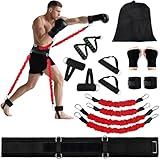
- Resistance Bands: Add resistance to your punches and footwork.
Partner Drills
Working with a partner can add a new dimension to your shadow boxing training. You can practice combinations, timing, and defensive techniques with a partner.
Partner drills to try:
- Focus Mitt Drills: Practice combinations with a partner holding focus mitts.
- Pad Work: Practice power punching on pads.
- Defense Drills: Practice slipping, blocking, and parrying punches with a partner.
Visualization Techniques
Visualization is a powerful tool for improving your performance. Use these techniques to enhance your mental training.
Visualization exercises:
- Visualizing Your Opponent: Imagine your opponent’s movements and plan your attacks.
- Visualizing Success: Imagine yourself executing your techniques flawlessly.
- Mental Rehearsal: Mentally rehearse your fight strategy.
Plyometric Exercises
Plyometric exercises involve explosive movements that can improve your power and explosiveness. Incorporate these exercises into your shadow boxing routine. (See Also: Does Boxing Classes Help With Weight Loss )
Plyometric exercises to incorporate:
- Jump Squats: Increase your leg power.
- Box Jumps: Improve your explosiveness.
- Plyometric Push-ups: Develop upper body power.
Shadow Boxing with Resistance Bands
Resistance bands can add a new level of challenge to your shadow boxing. They increase the resistance, making the exercises more difficult and helping to build strength and endurance.
How to use resistance bands:
- Around the Wrists: Increases resistance on punches.
- Around the Ankles: Increases resistance on footwork drills.
- Anchored to a Post: Allows for controlled resistance during punches and combinations.
Shadow Boxing and Other Training Methods
Shadow boxing is a valuable component of a complete training program. Let’s explore how it complements other training methods.
Shadow Boxing vs. Sparring
Shadow boxing and sparring are both essential for boxing training, but they serve different purposes.
Shadow Boxing:
- Focus: Technique, form, and conditioning.
- Environment: Controlled, safe.
- Objective: Build a strong foundation, improve skills, and prepare for sparring.
Sparring:
- Focus: Applying skills against a live opponent, testing strategies, and developing fight IQ.
- Environment: Dynamic, unpredictable.
- Objective: Practice fighting in a real-world scenario, refine skills under pressure.
Shadow Boxing and Strength Training
Strength training is important for building power and preventing injuries.
How they complement each other:
- Strength Training: Builds overall strength and power, supporting the explosive movements in shadow boxing.
- Shadow Boxing: Refines technique and builds endurance.
Exercises to include in your strength training:
- Squats: Builds leg strength.
- Deadlifts: Develops overall power.
- Bench Press: Strengthens upper body.
- Pull-ups: Improves back and core strength.
Shadow Boxing and Cardio
Shadow boxing is a great form of cardio, but it can be supplemented with other cardio exercises.
Cardio exercises to incorporate:
- Running: Improves endurance and stamina.
- Swimming: Low-impact cardio.
- Cycling: Good for overall fitness and leg strength.
- Jump Rope: Enhances footwork and cardio.
Shadow Boxing for Weight Loss
Shadow boxing can be an effective tool for weight loss when combined with a healthy diet.
How shadow boxing aids weight loss:
- Burns Calories: The high-intensity workout burns a significant number of calories.
- Builds Muscle: Increased muscle mass boosts your metabolism.
- Improves Overall Fitness: A better fitness level supports weight loss.
Key Factors for Weight Loss:
- Calorie Deficit: Consume fewer calories than you burn.
- Balanced Diet: Eat a diet rich in fruits, vegetables, and lean protein.
- Consistency: Regular shadow boxing sessions and a healthy diet are key.
| Training Method | Focus | Benefits | Considerations |
|---|---|---|---|
| Shadow Boxing | Technique, Endurance, Mental Focus | Improves form, builds cardio, enhances mental skills | Requires proper form, can be repetitive |
| Sparring | Application of Skills, Fight IQ | Develops real-world fighting skills, tests strategy | Risk of injury, requires a partner |
| Strength Training | Power, Strength, Injury Prevention | Builds muscle, increases power, reduces injury risk | Requires proper form, can be time-consuming |
| Cardio | Endurance, Stamina | Improves cardiovascular health, aids in weight loss | Can be monotonous, requires time commitment |
Final Thoughts
Shadow boxing is undoubtedly an effective training method for anyone looking to improve their boxing skills, get in shape, or simply enjoy a challenging workout. It offers a wide array of benefits, from refining your technique and building endurance to enhancing your mental focus and coordination.
By incorporating shadow boxing into your routine, you’ll not only see improvements in your physical abilities but also experience an increase in your mental fortitude and overall well-being. Remember to focus on proper form, vary your workouts, and stay consistent to reap the full rewards of this versatile and accessible exercise.
Whether you’re a beginner taking your first steps into the world of boxing or a seasoned athlete seeking to refine your skills, shadow boxing is a valuable tool that can help you achieve your fitness goals and unleash your full potential.