Ever wondered if you could sculpt your arms without heavy weights or endless gym sessions? Well, you’re not alone. Many people are turning to shadow boxing as a convenient and effective way to get in shape. Shadow boxing, the art of boxing without an opponent, is a fantastic full-body workout. But the question on everyone’s mind is: does shadow boxing tone arms? The answer, as you’ll soon discover, is a resounding yes!
Shadow boxing offers a dynamic blend of cardio and strength training. It’s a workout that challenges your muscles, boosts your cardiovascular health, and improves your coordination. We’re going to break down how shadow boxing works, what it does for your arms, and how you can get started. Get ready to learn about the science behind the movements, the muscles involved, and the best techniques to maximize your results. Let’s get started!
The Mechanics of Shadow Boxing: A Deep Dive
Shadow boxing is more than just throwing punches into the air. It’s a carefully orchestrated sequence of movements that mimic a real boxing match. The key to effective shadow boxing lies in the proper execution of each punch, the footwork, and the overall rhythm of the workout. Let’s delve into the mechanics to understand how it works.
The Basic Punches: Building the Foundation
The foundation of shadow boxing is built on the basic punches. Mastering these is crucial before moving on to more complex combinations. Each punch targets different muscle groups and requires specific techniques:
- Jab: This is a straight punch thrown with the lead hand. It’s quick, precise, and used to maintain distance and set up other punches.
- Cross: A powerful punch thrown with the rear hand, crossing the body. It relies on the rotation of the torso for power.
- Hook: A curved punch thrown from the side, aiming for the head or body. It engages the shoulder, back, and core muscles.
- Uppercut: An upward punch thrown from a close range. It targets the chin and requires significant leg drive.
Proper form is essential to prevent injuries and maximize the effectiveness of each punch. Keep your elbows tucked in, your hands up to protect your face, and your core engaged throughout.
Footwork: The Dance of Boxing
Footwork is the unsung hero of shadow boxing. It’s what allows you to move around, create angles, and set up your punches. Good footwork involves:
- Staying Light on Your Feet: Bounce slightly to stay agile and ready to move.
- The Boxing Stance: One foot slightly ahead of the other, with knees bent and weight balanced.
- Moving Forward, Backward, and Sideways: Practice shuffling, pivoting, and stepping to control the space.
Footwork not only improves your agility but also engages your leg muscles, making shadow boxing a full-body workout.
Rhythm and Timing: The Heartbeat of Shadow Boxing
Rhythm and timing are what make shadow boxing a fluid and engaging workout. The goal is to create a flow of punches and movements that mimic a real fight. This requires:
- Maintaining a Consistent Pace: Find a rhythm that you can sustain throughout the workout.
- Combining Punches: Practice different combinations, such as jab-cross, hook-jab, or uppercut-cross.
- Adding Defensive Movements: Incorporate slips, rolls, and blocks to simulate defensive maneuvers.
Developing a good rhythm helps you burn more calories, improve your coordination, and make the workout more enjoyable.
How Shadow Boxing Tones Your Arms: The Science Behind the Sculpt
Now, let’s get to the core of the question: does shadow boxing tone arms? The answer lies in the specific muscle groups that are engaged during a shadow boxing workout. When you throw punches, your arms are far from the only muscles working. It’s a full-body exercise, but the arms get a significant workout.
Muscle Groups Involved: The Arm Arsenal
Several muscle groups in your arms are engaged during shadow boxing. These include:
- Biceps: Responsible for flexing the elbow and pulling your arm towards you.
- Triceps: Located on the back of your upper arm, responsible for extending the elbow.
- Deltoids (Shoulders): Essential for raising your arms and providing stability.
- Forearms: Used for gripping and controlling your punches.
Each punch you throw works these muscles, strengthening and toning them over time. The constant repetition and resistance from the air create a challenging workout.
The Role of Resistance and Repetition
Shadow boxing uses air resistance, which might seem less effective than lifting weights. However, the constant repetition of punches creates a significant workout. This is how it works:
- Resistance from Air: Your arms must overcome the resistance of the air with each punch.
- Repetition: The more punches you throw, the more your muscles are engaged.
- Endurance: Shadow boxing builds muscular endurance, allowing you to perform more repetitions with good form.
Over time, this combination of resistance and repetition leads to increased muscle tone and definition in your arms. (See Also: How To Always Win In Shadow Boxing )
Cardio Benefits and Fat Burning
Shadow boxing is a fantastic cardio workout, which helps you burn calories and reduce body fat. This is crucial for revealing the toned muscles you’re building. Here’s how it works:
- Increased Heart Rate: Shadow boxing elevates your heart rate, which increases calorie burn.
- Fat Loss: Burning calories leads to a reduction in overall body fat.
- Muscle Definition: As you lose fat, your muscles become more visible and defined.
The combination of cardio and strength training makes shadow boxing a powerful tool for arm toning.
Techniques to Maximize Arm Toning in Shadow Boxing
To get the most out of your shadow boxing workout, it’s essential to incorporate specific techniques that target your arms. Here are some effective strategies to enhance your arm toning:
Proper Punching Form: The Key to Efficiency
Correct form is not just about avoiding injury; it’s also about maximizing the effectiveness of each punch. Here’s how to ensure proper form:
- Keep Your Hands Up: This protects your face and engages your shoulder muscles.
- Elbows Tucked In: This protects your ribs and keeps your arms close to your body.
- Rotate Your Torso: This adds power to your punches and engages your core.
- Snap Your Punches: Don’t push your punches; snap them out and back for maximum impact.
Focusing on form ensures that you’re working the right muscles and getting the most out of each punch.
Punching Combinations: Variety Is Key
Varying your punching combinations keeps your workout interesting and challenges your muscles in different ways. Here are some examples:
- Jab-Cross: A classic combination that works the biceps and triceps.
- Hook-Jab: Targets the shoulders, back, and biceps.
- Uppercut-Cross: Engages the shoulders, biceps, and triceps.
- Adding Body Shots: Incorporate punches to the body to work different muscle groups.
Experimenting with different combinations keeps your muscles guessing and prevents plateaus.
Adding Resistance: Taking It Up a Notch
While shadow boxing uses air resistance, you can increase the challenge by adding extra resistance:
- Light Hand Weights: Using 1-3 pound hand weights increases the resistance on your arms.
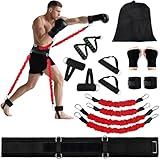
- Resistance Bands: Loop resistance bands around your wrists to add resistance.
- Focus Mitts: If you have a partner, using focus mitts adds a target and resistance.
Adding resistance boosts the intensity of your workout and accelerates muscle toning.
Focusing on Speed and Power: Dynamic Training
To maximize arm toning, focus on both speed and power. Here’s how:
- Speed Drills: Practice throwing punches as fast as possible.
- Power Drills: Concentrate on generating maximum power with each punch.
- Interval Training: Alternate between high-intensity intervals and rest periods.
Combining speed and power training makes your workouts more effective and challenging.
Building a Shadow Boxing Routine: Your Path to Toned Arms
Now that you understand the mechanics, benefits, and techniques, let’s build a shadow boxing routine that you can incorporate into your fitness regimen. Here’s how to create an effective workout:
Warm-Up: Preparing Your Body
Always start with a warm-up to prepare your body for exercise. This helps prevent injuries and increases blood flow to your muscles: (See Also: Does Peloton Have Boxing Classes )
- Light Cardio: 5-10 minutes of jumping jacks, jogging in place, or high knees.
- Dynamic Stretching: Arm circles, torso twists, and leg swings.
A good warm-up is essential for a safe and effective workout.
The Workout: Punching Your Way to Success
Here’s a sample shadow boxing workout you can follow:
- Round 1: Jab-Cross Combination (3 minutes): Focus on proper form and controlled movements.
- Round 2: Hook-Jab Combination (3 minutes): Vary your combinations and add speed.
- Round 3: Uppercut-Cross Combination (3 minutes): Focus on power and core engagement.
- Round 4: Footwork and Defense (3 minutes): Practice moving around and incorporating slips and rolls.
- Round 5: Speed Drills (3 minutes): Throw punches as fast as possible.
- Round 6: Power Drills (3 minutes): Concentrate on generating maximum power with each punch.
- Round 7: Combination Drill (3 minutes): Combine all techniques learned.
Rest for 60 seconds between rounds. Adjust the duration and intensity based on your fitness level.
Cool-Down: Recovering and Stretching
Cool down after your workout to help your body recover. This includes:
- Light Cardio: 5-10 minutes of walking or slow jogging.
- Static Stretching: Hold stretches for 30 seconds each, focusing on your arms, shoulders, and back.
Cooling down reduces muscle soreness and improves flexibility.
Frequency and Progression: Staying Consistent
Consistency is key to seeing results. Aim to shadow box 3-5 times per week. As you get stronger, you can:
- Increase the Duration: Add more rounds or increase the time of each round.
- Add Resistance: Use hand weights or resistance bands.
- Increase Intensity: Focus on speed, power, and more complex combinations.
Gradually increasing the intensity and duration of your workouts will help you continue to see progress.
Beyond Arm Toning: Additional Benefits of Shadow Boxing
While the focus is often on arm toning, shadow boxing offers numerous other benefits that contribute to overall fitness and well-being. It’s a holistic workout that improves several aspects of your health.
Cardiovascular Health: Pump Up Your Heart
Shadow boxing is an excellent cardiovascular workout, providing significant benefits for your heart health:
- Improved Heart Rate: Increases your heart rate, strengthening your heart muscle.
- Enhanced Blood Circulation: Improves blood flow throughout your body.
- Reduced Risk of Heart Disease: Regular cardio exercise helps reduce the risk of heart disease and stroke.
Shadow boxing is a fun and effective way to improve your cardiovascular fitness.
Coordination and Balance: Sharpen Your Skills
Shadow boxing requires coordination, balance, and agility, which improve over time:
- Enhanced Hand-Eye Coordination: Improves the ability to react quickly and accurately.
- Improved Balance: Develops a sense of balance and stability.
- Increased Agility: Enhances overall agility and movement skills.
These improvements translate to better performance in other sports and activities.
Stress Relief and Mental Health: Box Away the Blues
Shadow boxing can be a great stress reliever and improve mental health: (See Also: Does Shadow Boxing Help )
- Stress Reduction: The physical activity releases endorphins, which have mood-boosting effects.
- Improved Focus: Requires concentration and focus, which can improve mental clarity.
- Increased Confidence: Achieving fitness goals boosts self-esteem and confidence.
Shadow boxing is a fantastic way to clear your head and improve your overall well-being.
Full-Body Workout: More Than Just Arms
Shadow boxing is a full-body workout that engages multiple muscle groups:
- Legs: Footwork and stance engage your leg muscles.
- Core: Core muscles are engaged for every punch.
- Shoulders and Back: Provide stability and power for punches.
It’s a comprehensive workout that can improve overall fitness and muscle tone.
Accessibility and Convenience: Train Anywhere, Anytime
One of the biggest advantages of shadow boxing is its accessibility and convenience:
- No Equipment Needed: Requires no equipment, making it easy to do anywhere.
- Home Workouts: You can do it at home, at the gym, or even in a park.
- Flexible Schedule: Easy to fit into a busy schedule.
The convenience of shadow boxing makes it a sustainable workout for almost anyone.
Comparing Shadow Boxing with Other Arm Toning Methods
To fully understand the effectiveness of shadow boxing, it’s helpful to compare it with other popular arm toning methods. This will give you a clear perspective on its strengths and weaknesses.
Shadow Boxing vs. Weightlifting
Both weightlifting and shadow boxing can tone your arms, but they differ in several key aspects:
| Feature | Shadow Boxing | Weightlifting |
|---|---|---|
| Primary Focus | Cardio and muscular endurance | Strength and muscle mass |
| Equipment | Minimal (optional hand weights) | Weights, machines |
| Muscle Growth | Moderate | Significant |
| Cardio Benefit | High | Low to moderate |
| Convenience | High (can be done anywhere) | Moderate (requires gym access) |
Verdict: Weightlifting is generally more effective for building significant muscle mass. Shadow boxing is excellent for toning, improving endurance, and burning calories. Both can be combined for optimal results.
Shadow Boxing vs. Calisthenics
Calisthenics uses bodyweight exercises to build strength and tone muscles. Here’s how it compares to shadow boxing:
| Feature | Shadow Boxing | Calisthenics |
|---|---|---|
| Primary Focus | Cardio and arm toning | Strength and overall fitness |
| Exercises | Punching combinations, footwork | Push-ups, pull-ups, squats |
| Muscle Engagement | Arms, shoulders, core | Full body |
| Cardio Benefit | High | Moderate |
| Muscle Growth | Moderate | Moderate |
Verdict: Both are great for overall fitness. Calisthenics may offer a bit more in terms of overall strength building, while shadow boxing provides better cardio benefits and is more specific for arm toning.
Shadow Boxing vs. Other Cardio Exercises
Compared to other cardio exercises like running or cycling, shadow boxing has unique advantages:
| Feature | Shadow Boxing | Running/Cycling |
|---|---|---|
| Primary Focus | Arm toning and cardio | Cardio endurance |
| Muscle Engagement | Arms, shoulders, core, legs | Primarily legs |
| Calorie Burn | High | High |
| Coordination | High | Low |
| Variety | High (combinations and drills) | Moderate |
Verdict: Shadow boxing offers a more comprehensive workout that engages more muscle groups while providing similar cardio benefits. It’s a great choice for those seeking a more engaging and dynamic workout.
Final Verdict
So, does shadow boxing tone arms? Absolutely! Shadow boxing is a dynamic and effective way to sculpt your arms, build endurance, and improve your overall fitness. By mastering the basic punches, footwork, and combinations, you can create a challenging workout that targets your biceps, triceps, shoulders, and forearms. Remember to focus on proper form, vary your combinations, and gradually increase the intensity to maximize your results. With consistency and dedication, you’ll see a noticeable improvement in your arm tone and definition.
Shadow boxing provides numerous benefits beyond arm toning, including improved cardiovascular health, coordination, and stress relief. It’s a convenient and accessible workout that can be done anywhere, anytime, making it a sustainable choice for your fitness journey. Whether you’re a beginner or an experienced athlete, shadow boxing can be tailored to meet your fitness goals. Get ready to punch your way to a stronger, more toned you!