Shadow boxing. It’s the silent dance, the practice ground for pugilistic perfection. Many see it as a warm-up, a way to loosen up before hitting the heavy bag or sparring. But I see it as so much more. Done right, shadow boxing can be the cornerstone of your boxing prowess, a secret weapon that helps you refine your technique, build stamina, and, yes, even ‘win’ – in the sense of constant improvement and readiness.
This isn’t about some magic formula promising instant victories in the ring. Instead, this guide is about equipping you with the tools and strategies to maximize your shadow boxing sessions. We’ll explore the nuances of footwork, the art of the jab, the power of visualization, and the importance of mindful practice. Get ready to transform your shadow boxing from a simple exercise into a powerful training tool, and see how it can significantly improve your boxing capabilities.
So, lace up your imaginary gloves, find your space, and let’s get started. By the end of this, you’ll understand not just how to shadow box, but how to do it in a way that consistently moves you closer to your boxing goals.
The Fundamentals of Winning Shadow Boxing
Before we get into advanced techniques, let’s nail down the basics. These are the building blocks upon which all winning shadow boxing is built. Neglecting these fundamentals is like building a house on sand – it won’t last. We’ll cover stance, footwork, and the essence of proper form.
The Correct Stance: Your Foundation
Your stance is the bedrock of your boxing. It dictates your balance, power, and ability to move. Get it wrong, and you’re fighting an uphill battle. Here’s how to get it right:
- Feet: Shoulder-width apart, with your lead foot slightly ahead of your rear foot.
- Angle: Turn your lead foot outwards slightly (about 45 degrees). This allows for easier pivots and lateral movement. Your rear foot should be at a similar angle.
- Knees: Slightly bent, ready to spring into action. Imagine you’re about to sit down in a chair.
- Weight Distribution: Balanced. You should feel comfortable shifting your weight from one foot to the other. Aim for roughly 60% on your lead leg and 40% on your rear leg.
- Hands: Guard up! Your lead hand should be protecting your face, your rear hand covering your chin. Elbows tucked in to protect your ribs.
Practice getting into your stance and holding it for extended periods. This builds the muscle memory and stamina necessary for maintaining it throughout a fight or a shadow boxing session. Think of it as your default setting, the position you naturally return to between punches and movements.
Footwork: The Dance of Deception
Footwork is the unsung hero of boxing. It’s how you control distance, set up your punches, and evade your opponent’s attacks. Mastering footwork in shadow boxing translates directly to success in the ring. Here’s what to focus on:
- The Shuffle: The most basic movement. To move forward, push off with your rear foot and bring your lead foot forward. To move backward, reverse the process. Keep your feet in line with your shoulders. Never cross your feet!
- The Pivot: Rotate on the balls of your feet to change your angle. This is crucial for creating openings and escaping pressure. Practice pivoting to both sides.
- The Lateral Step: Move sideways. Keep your feet at the same distance apart, and don’t cross them.
- Light on Your Feet: Always be moving, even subtly. Don’t stand still. Bouncing lightly on the balls of your feet keeps you ready to react.
Drills: Incorporate these footwork drills into your shadow boxing routine:
- The Circle: Shadow box while moving around in a circle, practicing your punches as you move.
- The Triangle: Move in a triangle pattern, focusing on pivots and lateral steps.
- The Line: Practice moving forward and backward along a line, working on your shuffle.
Form and Technique: The Art of the Punch
Correct form is paramount. It prevents injuries, maximizes power, and ensures your punches land effectively. Every punch has a specific form. We will cover the most common punches here.
- The Jab: A quick, straight punch thrown with your lead hand. Keep your elbow tucked in and snap your hand back to your face immediately after the punch.
- The Cross: A powerful punch thrown with your rear hand. Rotate your hips and shoulders into the punch, transferring your weight.
- The Hook: A looping punch thrown with either hand. Bend your elbow and pivot your foot.
- The Uppercut: An upward punch, good for striking under the opponent’s guard. Bend your knees and drive upwards, keeping your elbow in.
Tips for Perfecting Form:
- Keep Your Eyes on Your Target: Always focus on where you want your punch to land.
- Rotate Your Hips and Shoulders: This generates power.
- Protect Your Chin: Keep your hands up to guard against counter-punches.
- Snap Your Punches: Don’t push your punches. Snap them out and back.
- Breathe: Exhale as you punch.
Advanced Shadow Boxing Strategies
Once you’ve mastered the fundamentals, it’s time to level up. This section focuses on the strategies and techniques that separate good shadow boxers from great ones. We’ll explore combinations, defense, and the art of visualization.
Punch Combinations: The Symphony of Strikes
Punch combinations are the language of boxing. They are the sequences of punches that you use to attack and overwhelm your opponent. Learning and practicing combinations is crucial for winning in the ring.
Here are a few basic combinations to get you started:
- Jab-Cross: A classic combination. Jab with your lead hand, then throw a cross with your rear hand.
- Jab-Jab-Cross: A variation on the above. Throw two jabs followed by a cross.
- Jab-Cross-Hook: Add a hook after the jab-cross.
- Jab-Cross-Hook-Uppercut: A more advanced combination.
Tips for Combining Punches:
- Smooth Transitions: Practice flowing seamlessly between punches.
- Vary Your Rhythm: Don’t throw all your punches at the same speed.
- Footwork: Use your footwork to create angles and set up your combinations.
- Head Movement: Incorporate head movement between punches to avoid counters.
Defense: The Art of Not Getting Hit
Defense is just as important as offense. A good defense can frustrate your opponent and give you more opportunities to land your own punches. In shadow boxing, you can practice the defensive techniques that will protect you in the ring.
- Head Movement: Practice slipping, bobbing, and weaving. Imagine punches coming at you and move your head to avoid them.
- Blocking: Practice blocking punches with your gloves.
- Footwork: Use your footwork to move out of range.
- Parrying: Practice deflecting punches with your gloves.
Drills:
- The Slip Drill: Imagine punches coming at you, and practice slipping to the left and right.
- The Bob and Weave Drill: Practice bobbing and weaving under imaginary punches.
- The Block Drill: Practice blocking punches with your gloves.
Visualization: The Mental Game
Visualization is a powerful tool that can significantly improve your performance. It involves mentally rehearsing your shadow boxing routine, fight strategy, and desired outcomes. Think of it as a mental rehearsal. (See Also: Does Shadow Boxing Really Work )
How to Visualize Effectively:
- Create a Detailed Mental Picture: Imagine yourself in the ring. Visualize your opponent, the crowd, and the sounds of the fight.
- Focus on Your Senses: Engage all your senses. See your punches landing, hear the impact, feel the sweat on your skin.
- Practice Regularly: Incorporate visualization into your daily routine.
- Focus on Success: Imagine yourself executing your techniques flawlessly and winning the fight.
Shadow Boxing Workouts and Routines
Here are a few shadow boxing workout routines to get you started. Remember to adjust the rounds and rest periods according to your fitness level. Always warm up before and cool down after your workouts.
Beginner Routine
This routine is designed for beginners. It focuses on the fundamentals.
Warm-up: 5 minutes of light cardio (e.g., jumping jacks, high knees)
Rounds: 3 rounds of 3 minutes with 1-minute rest periods.
Round 1: Focus on stance, footwork (shuffle, pivot), and basic punches (jab, cross).
Round 2: Practice combinations (jab-cross, jab-jab-cross). Incorporate head movement.
Round 3: Defensive drills (slipping, bobbing, weaving). Visualize your techniques.
Cool-down: 5 minutes of stretching.
Intermediate Routine
This routine is more challenging. It includes more combinations and defensive drills.
Warm-up: 5 minutes of light cardio and dynamic stretching.
Rounds: 4 rounds of 3 minutes with 1-minute rest periods.
Round 1: Footwork and basic punches with power.
Round 2: Combinations: jab-cross-hook, jab-cross-hook-uppercut. Incorporate head movement and footwork.
Round 3: Defensive drills: slipping, bobbing, weaving, blocking, and parrying. Practice counter-punching.
Round 4: Free-flowing shadow boxing. Practice all the techniques you have learned. Visualize your techniques. (See Also: Are Boxing Classes Worth It )
Cool-down: 5 minutes of stretching.
Advanced Routine
This routine is for experienced boxers. It focuses on advanced techniques and strategies.
Warm-up: 5 minutes of light cardio and dynamic stretching.
Rounds: 5 rounds of 3 minutes with 1-minute rest periods.
Round 1: Footwork, power punches, and feints.
Round 2: Combinations incorporating uppercuts, body shots, and feints.
Round 3: Defensive drills, including counter-punching and creating angles.
Round 4: Shadow box while imagining a specific opponent and strategy.
Round 5: Free-flowing shadow boxing. Practice all the techniques you have learned. Visualize your techniques.
Cool-down: 5 minutes of stretching.
Incorporating Equipment and Variety
While shadow boxing is primarily a bodyweight exercise, incorporating equipment can add variety and challenge to your workouts. It can also help you develop specific skills.
Using a Mirror
Benefits:
- Feedback on Form: A mirror allows you to see your technique and make corrections.
- Self-Assessment: You can evaluate your movements and identify areas for improvement.
- Mental Rehearsal: You can visualize your fight and practice your strategy.
How to Use a Mirror Effectively:
- Position Yourself: Stand in front of the mirror, ensuring you can see your entire body.
- Focus on Form: Pay attention to your stance, footwork, and punches.
- Make Adjustments: Correct any flaws you notice.
- Vary Your Angles: Practice from different angles to improve your awareness.
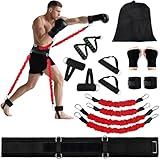
Resistance Bands
Benefits:
- Increased Resistance: Resistance bands add resistance to your punches, building strength and power.
- Improved Muscle Activation: They activate more muscles, leading to greater conditioning.
- Enhanced Punch Speed: Using resistance bands can increase your punch speed and explosiveness.
How to Use Resistance Bands:
- Anchor the Band: Secure the resistance band to a stable object.
- Attach the Band: Hold the other end of the band with your hands.
- Perform Punches: Throw punches, feeling the resistance of the band.
- Focus on Explosiveness: Throw punches as fast as possible.
Shadow Boxing with Weights
Benefits: (See Also: Does Boxing Classes Help With Weight Loss )
- Increased Strength: Weight training increases your strength, which leads to more powerful punches.
- Muscle Endurance: Weight training builds muscle endurance, which helps you sustain your punches for longer.
- Improved Conditioning: Weight training improves your overall conditioning.
How to Use Weights:
- Use Light Weights: Do not use heavy weights when shadow boxing.
- Focus on Technique: Ensure your technique is perfect before adding weights.
- Start Slowly: Begin with a few rounds and gradually increase the number of rounds.
Using a Heavy Bag
Benefits:
- Develop Power: Hitting a heavy bag helps you develop power.
- Improve Technique: You can practice your technique and improve your accuracy.
- Build Stamina: Hitting a heavy bag helps you build stamina.
How to Use a Heavy Bag:
- Use Proper Form: Ensure your form is correct before hitting the bag.
- Focus on Power: Throw your punches with power.
- Vary Your Punches: Practice different punches and combinations.
- Build Stamina: Gradually increase the number of rounds.
Adding Variety
Why It’s Important:
- Prevent Boredom: Variety keeps your workouts interesting.
- Challenge Your Body: Different exercises challenge your body in new ways.
- Improve Overall Fitness: A varied routine improves your overall fitness.
Ways to Add Variety:
- Change Your Routine: Vary your workout routine.
- Incorporate Different Exercises: Try new exercises and techniques.
- Use Different Equipment: Use different equipment to add variety.
- Work with a Trainer: A trainer can help you create a varied and effective workout.
Avoiding Common Mistakes
Even with the best intentions, it’s easy to fall into bad habits during shadow boxing. Here are some common mistakes to avoid. Correcting these will significantly improve the effectiveness of your training.
Poor Form
Why It Matters:
- Increased Risk of Injury: Poor form can lead to injuries.
- Inefficient Technique: Poor form can make your punches less effective.
- Developing Bad Habits: Poor form can lead to the development of bad habits.
How to Avoid It:
- Focus on Technique: Always prioritize technique over speed or power.
- Use a Mirror: Regularly check your form in a mirror.
- Get Feedback: Ask a trainer or experienced boxer to critique your form.
Lack of Intensity
Why It Matters:
- Ineffective Training: Without intensity, your training will be less effective.
- Reduced Results: You won’t see the results you want.
- Poor Conditioning: You won’t improve your conditioning.
How to Avoid It:
- Focus on Speed and Power: Throw your punches with speed and power.
- Increase Your Pace: Increase your pace during your shadow boxing sessions.
- Vary Your Intensity: Alternate between high-intensity and low-intensity rounds.
Ignoring Footwork
Why It Matters:
- Poor Balance: Poor footwork can lead to poor balance.
- Limited Mobility: Poor footwork can limit your mobility.
- Reduced Effectiveness: Poor footwork can make your punches less effective.
How to Avoid It:
- Practice Footwork Drills: Regularly practice footwork drills.
- Focus on Movement: Always be moving during your shadow boxing sessions.
- Use Your Footwork to Create Angles: Use your footwork to create angles and set up your punches.
Lack of Focus
Why It Matters:
- Wasted Training Time: Lack of focus makes your training less effective.
- Poor Results: You won’t see the results you want.
- Developing Bad Habits: Lack of focus can lead to the development of bad habits.
How to Avoid It:
- Set Goals: Set specific goals for each shadow boxing session.
- Visualize Success: Visualize yourself executing your techniques flawlessly.
- Minimize Distractions: Minimize distractions during your shadow boxing sessions.
Not Varying Your Routine
Why It Matters:
- Boredom: Sticking to the same routine can lead to boredom.
- Plateauing: You may plateau if you do the same exercises constantly.
- Muscle Imbalance: The routine may lead to muscle imbalances.
How to Avoid It:
- Change Your Routine: Vary your workout routine.
- Incorporate Different Exercises: Try new exercises and techniques.
- Use Different Equipment: Use different equipment to add variety.
Verdict
Shadow boxing is more than just a warm-up; it’s a dynamic and essential component of any boxer’s training regimen. By focusing on the fundamentals, incorporating advanced techniques, and avoiding common pitfalls, you can transform your shadow boxing into a powerful tool for improvement. Remember to prioritize proper form, footwork, and mindful practice. Embrace the power of visualization and experiment with different routines to keep things interesting.
Consistency is key. Make shadow boxing a regular part of your training schedule, and you’ll see a noticeable improvement in your skills, stamina, and overall boxing performance. The journey to boxing mastery is paved with countless hours of practice, and shadow boxing, when done correctly, is a vital part of that journey. Keep practicing and refining your technique, and you’ll undoubtedly find yourself closer to your boxing goals.