Ever watched a boxer dance around the ring, a blur of motion and power, and wondered how they get so fast? You might think it’s all about genetics or grueling sparring sessions. But there’s a secret weapon accessible to everyone, regardless of experience: shadow boxing. This fundamental training method, often overlooked, is a powerhouse for developing speed, agility, and overall boxing prowess.
Shadow boxing isn’t just throwing punches at air. It’s a strategic practice, a dance with an imaginary opponent. It’s where boxers refine their technique, build muscle memory, and, crucially, work on their speed. But does it truly deliver on its promise? Will shadow boxing make you faster? Let’s break down the science, the techniques, and the benefits to give you a clear answer.
Get ready to lace up your invisible gloves and explore the world of shadow boxing. We’ll examine how it improves your reflexes, strengthens your core, and enhances your overall performance. Whether you’re a seasoned fighter or just starting, understanding the power of shadow boxing is key to reaching your speed goals.
The Science Behind Speed in Boxing
Before we dive into shadow boxing, let’s understand what makes a boxer fast. It’s not just about throwing punches quickly; it’s a complex interplay of several factors.
Neuromuscular Efficiency
This refers to how efficiently your brain communicates with your muscles. The faster and more effectively your brain sends signals, the quicker your muscles react. Shadow boxing helps improve this efficiency by repeatedly practicing movements, solidifying the neural pathways.
Muscle Fiber Types
Boxers need a mix of muscle fiber types. Fast-twitch fibers are crucial for explosive movements, like throwing a punch. Shadow boxing helps train these fibers through high-intensity, short-duration bursts of activity.
Technique and Form
Proper technique minimizes wasted movement. The more efficient your form, the faster your punches will be. Shadow boxing provides the perfect environment to perfect your technique without the pressure of a real opponent.
Reaction Time
Boxing is a game of reactions. The ability to see a punch and react quickly is essential. Shadow boxing can improve reaction time by training your eyes and brain to anticipate and respond to movements.
Cardiovascular Fitness
Being fast requires stamina. A good cardiovascular system ensures your muscles get the oxygen they need to perform at their peak. Shadow boxing, when done with intensity, elevates your heart rate and improves your cardiovascular fitness.
How Shadow Boxing Contributes to Speed
Now, let’s see how shadow boxing directly impacts these factors, leading to increased speed.
Refining Technique
Shadow boxing allows you to focus solely on your technique. Without the distraction of an opponent, you can analyze your movements and identify areas for improvement. You can exaggerate your movements, focusing on proper form and generating power from the ground up. This leads to more efficient and faster punches.
Building Muscle Memory
Repetition is key to building muscle memory. Shadow boxing allows you to repeat punches and combinations hundreds, even thousands, of times. This constant repetition solidifies the movements, making them faster and more automatic.
Improving Hand Speed
Shadow boxing emphasizes hand speed drills. You can focus on throwing punches as quickly as possible, practicing different combinations and angles. This constant practice trains your muscles to fire rapidly, increasing your overall hand speed. (See Also: Does Shadow Boxing Really Work )
Boosting Footwork
Footwork is crucial for speed and agility in boxing. Shadow boxing allows you to practice footwork drills, such as shuffling, pivoting, and cutting angles. These drills improve your coordination and agility, making you faster on your feet.
Enhancing Reaction Time
By simulating fight scenarios, shadow boxing helps you improve your reaction time. You can practice blocking, dodging, and countering imaginary punches. This training sharpens your reflexes, enabling you to react faster in real-time.
Shadow Boxing Drills for Speed
Here are some specific shadow boxing drills you can incorporate into your training to enhance your speed.
The Speed Round
Set a timer for 3 minutes (the length of a boxing round). Focus on throwing as many punches as possible, maintaining proper form. Prioritize speed over power, and vary your combinations. Rest for 1 minute between rounds.
The Combination Drill
Choose a specific combination, such as jab-cross-hook. Practice this combination repeatedly, focusing on speed and fluidity. Increase the speed as you become more comfortable with the movement. Vary the combinations to challenge yourself.
The Footwork Drill
Incorporate footwork drills into your shadow boxing routine. Practice shuffling, pivoting, and cutting angles. Imagine yourself circling an opponent and focus on staying balanced and agile. Add punches while moving to integrate your footwork with your striking.
The Defense Drill
Practice slipping punches, blocking, and parrying. Imagine your opponent throwing punches and react accordingly. Focus on moving your head and body to avoid getting hit. This improves your reaction time and defensive skills.
The Power Drill
Alternate between speed rounds and power rounds. For the power round, focus on throwing punches with maximum force. Maintain proper form and engage your core. This helps build explosive power and translate that power into speed.
Shadow Boxing Variations for Speed
To keep things interesting and maximize your results, try these variations of shadow boxing.
Shadow Boxing with Weights
Use light dumbbells (1-3 pounds) to add resistance to your punches. This helps build strength and power, which can translate into increased speed. Be careful not to sacrifice form for weight.
Shadow Boxing with Resistance Bands
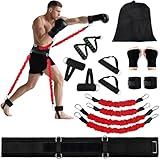
Wrap resistance bands around your wrists or ankles to add resistance to your movements. This is a great way to increase the intensity of your workouts and build muscle endurance. Focus on maintaining proper form throughout.
Mirror Shadow Boxing
Practice shadow boxing in front of a mirror. This allows you to observe your technique and identify areas for improvement. Pay attention to your form, footwork, and hand speed. Correct any flaws you see immediately. (See Also: Are Boxing Classes Worth It )
Shadow Boxing with Music
Choose upbeat music with a fast tempo to motivate you and set the pace for your workout. The rhythm of the music can help you maintain a consistent tempo and improve your hand speed. Try different genres to keep your workouts engaging.
Shadow Boxing with a Partner
Have a partner call out combinations or simulate punches. This adds an element of unpredictability and helps you improve your reaction time. This is also a good way to practice your defense and counter-punching skills.
Integrating Shadow Boxing Into Your Training
For shadow boxing to truly make you faster, it needs to be integrated effectively into your overall training regimen.
Warm-Up
Always start your shadow boxing session with a proper warm-up. This could include light cardio, such as jogging or jumping jacks, and dynamic stretching, like arm circles and leg swings. This prepares your muscles for activity and reduces the risk of injury.
Frequency
Aim to shadow box at least 3-4 times per week. Consistency is key to seeing results. The more you practice, the faster you will become.
Duration
Start with shorter sessions (15-20 minutes) and gradually increase the duration as you get more comfortable. You can also break your sessions into rounds, simulating the structure of a boxing match.
Intensity
Vary the intensity of your shadow boxing sessions. Some days, focus on speed and fluidity. Other days, focus on power and explosiveness. This variation prevents plateaus and keeps your training challenging.
Cool-Down
Finish your shadow boxing session with a cool-down. This could include static stretching, holding each stretch for 30 seconds. This helps your muscles recover and reduces soreness.
Additional Considerations
Beyond the drills and techniques, there are other factors to consider when using shadow boxing to improve speed.
Nutrition
Fuel your body with a balanced diet to support your training. Eat plenty of protein to repair and rebuild muscle, carbohydrates for energy, and healthy fats for overall health. Stay hydrated by drinking plenty of water.
Rest and Recovery
Allow your body enough time to recover between workouts. Get adequate sleep (7-9 hours) and incorporate rest days into your training schedule. This allows your muscles to repair and rebuild, preventing overtraining.
Mental Focus
Shadow boxing is not just physical; it’s also mental. Focus on your technique, visualize your movements, and stay present in the moment. This mental focus will enhance your performance and help you achieve your goals. (See Also: Does Boxing Classes Help With Weight Loss )
Equipment
While shadow boxing requires minimal equipment, having the right gear can enhance your training. Consider using hand wraps to protect your hands, boxing gloves to simulate the weight of a punch, and a heavy bag for power and conditioning. A jump rope can also be a valuable addition for improving your footwork and cardiovascular fitness.
Comparing Shadow Boxing with Other Training Methods
Let’s compare shadow boxing to other training methods commonly used to improve speed in boxing.
| Training Method | Focus | Benefits | Drawbacks |
|---|---|---|---|
| Shadow Boxing | Technique, Muscle Memory, Speed, Footwork, Reaction Time | Improves all-around skills, accessible, low-impact, great for solo practice | Requires discipline, less impact than sparring, can become repetitive |
| Heavy Bag Training | Power, Endurance, Technique | Builds power and stamina, improves punching form, good for conditioning | Can be hard on joints, less focus on footwork and reaction time, limited practice without equipment |
| Speed Bag Training | Hand Speed, Coordination, Rhythm | Develops hand speed and rhythm, improves hand-eye coordination | Requires specific equipment, can be difficult to learn, limited in overall boxing skills |
| Sparring | Real-time Application, Strategy, Reaction Time | Simulates real-fight scenarios, improves reaction time and strategy, develops confidence | Risk of injury, requires a partner, can be physically demanding |
| Plyometrics | Explosive Power, Agility | Improves explosive power, agility, and coordination, enhances speed | Can be hard on joints, requires proper form to avoid injury, needs dedicated space |
Each method has its own strengths and weaknesses. The best approach is to combine these training methods for a well-rounded and effective training program.
Common Mistakes to Avoid
To get the most out of shadow boxing, avoid these common mistakes:
Poor Form
Focus on maintaining proper form throughout your shadow boxing session. This is more important than speed. Poor form can lead to injuries and limit your progress.
Rushing Through Movements
Take your time and focus on the quality of your movements. Don’t rush through punches and combinations; instead, focus on making each movement precise and deliberate.
Neglecting Footwork
Footwork is crucial for boxing. Incorporate footwork drills into your shadow boxing routine. Practice shuffling, pivoting, and cutting angles.
Lack of Variation
Vary your shadow boxing routine to keep things interesting and challenge yourself. Don’t stick to the same combinations and drills every time. Experiment with different techniques and challenges.
Ignoring Rest and Recovery
Allow your body enough time to recover between workouts. Get adequate sleep and incorporate rest days into your training schedule. Overtraining can hinder your progress and increase the risk of injury.
Conclusion
So, will shadow boxing make you faster? The answer is a resounding yes. Shadow boxing is a powerful tool for improving speed, agility, and overall boxing performance. By refining technique, building muscle memory, improving hand speed, enhancing footwork, and boosting reaction time, shadow boxing directly addresses the key components of speed in boxing.
By incorporating shadow boxing into your training regimen, alongside other methods like heavy bag work and sparring, you can significantly enhance your speed and become a more formidable fighter. Remember to focus on proper form, vary your workouts, and prioritize rest and recovery. Shadow boxing is a journey of continuous improvement, and with dedication and consistency, you’ll see a noticeable increase in your speed and overall boxing abilities. Start shadow boxing today, and feel the difference!