Ever wondered if that solitary figure, throwing punches at thin air, is actually getting anything done? You’ve probably seen it – shadow boxing. It’s a staple in boxing gyms and a common sight in fitness routines. But is it just a warm-up, or is there genuine value to be found?
The answer, as you might suspect, is far more nuanced than a simple yes or no. Shadow boxing is a powerful tool, offering a surprising range of benefits for boxers and fitness enthusiasts alike. It’s a chance to refine technique, build stamina, and develop a strategic mindset. Let’s delve into the world of shadow boxing, exploring its real impact and how you can incorporate it into your training.
We’ll cover everything from the fundamental techniques to the more advanced strategies. I’ll guide you through the ‘why’ and ‘how’ of shadow boxing, ensuring you understand its importance and how to get the most out of your training sessions. Get ready to learn about the ‘sweet science’ of shadow boxing.
What Is Shadow Boxing?
At its core, shadow boxing is the practice of boxing against an imaginary opponent. You’re essentially simulating a fight, throwing punches, weaving, bobbing, and footwork, all without a physical target. This can be done anywhere, anytime, making it a highly accessible form of training. It allows you to focus on your form, speed, and strategy.
It’s a foundational element for anyone serious about boxing, but the beauty of shadow boxing is its versatility. It can be adapted to suit various fitness levels and goals, from beginners just learning the basics to seasoned pros honing their skills. You can shadow box for a few minutes as a warm-up or dedicate an entire training session to it. The key is to be intentional and focused during your practice.
The Real Benefits of Shadow Boxing
Shadow boxing offers a multitude of advantages, extending beyond just physical conditioning. Here’s a breakdown of the key benefits:
- Improved Technique: Shadow boxing allows you to focus on your form without the pressure of a live opponent. You can refine your punches, ensuring proper technique and minimizing bad habits.
- Enhanced Stamina: Throwing punches, even at the air, is physically demanding. Shadow boxing builds cardiovascular endurance and muscular stamina, preparing you for the rigors of a real fight.
- Increased Speed and Power: By practicing your punches with proper form and focusing on speed, you can improve your overall punching power.
- Development of Footwork: Footwork is crucial in boxing. Shadow boxing provides an excellent opportunity to practice your footwork patterns, improving your agility and balance.
- Strategic Thinking: Shadow boxing encourages you to think about your strategy. You can visualize different scenarios, plan your attacks, and anticipate your opponent’s moves.
- Mental Toughness: Shadow boxing can be mentally challenging, especially during long sessions. It helps you develop mental focus and discipline, essential qualities for any boxer.
- Warm-up and Cool-down: It serves as an excellent warm-up before a boxing workout, preparing your muscles for activity and increasing blood flow. It also serves as a great cool-down to help your muscles recover.
Essential Shadow Boxing Techniques
To get the most out of shadow boxing, you need to understand the fundamental techniques. Here’s a guide to the essential components:
Stance
Your stance is the foundation of your boxing. It provides balance, power, and the ability to move quickly. The standard boxing stance involves:
- Foot Placement: Your feet should be shoulder-width apart, with your lead foot slightly ahead of your rear foot.
- Knee Bend: Bend your knees slightly to lower your center of gravity and improve your balance.
- Weight Distribution: Distribute your weight evenly, with a slight bias towards your front foot.
- Hand Position: Keep your hands up, protecting your face. Your lead hand should be in front of your face, and your rear hand should be near your chin.
Punching Techniques
Proper punching technique is crucial for both power and safety. Here are the basic punches:
- Jab: A quick, straight punch thrown with your lead hand. It’s used for range finding, setting up combinations, and scoring points.
- Cross: A powerful straight punch thrown with your rear hand. It’s often used as a counterpunch or to finish combinations.
- Hook: A powerful, arcing punch thrown with either hand. It’s effective at close range and can be used to target the head or body.
- Uppercut: An upward punch thrown from a low position. It’s effective at hitting the opponent’s chin or body.
Key Tip: Always keep your guard up and protect your face. Rotate your hips and shoulders when throwing punches to generate power.
Footwork
Footwork is essential for movement, balance, and positioning. Practice these footwork drills:
- Shuffle: Slide your feet along the ground, maintaining your stance.
- Pivot: Rotate on the ball of your foot to change direction.
- Step and Slide: Step with your lead foot and then slide your rear foot to maintain your stance.
- Angles: Practice moving at angles to create openings and avoid your opponent’s punches.
Defense
Defense is just as important as offense. Practice these defensive techniques:
- Blocking: Use your gloves to block punches.
- Slipping: Move your head to the side to avoid punches.
- Weaving: Bend your knees and move your body from side to side to avoid punches.
- Parrying: Use your hands to deflect your opponent’s punches.
How to Structure a Shadow Boxing Session
A well-structured shadow boxing session will maximize your training benefits. Here’s a suggested format:
Warm-Up (5-10 Minutes)
Start with light cardio, such as jumping jacks or jogging in place, to raise your heart rate. Then, do dynamic stretching to prepare your muscles for activity. Include arm circles, leg swings, and torso twists. (See Also: Does Shadow Boxing Really Work )
Shadow Boxing (3-5 Rounds of 3 Minutes Each, with 1-Minute Rest)
Focus on different aspects of your boxing during each round:
- Round 1: Focus on your basic punches and footwork.
- Round 2: Practice combinations.
- Round 3: Visualize an opponent and work on your defense and counter-punching.
- Round 4 (Optional): Focus on speed and power.
- Round 5 (Optional): Work on specific techniques or strategies.
Cool-Down (5-10 Minutes)
End with static stretching, holding each stretch for 30 seconds. Focus on the muscles you worked during your shadow boxing session.
Advanced Shadow Boxing Drills and Variations
Once you’ve mastered the basics, you can incorporate more advanced drills and variations to keep your training challenging and effective. These will help you build more nuance in your technique.
Combination Drills
Practice specific punch combinations to improve your timing and coordination. Examples include:
- Jab-Cross
- Jab-Cross-Hook
- Jab-Cross-Hook-Uppercut
- Double Jab-Cross
Speed Drills
Focus on throwing punches as quickly as possible while maintaining proper form. Try these:
- Speed rounds: Set a timer for 30-60 seconds and throw as many punches as you can, focusing on speed.
- Rapid-fire combinations: Practice throwing combinations as quickly as possible.
Power Drills
Concentrate on generating maximum power with each punch. Focus on:
- Hip rotation: Rotate your hips to generate power.
- Footwork: Use your footwork to generate power.
- Visualization: Imagine you’re hitting a heavy bag.
Defensive Drills
Practice your defensive techniques to improve your ability to avoid punches. Try these:
- Slipping and weaving drills: Set up a scenario where you’re dodging an opponent’s punches.
- Parrying drills: Practice deflecting punches.
Visualization Drills
Use visualization to improve your strategy and mental toughness. Imagine you’re in a real fight and visualize your opponent’s moves. Plan your attacks and visualize yourself succeeding.
Shadow Boxing with Equipment
While shadow boxing can be done without any equipment, incorporating some tools can enhance your training:
Mirror
Using a mirror allows you to see your form and identify areas for improvement. You can monitor your technique and make corrections in real-time.
Focus Mitts
If you have a training partner, use focus mitts to practice your combinations and improve your timing and accuracy. This combines the benefits of shadow boxing with the feedback of hitting a target.
Speed Bag
The speed bag helps improve your hand-eye coordination, timing, and rhythm. It’s a great tool for developing speed and accuracy in your punches.
Heavy Bag
While not strictly shadow boxing, incorporating the heavy bag into your routine is highly beneficial. It allows you to practice your power and technique against a solid target. (See Also: Are Boxing Classes Worth It )
Resistance Bands
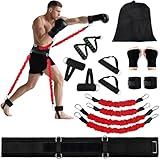
Resistance bands can be used to add resistance to your punches and footwork. This helps build strength and power.
Common Mistakes to Avoid
To get the most out of your shadow boxing, avoid these common mistakes:
- Poor Form: Always prioritize proper technique over speed or power. Bad habits can be difficult to break.
- Lack of Focus: Stay focused on your technique and strategy. Don’t just go through the motions.
- Ignoring Footwork: Footwork is crucial in boxing. Make sure to incorporate footwork drills into your shadow boxing routine.
- Neglecting Defense: Always keep your guard up and practice your defensive techniques.
- Rushing: Don’t rush your punches. Focus on proper technique and timing.
- Not Varying Your Routine: Mix up your drills and combinations to keep your training challenging and prevent boredom.
Shadow Boxing vs. Other Boxing Training Methods
Shadow boxing is just one component of a comprehensive boxing training program. It complements other training methods, such as:
Heavy Bag Training
Heavy bag training is essential for developing power and technique. It allows you to practice your punches against a solid target.
Sparring
Sparring is crucial for developing your fighting skills and strategy. It allows you to practice your techniques against a live opponent.
Pad Work
Pad work, where you hit focus mitts held by a trainer, is excellent for refining your combinations, timing, and accuracy.
Strength and Conditioning
Strength and conditioning training is essential for building the physical strength and endurance needed for boxing. This includes weight training, cardio, and plyometrics.
Cardio
Cardio exercises such as running, swimming, or cycling are important for building stamina.
Key Takeaway: Shadow boxing is a valuable tool, but it should be combined with other training methods for a well-rounded boxing program.
Incorporating Shadow Boxing Into Your Fitness Routine
Shadow boxing isn’t just for boxers. It’s a fantastic workout for anyone looking to improve their fitness. Here’s how to incorporate it into your routine:
Warm-Up
Before your workout, use shadow boxing as a warm-up to prepare your muscles for activity. Focus on light cardio and dynamic stretching.
Cardio Workout
Use shadow boxing as a high-intensity interval training (HIIT) exercise. Alternate between high-intensity rounds of shadow boxing and rest periods.
Strength Training
Incorporate shadow boxing into your strength training routine. Alternate between strength exercises and rounds of shadow boxing. (See Also: Does Boxing Classes Help With Weight Loss )
Cool-Down
Use shadow boxing as a cool-down after your workout. Focus on light shadow boxing and static stretching.
Shadow Boxing for Weight Loss
Shadow boxing can be an effective tool for weight loss. It’s a high-intensity workout that burns a significant amount of calories. It also helps build muscle, which boosts your metabolism.
Here’s how to use shadow boxing for weight loss:
- High-Intensity Intervals: Alternate between high-intensity rounds of shadow boxing and rest periods.
- Consistency: Aim to shadow box at least three times per week.
- Nutrition: Combine shadow boxing with a healthy diet.
- Track Progress: Monitor your progress by tracking your weight, measurements, and fitness level.
Shadow Boxing and Mental Health
Beyond the physical benefits, shadow boxing can also have a positive impact on your mental health. It can help reduce stress, improve your mood, and boost your confidence. The repetitive motions can be meditative, allowing you to clear your mind and focus on the present moment.
Here’s how shadow boxing can help with mental health:
- Stress Relief: The physical exertion of shadow boxing can help release endorphins, which have mood-boosting effects.
- Improved Focus: Shadow boxing requires focus and concentration, which can help improve your mental clarity.
- Increased Confidence: As you improve your skills, you’ll feel a sense of accomplishment, which can boost your confidence.
- Discipline: Shadow boxing requires discipline, which can help you develop mental toughness.
Shadow Boxing for Different Skill Levels
Shadow boxing can be adapted to suit different skill levels:
Beginners
Focus on the basics: stance, punches, footwork, and defense. Start with short rounds and gradually increase the duration. Use a mirror to check your form.
Intermediate
Incorporate more advanced techniques and combinations. Work on speed and power. Visualize an opponent and plan your strategy.
Advanced
Refine your technique and strategy. Focus on specific aspects of your boxing, such as defense or counter-punching. Use visualization to mentally prepare for a fight.
How to Find a Good Shadow Boxing Coach
While shadow boxing can be done independently, working with a coach can significantly improve your technique and progress. A good coach can provide personalized feedback, help you develop a strategy, and motivate you to achieve your goals.
Here’s how to find a good shadow boxing coach:
- Experience: Look for a coach with a proven track record of success.
- Qualifications: Check for certifications or qualifications from a reputable boxing organization.
- Personality: Find a coach with a personality that you connect with.
- Communication: Choose a coach who communicates clearly and provides constructive feedback.
- Recommendations: Ask for recommendations from other boxers or trainers.
Shadow Boxing in the Modern Era
Shadow boxing continues to evolve with the times, incorporating new technologies and training methods. Fitness apps and online resources offer tutorials, workout programs, and virtual coaching sessions. Wearable technology can track your performance and provide data-driven insights. The core principles of shadow boxing, however, remain unchanged. The dedication to proper technique, the focus on strategy, and the mental discipline are timeless aspects of the art.
Final Thoughts
So, is shadow boxing real? Absolutely. It’s a versatile and valuable training method that offers tangible benefits for boxers and fitness enthusiasts alike. From improving your technique and building stamina to enhancing your strategic thinking, shadow boxing is a powerful tool you can use to improve your physical and mental fitness.
By understanding the fundamentals, incorporating proper techniques, and avoiding common mistakes, you can harness the full potential of shadow boxing. Whether you are aiming to step into the ring or simply looking to improve your overall fitness, shadow boxing deserves a place in your training regimen. Start practicing, stay focused, and enjoy the journey of honing your skills.