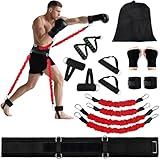
Ever wondered if you could get a killer workout without needing a punching bag or a sparring partner? The answer, my friend, is a resounding yes! Shadow boxing, often overlooked, is a fantastic form of exercise that brings a multitude of benefits to the table. It’s a versatile, accessible, and highly effective way to improve your fitness, coordination, and overall well-being.
Think of it as a dance with an invisible opponent. You’re moving, weaving, and throwing punches, all while honing your skills and building strength. Whether you’re a seasoned boxer or a complete beginner, shadow boxing offers a pathway to a fitter, more confident you. Let’s explore why shadow boxing is, indeed, a valuable exercise, and how you can incorporate it into your routine.
What Exactly Is Shadow Boxing?
Shadow boxing is essentially practicing boxing techniques without a physical opponent or a punching bag. You’re visualizing an opponent and going through the motions of boxing: throwing punches, moving your feet, and defending yourself. It’s a solo activity that allows you to focus on your form, technique, and strategy. You are, in essence, creating your own fight.
The Core Components
Shadow boxing combines several key elements:
- Punching: Executing a variety of punches, such as jabs, crosses, hooks, and uppercuts.
- Footwork: Moving around, stepping forward, backward, and sideways to maintain distance and angles.
- Defense: Practicing defensive maneuvers like slipping, bobbing, weaving, and blocking.
- Visualization: Imagining an opponent and reacting to their movements.
- Rhythm and Timing: Developing a sense of rhythm and timing in your punches and movements.
The History of Shadow Boxing
Shadow boxing has been a crucial part of boxing training for centuries. Boxers have used it to refine their skills, improve their conditioning, and prepare for fights. It’s a fundamental aspect of the sport, deeply rooted in its history, and has been practiced by legendary boxers throughout the ages.
Early forms of shadow boxing likely emerged alongside the evolution of boxing itself, with practitioners recognizing the value of practicing techniques without the need for a physical opponent. Over time, it evolved into a more structured and strategic form of training, incorporating specific drills and routines.
The emphasis on technique, footwork, and defensive maneuvers has made shadow boxing a powerful training tool for all levels of boxers, from beginners to world champions. It’s a testament to the effectiveness and versatility of this simple yet profound exercise.
The Numerous Benefits of Shadow Boxing
Shadow boxing offers a wide array of benefits that extend beyond simply improving your boxing skills. It’s a comprehensive workout that can enhance your physical and mental well-being.
Physical Benefits
Shadow boxing is a full-body workout that provides numerous physical advantages:
- Cardiovascular Health: It elevates your heart rate, improving cardiovascular fitness and endurance.
- Muscle Strengthening: It strengthens muscles throughout your body, particularly in your arms, shoulders, back, core, and legs.
- Calorie Burning: It’s a fantastic calorie burner, helping you shed excess weight and improve body composition.
- Improved Coordination and Agility: It enhances hand-eye coordination, agility, and reflexes.
- Enhanced Stamina: It builds stamina and endurance, allowing you to sustain physical activity for longer periods.
- Better Balance: Shadow boxing can improve your balance as you shift your weight and move around.
Mental Benefits
The benefits of shadow boxing extend to your mental state as well:
- Stress Relief: It’s a great stress reliever, allowing you to release tension and frustration.
- Improved Focus: It requires focus and concentration, helping to sharpen your mental acuity.
- Increased Confidence: As you improve your skills and fitness, your confidence naturally grows.
- Mental Toughness: It builds mental toughness and resilience, as you push yourself through challenging workouts.
- Improved Body Awareness: Shadow boxing helps you become more aware of your body and its movements.
Essential Techniques and How to Execute Them
To get the most out of shadow boxing, it’s important to understand and practice the fundamental techniques. Here’s a breakdown of the key elements: (See Also: Does Shadow Boxing Really Work )
Stance
The correct stance is the foundation of effective shadow boxing. It provides balance, power, and the ability to move freely. Here’s how to set it up:
- Foot Placement: Stand with your feet shoulder-width apart, one foot slightly in front of the other (your dominant foot should be slightly behind).
- Knee Bend: Bend your knees slightly to lower your center of gravity and provide stability.
- Weight Distribution: Distribute your weight evenly, with a slight bias towards your front foot.
- Guard Position: Keep your hands up, protecting your face. Your lead hand should be in front of your face, and your rear hand should be near your chin.
- Relaxation: Stay relaxed, ready to move and react.
Punches
Mastering the basic punches is crucial. Each punch has its own purpose and technique:
- Jab: A quick, straight punch thrown with your lead hand. Extend your arm fully, rotating your fist slightly at the end of the punch. Return your hand quickly to the guard position. The jab is used for range finding and setting up other punches.
- Cross: A powerful straight punch thrown with your rear hand. Rotate your body as you punch, transferring your weight from your rear foot to your front foot. Keep your elbow close to your body. The cross is a power punch.
- Hook: A powerful, curved punch thrown with either hand. Bend your elbow and bring your fist across your body, aiming for the side of your opponent’s head. Keep your guard up. The hook is used at close range.
- Uppercut: An upward punch thrown with either hand. Bend your knees and bring your fist up from below, aiming for your opponent’s chin. The uppercut is effective at close range and can be a knockout punch.
Footwork
Footwork is essential for movement, balance, and positioning. It allows you to control the distance and angles of your fight:
- Shuffle: Small steps to move forward, backward, or sideways. Keep your feet low to the ground and maintain your stance.
- Pivot: Turning on the balls of your feet to change direction. Use your feet to pivot and change angles.
- Footwork Drills: Practice drills like the “box step” (moving forward, sideways, and backward) to improve your footwork.
Defense
Defense is just as important as offense. Practice these defensive techniques:
- Slipping: Moving your head to the side to avoid punches. Slip to the left to avoid a right hand and to the right to avoid a left hand.
- Bobbing and Weaving: Bending your knees and moving your head from side to side to avoid punches.
- Blocking: Using your gloves or forearms to block punches.
- Parrying: Deflecting punches with your gloves.
Shadow Boxing Workouts: Putting It All Together
Now that you know the techniques, let’s look at how to structure a shadow boxing workout.
Warm-Up (5-10 Minutes)
Prepare your body for the workout with a warm-up:
- Light Cardio: Jumping jacks, high knees, or running in place.
- Dynamic Stretching: Arm circles, leg swings, torso twists.
- Shadow Boxing Lightly: Throw some light punches and practice footwork.
Workout (20-30 Minutes)
The main part of your workout:
- Round Structure: Alternate between rounds of shadow boxing (2-3 minutes) and rest periods (30-60 seconds).
- Punch Combinations: Practice different punch combinations, such as jab-cross, jab-cross-hook, and combinations of your choice.
- Footwork and Defense: Incorporate footwork drills and defensive maneuvers into your rounds.
- Visualization: Visualize your opponent and react to their movements.
- Focus on Technique: Concentrate on your form, speed, and power.
Cool-Down (5-10 Minutes)
Finish with a cool-down:
- Static Stretching: Hold stretches for major muscle groups, such as your arms, shoulders, legs, and core.
- Deep Breathing: Take deep breaths to relax your body and mind.
Sample Workout Routine
Here’s a sample shadow boxing routine you can follow:
- Round 1: Jab, Jab, Cross, Jab, Jab
- Round 2: Footwork Drill (Forward, Backward, Sideways)
- Round 3: Jab, Cross, Hook, Uppercut
- Round 4: Focus on Defense: Slipping, Bobbing, Weaving
- Round 5: Jab, Cross, Jab, Hook, Uppercut, Cross
- Round 6: Rest and Refocus
Repeat the rounds for the desired duration, adjusting the combinations and exercises to match your fitness level and goals. Adjust rest periods as needed. (See Also: Are Boxing Classes Worth It )
Training Aids and Equipment
While shadow boxing doesn’t require much equipment, certain tools can enhance your training.
Gloves
Although not strictly necessary for shadow boxing, wearing gloves can help you get used to the feel of them, practice your form, and protect your hands. Use lighter gloves (e.g., 10-12 oz) for shadow boxing, as they will allow you to move faster.
Hand Wraps
Essential for protecting your hands and wrists under the gloves. Properly wrapping your hands provides support and reduces the risk of injury.
Mirror
A mirror is incredibly useful for shadow boxing. It allows you to monitor your form, technique, and movements. Use it to check your stance, punch accuracy, and defensive maneuvers.
Timer
A timer is crucial for structuring your workouts. Use a timer to set the duration of your rounds and rest periods. This will help you maintain consistency and track your progress.
Music
Music can greatly enhance your workout. Choose music that motivates you, with a good rhythm and beat, to help you maintain your pace and focus.
Video Recording
Record yourself shadow boxing to analyze your technique. Reviewing your videos will help you identify areas for improvement and track your progress.
Common Mistakes and How to Avoid Them
Even with the best intentions, it’s easy to fall into bad habits. Here are some common mistakes and how to avoid them:
- Poor Form: Always prioritize proper form over speed and power. Incorrect form can lead to injuries. Focus on maintaining a good stance, proper hand position, and controlled movements.
- Neglecting Footwork: Footwork is just as important as punching. Avoid staying in one place. Incorporate footwork drills and practice moving around.
- Rushing Punches: Avoid throwing punches too quickly. Focus on technique and control.
- Dropping Your Guard: Always keep your hands up to protect your face.
- Lack of Visualization: Visualize your opponent and react to their movements. This will make your workout more effective.
- Ignoring Rest: Allow yourself adequate rest between rounds to recover.
Shadow Boxing for Different Fitness Levels
Shadow boxing is adaptable to any fitness level.
Beginners
Start slowly, focusing on the basics. Concentrate on your stance, the fundamental punches, and footwork. Begin with shorter rounds and longer rest periods. Gradually increase the duration and intensity as you improve. (See Also: Does Boxing Classes Help With Weight Loss )
Intermediate
Increase the complexity of your combinations and add more footwork drills and defensive maneuvers. Focus on speed, power, and endurance. Incorporate interval training to push yourself.
Advanced
Focus on refining your technique and strategy. Experiment with different combinations and styles. Challenge yourself with longer rounds, more complex drills, and higher intensity.
Shadow Boxing vs. Other Forms of Exercise
How does shadow boxing compare to other forms of exercise?
Shadow Boxing vs. Cardio
Shadow boxing offers a great cardiovascular workout. It elevates your heart rate and improves your endurance, similar to running or cycling. However, shadow boxing also incorporates strength training elements, making it a more comprehensive workout.
Shadow Boxing vs. Strength Training
While not a primary form of strength training, shadow boxing does build muscle strength, particularly in your arms, shoulders, back, and core. Incorporate other strength training exercises to complement shadow boxing.
Shadow Boxing vs. Boxing with a Partner
Shadow boxing allows you to practice boxing techniques on your own, focusing on form and technique. Boxing with a partner provides the opportunity to spar and test your skills against an opponent.
| Feature | Shadow Boxing | Boxing with a Partner |
|---|---|---|
| Focus | Form, technique, cardio | Sparring, strategy, reaction |
| Equipment | Minimal | Gloves, sometimes a bag or partner |
| Intensity | Adjustable | Higher, more unpredictable |
| Risk | Lower | Higher (risk of injury) |
Integrating Shadow Boxing Into Your Routine
Here’s how to effectively integrate shadow boxing into your fitness routine:
- Frequency: Aim for 2-3 shadow boxing workouts per week.
- Duration: Start with 20-30 minute workouts and gradually increase the duration.
- Consistency: Consistency is key. Stick to your schedule and make shadow boxing a regular part of your routine.
- Variety: Mix up your workouts to keep things interesting. Vary your combinations, footwork drills, and defensive maneuvers.
- Listen to Your Body: Rest and recover when needed. Don’t push yourself too hard, especially when starting.
- Combine with Other Exercises: Complement shadow boxing with other forms of exercise, such as strength training, cardio, and flexibility exercises.
By following these guidelines, you can create a well-rounded and effective fitness program that incorporates the benefits of shadow boxing.
Conclusion
So, is shadow boxing exercise? Absolutely! It’s a versatile, efficient, and highly rewarding way to achieve a full-body workout. From boosting your cardiovascular health and building muscle to enhancing your coordination and mental focus, the benefits are undeniable. By incorporating shadow boxing into your routine, you’re not just improving your physical fitness; you’re also cultivating mental toughness and self-confidence. So, lace up your imaginary gloves, find your space, and start your journey towards a fitter, more resilient you. Embrace the rhythm, the movement, and the challenge, and experience the transformative power of this incredible exercise.