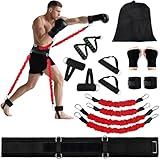
Shadow boxing, the art of fighting an invisible opponent, is a cornerstone of boxing training. It’s where fighters hone their skills, refine their technique, and build the muscle memory crucial for success in the ring. But it’s not just for professional boxers; it’s a fantastic workout for anyone looking to improve fitness, coordination, and self-defense skills.
Shadow boxing can be done anywhere, anytime, with minimal equipment. It’s a great way to warm up before a workout, cool down afterward, or simply get in a quick and effective training session. The best part? You’re in control. You determine the intensity, the focus, and the specific skills you want to practice. This guide will walk you through how to set up shadow boxing effectively, covering everything from the basics to more advanced techniques.
Whether you’re a complete beginner or looking to refine your existing skills, this guide will provide you with the knowledge and tools you need to maximize your shadow boxing sessions. Let’s get started!
Understanding the Fundamentals of Shadow Boxing
Before jumping into the setup, it’s crucial to grasp the core principles. Shadow boxing isn’t just about throwing punches; it’s about practicing proper form, footwork, and defensive maneuvers. It’s about visualizing your opponent, anticipating their moves, and reacting accordingly. Think of it as a dance, a choreographed fight against an imaginary adversary.
The Benefits of Shadow Boxing
Why bother with shadow boxing? The benefits are numerous and far-reaching. Here are some of the key advantages:
- Improved Technique: Shadow boxing allows you to focus on your form without the pressure of an actual opponent. You can perfect your punches, blocks, and footwork.
- Increased Stamina: Consistent shadow boxing builds cardiovascular endurance, preparing you for the demands of a fight.
- Enhanced Muscle Memory: Repeated practice ingrains techniques into your muscle memory, making them second nature.
- Better Coordination: Shadow boxing improves hand-eye coordination and overall body awareness.
- Mental Toughness: It helps develop focus, discipline, and the ability to think on your feet.
- Full-Body Workout: Shadow boxing engages multiple muscle groups, providing a comprehensive workout.
- No Equipment Needed: You can do it anywhere, anytime.
Essential Elements of a Good Shadow Boxing Session
A well-structured shadow boxing session includes several key elements. Focusing on these will maximize your training:
- Proper Stance: This is the foundation of everything. Get it right from the start.
- Correct Punches: Jab, cross, hook, uppercut – each with its own technique.
- Defensive Movements: Blocking, slipping, and weaving are crucial to avoid getting hit.
- Footwork: Moving around the “ring” with agility and precision.
- Visualization: Imagining your opponent and responding to their actions.
- Rhythm and Timing: Developing a smooth flow and accurate timing.
- Intensity and Duration: Varying the pace and length of your rounds.
Setting Up Your Shadow Boxing Space
You don’t need a fancy gym to shadow box effectively. A small, open space is all you need. However, setting up the right environment can enhance your training.
Choosing Your Space
Ideally, choose a space that is:
- Clear of Obstacles: Ensure there are no furniture or objects you could bump into.
- Well-Lit: Good lighting allows you to see your form and react quickly.
- Adequately Sized: You need enough room to move around freely. A space of about 6×6 feet is usually sufficient.
- Comfortable: A hard floor can be tough on your feet and joints. Consider using a mat or performing your shadow boxing on a carpeted surface.
Essential Gear (minimal Requirements)
Shadow boxing requires minimal equipment. Here’s what you need:
- Comfortable Clothing: Wear loose-fitting clothes that allow for a full range of motion.
- Supportive Footwear: Boxing shoes are ideal, but athletic shoes with good support will work. If you’re boxing on carpet or a mat, you can even go barefoot or wear socks.
- Optional: Hand Wraps: These provide additional wrist support and protect your knuckles.
- Optional: Boxing Gloves: While not essential for shadow boxing, wearing gloves can help you get used to the feel and weight.
- Optional: Mirror: A mirror can be incredibly helpful for observing your form and making adjustments.
Creating Your Training Environment
To maximize your shadow boxing experience, consider these tips:
- Music: Put on some motivational music to set the pace and rhythm. Choose tracks with a tempo that suits your training style.
- Timer: Use a timer to structure your rounds and rest periods. Boxing rounds are typically 3 minutes with 1-minute rest periods, but you can adjust these to your fitness level.
- Hydration: Have water nearby to stay hydrated.
- Focus: Eliminate distractions and concentrate on your technique.
- Visualize: Imagine your opponent, the fight, and your goals.
Mastering the Basic Techniques
Once your space is set up, it’s time to focus on the core techniques. This section will guide you through the fundamental punches, footwork, and defensive maneuvers.
The Boxing Stance: Your Foundation
The boxing stance is the foundation of all your movements. It provides balance, power, and protection. Here’s how to achieve it:
- Foot Placement: Stand with your feet shoulder-width apart, one foot slightly in front of the other. If you’re right-handed, your left foot should be forward; if you’re left-handed, your right foot should be forward.
- Knee Bend: Slightly bend your knees to lower your center of gravity and improve your balance.
- Weight Distribution: Distribute your weight evenly, with slightly more weight on your front foot.
- Guard Up: Keep your hands up, with your fists protecting your face and your elbows tucked in to protect your body.
- Chin Down: Keep your chin tucked towards your chest to protect it.
The Fundamental Punches
These are the building blocks of boxing. Practice each punch until you can execute it with proper form and power.
The Jab
The jab is the most fundamental punch, used for distance, setting up other punches, and defense. It’s thrown with your lead hand.
- Stance: Start in your boxing stance.
- Rotation: Rotate your lead shoulder forward.
- Extension: Extend your lead arm straight out, keeping your elbow slightly bent.
- Impact: Make contact with the knuckles of your index and middle fingers.
- Retraction: Quickly retract your hand back to your guard.
The Cross
The cross is a powerful punch thrown with your rear hand, crossing over your lead arm.
- Stance: Start in your boxing stance.
- Rotation: Rotate your rear hip and shoulder forward.
- Extension: Extend your rear arm straight out, keeping your elbow slightly bent.
- Impact: Make contact with the knuckles of your index and middle fingers.
- Retraction: Quickly retract your hand back to your guard.
The Hook
The hook is a powerful punch thrown with a sideways motion, typically aimed at the head or body. (See Also: Does Shadow Boxing Really Work )
- Stance: Start in your boxing stance.
- Rotation: Rotate your hips and shoulders towards your target.
- Elbow Bend: Bend your arm at the elbow, keeping your elbow at shoulder height.
- Impact: Make contact with the knuckles of your index and middle fingers.
- Retraction: Quickly retract your hand back to your guard.
The Uppercut
The uppercut is a powerful punch thrown upwards, typically aimed at the chin or body.
- Stance: Start in your boxing stance.
- Bend Knees: Slightly bend your knees.
- Rotation: Rotate your hips and shoulders upward.
- Ascension: Bring your hand up in a sweeping motion, keeping your elbow tucked in.
- Impact: Make contact with the knuckles of your index and middle fingers.
- Retraction: Quickly retract your hand back to your guard.
Defensive Maneuvers
Defense is just as important as offense in boxing. These techniques help you avoid getting hit.
Blocking
Blocking involves using your arms to deflect incoming punches.
- High Guard: Use your gloves to block punches aimed at your head.
- Low Guard: Use your forearms to block punches aimed at your body.
Slipping
Slipping involves moving your head slightly to the side to avoid a punch.
- Practice: Imagine punches coming at you and move your head slightly to the left or right, bending your knees to get under the imaginary punch.
Weaving
Weaving involves moving your head and torso from side to side and under the punches.
- Practice: Imagine punches coming at you and move your head and torso in a figure-eight motion.
Footwork: The Key to Movement
Footwork is crucial for moving around the “ring,” setting up punches, and evading your opponent. Focus on these techniques:
The Shuffle
A small, controlled movement to maintain your stance while moving.
- Movement: Slide your lead foot in the desired direction, and then bring your rear foot to match, maintaining your stance.
The Pivot
Turning on your lead foot to change your angle.
- Movement: Pivot on the ball of your lead foot, turning your body.
The Step
Taking a larger step to cover distance.
- Movement: Step forward, backward, or sideways, maintaining your stance.
Structuring Your Shadow Boxing Workout
A well-structured workout will help you progress and see results. Here’s a sample routine you can follow, adjusting the duration and intensity to match your fitness level.
Warm-Up (5-10 Minutes)
Prepare your body for the workout with dynamic stretches and light cardio.
- Jumping Jacks: 1 minute
- High Knees: 1 minute
- Butt Kicks: 1 minute
- Arm Circles: 1 minute forward, 1 minute backward
- Shadow Boxing (Light): 3-5 minutes, focusing on technique.
Main Workout (15-30 Minutes)
This is where you’ll focus on your punches, footwork, and defense.
- Round 1: Jab, jab, cross (3 minutes)
- Round 2: Jab, cross, hook (3 minutes)
- Round 3: Combinations of your choice (3 minutes)
- Round 4: Focus on footwork and movement (3 minutes)
- Round 5: Defensive drills (3 minutes)
- Rest: 1 minute between rounds.
Cool-Down (5-10 Minutes)
Help your body recover with static stretches.
- Tricep Stretch: 30 seconds per arm
- Bicep Stretch: 30 seconds per arm
- Shoulder Stretch: 30 seconds per arm
- Hamstring Stretch: 30 seconds per leg
- Quadriceps Stretch: 30 seconds per leg
Advanced Shadow Boxing Techniques
Once you’ve mastered the basics, you can add more advanced techniques to your routine. This will challenge you and improve your skills further.
Adding Power and Speed
Increase the intensity of your workout by focusing on power and speed. (See Also: Are Boxing Classes Worth It )
- Power Punches: Throw punches with maximum force, focusing on proper technique.
- Speed Drills: Practice throwing punches as fast as possible, maintaining good form.
- Combination Drills: Combine multiple punches in rapid succession, focusing on speed and accuracy.
Complex Combinations
Experiment with different punch combinations to improve your versatility.
- 2-3-2: Jab, cross, hook, cross
- 1-2-3-2: Jab, cross, hook, cross
- 3-2-3: Hook, cross, hook
- 1-2-6: Jab, cross, uppercut
Incorporating Defensive Drills
Focus on improving your defensive skills by incorporating drills into your shadow boxing.
- Slip and Counter: Practice slipping punches and immediately countering with a jab or cross.
- Weave and Counter: Practice weaving under punches and immediately countering with a hook or uppercut.
- Block and Counter: Practice blocking punches and immediately countering with a combination.
Footwork Drills
Improving your footwork will make you more agile and allow you to move around the ring more effectively.
- Shuffle Drills: Practice shuffling forward, backward, and sideways.
- Pivot Drills: Practice pivoting on your lead foot to change your angle.
- Step and Drill: Combine stepping with punches to create angles.
Common Mistakes and How to Avoid Them
Even experienced boxers can make mistakes. Recognizing and correcting these errors is essential for improving your technique.
Poor Form
Poor form can lead to injuries and limit your effectiveness. Here’s how to avoid it:
- Round Shoulders: Keep your shoulders relaxed and back.
- Dropping Your Guard: Keep your hands up to protect your face.
- Over-Rotating: Don’t over-rotate your hips or shoulders, which can throw off your balance.
- Punching with Your Arm: Use your legs and core to generate power.
Insufficient Footwork
Footwork is essential for movement and balance. Here’s how to improve your footwork:
- Flat-Footed: Stay on the balls of your feet.
- Crossing Your Feet: Avoid crossing your feet when moving, which can lead to loss of balance.
- Not Moving Enough: Move around the space, don’t stay in one place.
Lack of Focus
Stay focused to get the most out of your shadow boxing session:
- Distraction: Remove distractions and concentrate on your technique.
- Rushing: Take your time and focus on correct form.
- Unrealistic Expectations: Be patient and consistent. Results take time.
Ignoring Visualization
Use visualization to enhance your training:
- Lack of Visualization: Imagine an opponent and react accordingly.
- Not Practicing: Practice the techniques in your mind before executing them.
Troubleshooting Your Shadow Boxing Routine
Even with the best preparation, you might encounter some challenges. Here’s how to troubleshoot common issues.
Problem: Feeling Uncoordinated
If you’re struggling with coordination, try these solutions:
- Start Slowly: Focus on the basic techniques and gradually increase your speed.
- Break It Down: Practice each punch and movement individually before combining them.
- Mirror Practice: Use a mirror to observe your form and make adjustments.
- Focus: Concentrate on each movement.
Problem: Getting Tired Quickly
If you’re fatiguing quickly, try these solutions:
- Warm-Up Properly: A good warm-up prepares your body for the workout.
- Pace Yourself: Start with shorter rounds and rest periods and gradually increase the duration.
- Stay Hydrated: Drink water before, during, and after your workout.
- Build Stamina: Incorporate cardio exercises into your training routine.
Problem: Lacking Motivation
If you’re struggling to stay motivated, try these solutions:
- Set Goals: Establish specific, measurable, achievable, relevant, and time-bound goals.
- Vary Your Routine: Change up your routine to keep things interesting.
- Listen to Music: Put on some motivational music to set the pace and rhythm.
- Find a Training Partner: Training with a friend can provide support and motivation.
Shadow Boxing for Different Fitness Levels
Shadow boxing can be adapted to suit various fitness levels. Here’s how to adjust your routine based on your experience.
Beginner
If you’re new to shadow boxing, focus on the basics.
- Short Rounds: Start with 1-2 minute rounds.
- Focus on Form: Prioritize proper technique over speed and power.
- Simple Combinations: Stick to the fundamental punches.
- Rest Periods: Allow for longer rest periods.
- Light Intensity: Keep the intensity low to avoid fatigue.
Intermediate
If you have some experience, you can increase the intensity and complexity of your workout. (See Also: Does Boxing Classes Help With Weight Loss )
- Longer Rounds: Increase round duration to 3 minutes.
- Complex Combinations: Add more advanced punch combinations.
- Footwork Drills: Incorporate footwork drills into your routine.
- Defensive Drills: Practice defensive maneuvers.
- Increased Intensity: Increase the speed and power of your punches.
Advanced
If you’re an experienced boxer, you can refine your skills and push your limits.
- High-Intensity Rounds: Push yourself to the limit with high-intensity rounds.
- Sparring Simulation: Simulate sparring scenarios with complex combinations and footwork.
- Advanced Drills: Incorporate more advanced drills and techniques.
- Focus on Specific Skills: Focus on improving specific aspects of your game.
- Constant Improvement: Continuously refine your technique and push your limits.
Integrating Shadow Boxing Into Your Routine
Shadow boxing can be a versatile tool. Here’s how to integrate it into your training regimen.
As a Warm-Up
Shadow boxing is an excellent way to prepare your body for a workout.
- Light Shadow Boxing: Perform 3-5 minutes of light shadow boxing before your workout.
- Dynamic Stretching: Include dynamic stretches to warm up your muscles.
As a Standalone Workout
Shadow boxing is a complete workout in itself.
- Structured Routine: Follow a structured routine with rounds, rest periods, and a cool-down.
- Focus on Intensity: Vary the intensity to challenge yourself.
- Track Your Progress: Track your progress to monitor your improvement.
As a Cool-Down
Shadow boxing can help your body recover after a workout.
- Light Shadow Boxing: Perform 3-5 minutes of light shadow boxing after your workout.
- Static Stretching: Include static stretches to cool down your muscles.
With Other Training
Combine shadow boxing with other forms of training.
- Strength Training: Combine shadow boxing with strength training to build muscle.
- Cardio: Combine shadow boxing with cardio exercises to improve your cardiovascular fitness.
- Bag Work: Combine shadow boxing with heavy bag work to develop power and technique.
Maintaining Consistency and Progress
Consistency is key to seeing results. Here’s how to stay on track and continue improving.
Scheduling Your Workouts
Create a consistent schedule to make shadow boxing a habit.
- Schedule: Schedule your workouts like any other appointment.
- Consistency: Aim for at least 2-3 shadow boxing sessions per week.
- Flexibility: Be flexible and adjust your schedule as needed.
Tracking Your Progress
Tracking your progress will help you stay motivated and see your improvement.
- Record Your Workouts: Record your workouts, including the duration, intensity, and techniques practiced.
- Assess Your Skills: Regularly assess your skills to identify areas for improvement.
- Set Goals: Set specific, measurable, achievable, relevant, and time-bound goals.
Adjusting Your Routine
Adapt your routine as you progress to continue challenging yourself.
- Increase Intensity: Increase the intensity of your workouts over time.
- Add Complexity: Add more complex combinations and drills.
- Vary Your Routine: Change up your routine to keep things interesting.
- Listen to Your Body: Rest when needed and avoid overtraining.
Maximizing Your Shadow Boxing Experience
Here are some final tips to take your shadow boxing to the next level.
Listen to Your Body
Pay attention to your body and rest when needed.
- Rest Days: Schedule rest days to allow your body to recover.
- Listen to Pain: If you experience pain, stop and rest.
- Proper Nutrition: Fuel your body with a healthy diet.
- Adequate Sleep: Get enough sleep to allow your body to recover.
Seek Guidance
Consider seeking guidance from a coach or experienced boxer.
- Coaching: A coach can provide personalized feedback and help you refine your technique.
- Sparring: Sparring is a great way to test your skills and improve your fighting ability.
- Training Partners: Train with other boxers to learn from each other.
- Online Resources: Utilize online resources to learn more about boxing.
Stay Committed
The key to success is consistency and dedication.
- Stay Focused: Stay focused on your goals.
- Be Patient: Be patient and persistent.
- Enjoy the Process: Enjoy the process of learning and improving.
Final Verdict
Shadow boxing is a versatile and effective training method suitable for anyone, regardless of their fitness level or experience. By following the guidelines in this article, you can set up a productive shadow boxing routine that helps improve your technique, stamina, and overall fitness. Remember to start with the basics, focus on proper form, and gradually increase the intensity and complexity as you progress. With consistent practice and dedication, you’ll be well on your way to achieving your fitness and boxing goals.
Shadow boxing is more than just a workout; it’s a journey of self-improvement. It challenges you physically and mentally, requiring focus, discipline, and a willingness to learn. Embrace the process, stay committed, and enjoy the satisfaction of seeing yourself grow stronger and more skilled with each session. So, put on your gloves, find your space, and start shadow boxing today!