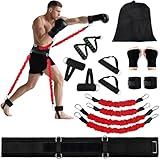
Shadow boxing is a cornerstone of mixed martial arts (MMA) training, a fundamental exercise that hones your skills, improves your fitness, and prepares you for the challenges of the ring. It’s a versatile tool that can be used by everyone, from seasoned professionals to complete beginners. Shadow boxing allows you to practice your techniques, build your endurance, and refine your footwork without the need for a partner or equipment.
But simply throwing punches in the air isn’t enough. To truly benefit from shadow boxing, you need to set it up correctly. This guide will walk you through the essential steps, covering everything from finding the right space to visualizing your opponent and integrating it into your MMA training routine. We’ll delve into the nuances of proper form, footwork, and combinations, ensuring you get the most out of every shadow boxing session. Let’s get started!
The Importance of Shadow Boxing in Mma
Before we jump into the setup, let’s understand why shadow boxing is so crucial for MMA fighters. It’s more than just throwing punches; it’s a comprehensive training tool that addresses multiple aspects of your performance.
Skill Development
Shadow boxing allows you to practice and refine your techniques. You can focus on the technical aspects of each punch, kick, and movement without the pressure of an opponent. This focused practice helps ingrain proper form and muscle memory, making your techniques more efficient and effective. You can experiment with different combinations, transitions, and strategies, finding what works best for your fighting style.
Cardiovascular Conditioning
Shadow boxing is a fantastic cardiovascular workout. The continuous movement and explosive actions elevate your heart rate, improving your stamina and endurance. This is essential for MMA, where you need to maintain a high level of performance throughout a fight. Regular shadow boxing sessions will help you build the necessary cardiovascular fitness to go the distance.
Muscle Endurance
Beyond cardio, shadow boxing builds muscle endurance. Repeatedly throwing punches, kicking, and moving around engages your muscles, building their capacity to withstand fatigue. This is particularly important for MMA, where you need to maintain power and speed throughout the rounds. Shadow boxing helps you develop the stamina needed to execute techniques effectively, even when you’re tired.
Footwork and Agility
Footwork is the foundation of effective striking in MMA. Shadow boxing provides an excellent opportunity to practice and refine your footwork. You can work on your stance, movement, and transitions, improving your agility and ability to control the distance. This helps you move in and out of range, set up your attacks, and avoid your opponent’s strikes. Proper footwork is critical for staying safe and landing your shots.
Mental Toughness and Focus
Shadow boxing is a mental exercise as much as a physical one. It requires focus, discipline, and the ability to maintain intensity even when training alone. This builds mental toughness, helping you stay focused and composed under pressure. You can use shadow boxing to visualize your opponent, plan your strategy, and prepare mentally for the challenges of a fight. It’s a great way to develop your mental game.
Injury Prevention
Shadow boxing helps improve your body awareness and coordination, reducing the risk of injuries. By focusing on proper form and technique, you can identify and correct any imbalances or weaknesses that could lead to injury. It’s also a low-impact exercise, making it a safe way to train your striking skills without putting excessive stress on your joints.
Setting Up Your Shadow Boxing Space
Creating the right environment is vital for productive shadow boxing sessions. Here’s what you need to consider:
Space Requirements
You need enough space to move freely without hitting anything. A minimum of 8×8 feet is recommended, but more space is always better. Ensure the area is clear of obstacles like furniture, sharp corners, or anything that could get in your way. A clear space allows you to move fluidly and focus on your technique.
Flooring Considerations
The type of flooring can impact your performance and safety. A padded floor, like an exercise mat or a wrestling mat, is ideal. It provides cushioning, reduces the impact on your joints, and offers better grip. If you don’t have a padded floor, choose a surface that offers good traction and isn’t too slippery. Avoid concrete or other hard surfaces as they can be tough on your joints.
Lighting and Ventilation
Good lighting is essential for visibility. Make sure the area is well-lit so you can clearly see your movements and maintain proper form. Adequate ventilation is also important, especially during intense workouts. Open a window or use a fan to circulate air and keep you cool. Proper lighting and ventilation will help you stay comfortable and focused.
Mirrors (optional, but Highly Recommended)
Mirrors are a game-changer for shadow boxing. They allow you to see your form and technique in real-time, enabling you to identify and correct any errors. If possible, set up a large mirror or several smaller ones to give you a full view of your body. The mirror provides instant feedback, helping you refine your technique and improve your overall performance.
Music or Background Noise
Music can be a great motivator for shadow boxing. Choose music that gets you pumped up and helps you maintain a good rhythm. Alternatively, some people prefer silence to focus on their technique. Experiment to find what works best for you. If you choose music, make sure it’s at a volume that allows you to hear your own breathing and movements.
Essential Equipment for Shadow Boxing
While shadow boxing primarily requires no equipment, some items can enhance your training: (See Also: Does Shadow Boxing Really Work )
Boxing Gloves
Wearing boxing gloves during shadow boxing can help you get used to the feel and weight of the gloves, which is particularly useful for preparing for sparring or competition. Choose gloves that fit properly and offer good wrist support. They also protect your hands and knuckles, making it safer to practice your punches.
Hand Wraps
Hand wraps are crucial for protecting your hands and wrists. They provide support and stability, reducing the risk of injury. Learn the proper way to wrap your hands before each training session. Hand wraps provide a snug fit, keeping your knuckles aligned and preventing excessive movement.
Focus Mitts (optional)
Focus mitts can be used to add variety to your shadow boxing routine. Have a partner hold them and practice specific combinations, working on your timing and accuracy. Focus mitts help you develop your punching power and speed, and improve your hand-eye coordination.
Heavy Bag (optional)
Integrating a heavy bag into your training can be beneficial for developing power and technique. Use the shadow boxing to warm up and then transition to the heavy bag to practice your combinations with full force. The heavy bag allows you to gauge the impact of your punches and work on your overall power and endurance.
Jump Rope (optional)
Jumping rope is an excellent warm-up exercise for shadow boxing. It improves your footwork, coordination, and cardiovascular fitness. Incorporate jump rope into your routine before or after your shadow boxing session to enhance your overall conditioning.
Shadow Boxing Techniques: Mastering the Fundamentals
Effective shadow boxing relies on proper technique. Here’s a breakdown of the key elements:
Stance
The stance is the foundation of your striking. It provides balance, power, and mobility. Here’s how to achieve a good stance:
- Feet: Stand with your feet shoulder-width apart, one foot slightly ahead of the other. For a right-handed fighter, your left foot should be forward.
- Knees: Slightly bend your knees to lower your center of gravity.
- Weight Distribution: Distribute your weight evenly, with a slight bias towards the balls of your feet.
- Posture: Keep your back straight, your core engaged, and your shoulders relaxed.
- Hands: Keep your hands up, protecting your chin and face.
Footwork
Footwork is crucial for moving in and out of range, setting up your attacks, and avoiding your opponent’s strikes. Here are the key footwork techniques:
- Shuffling: Small, quick steps to adjust your position.
- Pivoting: Rotating on your lead foot to change your angle.
- Stepping: Moving forward, backward, or sideways, maintaining your stance.
- Cutting Angles: Moving to your opponent’s side to create an advantage.
Punching Techniques
Proper punching technique is essential for power, accuracy, and injury prevention. Here are the basic punches:
- Jab: A quick, straight punch from your lead hand.
- Cross: A powerful, straight punch from your rear hand.
- Hook: A powerful, arcing punch, thrown from the side.
- Uppercut: A vertical punch, thrown from below.
When throwing punches, remember to:
- Rotate your body for power.
- Keep your hands up to protect your face.
- Exhale with each punch.
- Return your hand quickly to your guard.
Kicking Techniques
Kicks add power and range to your attack. Here are the basic kicks:
- Front Kick: A straight kick, targeting the opponent’s midsection or head.
- Roundhouse Kick: A powerful, circular kick, targeting the opponent’s body or head.
- Side Kick: A kick delivered from the side, with the heel or edge of the foot.
- Teep (Push Kick): A push kick used to create distance or disrupt the opponent’s attack.
When kicking, remember to:
- Pivot on your standing foot to generate power.
- Keep your hands up for balance and protection.
- Snap your kick for speed.
- Chamber your leg before kicking.
Defensive Techniques
Defense is just as important as offense. Here are some key defensive techniques:
- Blocking: Using your forearms and gloves to deflect punches.
- Parrying: Deflecting your opponent’s punches with your hands.
- Slipping: Moving your head to the side to avoid punches.
- Weaving: Ducking under punches.
- Footwork: Using footwork to create distance and avoid strikes.
Creating Effective Shadow Boxing Routines
A well-structured shadow boxing routine will maximize your training benefits. Here’s how to create one:
Warm-Up
Always start with a warm-up to prepare your body for exercise. This typically includes: (See Also: Are Boxing Classes Worth It )
- Light Cardio: Jumping jacks, high knees, or running in place for 3-5 minutes.
- Dynamic Stretching: Arm circles, leg swings, torso twists, and other movements to improve flexibility and range of motion.
- Shadow Boxing (Light): Start with basic punches and footwork to get your body moving.
Main Workout
The main workout should focus on technique, combinations, and conditioning. This could involve:
- Round Structure: Typically, MMA fighters train in rounds, usually 3-5 minutes with a 1-minute rest.
- Combination Practice: Practice specific combinations, such as jab-cross-hook or cross-hook-uppercut.
- Footwork Drills: Practice footwork patterns, such as circling, pivoting, and cutting angles.
- Defensive Drills: Practice slipping, weaving, and blocking techniques.
- Visualization: Imagine your opponent and practice your strategy.
- Adding Kicks: Incorporate kicks into your combinations and footwork.
- Focus on Speed and Power: Vary the intensity, focusing on speed in some rounds and power in others.
Cool-Down
Cool down after your workout to help your body recover. This includes:
- Static Stretching: Hold stretches for 20-30 seconds each, focusing on the muscles you worked.
- Light Cardio: Walk around for a few minutes to lower your heart rate.
Sample Routine
Here’s a sample shadow boxing routine:
- Warm-up (5 minutes): Jump rope, dynamic stretching, light shadow boxing.
- Round 1 (3 minutes): Jab-cross, footwork drills, focus on technique.
- Round 2 (3 minutes): Cross-hook-uppercut, slipping and weaving drills, focus on speed.
- Round 3 (3 minutes): Incorporate kicks, defensive drills, focus on power.
- Rest (1 minute)
- Round 4 (3 minutes): Combination practice, incorporate footwork, focus on speed and accuracy.
- Round 5 (3 minutes): Freestyle, visualize your opponent, incorporate all techniques.
- Cool-down (5 minutes): Static stretching, light cardio.
Advanced Shadow Boxing Drills and Variations
Once you’ve mastered the basics, you can incorporate advanced drills to enhance your training:
Speed Drills
Speed drills focus on increasing the speed of your punches and movements. This includes:
- Rapid-Fire Punches: Throw punches as fast as possible, focusing on maintaining good form.
- Fast Footwork: Practice quick footwork patterns, such as shuffling and pivoting.
- Timed Combinations: Practice combinations with a specific time limit to increase speed.
Power Drills
Power drills focus on increasing the power of your punches and kicks. This includes:
- Explosive Combinations: Throw combinations with maximum power, focusing on full body rotation.
- Heavy Bag Integration: Transition from shadow boxing to the heavy bag to practice power.
- Resistance Training: Use resistance bands to add resistance to your punches and movements.
Footwork Drills
Footwork drills improve your agility, balance, and ability to control distance. This includes:
- Circle and Pivot: Practice circling your opponent and pivoting to create angles.
- Cutting Angles: Practice moving to the side of your opponent to cut off their escape.
- Footwork Ladder: Use a footwork ladder to improve your foot speed and coordination.
Combination Drills
Combination drills allow you to practice and refine specific combinations. This includes:
- Focus on Specific Combinations: Practice your favorite combinations repeatedly.
- Transition Drills: Practice transitioning between different combinations.
- Counter-Punching Drills: Practice counter-punching techniques.
Visualization Drills
Visualization drills help you prepare mentally for a fight. This includes:
- Visualizing Your Opponent: Imagine your opponent and practice your strategy.
- Rehearsing Your Game Plan: Visualize your plan for the fight, including your techniques and strategy.
- Mental Rehearsal: Mentally rehearse your movements and combinations.
Integrating Shadow Boxing Into Your Mma Training
Shadow boxing should be a regular part of your MMA training routine. Here’s how to integrate it effectively:
Warm-Up Routine
Use shadow boxing as part of your warm-up. This prepares your body for more intense training and activates your muscles. Start with light shadow boxing to increase your heart rate and warm up your muscles.
Skill Development
Dedicate time each week to focus on specific techniques. Use shadow boxing to refine your punches, kicks, footwork, and combinations. Focus on the technical aspects of each movement, and make sure you’re using proper form.
Conditioning
Use shadow boxing as a conditioning tool. Incorporate shadow boxing into your cardio and strength training routine. Use high-intensity rounds with short rest periods to build your cardiovascular fitness and muscle endurance.
Sparring Preparation
Use shadow boxing to prepare for sparring. Visualize your sparring partner and practice your strategy. Work on your combinations, footwork, and defensive techniques. Shadow boxing helps you build confidence and prepare mentally for sparring.
Cool-Down Routine
Incorporate shadow boxing into your cool-down routine. Use shadow boxing as a low-intensity activity to help your body recover after a workout. Focus on light movements and stretching to improve flexibility and reduce muscle soreness. (See Also: Does Boxing Classes Help With Weight Loss )
Common Mistakes to Avoid
To get the most out of your shadow boxing, avoid these common mistakes:
- Poor Form: Focus on proper technique. Bad form can lead to injuries and hinder your progress.
- Lack of Focus: Stay focused and engaged. Avoid distractions and concentrate on your movements.
- Rushing: Don’t rush your punches. Focus on technique and control.
- Ignoring Defense: Remember to incorporate defensive techniques.
- Lack of Variety: Vary your routine to keep it interesting and challenge yourself.
- Inconsistent Training: Be consistent. Shadow box regularly to see results.
- Not Visualizing: Don’t neglect visualization. Imagine your opponent and practice your strategy.
- Over-Training: Allow for rest and recovery.
Troubleshooting and Refining Your Shadow Boxing
Even with careful planning, you may encounter challenges. Here’s how to troubleshoot common issues:
Lack of Motivation
If you struggle with motivation, try these tips:
- Set Goals: Establish clear goals to keep you motivated.
- Vary Your Routine: Keep it interesting by adding new drills and combinations.
- Listen to Music: Choose music that energizes you.
- Train with a Partner: Train with a friend to stay accountable.
- Track Your Progress: Monitor your progress to see how far you’ve come.
Poor Form
If you struggle with your form, try these tips:
- Use Mirrors: Use a mirror to see your form and make corrections.
- Record Yourself: Record your sessions and analyze your technique.
- Get Feedback: Ask a coach or experienced fighter for feedback.
- Focus on Technique: Prioritize technique over speed and power.
- Slow Down: Slow down to focus on your technique.
Lack of Progress
If you aren’t seeing progress, try these tips:
- Increase Intensity: Increase the intensity of your workouts.
- Add New Drills: Add new drills to challenge yourself.
- Vary Your Routine: Vary your routine to avoid plateaus.
- Review Your Technique: Review your technique and make necessary adjustments.
- Be Patient: Be patient and consistent with your training.
Shadow Boxing for Different Skill Levels
Shadow boxing is adaptable to all skill levels:
Beginners
Focus on the fundamentals. Start with basic punches, footwork, and defensive techniques. Focus on proper form and technique. Start slowly, gradually increasing the intensity and duration of your workouts.
Intermediate
Refine your technique. Focus on improving your speed, power, and combinations. Incorporate more advanced drills and variations. Challenge yourself with new combinations and techniques.
Advanced
Refine your strategy. Focus on improving your strategy, tactics, and mental game. Incorporate advanced drills and variations. Focus on visualization and mental preparation.
Optimizing Your Shadow Boxing Routine
To maximize the effectiveness of your shadow boxing routine, consider these tips:
- Consistency: Shadow box regularly. Consistency is key to seeing results.
- Progression: Gradually increase the intensity and duration of your workouts.
- Variety: Vary your routine to keep it interesting and prevent plateaus.
- Focus: Stay focused and engaged during your workouts.
- Listen to Your Body: Rest and recover when needed.
- Seek Feedback: Ask a coach or experienced fighter for feedback.
- Track Your Progress: Monitor your progress to see how far you’ve come.
Beyond the Basics: Advanced Shadow Boxing Strategies
Once you’ve mastered the fundamentals, you can incorporate more advanced strategies:
- Counter-Punching: Practice counter-punching techniques to capitalize on your opponent’s mistakes.
- Feints and Setups: Learn to use feints to set up your attacks.
- Angle Work: Work on creating angles to gain an advantage.
- Distance Management: Improve your ability to control the distance.
- Adaptability: Practice adapting to different fighting styles.
Putting It All Together: Your Shadow Boxing Blueprint
Putting together all of these elements, here’s a suggested approach to building your shadow boxing:
- Assess Your Needs: Determine your skill level and goals.
- Choose Your Space: Prepare your shadow boxing space.
- Gather Your Equipment: Gather the necessary equipment.
- Warm-Up: Start with a proper warm-up.
- Structure Your Rounds: Structure your rounds with the right combinations.
- Incorporate Drills: Integrate speed, power, and footwork drills.
- Cool-Down: Finish with a proper cool-down.
- Review and Adjust: Regularly review your routine and make adjustments.
Final Verdict
Shadow boxing is a powerful tool for any MMA fighter, regardless of experience. By understanding the fundamentals, setting up your space correctly, and incorporating it into your training routine, you can significantly enhance your skills, conditioning, and mental toughness. Remember to focus on proper technique, stay consistent, and adapt your routine as you progress. With dedication and the right approach, shadow boxing will become an invaluable asset in your journey.
Embrace the process, stay disciplined, and enjoy the journey of self-improvement that shadow boxing offers. By consistently practicing and refining your skills, you’ll be well on your way to achieving your MMA goals. Shadow boxing provides a unique opportunity to build a solid foundation for your fighting career. So, step into your space, put on your gloves, and start shadow boxing!