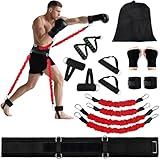
Shadow boxing. The very phrase conjures images of powerful athletes, moving with grace and precision, honing their skills in an empty space. But it’s not just for seasoned fighters. Shadow boxing is an incredibly effective training tool that anyone can use to improve their fitness, coordination, and boxing technique, regardless of their experience level.
Whether you’re a complete beginner or an experienced martial artist, shadow boxing provides a fantastic way to develop your skills. It’s a versatile, accessible exercise that can be done virtually anywhere, anytime, without the need for equipment or a partner. This guide will walk you through the fundamentals, providing you with the knowledge and techniques to get started and make the most of your shadow boxing workouts.
We’ll cover everything from the basic stances and punches to more advanced combinations and drills. I’ll explain the importance of proper form, footwork, and visualization. Get ready to transform your training routine and build a strong foundation in boxing!
What Is Shadow Boxing and Why Do It?
Shadow boxing is essentially boxing without an opponent. It involves practicing punches, footwork, and defensive movements in the air, imagining an opponent in front of you. It’s a fundamental part of a boxer’s training regimen, used for everything from warming up to refining technique and building endurance.
But why is shadow boxing so crucial? Here are some key benefits:
- Improves Technique: Shadow boxing allows you to focus solely on your form. You can analyze your punches, ensure your hands are in the correct position, and perfect your footwork without the pressure of a live opponent.
- Develops Muscle Memory: Repeating punches and movements over and over helps to ingrain them into your muscle memory. This means your body will naturally perform these actions more efficiently and effectively.
- Enhances Coordination: Shadow boxing requires you to coordinate your hands, feet, and body. This improves your overall coordination and agility.
- Builds Endurance: Shadow boxing is a great cardio workout. It elevates your heart rate and helps you build stamina.
- Boosts Confidence: As you see your technique improve, your confidence will grow. Shadow boxing allows you to visualize success and mentally prepare for real-life sparring or competition.
- Excellent Warm-Up: Shadow boxing is the perfect way to warm up before a workout or sparring session. It gets your blood flowing and primes your muscles for action.
- Mental Toughness: Shadow boxing requires focus and discipline. It helps you develop mental toughness, which is essential for success in boxing and in life.
Getting Started: The Fundamentals
Before you start throwing punches, it’s essential to understand the basics. Let’s break down the key elements of shadow boxing.
The Stance
Your stance is the foundation of your boxing. It determines your balance, power, and ability to move. Here’s how to adopt the correct stance:
- Feet: Stand with your feet shoulder-width apart, one foot slightly ahead of the other. If you’re right-handed, your left foot should be forward; if you’re left-handed, your right foot should be forward.
- Knees: Slightly bend your knees. This will help you absorb impact and move more efficiently.
- Weight Distribution: Distribute your weight evenly between both feet.
- Posture: Keep your back straight, your core engaged, and your shoulders relaxed.
- Hands: Bring your hands up to protect your face. Your lead hand (the one in front) should be positioned near your cheek, and your rear hand should be near your chin.
- Chin: Tuck your chin slightly to protect your jaw.
Practice your stance until it feels natural and comfortable. Make small adjustments to find the position that works best for you. The goal is to feel balanced, stable, and ready to move.
The Basic Punches
There are four basic punches in boxing. Mastering these is the cornerstone of any boxer’s repertoire. Let’s look at each one:
- Jab: This is a straight punch thrown with your lead hand. It’s a quick, light punch used to keep your opponent at bay, set up other punches, and score points. To throw a jab:
- Step forward slightly with your lead foot as you punch.
- Extend your arm straight out, turning your fist over as you make contact.
- Snap your arm back quickly to your guard.
- Cross: This is a straight punch thrown with your rear hand. It’s a powerful punch used to deliver knockout blows. To throw a cross:
- Step forward slightly with your rear foot as you punch.
- Rotate your hips and torso to generate power.
- Extend your arm straight out, turning your fist over as you make contact.
- Snap your arm back quickly to your guard.
- Hook: This is a punch thrown with a bent arm, targeting the side of your opponent’s head or body. To throw a hook:
- Bend your elbow at a 90-degree angle.
- Rotate your hips and torso to generate power.
- Swing your arm in a semi-circular motion, aiming for the target.
- Snap your arm back quickly to your guard.
- Uppercut: This is a punch thrown from below, targeting the chin or body. To throw an uppercut:
- Bend your knees slightly.
- Bring your arm up in a vertical motion, aiming for the target.
- Rotate your hips and torso to generate power.
- Snap your arm back quickly to your guard.
Practice these punches in slow motion at first, focusing on your form. Gradually increase your speed as you become more comfortable. Remember to keep your hands up to protect your face and to return your hands to your guard after each punch. (See Also: Does Shadow Boxing Really Work )
Footwork
Footwork is crucial in boxing. It allows you to move around the ring, maintain your distance, and set up your punches. Here are some basic footwork drills:
- The Shuffle: Slide your feet sideways, keeping your weight balanced and your feet shoulder-width apart.
- The Step-Drag: Step forward with your lead foot, then drag your rear foot to close the distance.
- The Pivot: Rotate your body on the ball of your foot, maintaining your stance.
- The Jump Rope: Jumping rope is an excellent way to improve your footwork, coordination, and cardiovascular fitness.
Practice these footwork drills regularly to improve your agility and coordination. Remember to always keep your weight balanced and your feet moving.
Defense
Defense is just as important as offense in boxing. Here are some basic defensive techniques:
- Blocking: Use your gloves and forearms to block punches.
- Parrying: Use your gloves to deflect punches.
- Slipping: Move your head to the side to avoid punches.
- Bobbing and Weaving: Bend your knees and move your head from side to side to avoid punches.
Practice these defensive techniques regularly to improve your ability to protect yourself in the ring.
Shadow Boxing Drills and Exercises
Now that you know the basics, let’s explore some effective shadow boxing drills and exercises to enhance your training.
Warm-Up (5-10 Minutes)
Before you begin any shadow boxing session, it’s essential to warm up your muscles. This will prepare your body for the workout and help prevent injuries. Here’s a sample warm-up routine:
- Light Cardio: Start with 2-3 minutes of light cardio, such as jumping jacks, high knees, or jogging in place.
- Dynamic Stretching: Perform dynamic stretches to increase your range of motion and prepare your muscles for movement. Examples include arm circles, leg swings, torso twists, and shoulder rotations.
- Shadow Boxing (Light): Spend 2-3 minutes shadow boxing at a slow pace, focusing on your form and footwork.
Basic Punching Combinations (10-15 Minutes)
Once you’re warmed up, it’s time to practice some basic punching combinations. Here are a few examples:
- Jab, Cross: Throw a jab followed by a cross.
- Jab, Jab, Cross: Throw two jabs followed by a cross.
- Jab, Cross, Hook: Throw a jab, a cross, and a hook.
- Jab, Cross, Hook, Uppercut: Throw a jab, a cross, a hook, and an uppercut.
Practice these combinations at different speeds, focusing on your form and technique. Remember to keep your hands up and to return to your guard after each punch. Visualize your target and imagine your opponent reacting to your punches.
Footwork Drills (5-10 Minutes)
Incorporate footwork drills into your shadow boxing routine to improve your agility and coordination. Here are some drills you can try: (See Also: Are Boxing Classes Worth It )
- Shuffle: Shuffle sideways, forward, and backward, maintaining your boxing stance.
- Step-Drag: Practice the step-drag technique, moving in different directions.
- Pivot: Practice pivoting on the ball of your foot.
- Footwork with Punches: Combine footwork with punching combinations. For example, step forward with a jab, then shuffle to the side while throwing a cross.
Defensive Drills (5-10 Minutes)
Practice defensive techniques to improve your ability to protect yourself. Here are some drills you can try:
- Blocking Drill: Imagine your opponent throwing punches and practice blocking them with your gloves.
- Slipping Drill: Practice slipping punches by moving your head to the side.
- Bobbing and Weaving Drill: Practice bobbing and weaving to avoid punches.
- Combination Drill: Combine defensive techniques with punching combinations. For example, slip a jab, then throw a cross.
Power and Speed Drills (5-10 Minutes)
Once you’ve mastered the basics, you can incorporate power and speed drills to take your shadow boxing to the next level. Here are some examples:
- Speed Rounds: Perform rounds of shadow boxing at a high speed, focusing on quick punches and footwork.
- Power Rounds: Perform rounds of shadow boxing, focusing on generating maximum power with each punch.
- Combination Drills: Combine speed and power drills. For example, start with a series of quick jabs, then throw a powerful cross.
Cool-Down (5 Minutes)
After your shadow boxing session, it’s important to cool down your muscles. Here’s a sample cool-down routine:
- Static Stretching: Perform static stretches to improve your flexibility and reduce muscle soreness. Examples include holding stretches for your shoulders, arms, legs, and back.
- Deep Breathing: Take deep breaths to help your body relax and recover.
- Visualization: Visualize your success and mentally review your performance.
Advanced Shadow Boxing Techniques
As you progress, you can incorporate more advanced techniques to challenge yourself and refine your skills.
Adding Head Movement
Head movement is crucial for defense. Practice slipping, bobbing, and weaving to avoid imaginary punches. Visualize your opponent’s attacks and react accordingly. This will significantly improve your defensive capabilities.
Working with Angles
Instead of staying directly in front of your imaginary opponent, practice moving at angles. This creates opportunities to land punches and avoid incoming attacks. Practice changing angles by stepping to the side and throwing punches from different positions.
Focusing on Rhythm and Timing
Develop a rhythm to your shadow boxing. Vary the speed and tempo of your punches and footwork. This will improve your timing and make your attacks more unpredictable. Practice throwing punches in different rhythms, such as quick-quick-slow or slow-quick-quick.
Incorporating Feints
Feints are deceptive movements used to trick your opponent. Practice feinting punches and footwork to create openings for your attacks. For example, feint a jab and then throw a cross.
Visualization
Visualization is a powerful tool for improving your performance. During your shadow boxing sessions, visualize yourself sparring, competing, or successfully executing your techniques. Imagine your punches landing, your footwork being precise, and your defense being impenetrable. This mental practice can significantly enhance your performance. (See Also: Does Boxing Classes Help With Weight Loss )
Creating a Shadow Boxing Workout Plan
To get the most out of your shadow boxing, it’s helpful to create a structured workout plan. Here’s a sample plan you can adapt to your needs:
| Day | Focus | Duration | Details |
|---|---|---|---|
| Monday | Technique & Fundamentals | 30-45 minutes | Warm-up (5 min), Stance & basic punches (10 min), Footwork drills (10 min), Defensive drills (10 min), Cool-down (5 min) |
| Tuesday | Cardio & Speed | 30-45 minutes | Warm-up (5 min), Speed rounds (15 min), Footwork drills (10 min), Cool-down (5 min) |
| Wednesday | Rest or Active Recovery | – | Light activity such as stretching, yoga, or a walk. |
| Thursday | Power & Combinations | 30-45 minutes | Warm-up (5 min), Power rounds (15 min), Combination drills (10 min), Cool-down (5 min) |
| Friday | Sparring Simulation | 30-45 minutes | Warm-up (5 min), Sparring simulation (20 min), Cool-down (5 min) |
| Saturday | Active Recovery or Long Session | – | Longer session focusing on technique, endurance, or a combination of both. |
| Sunday | Rest | – | Complete rest day. |
Remember to adjust the plan based on your fitness level, goals, and available time. Consistency is key, so aim to stick to your plan as much as possible.
Tips for Effective Shadow Boxing
Here are some tips to help you maximize the effectiveness of your shadow boxing workouts:
- Focus on Form: Always prioritize proper technique over speed or power.
- Visualize an Opponent: Imagine a specific opponent and their style of fighting.
- Use a Mirror: Shadow box in front of a mirror to check your form and make corrections.
- Vary Your Routine: Change up your combinations, footwork, and drills to keep things interesting.
- Time Your Rounds: Use a timer to structure your workouts and track your progress.
- Listen to Music: Choose music that motivates you and helps you maintain a good rhythm.
- Stay Consistent: The more you shadow box, the better you’ll become.
- Record Yourself: Use your phone to record your shadow boxing and review it. This will help you identify areas for improvement.
- Don’t Forget the Core: Engage your core muscles throughout your workout.
- Breathe Properly: Focus on your breathing. Breathe in through your nose and out through your mouth.
Common Mistakes to Avoid
Even experienced boxers can make mistakes. Here are some common pitfalls to avoid during your shadow boxing sessions.
- Poor Form: Neglecting proper technique can lead to bad habits and injuries.
- Lack of Focus: Without a clear focus, your training becomes less effective.
- Insufficient Warm-Up: Skipping your warm-up can increase the risk of injuries.
- Ignoring Defense: Focusing solely on offense can leave you vulnerable.
- Overdoing It: Overtraining can lead to fatigue and injuries.
- Not Varying Your Routine: Repeating the same exercises without variation can lead to plateaus.
- Lack of Visualization: Not visualizing your opponent or your techniques can limit your progress.
By avoiding these mistakes, you can optimize your shadow boxing workouts and achieve better results.
Shadow Boxing with Equipment
While shadow boxing primarily requires no equipment, incorporating certain items can enhance your training.
- Hand Wraps: Protect your hands and wrists.
- Boxing Gloves: Get used to the weight and feel of gloves.
- Heavy Bag: After shadow boxing, use a heavy bag to practice your punches with resistance.
- Speed Bag: Improve hand-eye coordination and rhythm.
- Mirror: Essential for self-assessment.
- Timer: Helps structure your rounds and track progress.
Final Thoughts
Shadow boxing is a powerful and versatile training method that can benefit anyone, regardless of their experience level. By focusing on proper technique, incorporating various drills, and staying consistent, you can significantly improve your boxing skills, fitness, and confidence. Remember to start with the fundamentals, gradually progress to more advanced techniques, and always prioritize form over speed. With dedication and practice, you’ll see remarkable results in your boxing journey.
Shadow boxing offers a fantastic opportunity to build a solid foundation in boxing. It allows you to refine your technique, develop muscle memory, and improve your overall fitness. By incorporating shadow boxing into your training routine, you’ll be well on your way to achieving your boxing goals. So, get started today, and enjoy the process of becoming a better boxer!