Shadow boxing. It’s the silent dance of a fighter, the practice of honing skills without the impact. It’s where champions are made, and it’s a fundamental part of any boxer’s or martial artist’s training regimen. But shadow boxing isn’t just about throwing punches in the air. It’s a highly nuanced exercise that requires focus, discipline, and a deep understanding of technique.
So, you want to get better at shadow boxing? Excellent! Whether you’re a seasoned pugilist looking to refine your skills or a beginner eager to learn the fundamentals, this guide will provide you with the knowledge and strategies you need. We’ll explore the ‘why’ and the ‘how’ – why shadow boxing is so crucial and how to maximize its benefits. Get ready to transform your shadow boxing from a mere warm-up into a powerful tool for improvement.
Let’s lace up our imaginary gloves and get started!
The Core Principles of Effective Shadow Boxing
Before we dive into specific drills and techniques, let’s establish the core principles that underpin effective shadow boxing. These principles are the foundation upon which all your practice should be built. Ignoring them is like building a house on sand – it won’t last.
1. Footwork Is Paramount
Footwork is the engine of boxing. Without proper footwork, your punches will lack power, your defense will be weak, and your movement will be predictable. In shadow boxing, you should constantly practice your footwork. This includes:
- The basic shuffle: Moving forward, backward, and laterally, always keeping your feet shoulder-width apart and your weight balanced.
- Pivoting: Turning on the balls of your feet to change your angle of attack or defense.
- Cutting off the ring: Using footwork to control the space and prevent your opponent from escaping.
- The ‘in-and-out’ movement: Using your feet to quickly enter and exit the range.
Focus on smooth, efficient movement. Avoid crossing your feet, which can throw you off balance. Imagine you are gliding across the floor, always ready to punch or defend. Practice different footwork patterns, such as the triangle step (forward-right-back), and incorporate them into your shadow boxing routine. Think about where your feet are in relation to your imaginary opponent. Are you in the right position to land a punch? Are you in a safe position to defend?
2. Form and Technique First
Technique is king. It’s more important than speed or power, especially when you’re shadow boxing. Focus on executing each punch, block, and movement with perfect form. This means:
- Maintaining a solid stance: Feet shoulder-width apart, knees slightly bent, weight balanced.
- Protecting your chin: Keeping your hands up to guard your face.
- Rotating your hips: Generating power from your core.
- Keeping your elbows in: Protecting your body.
- Breathing properly: Exhaling with each punch.
Watch videos of professional boxers and pay close attention to their technique. Mimic their movements, and don’t be afraid to slow things down initially to ensure you’re doing them correctly. A coach or experienced training partner can provide invaluable feedback on your technique. Even if you’re shadow boxing alone, record yourself and review the footage to identify areas for improvement. Correcting small flaws in your technique can make a huge difference in your overall performance.
3. Visualization and Imagination
Shadow boxing is as much a mental exercise as it is physical. You must visualize your opponent, imagine their movements, and react accordingly. This is where your creativity comes in. Imagine different scenarios:
- Your opponent is aggressive: How would you defend? What counter-punches would you throw?
- Your opponent is defensive: How would you break them down? What feints would you use?
- You’re tired: How would you conserve energy while still maintaining your defense and offense?
Use your imagination to create a realistic fight scenario. Pretend your opponent is circling you, throwing jabs, and trying to land a knockout blow. React as if you were in a real fight. This mental rehearsal helps you develop your reflexes, decision-making skills, and fight IQ. It also makes your shadow boxing sessions more engaging and enjoyable.
4. Rhythm and Timing
Boxing is all about rhythm and timing. Develop a natural flow to your movements. Practice throwing combinations with different rhythms. Experiment with varying the speed and power of your punches. Try incorporating pauses and feints to disrupt your opponent’s timing. Listen to music that motivates you and helps you find your rhythm. This will improve your coordination and hand-eye coordination.
Consider the timing of your punches in relation to your opponent’s movements. When is the best time to throw a jab? When should you counter-punch? By focusing on rhythm and timing, you’ll become a more effective and unpredictable fighter.
Structuring Your Shadow Boxing Session
Now that we’ve covered the core principles, let’s look at how to structure your shadow boxing sessions for maximum effectiveness. A well-structured session will help you improve your skills and prevent injury. Remember, consistency is key.
1. Warm-Up (5-10 Minutes)
Never skip the warm-up! It’s essential to prepare your body for the workout ahead. A proper warm-up increases blood flow to your muscles, improves flexibility, and reduces the risk of injury. Here’s a sample warm-up routine:
- Light cardio: Jumping jacks, high knees, butt kicks, or jogging in place. (2-3 minutes)
- Dynamic stretching: Arm circles, leg swings, torso twists, and shoulder rotations. (3-5 minutes)
- Shadow boxing at a slower pace: Throwing basic punches and combinations to warm up your muscles and get your body moving. (2-3 minutes)
The warm-up should progressively increase your heart rate and prepare your muscles for the more intense work to come. It should feel like your body is ready to move.
2. Shadow Boxing Drills (3-5 Rounds of 3 Minutes Each, with 1-Minute Rest)
This is the core of your workout. Focus on the principles we discussed earlier: footwork, technique, visualization, and rhythm. Here are some drills to incorporate: (See Also: Does Shadow Boxing Really Work )
- Basic combinations: Jab-cross, jab-cross-hook, jab-cross-hook-uppercut.
- Defensive drills: Slipping punches, rolling under punches, blocking, and parrying.
- Footwork drills: Moving forward, backward, laterally, and pivoting.
- Counter-punching drills: Practicing counters to different punches.
- Focus on a specific area: Dedicate a round to working on a particular weakness, such as your jab or your footwork.
Vary the intensity and speed throughout the rounds. Start slow, focusing on technique, and gradually increase the pace as you warm up. Use the rest periods to catch your breath, hydrate, and mentally prepare for the next round. Don’t be afraid to experiment with different combinations and movements.
3. Cool-Down (5-10 Minutes)
Cooling down is as important as warming up. It helps your muscles recover and reduces soreness. Here’s a sample cool-down routine:
- Light cardio: Slow jogging or walking in place. (2-3 minutes)
- Static stretching: Holding stretches for 20-30 seconds. Focus on the muscles you worked during shadow boxing, such as your shoulders, arms, back, and legs. (3-5 minutes)
- Deep breathing: Take slow, deep breaths to help your body relax and recover. (2-3 minutes)
The cool-down should help your heart rate return to normal and reduce muscle stiffness. It’s a great way to end your workout and prepare your body for the next session.
Advanced Shadow Boxing Techniques
Once you’ve mastered the basics, you can start incorporating more advanced techniques into your shadow boxing routine. These techniques will help you become a more versatile and effective fighter.
1. Feints and Deception
Feints are crucial for creating openings and setting up your punches. They involve faking a punch or movement to trick your opponent into reacting in a certain way. Here are some examples:
- Jab feint: Faking a jab to draw out a reaction from your opponent.
- Body shot feint: Faking a body shot to open up your opponent’s head.
- Footwork feint: Faking a step in one direction to make your opponent move and then quickly changing direction.
Practice different feints and incorporate them into your combinations. The key is to make your feints believable. Think about how your opponent might react and adjust your feints accordingly. Experiment with different rhythms and timing to make your feints more effective.
2. Head Movement and Slipping
Head movement is essential for avoiding punches. It makes you a more difficult target and allows you to counter-punch more effectively. Practice slipping punches by:
- Slipping to the inside: Moving your head inside your opponent’s punch to avoid it.
- Slipping to the outside: Moving your head outside your opponent’s punch to avoid it.
- Rolling under punches: Ducking under your opponent’s punches.
Combine head movement with your footwork to create a dynamic and elusive defense. Practice moving your head while throwing punches to improve your balance and coordination. This will make you a much harder target to hit.
3. Counter-Punching
Counter-punching is the art of hitting your opponent when they least expect it. It requires excellent timing, reflexes, and anticipation. Practice countering different punches:
- Countering the jab: Slip the jab and counter with a cross or hook.
- Countering the cross: Slip the cross and counter with a hook or uppercut.
- Countering the hook: Roll under the hook and counter with an uppercut or cross.
Visualize your opponent’s punches and react accordingly. Practice different counter-punching combinations. The key is to stay relaxed, anticipate your opponent’s movements, and react quickly. Counter-punching is a sophisticated skill that takes time and practice to develop. The more you practice, the better you will become.
4. Combination Training
Combining different punches into fluid combinations is essential for success. Practice a wide variety of combinations. Don’t just stick to the basics. Experiment with different combinations and find what works best for you. Here are some examples:
- Jab-cross-hook
- Jab-cross-hook-uppercut
- Cross-hook-body shot-uppercut
- Double jab-cross-hook
Focus on generating power from your core and rotating your hips with each punch. Practice transitioning smoothly between punches. The more combinations you learn, the more versatile and unpredictable you will become. Vary your combinations to keep your opponent guessing.
5. Sparring Simulation
While shadow boxing is great, you can take it a step further by simulating sparring. Imagine you’re in the ring with a specific opponent. Think about their strengths and weaknesses. What are their favorite punches? What are their tendencies? Based on this, adjust your shadow boxing. Here are some ways to simulate sparring:
- Focus on a specific opponent: Imagine you’re fighting a particular fighter.
- Use a mirror: Watch yourself in the mirror and imagine you’re fighting yourself.
- Vary your intensity: Go from fast-paced combinations to slower, more deliberate movements.
- Focus on defense: Practice slipping, blocking, and rolling under punches.
- Work on your strategy: Think about your game plan and how you’ll approach the fight.
This type of shadow boxing is a great way to prepare for sparring or a real fight. It helps you develop your mental toughness, improve your fight IQ, and build confidence.
Common Mistakes to Avoid
Even with the best intentions, it’s easy to fall into bad habits. Here are some common mistakes to avoid during your shadow boxing sessions: (See Also: Are Boxing Classes Worth It )
1. Neglecting Footwork
Footwork is the foundation of boxing. Without proper footwork, you’re at a serious disadvantage. Avoid these footwork mistakes:
- Crossing your feet: This throws you off balance.
- Moving flat-footed: This makes you slow and predictable.
- Not pivoting: This limits your angles of attack.
- Not maintaining your guard: This leaves you open to punches.
Always focus on maintaining good footwork. Practice your footwork drills regularly to improve your technique. Think about where your feet are in relation to your imaginary opponent. Are you in the right position to land a punch? Are you in a safe position to defend?
2. Poor Technique
Poor technique can lead to injuries and hinder your progress. Avoid these common technical mistakes:
- Dropping your hands: This leaves you open to punches.
- Not rotating your hips: This reduces your power.
- Not keeping your elbows in: This leaves your body vulnerable.
- Punching with your arm only: This reduces your power and increases your risk of injury.
Focus on proper form. Watch videos of professional boxers and mimic their movements. If possible, get feedback from a coach or experienced training partner. Correcting these mistakes will significantly improve your performance.
3. Lack of Visualization
Shadow boxing is as much a mental exercise as it is physical. Without proper visualization, you’re missing out on a key element of the training. Avoid these visualization mistakes:
- Not imagining an opponent: This makes your shadow boxing less effective.
- Not visualizing different scenarios: This limits your ability to adapt to different situations.
- Not reacting to your opponent’s movements: This reduces your reflexes and decision-making skills.
Use your imagination to create a realistic fight scenario. Imagine your opponent’s movements and react accordingly. This mental rehearsal will help you develop your reflexes, decision-making skills, and fight IQ. Practice visualizing different scenarios to prepare yourself for any situation.
4. Rushing and Poor Rhythm
Rushing and a lack of rhythm will make you predictable. Avoid these mistakes:
- Punching too fast: This reduces your power and makes you more likely to miss.
- Not varying your speed and power: This makes you predictable.
- Not incorporating feints: This limits your ability to set up your punches.
- Not listening to your body: This can lead to overtraining and injury.
Develop a natural flow to your movements. Practice throwing combinations with different rhythms. Experiment with varying the speed and power of your punches. Listen to music that motivates you and helps you find your rhythm. This will improve your coordination and hand-eye coordination.
5. Overtraining
Overtraining can lead to injuries and burnout. It’s important to listen to your body and give yourself adequate rest. Avoid these mistakes:
- Training too often: This can lead to fatigue and injury.
- Not taking rest days: This prevents your body from recovering.
- Ignoring pain: This can lead to serious injuries.
- Not eating a balanced diet: This can hinder your recovery.
Listen to your body. Get enough sleep. Eat a balanced diet. Take rest days when needed. Overtraining can be counterproductive. Rest and recovery are just as important as training.
Incorporating Equipment Into Your Shadow Boxing
While shadow boxing is primarily done without equipment, incorporating certain tools can enhance your training and help you improve specific skills.
1. Using a Mirror
A mirror is a simple yet powerful tool. It allows you to see your technique and identify areas for improvement. Here’s how to use a mirror effectively:
- Focus on your form: Make sure you’re executing each punch, block, and movement correctly.
- Check your footwork: Ensure you’re moving efficiently and maintaining your balance.
- Visualize your opponent: Imagine their movements and react accordingly.
- Record yourself: Use your phone to record your shadow boxing and review it later.
A mirror provides immediate feedback on your technique. Use it to refine your movements and correct any flaws. Regularly reviewing your form in the mirror is a great way to improve your technique.
2. Shadow Boxing with Hand Wraps and Gloves
Wearing hand wraps and gloves during shadow boxing is highly recommended. It provides:
- Protection: Your hands and wrists are protected from injury.
- Improved technique: The added weight can improve your punching power and speed.
- Increased realism: It simulates the feeling of wearing gloves in a real fight.
Always use properly fitted hand wraps and gloves. Practice throwing punches with a focus on technique and form. The added weight will also help you develop more power in your punches. Focus on accuracy and technique over speed when you first start using gloves. (See Also: Does Boxing Classes Help With Weight Loss )
3. Incorporating Resistance Bands
Resistance bands can be used to add resistance to your shadow boxing movements. This helps to:
- Increase strength and power: The added resistance challenges your muscles.
- Improve endurance: Resistance bands make your workout more challenging.
- Enhance technique: The resistance helps you focus on proper form.
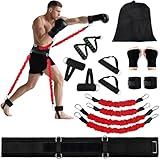
Use resistance bands around your ankles or wrists. Practice punches, blocks, and footwork drills with the bands. Start with light resistance and gradually increase the resistance as you get stronger. Resistance bands are a great way to add intensity to your shadow boxing routine.
4. Using a Heavy Bag
Shadow boxing is a great way to get ready to hit a heavy bag. It’s a great way to warm up and focus on technique before hitting the bag. Here’s how to incorporate shadow boxing before hitting the heavy bag:
- Warm-up: Do your regular warm-up routine.
- Shadow box: Spend a few rounds shadow boxing, focusing on technique and combinations.
- Transition to the heavy bag: Start with light punches on the heavy bag, focusing on technique.
- Increase intensity: Gradually increase the power and speed of your punches.
Using shadow boxing before hitting the heavy bag can help you improve your technique, warm up your muscles, and get ready for a more intense workout. This transition can lead to a more effective heavy bag session.
The Mental Side of Shadow Boxing
Shadow boxing is more than just physical exercise; it’s a mental workout. It’s an opportunity to build mental toughness, focus, and discipline. Here’s how to cultivate the mental aspects of shadow boxing:
1. Focus and Concentration
Maintaining focus is crucial for effective shadow boxing. Minimize distractions and concentrate on your technique, footwork, and visualization. Here’s how to improve your focus:
- Eliminate distractions: Turn off your phone, find a quiet space, and minimize interruptions.
- Set goals: Have a clear objective for each session, such as improving your jab or working on a specific combination.
- Practice mindfulness: Focus on your breath and be present in the moment.
- Use visualization: Imagine your opponent and concentrate on your movements.
The more focused you are, the more effective your shadow boxing will be. Practice focusing your attention and eliminating distractions.
2. Discipline and Consistency
Discipline and consistency are key to achieving any goal. Make shadow boxing a regular part of your training routine. Here’s how to build discipline and consistency:
- Set a schedule: Schedule your shadow boxing sessions and stick to them.
- Start small: Begin with shorter sessions and gradually increase the duration.
- Be patient: Progress takes time and effort. Don’t get discouraged if you don’t see results immediately.
- Track your progress: Keep a training journal to monitor your progress and stay motivated.
Consistency is more important than intensity. Even short, regular shadow boxing sessions are more effective than infrequent, intense workouts. Make it a habit.
3. Mental Toughness
Shadow boxing can help you build mental toughness. It’s a great way to push yourself and develop resilience. Here’s how to build mental toughness:
- Challenge yourself: Push yourself beyond your comfort zone.
- Embrace discomfort: Accept that training can be challenging and sometimes uncomfortable.
- Develop a positive mindset: Focus on your strengths and believe in your ability to improve.
- Learn from your mistakes: Don’t let setbacks discourage you. Learn from your mistakes and keep moving forward.
Mental toughness is a valuable asset in boxing and in life. Shadow boxing is a great way to develop it. Use your shadow boxing sessions as an opportunity to challenge yourself and build your mental fortitude.
4. Visualization Techniques
Visualization is a powerful tool for improving your performance. Here’s how to use visualization effectively:
- Create a clear image: Visualize yourself performing your techniques perfectly.
- Engage your senses: Imagine the sounds, sights, and feelings of being in a fight.
- Practice regularly: Visualize yourself daily, even when you’re not shadow boxing.
- Believe in yourself: Believe in your ability to succeed.
Visualization is a skill that takes practice. The more you practice, the more effective it will become. Use visualization to improve your technique, build confidence, and prepare for success.
Putting It All Together: A Sample Shadow Boxing Routine
Here’s a sample shadow boxing routine that incorporates all the elements we’ve discussed. Adjust it to fit your fitness level and goals.
1. Warm-Up (5-10 Minutes)
- Light cardio (2-3 minutes)
- Dynamic stretching (3-5 minutes)
- Shadow boxing at a slower pace (2-3 minutes)
2. Shadow Boxing Drills (3 Rounds of 3 Minutes Each, with 1-Minute Rest)
- Round 1: Focus on footwork and basic combinations (jab-cross, jab-cross-hook).
- Round 2: Focus on defense (slipping, rolling, blocking) and counter-punching.
- Round 3: Focus on combination training and simulating sparring.
3. Cool-Down (5-10 Minutes)
- Light cardio (2-3 minutes)
- Static stretching (3-5 minutes)
- Deep breathing (2-3 minutes)
This is just a sample routine. Feel free to adjust it to fit your needs. The key is to be consistent and to focus on the principles we’ve discussed. Remember to listen to your body and to take rest days when needed.
Verdict
Shadow boxing is a powerful tool for improving your boxing skills, building mental toughness, and achieving your fitness goals. It’s a fundamental part of a boxer’s training, and by following the principles and techniques outlined in this guide, you can significantly enhance your shadow boxing practice.
By focusing on proper footwork, technique, visualization, and rhythm, you’ll lay the foundation for a strong and effective boxing game. Remember to be consistent, disciplined, and patient. With dedication and practice, you’ll see a noticeable improvement in your skills. Embrace the silent dance, and let shadow boxing be your path to boxing mastery.