Shadow boxing. It’s the cornerstone of boxing training, a practice that’s as fundamental as the jab itself. But it’s so much more than just throwing punches at thin air. Done right, shadow boxing is a powerful tool for honing your technique, building stamina, and sharpening your mental game.
You might see it as just a warm-up, but I’m here to tell you that shadow boxing is a workout in itself. It’s where you build the foundation for everything else you do in the ring. It’s the perfect opportunity to practice your combinations, footwork, and defensive moves without the pressure of an opponent.
In this guide, we’ll go beyond the basics, exploring the nuances of shadow boxing, how to do it properly, and how to maximize its benefits. Get ready to transform your shadow boxing from a simple routine into a powerful training tool.
The Fundamentals of Proper Shadow Boxing
Before we get into the advanced stuff, let’s nail down the basics. A solid foundation is crucial, and it all starts with your stance, guard, and footwork. These elements are the building blocks of effective shadow boxing, and neglecting them will limit your progress.
Stance and Guard: Your Defensive Fortress
Your stance is the starting point for every punch, every movement. It’s your base of power and stability. There’s no single ‘perfect’ stance, as it varies based on your style and comfort. However, there are some general principles we can follow:
- Feet: Generally, your feet should be shoulder-width apart, with one foot slightly in front of the other (the lead foot). This gives you a stable base and allows for easy movement.
- Angle: Turn your lead foot slightly inward, and your rear foot outward at a 45-degree angle. This creates a balanced stance and allows you to pivot easily.
- Knees: Keep your knees slightly bent. This helps absorb impact and allows for greater mobility.
- Weight Distribution: Distribute your weight evenly between both feet. This provides balance and power.
Your guard is your shield, protecting your head and body from incoming attacks. It’s crucial for defense and should be maintained throughout your shadow boxing session:
- Hands: Keep your hands up, near your face. Your lead hand should be in front of your face, protecting your chin. Your rear hand should be near your cheek, guarding your jaw.
- Elbows: Keep your elbows tucked in close to your body. This protects your ribs and torso.
- Chin: Tuck your chin slightly to protect it from punches.
- Eyes: Keep your eyes focused on your imaginary opponent.
Footwork: The Dance of Boxing
Footwork is the secret ingredient that separates good boxers from great ones. It’s the foundation of your offense and defense, allowing you to control distance, angle your punches, and evade your opponent’s attacks. Proper footwork in shadow boxing is essential for developing these skills:
- The Shuffle: The most basic movement. To move forward, slide your lead foot forward first, then bring your rear foot up to maintain your stance. To move backward, do the opposite: slide your rear foot back, then bring your lead foot back.
- Pivoting: Pivoting allows you to change your angle on your opponent. To pivot, push off with your rear foot and turn your body in the desired direction. Keep your lead foot planted.
- Cutting Angles: This involves moving laterally to create angles. Step to the side with your lead foot, then bring your rear foot to maintain your stance.
- Weight Transfer: Pay attention to how your weight shifts as you move. When you step forward, your weight should shift to your lead foot. When you step backward, your weight should shift to your rear foot.
- Stay Light on Your Feet: Avoid stomping or crossing your feet. Your movements should be smooth and controlled.
Mastering Punching Techniques
Now that we’ve covered the basics, let’s get into the punches. Shadow boxing is the perfect place to refine your technique and build muscle memory. Focus on proper form, speed, and power. Remember, quality over quantity.
The Jab: The Foundation of Offense
The jab is the most fundamental punch in boxing. It’s a quick, straight punch thrown from your lead hand. It’s used to control distance, set up other punches, and score points. Here’s how to throw a proper jab: (See Also: Does Shadow Boxing Really Work )
- Stance: Start in your boxing stance.
- Extension: Extend your lead arm straight out, keeping your elbow slightly bent.
- Rotation: As you extend your arm, rotate your fist so that your palm faces down at the point of impact.
- Snap: Snap your punch out quickly, like you’re flicking a switch.
- Return: Immediately retract your hand back to your guard.
- Footwork: As you jab, you can step forward slightly with your lead foot to gain ground.
The Cross: The Power Punch
The cross is a powerful punch thrown from your rear hand. It’s a straight punch that generates power from your legs, hips, and core. Here’s how to throw a proper cross:
- Stance: Start in your boxing stance.
- Rotation: Rotate your rear foot and hip as you throw the punch.
- Extension: Extend your rear arm straight out, keeping your elbow slightly bent.
- Snap: Snap your punch out, rotating your fist so that your palm faces down at the point of impact.
- Power: Transfer your weight from your rear foot to your lead foot as you punch.
- Return: Immediately retract your hand back to your guard.
The Hook: The Power Punch
The hook is a powerful, arcing punch thrown from either hand. It’s used to attack the sides of your opponent’s head or body. Here’s how to throw a proper hook:
- Stance: Start in your boxing stance.
- Pivot: Pivot on the balls of your feet, turning your body sideways.
- Elbow: Bend your elbow at a 90-degree angle, keeping your elbow close to your body.
- Swing: Swing your arm in a horizontal arc, aiming for your opponent’s head or body.
- Power: Generate power from your legs, hips, and core.
- Return: Immediately retract your hand back to your guard.
The Uppercut: The Explosive Punch
The uppercut is an explosive punch thrown from either hand. It’s used to attack your opponent’s chin or body from below. Here’s how to throw a proper uppercut:
- Stance: Start in your boxing stance.
- Bend: Bend your knees slightly.
- Elbow: Keep your elbow close to your body.
- Swing: Swing your arm upward in a vertical arc, aiming for your opponent’s chin or body.
- Power: Generate power from your legs, hips, and core.
- Return: Immediately retract your hand back to your guard.
Combining Punches: Building Combinations
Once you’ve mastered the individual punches, it’s time to put them together. Combinations are a series of punches thrown in rapid succession. They’re essential for overwhelming your opponent and creating opportunities to land power shots. Here are some basic combinations to get you started:
- Jab-Cross: A classic combination. Throw a jab, then immediately follow with a cross.
- Jab-Jab-Cross: Another fundamental combo. Throw two jabs, then finish with a cross.
- Jab-Cross-Hook: A powerful combination. Throw a jab, then a cross, and finish with a hook.
- Jab-Cross-Uppercut: A versatile combination. Throw a jab, then a cross, and finish with an uppercut.
- Hook-Cross: A strong combination. Throw a hook, then follow with a cross.
When practicing combinations, focus on:
- Smooth Transitions: Aim for a seamless flow between punches.
- Speed and Power: Throw your punches quickly and with power.
- Accuracy: Aim for your target.
- Footwork: Use your footwork to create angles and set up your punches.
Defensive Techniques in Shadow Boxing
Shadow boxing isn’t just about offense; it’s also about defense. Practicing defensive techniques is crucial for protecting yourself in the ring and developing your overall boxing skills. Here are some key defensive techniques to incorporate into your shadow boxing routine:
Head Movement: The Art of Evasion
Head movement is one of the most effective ways to avoid punches. It involves moving your head to make it a difficult target for your opponent. Here are some key head movement techniques:
- Slipping: Move your head to the side, away from the incoming punch. Imagine you’re slipping a punch.
- Bobbing: Bend your knees and move your head down, as if you’re ducking under a punch.
- Weaving: Combine slipping and bobbing to create a flowing, evasive motion.
Blocking: The Shield
Blocking involves using your gloves and forearms to deflect punches. It’s a fundamental defensive technique that can protect you from getting hit. Here are some blocking techniques: (See Also: Are Boxing Classes Worth It )
- High Guard: Use your gloves to block punches aimed at your head.
- Low Guard: Use your forearms to block punches aimed at your body.
Footwork: The Distance Dance
Footwork is crucial for both offense and defense. Use your footwork to control the distance between you and your imaginary opponent, making it difficult for them to land punches.
- Moving Out of Range: Step back or to the side to avoid your opponent’s punches.
- Creating Angles: Use your footwork to move around your opponent and create angles for your punches.
Structuring Your Shadow Boxing Session
Now that you know the techniques, let’s look at how to structure your shadow boxing session for maximum effectiveness. A well-structured routine will help you develop your skills and achieve your fitness goals. Here’s a sample structure:
Warm-Up (3-5 Minutes)
Warming up is essential to prepare your body for exercise and reduce the risk of injury. Start with some light cardio, such as jumping jacks or running in place, to increase your heart rate and warm up your muscles. Then, perform some dynamic stretching to improve your flexibility and range of motion. Examples include arm circles, leg swings, and torso twists.
Shadow Boxing (3-5 Rounds of 3 Minutes Each, with 1-Minute Rest)
This is the core of your workout. Focus on the techniques we’ve discussed. Start slow and concentrate on proper form. As you get more comfortable, increase your speed and power. Here’s how to structure your rounds:
- Round 1: Focus on your stance, guard, and footwork. Practice basic punches like the jab and cross.
- Round 2: Practice combinations. Combine the jab, cross, hook, and uppercut.
- Round 3: Focus on defensive techniques. Practice slipping, bobbing, weaving, and blocking.
- Round 4 (Optional): Incorporate all aspects of your training, focusing on your own style.
- Round 5 (Optional): Increase your intensity and focus on speed and power.
Cool-Down (3-5 Minutes)
Cooling down helps your body recover and reduces muscle soreness. Perform some static stretching, holding each stretch for 20-30 seconds. Examples include hamstring stretches, quad stretches, and triceps stretches.
Common Mistakes to Avoid
Even seasoned boxers make mistakes. Here are some common pitfalls in shadow boxing and how to avoid them:
- Poor Form: This is the most common mistake. It can lead to bad habits and injuries. Always focus on proper form.
- Rushing: Don’t rush your punches or movements. Take your time and focus on technique.
- Not Focusing: Shadow boxing requires focus. Don’t let your mind wander. Visualize your opponent and your actions.
- Neglecting Footwork: Footwork is crucial. Make sure you’re moving around and creating angles.
- Lack of Intensity: Shadow boxing should be a workout. Push yourself and maintain a good pace.
- Ignoring Defense: Don’t just focus on offense. Practice your defensive techniques.
Advanced Shadow Boxing Techniques
Once you’ve mastered the basics, you can start incorporating advanced techniques to take your shadow boxing to the next level.
Adding a Target
While shadow boxing is typically done without equipment, adding a target can help improve your accuracy and power. You can use a heavy bag, a focus mitt, or even a wall-mounted target. This allows you to visualize your target and focus on your punches. (See Also: Does Boxing Classes Help With Weight Loss )
Adding Resistance
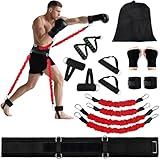
Adding resistance can help increase your strength and power. You can use resistance bands or light dumbbells during your shadow boxing routine. This will make your muscles work harder and improve your overall conditioning.
Working on Specific Drills
Focus on specific drills to improve your skills. For example, you can practice slipping drills to improve your head movement, or footwork drills to improve your agility. This allows you to target your weaknesses and improve your overall performance.
Visualizing a Real Opponent
This is a crucial aspect of shadow boxing. Imagine you’re in the ring with a real opponent. Visualize their movements, anticipate their attacks, and react accordingly. This will help you develop your mental game and improve your reaction time.
Using a Mirror
Using a mirror is a great way to monitor your technique. This allows you to see your form and identify any areas that need improvement. Focus on your stance, guard, and punch technique. This will help you to refine your technique and improve your overall performance.
Changing Your Pace
Varying your pace can help improve your stamina and conditioning. Start with a slow, controlled pace, focusing on technique. Then, increase your speed and power for short bursts, simulating a real fight. This will help you to develop your cardiovascular endurance and improve your overall boxing skills.
Shadow Boxing for Fitness and Beyond
Shadow boxing is more than just a boxing drill. It’s a fantastic workout that offers numerous benefits beyond improving your boxing skills:
- Cardiovascular Health: Shadow boxing is a great cardiovascular workout that can improve your heart health and stamina.
- Muscle Toning: It engages multiple muscle groups, helping to tone and strengthen your body.
- Coordination: It improves hand-eye coordination and overall body coordination.
- Stress Relief: Shadow boxing can be a great way to relieve stress and improve your mood.
- Mental Toughness: It requires focus and discipline, helping to build mental toughness.
- Weight Management: Shadow boxing can help you burn calories and manage your weight.
By incorporating shadow boxing into your fitness routine, you can experience these benefits and improve your overall health and well-being. It’s a versatile and effective workout that can be done anywhere, anytime.
Final Verdict
Shadow boxing, when done properly, is a powerful training tool. It’s a skill-building exercise and a complete workout. By focusing on your stance, footwork, and punch technique, you can develop your boxing skills, improve your fitness, and build mental toughness. Remember to focus on proper form, practice regularly, and push yourself to improve. Start incorporating these techniques into your routine and watch your boxing skills improve.
Shadow boxing is a journey of continuous improvement. Keep practicing, stay focused, and enjoy the process. With dedication and hard work, you’ll see significant improvements in your boxing skills and overall fitness. So, lace up your gloves, step into the ring (or your living room), and start shadow boxing your way to success!