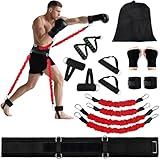
Shadow boxing is an incredible workout that builds strength, coordination, and endurance, all without needing a partner or expensive equipment. It’s a fantastic way to get in shape, relieve stress, and improve your boxing skills. The best part? You can do it right in the comfort of your own home, at any time that suits you.
This guide will walk you through everything you need to know about how to do shadow boxing at home, from the basic stances and punches to more advanced combinations and drills. We’ll cover how to set up your space, warm up properly, and cool down effectively. Get ready to transform your living room into your personal boxing arena!
Whether you’re a complete beginner or have some experience, this guide is designed to help you get the most out of your shadow boxing sessions. Let’s get started and see how you can benefit from this amazing workout!
Setting Up Your Shadow Boxing Space
Before you start throwing punches, it’s important to prepare your space. You don’t need a boxing ring, but a little planning goes a long way. Here’s what you should consider:
Choosing Your Space
Ideally, you’ll want a space that’s at least 6 feet by 6 feet, giving you enough room to move around freely. A clear area in your living room, bedroom, or even your garage works well. Make sure there are no obstacles like furniture, sharp objects, or anything you could trip over. Safety first!
Flooring
The type of flooring matters. A carpeted surface or a yoga mat can provide some cushioning and absorb impact, which is easier on your joints. If you have hardwood or tile floors, consider using an exercise mat or a rug to protect your feet and ankles. This will help prevent injuries and make your workouts more comfortable.
Mirror (optional but Recommended)
A mirror is a fantastic tool for shadow boxing. It allows you to see your form and correct any mistakes. If you have a full-length mirror, great! If not, a smaller mirror will still do the trick. Position the mirror so you can see your entire body as you box. This will help you identify areas where you can improve your technique.
Music
Music can significantly enhance your workout. Create a playlist of energetic songs that motivate you. Choose music with a consistent beat to help you maintain your rhythm and pace. Many people find that music makes the workout more enjoyable and helps them push through the tougher parts.
Equipment (optional)
While shadow boxing doesn’t require equipment, you can enhance your workout with a few extras:
- Boxing Gloves: Wearing gloves can make you feel more like you’re actually boxing. It can also help protect your hands if you’re practicing punches against a heavy bag (if you have one).
- Hand Wraps: Essential for protecting your hands and wrists, especially if you’re using gloves.
- Jump Rope: A great warm-up exercise to get your heart rate up.
- Focus Mitts: If you have a partner, focus mitts are great for practicing combinations and improving accuracy.
Warm-Up: Preparing Your Body
A proper warm-up is crucial before any workout, and shadow boxing is no exception. It increases blood flow to your muscles, reduces the risk of injury, and prepares your body for the movements ahead. Aim for a warm-up of about 5-10 minutes.
Cardio
Start with some light cardio to get your heart rate up. Options include:
- Jumping Jacks: A classic for a reason! Do them for 1-2 minutes.
- High Knees: Bring your knees up towards your chest for another 1-2 minutes.
- Butt Kicks: Kick your heels up towards your glutes for 1-2 minutes.
- Jump Rope: If you have a jump rope, use it for 2-3 minutes.
- Shadow Boxing (Light): Throw some light punches and footwork for a minute or two to start getting your body used to the movements.
Dynamic Stretching
Dynamic stretches involve movement and prepare your muscles for action. Examples include:
- Arm Circles: Forward and backward, small and large circles.
- Torso Twists: Rotate your torso from side to side.
- Leg Swings: Forward, backward, and sideways to improve flexibility.
- Shoulder Rolls: Roll your shoulders forward and backward.
- Wrist Rotations: Rotate your wrists to warm them up for punching.
Basic Shadow Boxing Stance and Footwork
The foundation of shadow boxing is your stance and footwork. A good stance provides balance, power, and protection. Mastering footwork allows you to move around the “ring” efficiently.
The Boxing Stance
Here’s how to set up your basic boxing stance:
- Feet: Stand with your feet shoulder-width apart.
- Lead Foot: If you’re right-handed, your left foot should be forward (southpaw stance if left-handed, then right foot forward).
- Angle: Your lead foot should be pointing slightly towards your opponent (imagine a clock, it would be at 1 o’clock for a right-handed boxer), with your rear foot at about a 45-degree angle.
- Knees: Bend your knees slightly to lower your center of gravity.
- Weight Distribution: Distribute your weight evenly between both feet, with a slight emphasis on the balls of your feet.
- Hands: Keep your hands up, near your face, to protect your chin and jaw. Your elbows should be tucked in to protect your ribs.
- Chin: Tuck your chin slightly to protect your jaw.
- Eyes: Look forward, focusing on an imaginary opponent.
Footwork Drills
Footwork is all about moving efficiently and maintaining your balance. Here are some basic footwork drills to practice:
- The Shuffle: Slide your feet in the direction you want to move. Keep your feet shoulder-width apart at all times. Do not cross your feet.
- The Step: Step forward, backward, left, or right, keeping your feet aligned and maintaining your stance.
- The Pivot: Rotate on the balls of your feet, turning your body. This is crucial for changing angles.
- The “Triangle”: Move forward, then to the side, then backward, forming a triangle with your footwork.
Basic Punches
Now, let’s learn the basic punches. Focus on technique over speed at first. Proper form is essential to prevent injuries and generate power.
The Jab
The jab is the most fundamental punch in boxing. It’s a quick, straight punch thrown with your lead hand.
- Stance: Start in your boxing stance.
- Motion: Extend your lead arm straight out towards your target.
- Rotation: As you extend your arm, rotate your fist so your palm faces down at the end of the punch.
- Return: Quickly retract your arm back to your face, maintaining your guard.
- Breathing: Exhale as you throw the punch.
The Cross
The cross is a powerful punch thrown with your rear hand. It crosses your body to reach the target.
- Stance: Start in your boxing stance.
- Motion: Transfer your weight to your rear leg and pivot your rear foot slightly.
- Punch: Extend your rear arm straight out, rotating your fist so your palm faces down at the end of the punch.
- Return: Quickly retract your arm back to your face, maintaining your guard.
- Breathing: Exhale as you throw the punch.
The Hook
The hook is a powerful punch that targets the side of the head. It’s thrown with a bent arm. (See Also: Does Shadow Boxing Really Work )
- Stance: Start in your boxing stance.
- Motion: Bend your elbow and bring your hand up towards your ear.
- Punch: Rotate your body and swing your arm across your body, aiming for the side of your opponent’s head.
- Return: Quickly retract your arm back to your face, maintaining your guard.
- Breathing: Exhale as you throw the punch.
The Uppercut
The uppercut is a vertical punch that targets the chin or body. It’s thrown from a low position.
- Stance: Start in your boxing stance, but slightly crouch down.
- Motion: Bend your knees and drop your lead hand slightly.
- Punch: Drive upwards, aiming your fist towards the chin or body.
- Return: Quickly retract your arm back to your face, maintaining your guard.
- Breathing: Exhale as you throw the punch.
Punching Combinations
Once you’ve mastered the basic punches, you can start combining them. Combinations add variety and complexity to your workouts, improving your timing, coordination, and flow. Here are some beginner-friendly combinations:
Combination 1: Jab-Cross
This is a classic combination, perfect for setting up your attacks.
- Jab (lead hand)
- Cross (rear hand)
Combination 2: Jab-Jab-Cross
This combination adds a second jab to keep your opponent guessing.
- Jab (lead hand)
- Jab (lead hand)
- Cross (rear hand)
Combination 3: Jab-Cross-Hook
This adds a hook for extra power.
- Jab (lead hand)
- Cross (rear hand)
- Hook (rear hand)
Combination 4: Jab-Cross-Uppercut
This combination includes an uppercut for a more dynamic attack.
- Jab (lead hand)
- Cross (rear hand)
- Uppercut (lead hand or rear hand)
Combination 5: Jab-Hook-Cross
A good combination to vary your attack.
- Jab (lead hand)
- Hook (lead hand)
- Cross (rear hand)
Practice these combinations slowly at first, focusing on your form. As you get more comfortable, increase the speed and power of your punches.
Shadow Boxing Drills
Drills help improve your technique, speed, and endurance. Here are some effective shadow boxing drills:
The “3-Minute Round” Drill
Simulate a boxing round. Set a timer for 3 minutes and shadow box continuously, focusing on your combinations and footwork. Take a 1-minute rest between rounds. Do 3-5 rounds.
The “speed Bag” Drill (imaginary)
Imagine a speed bag in front of you. Practice quick, repetitive jabs and crosses, focusing on hand speed and rhythm. This drill improves your hand speed and coordination.
The “heavy Bag” Drill (imaginary)
Imagine a heavy bag. Throw powerful punches, focusing on your stance, footwork, and generating power from your core. This drill helps develop your punching power and endurance.
The “defense” Drill
Practice defensive movements, such as slipping punches (moving your head to the side), blocking punches with your gloves, and parrying punches (deflecting punches with your gloves). This improves your defensive skills and awareness.
The “footwork” Drill
Focus solely on footwork. Practice shuffling, stepping, and pivoting, moving around your imaginary opponent. This drill improves your footwork agility and balance.
Adding Intensity and Variation
To keep your shadow boxing workouts challenging and effective, vary your training and increase the intensity.
Increase Speed and Power
As you become more comfortable with the basic techniques, gradually increase the speed and power of your punches. Remember to maintain proper form to avoid injuries.
Add Weights (optional)
Using light hand weights (1-3 pounds) can increase the intensity of your shadow boxing workouts. This builds strength and endurance in your arms and shoulders. Only use weights if you have good form and are comfortable with the basics.
Vary Your Combinations
Experiment with different punch combinations. The more combinations you learn, the more versatile and challenging your workouts will become. Try to come up with your own combinations. (See Also: Are Boxing Classes Worth It )
Incorporate Interval Training
Interval training involves alternating between high-intensity bursts and periods of rest or lower intensity. For example, you could shadow box at maximum intensity for 30 seconds, followed by 30 seconds of rest. This is a great way to improve your cardiovascular fitness and burn more calories.
Use Visualizations
Imagine you are fighting an opponent. Visualize their movements and react accordingly. This can help you improve your reaction time, strategy, and mental focus.
Cool-Down: Recovering After Your Workout
Cooling down is as important as warming up. It allows your body to gradually return to its resting state, reduces muscle soreness, and prevents injuries. Aim for a cool-down of about 5-10 minutes.
Light Cardio
Start with some light cardio to gradually lower your heart rate. Options include:
- Walking in place: For 1-2 minutes.
- Light jogging: For 1-2 minutes.
- Slow shadow boxing: Throwing slow, controlled punches for a minute or two.
Static Stretching
Static stretches involve holding a stretch for a period of time. Examples include:
- Triceps Stretch: Reach one arm overhead and bend your elbow, reaching behind your head. Use your other hand to gently pull your elbow further back.
- Shoulder Stretch: Cross one arm across your chest and hold it with your other arm.
- Hamstring Stretch: Stand with one leg straight and the other slightly bent. Reach down towards your toes.
- Quadriceps Stretch: Stand holding onto a wall or chair for balance. Bend one knee and grab your foot, pulling it towards your glute.
- Chest Stretch: Interlock your fingers behind your back and gently pull your arms back.
Breathing
Focus on deep, controlled breathing to help your body relax and recover. Inhale slowly and deeply through your nose, and exhale slowly through your mouth.
Common Mistakes to Avoid
Even experienced boxers can make mistakes. Here are some common pitfalls to avoid when shadow boxing:
Poor Form
Always prioritize form over speed and power. Poor form can lead to injuries. Watch yourself in a mirror or record your workouts to identify and correct any flaws in your technique.
Neglecting Footwork
Footwork is crucial for balance, agility, and power. Don’t just stand in one place and punch. Practice moving around, pivoting, and changing angles.
Not Maintaining Your Guard
Keep your hands up to protect your face. Dropping your guard leaves you vulnerable to punches. Your guard is your defense.
Over-Reaching
Don’t extend your punches too far. Over-reaching reduces your power and leaves you off balance. Keep your punches compact and controlled.
Holding Your Breath
Breathe consistently throughout your workout. Holding your breath reduces your endurance and can make you feel lightheaded.
Not Warming Up or Cooling Down
Always warm up before and cool down after your workouts. These are essential for preventing injuries and aiding recovery.
Ignoring Your Body
Listen to your body. If you feel pain, stop and rest. Don’t push yourself too hard, especially when you’re just starting out.
Benefits of Shadow Boxing
Shadow boxing offers a wide range of benefits for your physical and mental well-being:
Improved Cardiovascular Health
Shadow boxing is a great cardio workout. It elevates your heart rate, strengthens your heart, and improves your overall cardiovascular health.
Increased Strength and Endurance
Shadow boxing builds strength in your arms, shoulders, core, and legs. It also improves your muscular endurance, allowing you to sustain physical activity for longer periods.
Enhanced Coordination and Agility
Shadow boxing requires coordination between your hands, feet, and eyes. It improves your hand-eye coordination, balance, and agility. (See Also: Does Boxing Classes Help With Weight Loss )
Stress Relief
Shadow boxing is a fantastic stress reliever. The repetitive movements and physical exertion release endorphins, which have mood-boosting effects. It is a great way to relieve stress.
Weight Loss and Muscle Toning
Shadow boxing burns calories and helps you shed unwanted weight. It also tones your muscles, giving you a leaner and more sculpted physique.
Improved Self-Confidence
As you get better at shadow boxing, you’ll feel more confident in your abilities. This can translate into other areas of your life.
Improved Cognitive Function
Shadow boxing can improve cognitive function by increasing blood flow to the brain and enhancing focus and concentration.
Develops Discipline
Regular shadow boxing requires discipline and consistency, which can help you develop positive habits and achieve your goals.
Versatile Workout
Shadow boxing can be tailored to any fitness level. You can adjust the intensity, duration, and combinations to suit your needs and goals.
Tips for Consistency and Motivation
Staying consistent with your shadow boxing workouts is key to seeing results. Here are some tips to help you stay motivated and on track:
Set Realistic Goals
Start with achievable goals, such as shadow boxing for 15-20 minutes, three times a week. Gradually increase the duration and frequency as you get fitter.
Schedule Your Workouts
Treat your shadow boxing sessions like important appointments. Schedule them in your calendar and stick to them as much as possible.
Find a Workout Buddy (virtual or Real)
Working out with a friend can provide motivation and accountability. You can shadow box together in person or connect virtually.
Track Your Progress
Keep a record of your workouts, including the duration, intensity, and combinations you used. This helps you see your progress and stay motivated.
Vary Your Workouts
To prevent boredom, change up your workouts regularly. Try different combinations, drills, and interval training techniques.
Listen to Your Body
Rest and recover when needed. Don’t push yourself too hard, especially when you’re feeling tired or sore.
Reward Yourself
Celebrate your accomplishments. Reward yourself for reaching your goals. This can be anything from a relaxing bath to a new workout outfit.
Make It Fun
Choose music that you enjoy. Experiment with different combinations. Don’t be afraid to add your own style and personality to your workouts.
Find a Routine
Establishing a consistent routine will make it easier to stay committed to shadow boxing. Find a time of day that works for you and stick to it.
Stay Patient
It takes time to see results. Be patient and persistent, and you will eventually see improvements in your fitness, skills, and overall well-being.
Final Verdict
Shadow boxing at home is a powerful and accessible way to improve your fitness, coordination, and mental well-being. By following the tips and techniques outlined in this guide, you can create effective workouts that fit your schedule and goals. Remember to start slowly, focus on proper form, and gradually increase the intensity as you get stronger.
Consistency is key, so find a routine that works for you and stick with it. With dedication and practice, you’ll not only see improvements in your boxing skills but also experience the numerous benefits of this fantastic workout. So, put on your gloves (or not!), clear some space, and start shadow boxing today! You’ll be amazed at what you can achieve.