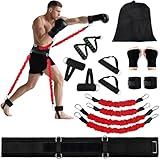
So, you’re looking to get a fantastic workout in, build some serious strength, and maybe even learn a few self-defense moves? Boxing might be the perfect fit! The beauty of boxing is that you don’t always need a gym or a sparring partner to get an incredible workout. You can absolutely do effective boxing exercises right in the comfort of your own home.
This guide will show you exactly how to do it. We’ll cover everything from the basic punches to essential footwork drills and conditioning exercises. I’ll break down each exercise, explaining the proper form and offering tips to maximize your results. Get ready to transform your living room into your personal boxing ring and start seeing real changes in your fitness level and overall well-being. Let’s get started!
Getting Started: What You’ll Need
Before you start throwing punches, it’s important to gather a few essential pieces of equipment. You don’t need a fully equipped boxing gym, but having the right tools will greatly enhance your home boxing workouts and help you stay safe.
Essential Equipment:
- Boxing Gloves: Choose gloves that fit your hand size and intended use. 12-14oz gloves are good for general training. Consider bag gloves for heavy bag work and sparring gloves if you have a partner.
- Hand Wraps: These are crucial for protecting your hands and wrists. They provide support and absorb sweat. Learn how to wrap your hands properly; it’s essential for preventing injuries.
- Heavy Bag (Optional): If you can, a heavy bag is a fantastic addition. It allows you to practice your punches with power and develop your technique. Choose a bag that’s the right weight for your size and strength.
- Speed Bag (Optional): A speed bag is great for improving hand-eye coordination, rhythm, and speed.
- Jump Rope: Jumping rope is an excellent warm-up and conditioning exercise. It improves your cardiovascular fitness and footwork.
- Workout Mat (Optional): A mat provides cushioning for floor exercises and can protect your floor from wear and tear.
- Mirror (Optional): A mirror helps you check your form and make sure you’re executing the techniques correctly.
Safety First:
Always prioritize safety. Before you begin any workout, make sure to:
- Warm-up: Spend 5-10 minutes warming up your muscles with dynamic stretches like arm circles, torso twists, and leg swings.
- Cool-down: After your workout, cool down with static stretches, holding each stretch for 20-30 seconds.
- Listen to Your Body: Don’t push yourself too hard, especially when starting. Rest when you need to.
- Consult a Doctor: If you have any health concerns, consult your doctor before starting a new exercise program.
Basic Boxing Techniques: The Foundation
Before you start hitting a bag or shadow boxing, it’s important to learn the fundamental boxing techniques. These techniques are the building blocks of all your punches and movements. Let’s break down the key elements.
The Stance:
Your stance is the foundation of your boxing. It provides balance, power, and mobility. Here’s how to set up your stance:
- Foot Placement: Stand with your feet shoulder-width apart, one foot slightly in front of the other. If you’re right-handed, your left foot should be forward; if you’re left-handed, your right foot should be forward.
- Knee Bend: Bend your knees slightly, keeping your weight balanced.
- Body Angle: Turn your body slightly to the side, creating a slight angle.
- Guard: Keep your hands up, protecting your face. Your lead hand should be in front of your face, and your rear hand should be near your chin.
The Jab:
The jab is the most fundamental punch in boxing. It’s a quick, straight punch thrown with your lead hand. Here’s how to throw a proper jab:
- Starting Position: Begin in your boxing stance.
- Rotation: Rotate your lead shoulder forward as you extend your lead arm.
- Punching: Extend your arm straight out, keeping your elbow slightly bent.
- Impact: Make contact with the knuckles of your index and middle fingers.
- Return: Quickly retract your hand back to your guard.
The Cross:
The cross is a powerful punch thrown with your rear hand. It’s a straight punch that crosses your body. Here’s how to throw a cross:
- Starting Position: Begin in your boxing stance.
- Weight Transfer: Shift your weight to your rear foot.
- Rotation: Rotate your rear shoulder and hip forward as you extend your rear arm.
- Punching: Extend your arm straight out, keeping your elbow slightly bent.
- Impact: Make contact with the knuckles of your index and middle fingers.
- Return: Quickly retract your hand back to your guard and return to your stance.
The Hook:
The hook is a powerful punch thrown with a bent arm. It’s an effective punch for hitting the side of the head or body. Here’s how to throw a hook: (See Also: Does Shadow Boxing Really Work )
- Starting Position: Begin in your boxing stance.
- Footwork: Pivot your lead foot (if throwing a hook with your lead hand) or your rear foot (if throwing a hook with your rear hand).
- Elbow Position: Keep your elbow bent at a 90-degree angle.
- Punching: Rotate your torso and throw your fist towards your target, aiming for the side of the head or body.
- Impact: Make contact with the knuckles of your index and middle fingers.
- Return: Quickly retract your hand back to your guard.
The Uppercut:
The uppercut is a powerful punch thrown from a lower position, targeting the chin or body. Here’s how to throw an uppercut:
- Starting Position: Begin in your boxing stance, slightly closer to your opponent (imaginary).
- Knee Bend: Bend your knees slightly.
- Punching: Bring your fist up in an upward arc, aiming for the chin or body.
- Impact: Make contact with the knuckles of your index and middle fingers.
- Return: Quickly retract your hand back to your guard.
Footwork Drills: Agility and Movement
Footwork is crucial in boxing. It allows you to move around the ring, control distance, and set up your punches. Here are some effective footwork drills you can do at home.
The Shuffle:
The shuffle is a basic movement for moving laterally. Here’s how to do it:
- Starting Position: Begin in your boxing stance.
- Movement: Slide your lead foot in the direction you want to move, followed by your rear foot.
- Maintain Stance: Keep your feet shoulder-width apart and your guard up.
- Avoid Crossing Feet: Never cross your feet as this can disrupt your balance.
The Pivot:
The pivot is used to change your angle. Here’s how to do it:
- Starting Position: Begin in your boxing stance.
- Pivot: Rotate on the ball of your lead foot, turning your body.
- Maintain Stance: Keep your feet shoulder-width apart and your guard up.
The in-and-Out Drill:
This drill helps you practice moving in and out of range. Here’s how to do it:
- Starting Position: Begin in your boxing stance.
- Step In: Step forward with your lead foot, throwing a jab.
- Step Out: Step back with your lead foot, returning to your stance.
- Repeat: Repeat this movement, alternating between stepping in and out.
Shadow Boxing Footwork:
Combine your punches with footwork. Practice moving around as you throw punches. This helps you develop coordination and agility.
Workout Structure: Putting It All Together
Now that you know the basic techniques and footwork drills, let’s create a structured boxing workout that you can do at home. Remember to adjust the duration and intensity based on your fitness level.
Sample Boxing Workout:
- Warm-up (5-10 minutes):
- Jumping rope (2-3 minutes)
- Dynamic stretches (arm circles, torso twists, leg swings)
- Shadow Boxing (3 rounds of 3 minutes with 1-minute rest between rounds):
- Round 1: Focus on jabs and footwork.
- Round 2: Add in crosses and hooks.
- Round 3: Combine all punches with footwork and movement.
- Heavy Bag Work (3-5 rounds of 3 minutes with 1-minute rest between rounds, if you have a bag):
- Round 1: Jab, jab, cross.
- Round 2: Hook, hook, uppercut.
- Round 3: Combine all punches, working on power and combinations.
- Conditioning (3 rounds of 3 minutes with 1-minute rest between rounds):
- Round 1: Jumping rope.
- Round 2: Burpees.
- Round 3: Mountain climbers.
- Cool-down (5-10 minutes):
- Static stretches (hold each stretch for 20-30 seconds).
Workout Variations:
You can modify this workout based on your needs and goals. Consider these variations: (See Also: Are Boxing Classes Worth It )
- Focus on Technique: Spend more time on shadow boxing, focusing on perfecting your form.
- Increase Intensity: Reduce rest times or increase the number of rounds.
- Add Resistance: Use resistance bands during shadow boxing or for conditioning exercises.
- Include Core Work: Add exercises like planks, Russian twists, and bicycle crunches to strengthen your core.
Conditioning Exercises: Building Strength and Endurance
Boxing requires a high level of fitness. Conditioning exercises will help you build the strength and endurance you need to perform at your best. Here are some effective exercises you can incorporate into your home boxing workouts.
Jumping Rope:
Jumping rope is a great way to warm up and improve your cardiovascular fitness, footwork, and coordination. Focus on proper form and try to maintain a consistent pace.
Burpees:
Burpees are a full-body exercise that combines a squat, push-up, and jump. They are great for building strength and endurance. Here’s how to do a burpee:
- Starting Position: Stand with your feet shoulder-width apart.
- Squat: Squat down and place your hands on the floor in front of you.
- Push-up: Jump your feet back into a plank position and do a push-up.
- Jump: Jump your feet forward to your hands.
- Jump Up: Jump up, reaching your arms overhead.
Mountain Climbers:
Mountain climbers are a great exercise for building core strength and cardiovascular fitness. Here’s how to do them:
- Starting Position: Get into a plank position.
- Movement: Bring one knee towards your chest, then quickly alternate with the other knee.
- Pace: Maintain a steady pace, engaging your core.
Push-Ups:
Push-ups are a great exercise for building upper body strength. Modify the exercise by doing them on your knees if needed.
Plank:
The plank is a great exercise for building core strength and stability. Hold the plank for as long as you can maintain good form. Keep your back straight, and your core engaged.
Squats:
Squats are a great exercise for building leg strength. Focus on proper form, keeping your back straight and your core engaged.
Shadow Boxing with Weights (optional):
Holding light dumbbells (2-5 lbs) while shadow boxing can increase the intensity of your workout and build upper body strength and endurance. Be careful not to use weights that are too heavy, as this can compromise your technique. (See Also: Does Boxing Classes Help With Weight Loss )
Training Tips for Optimal Results
Here are some tips to help you get the most out of your home boxing workouts.
- Focus on Form: Always prioritize proper technique over speed or power. Poor form can lead to injuries.
- Vary Your Workouts: Don’t do the same workout every day. Vary your exercises and routines to challenge your body and prevent boredom.
- Stay Consistent: The key to success is consistency. Aim to box at least 2-3 times per week.
- Listen to Your Body: Rest when you need to. Don’t push yourself too hard, especially when you’re starting.
- Stay Hydrated: Drink plenty of water before, during, and after your workouts.
- Fuel Your Body: Eat a healthy diet that supports your training. Focus on lean protein, complex carbohydrates, and healthy fats.
- Record Your Progress: Keep track of your workouts, including the exercises you did, the number of rounds, and the intensity. This will help you see your progress over time.
- Watch Boxing Videos: Watch professional boxing matches and training videos to learn new techniques and gain inspiration.
- Find a Training Partner (Optional): If you have a friend who’s also interested in boxing, train together. This can provide motivation and accountability. You can also hold pads for each other.
Troubleshooting Common Issues
Here are some common issues people face when doing boxing exercises at home and how to overcome them.
- Lack of Motivation: Set realistic goals, create a workout schedule, and find ways to make your workouts enjoyable. Listen to music, watch boxing videos, or train with a friend.
- Boredom: Vary your workouts, try different exercises, and experiment with new techniques.
- Poor Form: Watch videos and practice in front of a mirror to check your form. If possible, ask a friend or family member to watch you and provide feedback.
- Injuries: Always warm up before your workouts, use proper form, and listen to your body. If you experience pain, stop exercising and consult a doctor.
- Limited Space: You don’t need a lot of space to box at home. Clear a small area in your living room or bedroom.
Progression and Advanced Techniques
Once you’ve mastered the basics, you can start incorporating more advanced techniques and exercises into your home boxing workouts. This will help you continue to progress and challenge yourself.
Advanced Punches:
- The Slip: A defensive move where you move your head slightly to the side to avoid a punch.
- The Roll: A defensive move where you duck under a punch and come up with a counterpunch.
- The Counter Punch: Throwing a punch in response to your opponent’s punch.
Advanced Footwork:
- The Pivot and Punch: Combining a pivot with a punch to change your angle and deliver a powerful strike.
- The Step-Around: Moving around your opponent to gain a better angle.
Advanced Training Methods:
- Interval Training: Alternate between high-intensity bursts of exercise and periods of rest or low-intensity activity.
- Circuit Training: Perform a series of exercises one after the other with minimal rest in between.
- Plyometrics: Exercises that use explosive movements to build power and speed.
Adding Variety to Your Workouts
To keep things interesting and continue to see progress, it’s important to add variety to your home boxing workouts. Here are some ideas.
- Change Your Routine: Alternate between different workouts each week. Focus on different aspects of your training, such as technique, power, or endurance.
- Incorporate Different Equipment: If you have access to a heavy bag, try different drills and combinations. If you have a speed bag, work on your hand-eye coordination and speed.
- Challenge Yourself: Set new goals, such as increasing the number of rounds, reducing rest times, or adding resistance.
- Try Different Training Styles: Explore different boxing training styles, such as Muay Thai or kickboxing, to add variety to your workouts.
- Get Creative: Don’t be afraid to experiment with new exercises and combinations. The more you enjoy your workouts, the more likely you are to stick with them.
The Benefits of Boxing Exercises at Home
Boxing is a fantastic full-body workout that offers a wide range of physical and mental benefits. Here are some of the key advantages of incorporating boxing exercises into your home fitness routine.
- Improved Cardiovascular Health: Boxing exercises are excellent for your heart and lungs, helping to improve your overall cardiovascular health.
- Increased Strength and Endurance: Boxing exercises build strength and endurance throughout your body, especially in your arms, shoulders, core, and legs.
- Enhanced Coordination and Agility: Boxing requires precise movements and coordination, which can improve your overall agility and coordination.
- Stress Relief: Boxing can be a great way to relieve stress and tension. The physical exertion and focus required can help clear your mind and boost your mood.
- Improved Self-Confidence: Learning boxing techniques and improving your fitness can boost your self-confidence and self-esteem.
- Weight Loss: Boxing exercises burn a significant number of calories, which can help you lose weight and improve your body composition.
- Self-Defense Skills: Boxing teaches you valuable self-defense skills, which can help you feel safer and more confident in your ability to protect yourself.
- Full-Body Workout: Boxing is a complete workout that engages all major muscle groups.
- Convenience: You can box at home anytime, anywhere, saving you time and money.
Verdict
Boxing exercises at home provide a convenient and effective way to get a fantastic workout, improve your physical and mental well-being, and learn valuable self-defense skills. By following the tips and techniques outlined in this guide, you can create a personalized boxing workout that fits your fitness level and goals. Remember to prioritize proper form, stay consistent, and enjoy the process.
With dedication and effort, you’ll be well on your way to achieving your fitness goals and experiencing the many benefits of this exciting and rewarding activity. So, put on your gloves, wrap your hands, and get ready to transform your living room into your personal boxing ring. Happy training!