Shadow boxing. It’s the silent dance of a fighter, the rehearsal before the main event, the foundation upon which all boxing skills are built. But it’s more than just flailing your arms in front of a mirror. It’s a crucial training tool that, when done correctly, can dramatically improve your technique, stamina, and overall boxing ability. You’re probably already doing it, but are you doing it effectively?
This guide will take you far beyond the basics. We’ll explore the ‘why’ and the ‘how’ of shadow boxing, breaking down the essential elements that will help you refine your movements, build muscle memory, and develop a more fluid and powerful boxing style. Prepare to transform your shadow boxing sessions from a casual warm-up to a highly effective training regimen. Let’s get started!
Get ready to refine your technique and build a better you, one shadow punch at a time.
The Fundamentals: Building Your Shadow Boxing Base
Before we get into the advanced techniques, let’s ensure you have the basics covered. A solid foundation is crucial for maximizing the benefits of shadow boxing.
Stance and Footwork: The Unsung Heroes
Your stance is the bedrock of your boxing. It dictates your balance, power generation, and defensive capabilities. A proper stance allows you to move efficiently and react quickly. Here’s what you need to focus on:
- Foot Placement: Your feet should be shoulder-width apart, with your lead foot slightly ahead of your rear foot. Imagine a line running down the center of your body, and your feet should be positioned on either side of that line.
- Weight Distribution: Distribute your weight evenly, with a slight bend in your knees. This will keep you balanced and ready to move in any direction. Avoid locking your knees.
- Footwork: Practice shuffling, pivoting, and stepping forward and backward. Imagine you are gliding across the floor. Footwork is the cornerstone of effective shadow boxing and boxing in general.
Why it matters: A poor stance will make you slow, unbalanced, and vulnerable. A good stance provides stability and allows for explosive movements.
Hand Positioning: Protecting Your Most Valuable Assets
Your hands are your weapons, but they also need protection. Correct hand positioning is essential for both offense and defense.
- Guard Up: Keep your hands up, near your face, protecting your chin and temples. Your elbows should be tucked in, guarding your body.
- Relaxation is Key: Don’t clench your fists unless you’re throwing a punch. Relaxed hands allow for quicker punches and less fatigue.
- Chin Down: Keep your chin tucked down, protecting it from potential blows.
Why it matters: Incorrect hand positioning leaves you open to attacks. Relaxed hands lead to faster punches.
Breathing: The Oxygen Advantage
Proper breathing is often overlooked, but it’s critical for stamina and power.
- Exhale on Impact: Breathe out sharply as you throw a punch. This helps to generate power and protect your core.
- Inhale During Recovery: Breathe in as you retract your punch and return to your guard.
- Rhythm: Develop a consistent breathing rhythm to avoid gasping for air.
Why it matters: Shallow breathing limits your endurance. Proper breathing maximizes your energy and power output.
The Core Techniques: Punching with Purpose
Now, let’s delve into the core boxing techniques you should be practicing during your shadow boxing sessions. Remember, quality over quantity is key.
The Jab: The Foundation of Offense
The jab is the most fundamental punch in boxing. It’s a quick, straight punch thrown with your lead hand.
- Stance: Maintain your boxing stance.
- Rotation: Rotate your lead shoulder and hip forward as you extend your arm.
- Extension: Extend your arm fully, but don’t lock your elbow.
- Return: Quickly retract your hand back to your guard.
Why it matters: The jab sets up other punches, controls distance, and scores points. It’s the most used punch in boxing.
The Cross: Power and Precision
The cross is a powerful punch thrown with your rear hand, crossing over your body. (See Also: Does Shadow Boxing Really Work )
- Rotation: Rotate your rear shoulder and hip forward, transferring your weight.
- Pivot: Pivot on your rear foot.
- Extension: Extend your arm, aiming for the target.
- Return: Quickly retract your hand back to your guard.
Why it matters: The cross is a power punch, capable of knocking out an opponent. Correct technique is crucial to avoid injury.
The Hook: The Angle of Attack
The hook is a powerful, arcing punch thrown with a bent arm.
- Footwork: Step slightly to the side, creating an angle.
- Rotation: Rotate your hips and torso, driving the punch.
- Elbow Up: Keep your elbow up, protecting your body.
- Return: Quickly retract your hand back to your guard.
Why it matters: The hook is effective at close range and can be used to target the head or body.
The Uppercut: The Vertical Assault
The uppercut is a vertical punch thrown from below, targeting the chin.
- Footwork: Slightly bend your knees and shift your weight.
- Rotation: Rotate your hips and torso upward.
- Angle: Angle your punch upwards, aiming for the chin.
- Return: Quickly retract your hand back to your guard.
Why it matters: The uppercut is a devastating punch, especially when timed correctly.
Adding Complexity: Drills and Combinations
Once you’ve mastered the individual punches, it’s time to combine them into effective combinations.
Punching Combinations: The Art of Flow
Punching combinations are a sequence of punches designed to overwhelm your opponent. Start with simple combinations and gradually increase the complexity.
- 1-2: Jab, Cross. The most basic and effective combination.
- 1-2-3: Jab, Cross, Hook. Adds a hook to the combination.
- 1-2-3-2: Jab, Cross, Hook, Cross. A more advanced combination.
- Feints: Incorporate feints (fake punches) to set up your combinations.
Why it matters: Combinations allow you to attack your opponent from multiple angles and increase your chances of landing a knockout blow.
Footwork Drills: Dancing in the Ring
Footwork is crucial for moving in and out of range, setting up punches, and avoiding your opponent’s attacks. Practice these drills:
- Shuffle: Move laterally, maintaining your stance.
- Pivot: Turn on your lead or rear foot, changing your angle.
- In-and-Out: Step forward and backward, controlling the distance.
- Angles: Practice moving at angles to create openings.
Why it matters: Good footwork will help you dictate the pace of the fight, create angles, and avoid getting hit.
Defense Drills: Staying Safe
Defense is just as important as offense. Practice these defensive techniques during your shadow boxing sessions.
- Head Movement: Practice slipping (moving your head to the side to avoid punches), bobbing (ducking under punches), and weaving (a combination of slipping and bobbing).
- Blocking: Practice blocking punches with your gloves.
- Parrying: Practice deflecting punches with your gloves.
Why it matters: Good defense will keep you safe and allow you to counter-attack effectively.
Elevating Your Training: Advanced Strategies
Now, let’s explore some advanced strategies to take your shadow boxing to the next level. (See Also: Are Boxing Classes Worth It )
Visualization: The Mental Edge
Visualization is a powerful tool that can help you improve your performance. Visualize yourself executing your techniques flawlessly, landing punches, and avoiding your opponent’s attacks.
- Close Your Eyes: Close your eyes and imagine a fight scenario.
- Focus on Details: Visualize the movements, the sounds, and the feeling of landing punches.
- Positive Affirmations: Repeat positive affirmations, such as “I am strong,” “I am fast,” and “I am confident.”
Why it matters: Visualization can improve your mental focus, build confidence, and enhance your performance.
Rhythm and Timing: Finding Your Flow
Developing a good rhythm and timing is essential for boxing. Practice shadow boxing to a metronome or music to help you find your flow.
- Metronome: Use a metronome to set the pace of your punches.
- Music: Choose music with a good beat and rhythm.
- Vary the Tempo: Practice punching at different speeds.
Why it matters: Good rhythm and timing will make you more unpredictable and effective in the ring.
Adding Resistance: Increasing the Challenge
To increase the intensity of your shadow boxing sessions, you can add resistance.
- Shadow Boxing with Weights: Use light dumbbells or wrist weights.
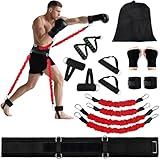
- Resistance Bands: Attach resistance bands to your ankles or wrists.
- Focus Mitts: Incorporate focus mitt work.
Why it matters: Resistance training can build strength and endurance, making your punches more powerful.
Analyzing Your Technique: The Path to Perfection
Regularly analyze your technique to identify areas for improvement.
- Mirror Work: Shadow box in front of a mirror to observe your form.
- Video Analysis: Record your shadow boxing sessions and review them.
- Seek Feedback: Ask a coach or experienced boxer for feedback.
Why it matters: Identifying and correcting flaws is crucial for improving your technique.
Structuring Your Shadow Boxing Session: A Sample Routine
Here’s a sample shadow boxing routine you can use as a template. Adjust it to your fitness level and goals.
Warm-Up (5 Minutes)
Light cardio, such as jumping jacks, high knees, and arm circles. Dynamic stretching.
Shadow Boxing (15-20 Minutes)
- Round 1: Focus on your stance, footwork, and basic punches (jab, cross).
- Round 2: Practice combinations (1-2, 1-2-3).
- Round 3: Focus on head movement and defense.
- Round 4: Incorporate footwork drills and angles.
- Round 5: Speed round – increase the tempo and focus on speed and power.
Cool-Down (5 Minutes)
Static stretching, holding each stretch for 30 seconds.
Common Mistakes and How to Avoid Them
Even the best boxers make mistakes. Here are some common errors and how to avoid them.
- Looking Down: Keep your eyes up, focused on your imaginary opponent.
- Dropping Your Hands: Always keep your hands up to protect your face.
- Telegraphing Your Punches: Avoid giving away your intentions.
- Rushing Your Punches: Focus on proper technique, not speed.
- Neglecting Footwork: Footwork is the foundation of your boxing.
Why it matters: Avoiding these mistakes will help you develop better technique and avoid bad habits. (See Also: Does Boxing Classes Help With Weight Loss )
Integrating Shadow Boxing Into Your Training Regimen
Shadow boxing should be a regular part of your training regimen. Here’s how to integrate it effectively:
- Warm-up: Use shadow boxing as a warm-up before other boxing workouts.
- Skill Development: Use it to practice and refine your techniques.
- Conditioning: Use it to build stamina and endurance.
- Mental Preparation: Use it to visualize and prepare for fights.
Why it matters: Consistent shadow boxing will lead to significant improvements in your boxing skills.
Tools and Equipment: Maximizing Your Sessions
While shadow boxing doesn’t require much equipment, certain tools can enhance your training.
- Mirrors: A large mirror allows you to observe your form.
- Focus Mitts: Partner up with someone.
- Heavy Bag: Transition to the heavy bag after shadow boxing.
- Speed Bag: Improves hand-eye coordination and rhythm.
- Jump Rope: A great warm-up tool.
Why it matters: These tools will help you refine your technique and improve your overall boxing ability.
Shadow Boxing for Different Skill Levels
Shadow boxing is adaptable to all skill levels. Here’s how to tailor your sessions:
Beginners
Focus on the fundamentals: stance, footwork, basic punches, and hand positioning. Keep it simple and concentrate on proper technique.
Intermediate
Incorporate combinations, footwork drills, and defensive techniques. Increase the intensity and duration of your sessions.
Advanced
Focus on advanced techniques, visualization, and strategic planning. Add resistance and analyze your technique regularly.
Shadow Boxing vs. Other Boxing Drills: A Comparison
Shadow boxing is just one tool in a boxer’s arsenal. Here’s how it compares to other boxing drills:
| Drill | Focus | Benefits | When to Use |
|---|---|---|---|
| Shadow Boxing | Technique, footwork, combinations, defense | Improves form, builds muscle memory, enhances conditioning | Before all other workouts, skill practice |
| Heavy Bag Work | Power, endurance, combinations | Builds power, improves punching technique, increases stamina | After shadow boxing, conditioning |
| Speed Bag | Hand-eye coordination, rhythm, timing | Improves hand speed and accuracy | Skill development, warm-up |
| Sparring | Live application of skills, strategy | Improves fighting skills, builds confidence | Advanced training, fight preparation |
Why it matters: Each drill serves a specific purpose, and a well-rounded training regimen includes a variety of drills.
Conclusion
Shadow boxing is more than just a warm-up; it’s a critical component of any boxer’s training. By focusing on the fundamentals, incorporating advanced techniques, and integrating it into your overall training plan, you can significantly improve your skills, stamina, and mental fortitude.
Remember to be patient, consistent, and always strive for improvement. Shadow boxing is a journey, not a destination. Embrace the process, and you’ll see your boxing skills flourish. Keep practicing, stay disciplined, and enjoy the process of becoming a better boxer. The ring, and your potential, awaits.