Shadow boxing. It’s the cornerstone of boxing training, a solo practice that builds skills and fitness. But, have you ever wondered, how long does it take to learn shadow boxing? The answer isn’t a simple one, as it depends on several factors. It’s a journey, not a destination, and the time you invest directly correlates with the results you’ll see.
This guide will break down the process, examining the key elements of shadow boxing, the timeframes involved, and how you can accelerate your progress. We’ll explore the fundamental techniques, the importance of consistent practice, and how to avoid common pitfalls. Get ready to lace up your invisible gloves and step into the ring – we’re about to begin!
Whether you’re a complete beginner or looking to refine your technique, understanding the learning curve of shadow boxing is essential. This article will provide you with a clear roadmap to help you become proficient in this invaluable training method. Let’s get started!
The Fundamentals of Shadow Boxing
Before we delve into the time it takes to learn, let’s establish the building blocks of effective shadow boxing. This practice isn’t just about throwing punches; it’s a comprehensive exercise that incorporates various elements.
Stance and Footwork
Your stance is the foundation of everything. A proper boxing stance provides balance, power generation, and defensive capabilities. The ideal stance involves a slightly staggered position, with your non-dominant foot forward and your dominant foot slightly behind. Your knees should be bent, your weight balanced, and your hands up, protecting your face. Footwork is the dance that complements your stance. It’s about moving in and out, side to side, and maintaining the correct distance from an imaginary opponent. Practicing footwork drills, such as shuffling, pivoting, and the “‘boxer’s step,” is crucial.
Punching Technique
Each punch must be thrown with precision, speed, and power. The basic punches include the jab, cross, hook, uppercut, and combinations thereof. The jab is a quick, straight punch thrown with your lead hand. The cross is a powerful, straight punch thrown with your rear hand. The hook is a looping punch aimed at the side of the head or body. The uppercut is a vertical punch targeting the chin or body. Practice each punch individually, focusing on proper form, before combining them into fluid combinations. Remember to pivot your feet and rotate your torso with each punch to generate maximum power.
Defense
Defense is just as important as offense. Shadow boxing should incorporate defensive movements such as head movement, parrying, and blocking. Head movement involves slipping, bobbing, and weaving to avoid punches. Parrying involves deflecting an opponent’s punch with your gloves. Blocking involves using your gloves and forearms to protect yourself from incoming blows. Practice these defensive techniques alongside your offensive skills to develop a well-rounded skillset.
Rhythm and Timing
Rhythm and timing are essential for effective shadow boxing. They help you develop a sense of flow and coordination. Practice throwing punches in a rhythmic pattern, varying the speed and power of your strikes. Incorporate pauses and changes in pace to mimic the ebb and flow of a real fight. Use a metronome or music to help you maintain a consistent rhythm. This will help you to anticipate your opponent’s movements and deliver your punches with greater accuracy and impact.
Factors Influencing Learning Time
Several factors can influence how long it takes to learn shadow boxing. Understanding these factors will help you set realistic goals and tailor your training program accordingly.
Prior Experience
If you have prior experience in any combat sport or martial art, you might find it easier to learn shadow boxing. Existing knowledge of footwork, punching techniques, and defensive maneuvers can significantly accelerate your learning curve. Conversely, if you’re entirely new to combat sports, you’ll need to spend more time mastering the basics.
Training Frequency and Consistency
The more frequently you practice, the faster you’ll improve. Aim for at least three to five shadow boxing sessions per week. Consistency is key. Regular practice helps you ingrain the techniques and develop muscle memory. Even short, focused sessions are more effective than sporadic, long ones. Make shadow boxing a regular part of your routine.
Training Intensity
The intensity of your training sessions plays a crucial role. Pushing yourself during each session will accelerate your progress. This means throwing punches with power, moving quickly, and incorporating a variety of combinations and defensive techniques. Vary your training intensity to challenge your body and prevent plateaus. Include high-intensity interval training (HIIT) to improve your cardiovascular fitness.
Proper Guidance
Learning from a qualified coach or trainer can significantly speed up your learning process. A coach can provide personalized feedback, correct your technique, and help you develop a sound training plan. They can also identify your weaknesses and help you work on improving them. If you can’t access a coach in person, consider online resources, such as instructional videos and tutorials.
Physical Fitness
Your overall physical fitness level will impact your shadow boxing performance. Good cardiovascular fitness is essential for maintaining stamina throughout your training sessions. Strength training can improve your punching power and endurance. Flexibility and mobility are also important for preventing injuries and improving your range of motion. Incorporate a well-rounded fitness regimen that complements your shadow boxing practice.
Mental Focus
Mental focus is an often-overlooked aspect of shadow boxing. Staying focused during your training sessions will help you learn and retain information more effectively. Eliminate distractions, concentrate on your technique, and visualize yourself executing your punches and defensive moves. This will improve your coordination, timing, and overall performance.
Timeframe Expectations: A Realistic Perspective
So, how long does it take to learn shadow boxing? There’s no single answer, but here’s a general guide: (See Also: Does Shadow Boxing Really Work )
Beginner (0-3 Months)
During the first few months, the focus should be on building a solid foundation. This means mastering the basic stance, footwork, and punches. You’ll likely spend a lot of time working on individual techniques, focusing on proper form and coordination. Expect to feel awkward and uncoordinated initially. However, with consistent practice, you’ll gradually develop muscle memory and improve your technique. At this stage, you’ll start to learn basic combinations and defensive maneuvers. You might notice improvements in your fitness level and coordination.
Intermediate (3-6 Months)
In the intermediate phase, you’ll start to refine your technique and develop more complex combinations. You should have a good understanding of the fundamentals and be able to execute punches and defensive moves with greater accuracy and speed. You’ll start to incorporate more advanced footwork and defensive techniques. You’ll work on developing your rhythm, timing, and footwork. You might also start to incorporate more advanced drills, such as shadow boxing with a heavy bag or focus mitts. The focus shifts to improving your speed, power, and endurance. Expect to see significant improvements in your overall skills and fitness.
Advanced (6+ Months)
At the advanced level, you should have a solid grasp of the techniques and be able to shadow box with confidence and fluidity. You can create complex combinations, adapt your style to different opponents, and incorporate advanced defensive techniques. The focus shifts towards refining your technique and developing your strategic thinking. You’ll likely spend more time working on your weaknesses and fine-tuning your strengths. You might start to incorporate more advanced training methods, such as sparring or competition. You’ll continue to see improvements in your overall skills, fitness, and ability to think strategically.
Creating an Effective Shadow Boxing Routine
To maximize your learning and development, it’s important to create an effective shadow boxing routine. Here’s a suggested structure:
Warm-Up (5-10 Minutes)
Start with a dynamic warm-up to prepare your body for exercise. This may include jumping jacks, high knees, butt kicks, arm circles, and torso twists. Include shadow boxing drills such as light punches and footwork drills. This will increase blood flow to your muscles and improve your flexibility.
Technical Work (10-15 Minutes)
Focus on specific techniques during this phase. Work on individual punches, defensive moves, and footwork drills. Concentrate on proper form, speed, and power. Practice combinations, gradually increasing the complexity. This is the time to correct any technical flaws and refine your skills. You might use a mirror to check your form.
Combination Practice (10-15 Minutes)
Combine the techniques you learned into fluid combinations. Vary the combinations, speed, and power of your punches. Practice different scenarios, such as attacking, defending, and counter-punching. Visualize an opponent and react accordingly. This section focuses on putting your skills into practice.
Footwork and Movement (5-10 Minutes)
Practice your footwork drills, such as shuffling, pivoting, and the boxer’s step. Focus on maintaining balance, agility, and quick changes of direction. Incorporate footwork into your combination practice. This will improve your overall coordination and movement.
Cool-Down (5 Minutes)
Finish with a static cool-down to help your body recover. This may include stretching your major muscle groups, such as your shoulders, arms, legs, and core. Hold each stretch for 30 seconds. This will improve your flexibility and reduce muscle soreness.
Common Mistakes to Avoid
While shadow boxing is beneficial, some common mistakes can hinder your progress. Being aware of these will help you avoid them.
Poor Form
Prioritize proper form over speed or power. Incorrect form can lead to bad habits and injuries. If you’re unsure about your technique, seek guidance from a qualified coach or trainer. Focus on the fundamentals and gradually increase the intensity as you improve.
Lack of Focus
Avoid distractions and stay focused during your training sessions. Concentration is essential for learning and retaining information. Eliminate any distractions, such as your phone or television. Visualize your movements and concentrate on your technique.
Ignoring Footwork
Footwork is the foundation of boxing. Neglecting footwork drills will limit your movement and ability to generate power. Practice footwork drills regularly, focusing on balance, agility, and quick changes of direction. Incorporate footwork into your combination practice.
Insufficient Warm-Up
Failing to warm up properly can increase your risk of injury. Always start with a dynamic warm-up that prepares your body for exercise. Include shadow boxing drills and stretching. This will improve your flexibility and reduce muscle soreness.
Over-Training
Overtraining can lead to fatigue, burnout, and injuries. Ensure you get enough rest and recovery between training sessions. Listen to your body and adjust your training schedule accordingly. Incorporate rest days into your routine. (See Also: Are Boxing Classes Worth It )
Lack of Variety
Repeating the same routine repeatedly can lead to plateaus. Incorporate variety into your training sessions to challenge your body and prevent boredom. Vary your combinations, speed, and power. Try different drills and training methods.
Tools and Equipment to Enhance Shadow Boxing
While you can shadow box with nothing but yourself, certain tools and equipment can enhance your training and accelerate your progress.
Mirrors
A mirror is an invaluable tool for self-assessment. It allows you to check your form and identify any technical flaws. Place the mirror in front of you and observe your movements as you shadow box. This will help you correct any bad habits and refine your technique.
Heavy Bag
A heavy bag is a great tool for practicing power and punching technique. It allows you to throw punches with full force and develop your punching power. Use the heavy bag after your shadow boxing session to reinforce your technique and build strength. Practice different combinations and drills on the heavy bag.
Focus Mitts
Focus mitts are used to improve your hand-eye coordination, timing, and accuracy. A coach or training partner holds the focus mitts while you throw punches. This helps you practice your combinations and develop your punching technique. Focus mitts are a great way to improve your reaction time and punching accuracy.
Speed Bag
The speed bag is used to improve your hand speed, coordination, and rhythm. It requires you to hit the bag repeatedly, developing your punching speed and accuracy. Practice different rhythms and combinations on the speed bag.
Jump Rope
Jumping rope is an excellent way to improve your cardiovascular fitness, coordination, and footwork. It’s a fundamental part of boxing training. Jump rope before or after your shadow boxing session to improve your fitness and coordination.
Shadow Boxing Timer
Use a timer to structure your shadow boxing sessions and track your progress. This will help you stay focused and maintain a consistent pace. Set up rounds and rest periods to mimic the structure of a boxing match. There are many apps and online timers available.
Integrating Shadow Boxing with Other Training Methods
Shadow boxing is a versatile training method that can be integrated with other forms of exercise to create a well-rounded fitness program.
Cardiovascular Exercise
Combine shadow boxing with cardio exercises such as running, cycling, or swimming. This will improve your cardiovascular fitness and endurance. Include HIIT workouts to challenge your body.
Strength Training
Strength training will improve your punching power and endurance. Incorporate exercises that target your major muscle groups, such as squats, push-ups, and pull-ups. Strength training will also improve your overall fitness.
Flexibility and Mobility Training
Improve your flexibility and mobility with stretching and yoga. This will improve your range of motion and reduce your risk of injury. Flexibility and mobility training can also improve your overall performance.
Nutrition and Hydration
Proper nutrition and hydration are essential for optimal performance and recovery. Eat a balanced diet and drink plenty of water. Consume enough protein to support muscle growth and repair. Avoid processed foods and sugary drinks.
Rest and Recovery
Rest and recovery are crucial for preventing overtraining and injury. Get enough sleep and rest days. Allow your body to recover between training sessions. Listen to your body and adjust your training schedule accordingly.
Progression and Continued Learning
The journey of learning shadow boxing is continuous. Here’s how to ensure continued progress: (See Also: Does Boxing Classes Help With Weight Loss )
Set Realistic Goals
Set achievable goals to stay motivated. Start with short-term goals, such as improving your form or learning a new combination. As you progress, set longer-term goals, such as increasing your punching power or endurance. Track your progress to monitor your improvement.
Seek Feedback
Get feedback from a coach or training partner. They can provide valuable insights and help you identify areas for improvement. Ask them to watch your technique and offer constructive criticism. Don’t be afraid to ask questions.
Vary Your Routine
Keep your training sessions interesting by varying your routine. Try different combinations, drills, and training methods. Introduce new challenges to prevent boredom and stimulate your progress. Experiment with different types of music to keep your training sessions fresh.
Stay Patient
Learning shadow boxing takes time and dedication. Don’t get discouraged if you don’t see results immediately. Stay patient and consistent with your training. Celebrate your progress and enjoy the process. Remember, the journey is as important as the destination.
Stay Committed
Commitment is key to success. Make shadow boxing a regular part of your routine. Stick to your training plan and stay focused on your goals. Even when you feel unmotivated, push yourself to train. The rewards of consistent effort are worth it.
The Importance of Consistency
The key takeaway is that consistency is the single most important factor. Regularly practicing shadow boxing, even for short periods, will yield better results than sporadic, intense sessions. Make it a habit, and you’ll see your skills improve over time.
Shadow Boxing: Beyond the Basics
Once you’ve grasped the fundamentals, there are many ways to expand your shadow boxing practice.
Shadow Boxing with Resistance Bands
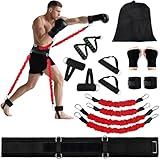
Adding resistance bands to your shadow boxing routine can significantly increase the intensity of your workout. Resistance bands help build strength and endurance. They force your muscles to work harder, leading to greater gains. Wrap a resistance band around your wrists or ankles while you shadow box. This will increase the resistance and challenge your muscles.
Shadow Boxing with Weights
Using light weights can enhance the power and strength of your punches. Use light dumbbells or wrist weights while shadow boxing. This will help build strength and improve your punching power. Start with light weights and gradually increase the weight as you get stronger.
Shadow Boxing in Front of a Mirror
Shadow boxing in front of a mirror is a crucial aspect of improving your technique. It allows you to see your form and identify any flaws. This will help you correct your technique and improve your overall performance. Focus on proper form and technique in the mirror.
Shadow Boxing for Specific Purposes
Shadow boxing can be tailored to meet your specific needs, whether that’s fitness, self-defense, or boxing competition. Adjust your routine based on your goals. If you’re preparing for a fight, incorporate sparring and fight simulations into your training. If you’re focused on fitness, concentrate on high-intensity interval training (HIIT) and cardio workouts. If you’re interested in self-defense, focus on practical techniques and situational awareness.
Incorporating Mental Training
Mental training can be just as crucial as physical training. Visualize your movements, focus on your technique, and stay mentally engaged during your sessions. This will improve your coordination, timing, and overall performance. Practice mindfulness to improve your focus and concentration.
Final Verdict
Shadow boxing is a valuable training method that can be learned and improved with consistent practice. The time it takes to see results varies depending on your experience, training frequency, intensity, and guidance. Start with the basics, focus on proper form, and gradually increase the complexity of your routine. By following these guidelines, you can develop your boxing skills, improve your fitness, and enjoy the benefits of this dynamic training method.
The time it takes to learn shadow boxing is a personal journey. There’s no magic formula. However, by understanding the fundamentals, setting realistic goals, and staying consistent with your practice, you can significantly accelerate your progress. Remember, the key is consistency and dedication. Embrace the process, enjoy the challenge, and watch yourself improve. With each session, you’ll be one step closer to mastering this essential boxing skill. Keep practicing, stay focused, and enjoy the journey of becoming a better boxer!
So, lace up those imaginary gloves, step into your personal ring, and start shadow boxing today. You’ll be amazed at what you can achieve with consistent effort. The rewards of improved fitness, enhanced skills, and increased confidence await. Now, go out there and show yourself what you can do!