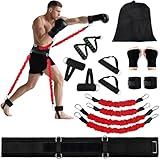
Shadow boxing, the art of fighting an invisible opponent, is a cornerstone of any boxer’s training regimen. It’s a fantastic way to hone your technique, improve your footwork, and build endurance. But what happens when you add weights to the equation? Does shadow boxing with weights truly translate to faster hands and quicker movements in the ring?
This is a question that many fighters, from beginners to seasoned professionals, grapple with. The idea of resistance training to build explosive power is appealing, but is it effective in this specific context? In this comprehensive guide, we’ll examine the science, the practical applications, and the potential pitfalls of incorporating weights into your shadow boxing routine. We’ll break down the benefits, the risks, and provide you with actionable advice to optimize your training and achieve your speed goals.
Get ready to explore the nuances of this training method and learn how to make it work for you. Let’s get started!
The Science Behind Speed and Power
Before diving into the specifics of shadow boxing with weights, it’s essential to understand the underlying principles of speed and power. Speed, in boxing terms, is a combination of reaction time, movement efficiency, and the ability to generate force quickly. Power, on the other hand, is the ability to exert force rapidly. Both are crucial for success in the ring.
Force-Velocity Relationship: A fundamental concept in sports science is the force-velocity relationship. This principle states that there’s an inverse relationship between the force you can generate and the speed at which you can generate it. In other words, you can lift a heavier weight slower, and a lighter weight faster. The goal of training for speed is to shift this curve, allowing you to generate more force at higher speeds.
Muscle Fiber Types: Your muscles are composed of different fiber types, broadly categorized as slow-twitch (Type I) and fast-twitch (Type II). Fast-twitch fibers are responsible for explosive movements and are primarily activated during high-intensity activities like punching. Training for speed focuses on recruiting and developing these fast-twitch fibers.
Neuromuscular Efficiency: Speed also depends on how efficiently your nervous system communicates with your muscles. Training can improve neuromuscular efficiency, allowing your brain to send signals faster and coordinate muscle contractions more effectively. This leads to quicker reaction times and more fluid movements.
Energy Systems: Boxing relies on various energy systems, including the ATP-PC system (for short bursts of power), the glycolytic system (for moderate-intensity work), and the oxidative system (for endurance). Training must address all these systems to optimize performance.
Benefits of Shadow Boxing with Weights
When done correctly, shadow boxing with weights can offer several advantages for boxers. However, it’s important to approach this type of training strategically to maximize its effectiveness and minimize the risk of injury.
Increased Muscle Strength and Power: The primary benefit is the potential for increased strength and power. Adding weights, whether through wrist weights, light dumbbells, or resistance bands, provides additional resistance, forcing your muscles to work harder. This can lead to muscle hypertrophy (growth) and increased force production.
Enhanced Punching Speed: While the initial movement with weights might feel slower, the goal is to increase the speed when you remove the weights. The added resistance can overload your muscles, making them stronger and more efficient at generating force. This can translate to faster punches without the weights.
Improved Muscle Endurance: Shadow boxing with weights, if performed with sufficient volume, can also improve muscular endurance. The added load challenges your muscles to sustain contractions for longer periods, which is crucial for maintaining power and speed throughout a fight.
Better Punching Technique: Using weights can help you refine your punching technique. The added resistance forces you to maintain proper form and control throughout the movement. This can improve your overall punching mechanics and reduce the risk of injury. (See Also: Does Shadow Boxing Really Work )
Increased Core Stability: Shadow boxing engages your core muscles to stabilize your body during punches and footwork. Adding weights can further challenge your core, leading to increased stability and balance.
Increased Shoulder Stability and Strength: The repetitive movements of shadow boxing, especially with weights, can strengthen the muscles around your shoulder joints, improving stability and reducing the risk of shoulder injuries. This is particularly important for boxers, who put a lot of stress on their shoulders.
Types of Weights for Shadow Boxing
Choosing the right type of weights is crucial for safety and effectiveness. Here’s a breakdown of common options:
Wrist Weights: These are small weights that attach to your wrists. They’re convenient and easy to use, but they can put extra stress on your wrist joints if the weight is too heavy. Start with very light weights and gradually increase the load.
Light Dumbbells: Using light dumbbells (1-3 lbs) allows for more control and a wider range of motion. Focus on maintaining proper form and avoiding excessive weight. Dumbbells can be used for punches, combinations, and defensive drills.
Resistance Bands: Resistance bands offer a versatile option. They provide variable resistance, meaning the resistance increases as you stretch the band. They’re great for shadow boxing with punches and footwork drills. You can loop them around your wrists, ankles, or feet.
Weighted Gloves: These gloves have added weight distributed throughout the glove. They can be a good option, but be careful not to overdo it, as they can alter your punching technique and potentially lead to injury if the weight is too heavy.
How to Properly Shadow Box with Weights
To maximize the benefits and minimize the risks, follow these guidelines:
Start Light: Begin with very light weights. For wrist weights or dumbbells, start with 1-2 lbs. For resistance bands, choose a band with light resistance. The goal is to focus on proper technique and control, not to lift the heaviest weight possible.
Focus on Technique: Maintain perfect form throughout your shadow boxing session. Avoid sacrificing technique for speed or power. If your form starts to break down, reduce the weight or take a break.
Short Bursts: Keep your shadow boxing sessions with weights short, approximately 2-3 rounds (3 minutes each), with adequate rest between rounds. This helps prevent fatigue and reduces the risk of injury.
Vary Your Training: Don’t rely solely on shadow boxing with weights. Incorporate other training methods, such as speed work, plyometrics, and heavy bag work, to create a well-rounded training program. (See Also: Are Boxing Classes Worth It )
Warm-up Properly: Before shadow boxing with weights, warm up your muscles with dynamic stretches, such as arm circles, shoulder rotations, and torso twists. This will prepare your body for the workout and reduce the risk of injury.
Cool Down and Stretch: After your session, cool down with static stretches, holding each stretch for 20-30 seconds. This helps improve flexibility and reduce muscle soreness.
Listen to Your Body: Pay attention to your body and take breaks when needed. If you experience any pain, stop immediately and rest. Don’t push yourself too hard, especially when starting.
Combine with Speed Drills: After a session with weights, follow up with speed drills without weights. This contrast training can help translate the strength gains into increased speed.
Common Mistakes to Avoid
Several common mistakes can undermine the effectiveness of shadow boxing with weights and increase the risk of injury.
Using Excessive Weight: This is the most common mistake. Using too much weight can compromise your technique, slow down your movements, and increase the risk of joint injuries. Always prioritize proper form over weight.
Neglecting Technique: Letting your technique suffer is another major error. When you focus solely on adding weight, you may compromise your form, leading to bad habits and potential injuries. Always maintain proper punching mechanics, footwork, and defensive movements.
Overdoing It: Overtraining can lead to fatigue, muscle soreness, and an increased risk of injury. Don’t shadow box with weights every day. Incorporate rest days and vary your training volume.
Ignoring Warm-up and Cool-down: Skipping the warm-up or cool-down can increase your risk of injury and reduce the effectiveness of your training. Always prepare your body for exercise and allow it to recover properly.
Ignoring Pain: Never push through pain. If you experience any sharp or persistent pain, stop immediately and rest. Ignoring pain can lead to serious injuries.
Lack of Variation: Sticking to the same routine can lead to plateaus and boredom. Vary your exercises, weights, and training methods to keep your body challenged and prevent adaptation.
Integrating Weights Into Your Training Program
Here’s a sample program that incorporates shadow boxing with weights, along with other essential training elements. Remember to adjust this program based on your individual needs and goals. (See Also: Does Boxing Classes Help With Weight Loss )
Weekly Schedule:
- Monday: Strength and Conditioning (Focus on compound exercises like squats, deadlifts, and bench press)
- Tuesday: Shadow Boxing with Weights (2-3 rounds, light weights, focus on technique) + Speed Drills (3 rounds)
- Wednesday: Active Recovery (light cardio, stretching)
- Thursday: Heavy Bag Work (3-5 rounds) + Core Training
- Friday: Shadow Boxing (3-5 rounds, no weights) + Sparring (if applicable)
- Saturday: Rest or Active Recovery
- Sunday: Long-Distance Run or Cross-Training
Sample Shadow Boxing with Weights Workout:
- Warm-up: 5 minutes of dynamic stretching
- Round 1: Shadow boxing with 1-2 lb dumbbells, focusing on jab-cross combinations, footwork, and head movement.
- Round 2: Shadow boxing with resistance bands around wrists, focusing on hooks and uppercuts.
- Round 3: Shadow boxing with wrist weights, focusing on defense, slips, and blocks.
- Cool-down: 5 minutes of static stretching
Important Considerations:
- Progressive Overload: Gradually increase the weight or resistance over time as you get stronger.
- Listen to Your Body: Adjust the intensity and volume based on how you feel.
- Prioritize Technique: Always maintain proper form.
- Vary Your Routine: Change up your exercises and training methods to prevent plateaus.
Comparing Shadow Boxing with Weights to Other Training Methods
Shadow boxing with weights is just one piece of the puzzle. Here’s how it stacks up against other training methods:
Heavy Bag Work: Heavy bag work is excellent for developing power, endurance, and technique. It allows you to practice your punches with full force and get a feel for impact. Shadow boxing with weights complements heavy bag work by focusing on refining technique and building strength.
Speed Bag Work: The speed bag is designed to improve hand speed, hand-eye coordination, and rhythm. It’s a great tool for developing quick, snappy punches. Shadow boxing with weights can help you build the strength and power needed to make the most of speed bag training.
Plyometrics: Plyometric exercises, such as box jumps, jump squats, and medicine ball throws, are designed to improve explosive power. They train your muscles to generate maximum force in short intervals. Shadow boxing with weights and plyometrics both target power development, but they approach it from different angles.
Strength Training: Weight training in the gym is essential for building overall strength and power. It allows you to target specific muscle groups and progressively overload your muscles. Shadow boxing with weights can be incorporated into your strength training program as a supplemental exercise.
Sparring: Sparring is crucial for practicing your skills in a live setting. It allows you to apply your techniques, improve your reaction time, and develop your fight IQ. Shadow boxing with weights can help you build the strength and speed needed to excel in sparring.
Comparison Table:
| Training Method | Focus | Benefits | How it Relates to Shadow Boxing with Weights |
|---|---|---|---|
| Shadow Boxing with Weights | Strength, Power, Technique | Increased muscle strength, enhanced punching speed, improved technique | Complements other methods by focusing on strength and technique; can prepare you for more intense training. |
| Heavy Bag Work | Power, Endurance, Technique | Increased power, improved conditioning, refined technique | Provides an outlet for the strength and power developed through shadow boxing with weights. |
| Speed Bag Work | Hand Speed, Coordination, Rhythm | Improved hand speed, enhanced coordination, better rhythm | Builds upon the foundational strength and power developed through shadow boxing with weights. |
| Plyometrics | Explosive Power | Increased power, improved agility, enhanced explosiveness | Focuses on developing explosive power, complementing the strength gains from shadow boxing with weights. |
| Strength Training | Overall Strength and Power | Increased muscle mass, improved strength, enhanced power | Provides a foundation of strength that can be leveraged in shadow boxing with weights. |
| Sparring | Skill Application, Reaction Time, Fight IQ | Improved skills, enhanced reaction time, better fight IQ | Allows you to apply the strength, power, and technique developed through other training methods. |
Final Thoughts
So, does shadow boxing with weights increase speed? The answer is a qualified yes. When implemented correctly, this training method can contribute to enhanced punching speed and overall performance. However, it’s not a magic bullet. It’s crucial to prioritize proper technique, use appropriate weights, and incorporate it as part of a comprehensive training program.
By following the guidelines outlined in this guide – starting light, focusing on technique, and listening to your body – you can harness the benefits of shadow boxing with weights while minimizing the risks. Remember, consistency and a well-rounded approach are key to achieving your speed goals. Combine shadow boxing with weights with other training methods, such as heavy bag work, speed bag drills, and strength training, to create a powerful and effective training regimen.
Ultimately, the goal is to become a more powerful, faster, and more technically proficient boxer. Shadow boxing with weights, when used strategically, can be a valuable tool in your arsenal to help you achieve that goal. Train smart, train hard, and keep improving!