Ever wondered if your shadow boxing sessions could be more effective? You’re not alone! Many fitness enthusiasts, from beginners to seasoned boxers, are curious about the potential of adding weights to their shadow boxing routines. It seems like a simple way to amp up the intensity, but does it actually translate into building muscle?
We’ll explore the science behind it, the pros and cons, and how to do it safely and effectively. I’ll break down everything you need to know, from the types of weights to use to the best techniques for maximizing your gains. Get ready to transform your shadow boxing into a more powerful and rewarding workout.
Let’s find out if shadow boxing with weights is the secret weapon you’ve been searching for to build muscle and improve your overall fitness. This article will provide a comprehensive guide, so you can make informed decisions about your training.
The Mechanics of Muscle Growth
Before we jump into shadow boxing with weights, let’s get a handle on how muscles grow. Muscle hypertrophy, or muscle growth, is essentially the process of your muscles adapting to stress. This stress is typically introduced through resistance training, which involves challenging your muscles with weights or other forms of resistance. When you lift weights, you create tiny tears in your muscle fibers. Your body then repairs these tears, building the muscle fibers back stronger and larger than before. This process is driven by several factors, including the intensity of the workout, the volume of work performed, and the type of exercise.
Several key elements are crucial for muscle growth. Progressive overload is one of the most important. This means gradually increasing the demands placed on your muscles over time. It could be by lifting heavier weights, doing more repetitions, or increasing the number of sets. Without progressive overload, your muscles will adapt to the existing stress and growth will plateau. Proper nutrition is also essential. Your body needs adequate protein to repair and rebuild muscle tissue. Carbohydrates provide the energy needed for workouts, and fats support hormone production, which plays a role in muscle growth. Adequate rest and recovery are also vital, as muscle growth occurs during periods of rest, not during the workout itself. Sleep, in particular, is critical for muscle repair and hormone regulation.
The type of exercise also matters. Exercises that recruit multiple muscle groups (compound exercises) tend to be more effective for overall muscle growth than isolation exercises. Compound exercises allow you to lift heavier weights, which leads to greater muscle fiber recruitment and, ultimately, more growth.
Shadow Boxing: The Basics
Shadow boxing is a fundamental training method in boxing and other combat sports. It involves simulating punches, footwork, and defensive movements without an opponent. It’s a versatile exercise that can be done anywhere, anytime, and requires no equipment. The goal of shadow boxing is to practice technique, improve coordination, build endurance, and develop muscle memory. Shadow boxing allows you to refine your form, work on your combinations, and visualize your fight strategy.
Shadow boxing has several benefits. It helps you improve your cardiovascular fitness. The constant movement and rapid punches elevate your heart rate, providing a good cardio workout. It also enhances your coordination and agility. The footwork and hand movements required in shadow boxing improve your balance, reaction time, and overall coordination. Shadow boxing is also an excellent way to improve your punching technique. Practicing your punches without the added pressure of a sparring partner allows you to focus on your form and refine your technique. It also builds muscle endurance, particularly in the shoulders, arms, and core. (See Also: Does Shadow Boxing Really Work )
Shadow boxing is often used as a warm-up before a more intense workout or sparring session. It helps to prepare the body for the demands of the sport. It’s also a valuable tool for cool-down, allowing you to gradually decrease your heart rate and stretch your muscles after a workout.
Adding Weights to the Equation
Now, let’s explore how adding weights to shadow boxing can impact your muscle-building potential. There are several ways to incorporate weights into your shadow boxing routine. The most common methods include using hand weights, weighted gloves, or resistance bands. Each method offers different levels of resistance and impacts various aspects of your workout.
Hand weights are small dumbbells held in your hands while shadow boxing. They typically range from 1 to 5 pounds. They are a good starting point for beginners. Hand weights increase the resistance of your punches, making your muscles work harder. They focus on building muscle in the shoulders, arms, and upper back. Weighted gloves are gloves that have extra weight sewn into them. They can range from 8 ounces to 20 ounces or more. Weighted gloves offer more resistance than hand weights, and they also increase the impact of your punches. They are generally suited for those with a good level of boxing experience and strength.
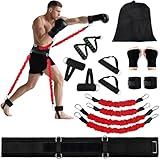
Resistance bands can also be incorporated into shadow boxing. You can loop a resistance band around your wrists or ankles to add resistance to your punches and footwork. Resistance bands offer a different type of resistance than weights, as the resistance increases as you stretch the band. They can be used to improve muscle endurance, and can also be used to target specific muscle groups, such as the shoulders, arms, and legs. Another option involves using a heavy bag or speed bag. Hitting these bags provides resistance and develops power and technique.
Does Shadow Boxing with Weights Build Muscle?
The short answer is yes, shadow boxing with weights can build muscle, but it’s more nuanced than that. Shadow boxing with weights can contribute to muscle growth, but it’s not the primary method for building significant muscle mass. The effectiveness depends on several factors, including the type of weights used, the intensity of the workout, and your overall training program.
Hand weights can help build muscle, but the amount of weight they provide is often limited. They are more effective for building muscle endurance and toning the muscles. Weighted gloves provide more resistance, and they can be more effective for building muscle, particularly in the arms and shoulders. However, they can also put more stress on your joints, so it’s important to use them with caution and proper technique. Resistance bands can contribute to muscle growth, but they are not as effective as weights for building significant muscle mass. They are more effective for improving muscle endurance and targeting specific muscle groups.
For muscle growth to occur, you need to challenge your muscles with enough resistance to create the necessary stress. This is where the concept of progressive overload comes in. If you’re using hand weights, you may need to increase the weight or the number of repetitions to continually challenge your muscles. If you’re using weighted gloves, you might gradually increase the weight of the gloves or the duration of your workouts. (See Also: Are Boxing Classes Worth It )
Shadow boxing with weights can also build muscle in the core and legs. The core muscles are engaged to stabilize your body during punches and footwork, and the leg muscles are used for movement and power generation. The intensity of your workout also plays a role in muscle growth. High-intensity workouts, with short rest periods, can stimulate muscle growth more effectively than lower-intensity workouts with longer rest periods.
The Benefits Beyond Muscle Growth
Even if shadow boxing with weights isn’t the most efficient way to build muscle, it still offers several other benefits that make it a valuable addition to your fitness routine. One of the most significant benefits is the improvement in punching power. Adding weights increases the resistance, which forces your muscles to work harder, leading to greater power output. This can translate into more powerful punches during sparring or in a real fight.
Shadow boxing with weights also improves your endurance. The increased resistance makes your muscles fatigue faster, which forces them to adapt and become more efficient. This increased endurance will help you maintain your energy levels during longer workouts or sparring sessions. It also helps improve your cardiovascular fitness. The combination of punching and footwork, with the added resistance of weights, elevates your heart rate, which improves your cardiovascular health. Shadow boxing with weights also helps to improve your coordination and agility.
The added weight challenges your balance and coordination, forcing your body to adapt and become more efficient. It is also an excellent method for burning calories. The high-intensity nature of shadow boxing, combined with the added resistance of weights, can burn a significant number of calories. This makes it a useful tool for weight loss or maintaining a healthy weight. Shadow boxing with weights is also a great way to relieve stress. The repetitive movements and the physical exertion can help to release endorphins, which have mood-boosting effects. It is also a very versatile workout.
You can do it anywhere, anytime, and it requires no equipment beyond the weights. It is also a full-body workout. Shadow boxing with weights engages multiple muscle groups, from your shoulders and arms to your core and legs. It is also a fun and engaging workout. It can be a great way to break up the monotony of your regular workouts and keep you motivated.
How to Shadow Box with Weights Safely and Effectively
To get the most out of shadow boxing with weights and minimize the risk of injury, it’s essential to follow some guidelines. Start slowly. If you’re new to shadow boxing with weights, start with lighter weights and gradually increase the weight as you get stronger. Begin with hand weights of 1-3 pounds and gradually increase the weight as you become more comfortable. For weighted gloves, start with a lighter weight (8-12 ounces) and gradually increase the weight as your strength improves.
Focus on your technique. Proper form is essential to prevent injuries. Make sure you maintain the correct punching technique, with your elbows close to your body and your fists in the correct position. Keep your core engaged to stabilize your body and protect your back. Warm-up before each workout. Before you start shadow boxing with weights, warm up your muscles with some light cardio and dynamic stretching. This will help to prepare your body for the workout and reduce the risk of injury. Cool down after each workout. After your workout, cool down with some static stretching. This will help to reduce muscle soreness and improve your flexibility. Listen to your body and take breaks when needed. If you feel any pain, stop and rest. Don’t push yourself too hard, especially when you’re first starting out. Vary your workouts to avoid overtraining. Include different types of exercises in your routine, such as cardio, strength training, and flexibility exercises. This will help to prevent injuries and keep your workouts interesting. (See Also: Does Boxing Classes Help With Weight Loss )
Here’s a sample shadow boxing routine with weights:
| Exercise | Sets | Reps/Duration | Weight |
|---|---|---|---|
| Warm-up (Jumping jacks, arm circles, etc.) | 1 | 5 minutes | – |
| Shadow Boxing (Jab, cross, hook, uppercut) | 3 | 3 minutes per round, 1-minute rest | 2-3 lb hand weights or 8-12 oz gloves |
| Footwork Drills (Shuffle, pivot, etc.) | 3 | 3 minutes per round, 1-minute rest | – |
| Core Exercises (Plank, Russian twists) | 3 | 15-20 reps | – |
| Cool-down (Stretching) | 1 | 5 minutes | – |
Remember to adjust the weight and intensity based on your fitness level and comfort. Proper form is crucial. If you’re new to boxing or weight training, consider working with a trainer to ensure you’re using the correct technique.
Consider your goals. If your primary goal is to build muscle, shadow boxing with weights should be part of a comprehensive training program that includes strength training with heavier weights. Shadow boxing with weights is a great addition to your training, but it shouldn’t be the only method you use to build muscle. Prioritize Nutrition and Rest. No matter your workout routine, good nutrition and rest are essential for muscle growth. Make sure you’re eating a balanced diet with enough protein, carbs, and fats, and get enough sleep to allow your muscles to recover and grow.
Alternatives and Complementary Exercises
While shadow boxing with weights can be a beneficial part of your fitness routine, it’s important to consider other exercises that can further enhance your muscle-building efforts and overall fitness. Traditional weight training is the most effective way to build significant muscle mass. Exercises like squats, bench presses, deadlifts, and overhead presses recruit multiple muscle groups and allow you to lift heavier weights. These exercises provide the stimulus needed to trigger substantial muscle growth.
Bodyweight exercises are a great option for building strength and muscle, especially if you don’t have access to weights. Exercises like push-ups, pull-ups, and dips can be modified to increase the challenge and promote muscle growth. High-Intensity Interval Training (HIIT) is a great way to improve your cardiovascular fitness and burn calories. HIIT workouts involve short bursts of intense exercise followed by brief rest periods. This type of training can also help to build muscle, especially if you incorporate exercises that engage multiple muscle groups.
Plyometrics are exercises that involve explosive movements, such as jump squats and box jumps. These exercises can help to improve your power and explosiveness, as well as build muscle. Resistance band exercises can be used to add resistance to your workouts and target specific muscle groups. Resistance bands are a versatile and affordable piece of equipment that can be used for a variety of exercises. Consider incorporating a variety of exercises into your routine to ensure you’re working all muscle groups and preventing muscle imbalances. Combining different types of exercises will help you achieve your fitness goals more effectively.
Conclusion
So, does shadow boxing with weights build muscle? The answer is a qualified yes. While it can contribute to muscle growth, especially in the arms and shoulders, it’s not the most efficient method for building substantial muscle mass. It is a fantastic addition to your routine to improve punching power, endurance, and cardiovascular fitness.
When incorporating weights into your shadow boxing, remember to prioritize proper technique and gradually increase the weight and intensity. Combine shadow boxing with weights with a well-rounded fitness plan that includes strength training, proper nutrition, and adequate rest. This will help you maximize your muscle-building potential and achieve your fitness goals. Embrace the challenge, enjoy the process, and watch your fitness journey transform!