Ever wonder if you can build serious strength without ever hitting a heavy bag? Shadow boxing, the art of fighting an imaginary opponent, might seem like a warm-up, but it’s a powerful tool for developing your physique. It’s accessible, requires minimal equipment, and can be done anywhere. But does shadow boxing increase strength, and if so, how does it work?
We’ll explore the science behind it, the muscles involved, and the best techniques to maximize your gains. Forget the gym for a moment; we’ll show you how to transform your living room into a training ground. From beginners to seasoned fighters, there’s something to learn. Let’s get started and see if shadow boxing can help you build the strength you desire!
The Fundamentals of Shadow Boxing
Shadow boxing is more than just throwing punches into thin air. It’s a dynamic exercise that simulates the movements of a real fight. It emphasizes footwork, balance, and the proper execution of punches, blocks, and defensive maneuvers. The absence of an actual opponent allows you to focus on form, speed, and strategic thinking. But how does this translate into increased strength?
Key Components of Shadow Boxing
- Footwork: Agility, balance, and the ability to move quickly in all directions.
- Punching Technique: Proper form, power generation, and combinations.
- Defense: Blocking, slipping, and weaving to avoid imaginary attacks.
- Mental Focus: Visualization, strategy, and staying present in the moment.
Muscles Worked During Shadow Boxing
Shadow boxing is a full-body workout. It activates a wide range of muscle groups, contributing to both strength and endurance. While the upper body is the primary focus, the lower body and core play crucial roles in power generation and stability. Let’s break down the major muscle groups involved:
Upper Body Muscles
- Shoulders (Deltoids): Responsible for raising the arms, executing punches, and providing stability.
- Chest (Pectorals): Involved in the power behind punches, particularly hooks and uppercuts.
- Back (Latissimus Dorsi, Trapezius, Rhomboids): Support the shoulders, stabilize the upper body, and contribute to pulling motions.
- Arms (Biceps, Triceps): Crucial for punching, blocking, and overall arm strength.
Lower Body Muscles
- Legs (Quadriceps, Hamstrings, Calves): Provide the power for footwork, balance, and transferring force into punches.
- Glutes: Key for power generation, especially in hooks and uppercuts.
Core Muscles
- Abdominals (Rectus Abdominis, Obliques): Stabilize the torso, generate rotational power, and protect the spine.
- Lower Back (Erector Spinae): Support the spine and maintain posture during movement.
How Shadow Boxing Contributes to Strength Gains
Shadow boxing builds strength through several mechanisms, although it’s not a direct replacement for weightlifting. It primarily develops muscular endurance and functional strength. Here’s how:
Increased Muscular Endurance
Shadow boxing involves repetitive movements over extended periods. This constant contraction and relaxation of muscles improves their ability to withstand fatigue. This endurance is crucial for combat sports, but it also translates to everyday activities.
Functional Strength Development
Unlike isolated exercises, shadow boxing requires the coordinated use of multiple muscle groups. This type of training builds functional strength, which is the ability to perform real-world movements efficiently. It improves coordination, balance, and overall athleticism.
Enhanced Muscle Fiber Recruitment
When you shadow box, your muscles are constantly working to stabilize your body, generate power, and execute movements. This requires the recruitment of various muscle fibers. Training consistently improves the efficiency with which your body recruits and uses these fibers, leading to increased strength over time.
Improved Neuromuscular Efficiency
Shadow boxing trains your nervous system to send signals to your muscles more effectively. This improved neuromuscular efficiency leads to faster reaction times, increased power output, and better coordination. The more efficient your nervous system is, the stronger you will feel.
Shadow Boxing Techniques to Maximize Strength
To get the most out of shadow boxing for strength, focus on these techniques:
Proper Form and Technique
Prioritize form over speed. Ensure your punches, blocks, and footwork are executed correctly. Incorrect form can lead to injuries and limit your strength gains. Watch videos of professional boxers and practice in front of a mirror to self-assess.
Vary Your Training
Don’t stick to the same routine. Mix up your punches, footwork, and defensive maneuvers. This variety keeps your muscles challenged and prevents plateaus.
Increase Intensity Gradually
Start with shorter rounds and gradually increase the duration and intensity of your shadow boxing sessions. This allows your muscles to adapt and grow stronger over time. Don’t push yourself too hard too soon. (See Also: Does Shadow Boxing Really Work )
Use Resistance
Adding resistance can significantly boost your strength gains. Consider these options:
- Light Dumbbells: Hold dumbbells during shadow boxing to increase the load on your muscles. Start with light weights and gradually increase.
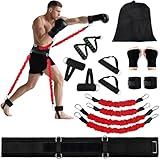
- Resistance Bands: Attach resistance bands to your wrists or ankles to add resistance to your punches and footwork.
- Weighted Vest: Wearing a weighted vest increases the overall load on your body, improving strength and endurance.
Focus on Core Engagement
Actively engage your core throughout your shadow boxing sessions. This not only enhances your power but also protects your spine and improves your balance. Imagine pulling your belly button towards your spine and maintaining a tight core.
Visualization and Mental Training
Visualize your punches connecting and your defense being effective. Mental rehearsal can improve your performance and strength. Imagine yourself fighting a specific opponent or mastering certain combinations.
Incorporate Plyometrics
Plyometric exercises like jump squats, burpees, and jump rope can be incorporated into your shadow boxing routine. These explosive movements improve power and overall athleticism.
Sample Shadow Boxing Routine for Strength
Here’s a sample routine to get you started. Adjust the round times and rest periods based on your fitness level.
Warm-Up (5 Minutes)
- Jumping jacks
- High knees
- Butt kicks
- Arm circles
Shadow Boxing Rounds (3 Rounds of 3 Minutes Each)
- Round 1: Focus on basic punches (jab, cross, hook, uppercut) with good form.
- Round 2: Combine punches with footwork (slipping, weaving, bobbing).
- Round 3: Incorporate defensive techniques (blocks, parries) and counter-punching.
Cool-Down (5 Minutes)
- Light stretching
- Deep breathing
Shadow Boxing vs. Other Strength Training Methods
How does shadow boxing stack up against other strength training methods? Let’s compare it to weightlifting and bodyweight exercises:
| Method | Primary Focus | Equipment Needed | Strength Gains | Other Benefits |
|---|---|---|---|---|
| Shadow Boxing | Muscular Endurance, Functional Strength | Minimal (optional: light dumbbells, resistance bands) | Moderate | Improves coordination, balance, cardiovascular fitness, mental focus |
| Weightlifting | Maximal Strength, Hypertrophy | Weights (barbells, dumbbells, machines) | High | Increases muscle mass, bone density, metabolic rate |
| Bodyweight Exercises | Functional Strength, Muscle Endurance | None (or minimal, e.g., pull-up bar) | Moderate | Improves flexibility, coordination, can be done anywhere |
Integrating Shadow Boxing Into Your Training Regimen
Shadow boxing can be a valuable addition to any training program, whether you’re a boxer, a martial artist, or just looking to improve your fitness. Here’s how you can incorporate it effectively:
As a Warm-Up
Shadow boxing is an excellent way to warm up before a weightlifting session or a more intense workout. It prepares your muscles for activity, improves blood flow, and enhances your coordination.
As a Standalone Workout
If you’re short on time or don’t have access to a gym, shadow boxing can be a complete workout on its own. It’s a great option for cardio, strength, and coordination. Aim for 3-5 sessions per week, lasting 30-60 minutes each.
Supplementing Other Training
Combine shadow boxing with weightlifting or bodyweight exercises for a well-rounded fitness regimen. For example, you could do a weightlifting session focusing on strength one day and shadow box the next for active recovery.
Active Recovery
On rest days, shadow boxing can serve as active recovery. The light exercise promotes blood flow and helps reduce muscle soreness. Keep the intensity low and focus on technique and form.
Potential Drawbacks and Considerations
While shadow boxing offers many benefits, there are also some potential drawbacks to consider: (See Also: Are Boxing Classes Worth It )
Not a Substitute for Traditional Strength Training
Shadow boxing primarily focuses on endurance and functional strength, not maximal strength or hypertrophy. If your goal is to build significant muscle mass or increase your one-rep max, you’ll need to incorporate weightlifting.
Risk of Injury
While less risky than sparring, shadow boxing still carries a risk of injury, especially if you have poor form or overtrain. Always focus on proper technique and listen to your body.
Limited Muscle Growth
Shadow boxing alone may not be enough to induce significant muscle growth. To build muscle, you need to provide a sufficient stimulus for your muscles to adapt and grow. Weightlifting is generally more effective for this purpose.
Boredom
Some people find shadow boxing repetitive or boring. To overcome this, vary your routines, listen to music, or visualize different scenarios to keep things interesting.
Expert Tips for Shadow Boxing
Here are some expert tips to help you get the most out of your shadow boxing sessions:
Focus on Rhythm and Timing
Develop a good sense of rhythm and timing in your punches. This will improve your power, speed, and coordination.
Practice Combinations
Learn and practice different punch combinations. This will make your shadow boxing sessions more engaging and effective.
Use a Mirror
Practice in front of a mirror to check your form and make sure you’re executing your techniques correctly.
Record Yourself
Record your shadow boxing sessions and review them to identify areas for improvement.
Listen to Your Body
Take rest days and don’t overtrain. Overtraining can lead to injuries and limit your progress.
Stay Consistent
Consistency is key to seeing results. Aim to shadow box regularly, even if it’s just for a short period each day.
The Science Behind Shadow Boxing and Strength
The benefits of shadow boxing are rooted in the principles of exercise physiology. The repetitive movements and varied muscle activation contribute to several physiological adaptations: (See Also: Does Boxing Classes Help With Weight Loss )
Muscle Fiber Recruitment
Shadow boxing recruits both slow-twitch and fast-twitch muscle fibers. Slow-twitch fibers are used for endurance, while fast-twitch fibers are used for power. Regular shadow boxing training improves the efficiency of both fiber types.
Cardiovascular Benefits
Shadow boxing elevates your heart rate, improving your cardiovascular health. This leads to increased blood flow, improved oxygen delivery to your muscles, and reduced risk of heart disease.
Hormonal Response
Exercise, including shadow boxing, stimulates the release of hormones that support muscle growth and recovery. These include testosterone, growth hormone, and insulin-like growth factor (IGF-1).
Metabolic Adaptations
Consistent shadow boxing can improve your metabolism, helping you burn more calories and fat. It also enhances your body’s ability to use energy efficiently.
Can Shadow Boxing Build Muscle?
Shadow boxing can contribute to muscle development, especially in terms of muscular endurance. However, it’s not as effective as weightlifting for building significant muscle mass.
How Often Should I Shadow Box?
Aim for 3-5 sessions per week, lasting 30-60 minutes each. Adjust the frequency and duration based on your fitness level and goals.
Do I Need Any Equipment for Shadow Boxing?
No, shadow boxing requires minimal equipment. You can use light dumbbells, resistance bands, or a weighted vest to add resistance.
Can Shadow Boxing Help with Weight Loss?
Yes, shadow boxing is a great way to burn calories and improve your metabolism, which can contribute to weight loss.
How Long Does It Take to See Results From Shadow Boxing?
You may start to see improvements in your cardiovascular fitness and coordination within a few weeks. Strength gains will take longer, typically several weeks or months, depending on your training intensity and consistency.
Is Shadow Boxing Good for Beginners?
Yes, shadow boxing is suitable for beginners. Start with shorter rounds and focus on proper form. Gradually increase the duration and intensity as you get fitter.
Can I Shadow Box Every Day?
You can shadow box most days of the week, but it’s important to incorporate rest days to allow your muscles to recover. Overtraining can lead to injuries and hinder your progress.
Final Verdict
So, does shadow boxing increase strength? The answer is a qualified yes. While it won’t replace the need for weightlifting if your primary goal is to build significant muscle mass, shadow boxing is a fantastic way to develop muscular endurance, functional strength, and overall athleticism. It offers a full-body workout that improves coordination, balance, and cardiovascular fitness, all while providing a great way to burn calories and improve your mental focus.
By incorporating the techniques and routines described, you can maximize your gains and transform your shadow boxing sessions into a powerful tool for achieving your fitness goals. Embrace the discipline, focus on proper form, and enjoy the journey. Shadow boxing is a versatile and effective exercise that anyone can use to improve their strength, fitness, and overall well-being. Get ready to punch your way to a stronger you!