Ever wondered if your shadow boxing sessions are doing more than just improving your footwork and reflexes? Specifically, are you curious about whether they contribute to building stronger biceps? It’s a common question, and the answer, as with most things related to fitness, is nuanced. We’re going to explore this in detail.
Shadow boxing, at its core, is a fantastic full-body workout. It mimics the movements of actual boxing, allowing you to practice your punches, combinations, and defensive maneuvers without an opponent. But does this translate into muscle growth, particularly in the biceps? Let’s break down the science, the techniques, and the realities of shadow boxing for biceps development. We’ll examine the biomechanics of punches and how they engage your arm muscles.
This article will delve into the specific muscle groups involved, the training principles to maximize biceps engagement, and how to incorporate shadow boxing effectively into your overall fitness regimen. Whether you’re a seasoned boxer or a fitness enthusiast, you’ll gain valuable insights into optimizing your shadow boxing for biceps development.
Understanding the Biceps Muscle
Before we get into shadow boxing, let’s establish a solid understanding of the biceps brachii. The biceps, as many know, is a two-headed muscle located on the front of your upper arm. Its primary functions are elbow flexion (bending your arm) and supination (rotating your forearm so your palm faces up). It also assists in shoulder flexion.
Biceps Anatomy Breakdown:
- Long Head: Originates from the supraglenoid tubercle of the scapula (shoulder blade).
- Short Head: Originates from the coracoid process of the scapula.
- Insertion: Both heads converge and insert onto the radial tuberosity of the radius (forearm bone).
The biceps is actively involved in pulling movements and is a key player in many everyday activities, from lifting groceries to opening a door. In boxing, the biceps contributes to the power and speed of punches, particularly hooks and uppercuts.
The Biomechanics of Punching and Biceps Engagement
Now, let’s examine how the biceps is utilized during different boxing punches. Understanding this is crucial to determine how shadow boxing can influence biceps development.
The Jab
The jab, the most fundamental punch, primarily relies on shoulder and triceps strength for extension. However, the biceps plays a supporting role. As you extend your arm, the biceps helps stabilize the elbow joint and prevent hyperextension. While not the primary mover, it’s still engaged isometrically (holding a position without significant movement).
The Cross
The cross, thrown from the rear hand, involves a greater degree of shoulder rotation and power generation. The biceps assists in maintaining elbow stability during the power transfer from the legs and core. The biceps is more actively involved than in a jab, but the primary muscles are still the shoulder, triceps, and core.
The Hook
The hook is where the biceps comes into play more significantly. The bending of the elbow to bring the fist towards the head, and the subsequent snap of the arm, engages the biceps directly. The biceps contributes to the explosive flexion of the elbow, generating the power and speed required for a strong hook. (See Also: Does Shadow Boxing Really Work )
The Uppercut
The uppercut, similar to the hook, heavily relies on elbow flexion. The upward trajectory of the punch necessitates a strong biceps contraction to bring the fist up and strike the target. This punch provides a good workout for the biceps, especially when done with proper technique.
Key Takeaway: The hook and uppercut are the punches that most directly engage the biceps during shadow boxing. The jab and cross involve the biceps, but to a lesser degree, primarily for stabilization.
How Shadow Boxing Impacts Biceps Development
Shadow boxing can contribute to biceps development, but it’s important to understand the limitations and how to maximize its effectiveness. Consider these points:
- Resistance: Shadow boxing primarily uses your body weight as resistance. This is less intense than lifting weights or using resistance bands.
- Repetition: The high number of repetitions in shadow boxing can build muscular endurance.
- Technique: Proper technique is crucial. Poor form can reduce biceps engagement and increase the risk of injury.
- Intensity: The intensity of your shadow boxing session will greatly affect its impact. The harder and faster you punch, the more your muscles will be challenged.
The Role of Punching Speed and Power: The speed and power you generate in your punches during shadow boxing greatly influence biceps engagement. Fast, explosive punches require more muscle fiber recruitment, including those in the biceps. Focusing on proper technique and generating maximum power with each punch is essential.
Maximizing Biceps Engagement in Shadow Boxing
Here’s how to optimize your shadow boxing sessions to get the most out of your biceps:
Focus on Hook and Uppercut Combinations
As mentioned earlier, these punches directly engage the biceps. Practice combinations that emphasize hooks and uppercuts. For example, try jab-hook-uppercut or cross-hook-uppercut combinations. Varying the combinations keeps your muscles challenged and engaged in different ways.
Emphasize Elbow Flexion
Ensure you are fully flexing your elbow during hooks and uppercuts. Visualize the movement and consciously squeeze your biceps as you bring your fist towards your target. This mindful approach helps to activate the biceps more effectively.
Use Proper Form
Maintaining correct form is paramount. This prevents injuries and ensures that your biceps and other muscles are activated efficiently. Keep your core engaged, your shoulders relaxed, and your elbows tucked in during your punches. Watch videos of professional boxers to understand proper technique.
Vary Your Training
To avoid plateaus and keep your muscles challenged, vary your shadow boxing routines. Change the number of rounds, the speed of your punches, and the combinations you use. Incorporate different stances and footwork drills to work different muscle groups. Consider using shadow boxing with hand weights. (See Also: Are Boxing Classes Worth It )
Increase Intensity
Work on increasing the intensity of your shadow boxing. This could involve increasing the speed of your punches, adding more explosive power to each punch, or increasing the duration of your rounds. Interval training, such as shadow boxing for a set time followed by a rest period, can enhance intensity.
Consider Incorporating Resistance
While shadow boxing primarily uses bodyweight, you can add resistance to increase biceps activation. This can be achieved through:
- Hand Weights: Using light hand weights (1-3 lbs) can increase the resistance during shadow boxing.
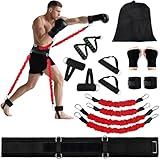
- Resistance Bands: Wrap resistance bands around your hands or forearms to add resistance to your punches.
Important Note: If using hand weights or resistance bands, start with lighter resistance and gradually increase it. Prioritize proper form over weight. If you feel any pain, stop immediately.
Shadow Boxing vs. Other Biceps Exercises
Let’s compare shadow boxing to other common biceps exercises to understand its place in a comprehensive fitness routine:
| Exercise | Primary Focus | Biceps Engagement | Equipment | Pros | Cons |
|---|---|---|---|---|---|
| Shadow Boxing | Cardiovascular fitness, boxing technique, full-body coordination | Moderate, primarily in hooks and uppercuts | None (or light hand weights/resistance bands) | Improves boxing skills, burns calories, enhances coordination | Less effective for hypertrophy (muscle growth) compared to weight training. |
| Bicep Curls (with dumbbells) | Biceps isolation | High | Dumbbells, barbell | Effective for muscle growth, allows for progressive overload | Doesn’t improve cardiovascular fitness or boxing skills |
| Hammer Curls (with dumbbells) | Biceps, brachialis, and brachioradialis | High | Dumbbells | Targets multiple arm muscles, good for overall arm development | Doesn’t improve boxing skills |
| Chin-ups | Back, biceps | High | Pull-up bar | Excellent for overall upper body strength, works multiple muscle groups simultaneously | Requires a pull-up bar, can be challenging for beginners |
Key Takeaway: Shadow boxing is a great supplementary exercise for biceps development, but it’s not a replacement for targeted weight training. A well-rounded fitness plan incorporates both.
Integrating Shadow Boxing Into Your Fitness Routine
To maximize the benefits of shadow boxing for your biceps, integrate it strategically into your overall fitness routine. Here are some guidelines:
Warm-Up
Always warm up before shadow boxing. Start with light cardio, such as jumping jacks or jogging in place, to increase blood flow to your muscles. Follow this with dynamic stretching, such as arm circles, shoulder rotations, and torso twists.
Shadow Boxing Session
Structure your shadow boxing sessions. Aim for 3-5 rounds of 2-3 minutes each, with a 1-minute rest between rounds. Focus on proper technique and varied combinations. Incorporate hooks and uppercuts, focusing on your biceps.
Cool-Down
Cool down after your shadow boxing session. Perform static stretches, holding each stretch for 20-30 seconds. Focus on stretching your arms, shoulders, and back. This helps improve flexibility and reduce muscle soreness. (See Also: Does Boxing Classes Help With Weight Loss )
Combine with Strength Training
Combine shadow boxing with traditional strength training exercises. Perform weightlifting sessions 2-3 times per week, focusing on exercises that target the biceps, such as bicep curls, hammer curls, and chin-ups. Alternate your shadow boxing days with your strength training days to allow your muscles time to recover.
Nutrition and Rest
Proper nutrition and rest are essential for muscle growth and recovery. Consume a balanced diet with sufficient protein to support muscle repair. Get at least 7-8 hours of sleep per night to allow your body to recover and rebuild muscle tissue. Drink plenty of water to stay hydrated.
Progressive Overload
To continue seeing results, you need to apply the principle of progressive overload. This means gradually increasing the demands on your muscles over time. For shadow boxing, this could involve:
- Increasing the number of rounds.
- Increasing the duration of the rounds.
- Adding more explosive power to your punches.
- Using hand weights or resistance bands.
For weight training, this could involve increasing the weight you lift, the number of repetitions, or the number of sets.
Common Mistakes to Avoid
Avoiding common mistakes will help you to enhance your results and reduce the risk of injury. Here are some of them:
- Poor Form: Always prioritize proper technique over speed or power. Incorrect form can lead to injuries and reduce biceps engagement.
- Neglecting Other Muscle Groups: Shadow boxing is a full-body workout. Don’t only focus on your biceps; make sure you are engaging your core, legs, and shoulders.
- Overtraining: Give your muscles enough time to recover. Overtraining can lead to injuries and hinder muscle growth. Listen to your body and take rest days when needed.
- Lack of Variety: Repeating the same routines can lead to plateaus. Vary your exercises and combinations to keep your muscles challenged.
- Ignoring Nutrition and Rest: Muscle growth requires proper nutrition and adequate rest. Make sure to consume a balanced diet and get enough sleep.
Advanced Techniques and Drills
Once you are comfortable with the basics, consider these advanced techniques to boost your biceps engagement:
- Focus Mitt Work: Partner with a coach or friend and practice hitting focus mitts. This allows for specific punch combinations and increased power output, which engages the biceps more effectively.
- Heavy Bag Training: Hitting a heavy bag can provide more resistance than shadow boxing. Focus on hooks and uppercuts to activate your biceps.
- Plyometric Training: Incorporate plyometric exercises, such as medicine ball throws or clap push-ups, to improve your explosive power. This will translate into more powerful punches during shadow boxing.
- Shadow Boxing with Resistance Bands: Wrap resistance bands around your forearms or hands to add extra resistance to your punches. This will increase the challenge to your biceps and other muscles.
- Isometric Holds: Incorporate isometric holds during your shadow boxing routine. For example, hold your arm in a flexed position for 30 seconds after throwing a hook or uppercut.
The Role of Genetics and Individual Differences
It is important to remember that individual results may vary based on genetics, training history, and other factors. Some people may naturally develop stronger biceps than others. However, with consistent effort and proper training, anyone can improve their biceps strength and size.
Factors to Consider:
- Genetics: Your genetic makeup can influence your muscle fiber type distribution, which can affect your potential for muscle growth.
- Training History: If you have a history of weight training, you may see results faster than someone who is new to exercise.
- Age: Muscle mass naturally declines with age. However, consistent training can help you maintain and even increase muscle mass as you get older.
- Consistency: The key to success is consistency. Stick to your training plan and adjust it as needed.
Listen to Your Body: Pay attention to your body and adjust your training accordingly. If you feel pain, stop and rest. Consult with a healthcare professional or a certified personal trainer if you have any concerns.
Conclusion
While shadow boxing is an excellent full-body workout that significantly improves cardiovascular fitness, boxing technique, and overall coordination, its direct impact on biceps development is moderate. The hook and uppercut are the primary punches that engage the biceps. To maximize biceps engagement, focus on these punches, emphasizing elbow flexion, maintaining proper form, and incorporating techniques like hand weights or resistance bands.
Shadow boxing can be a valuable part of a broader fitness regimen that incorporates targeted strength training exercises, like bicep curls, hammer curls, and chin-ups, to achieve optimal muscle growth. By combining shadow boxing with a balanced diet, adequate rest, and progressive overload, you can effectively enhance your biceps strength and achieve your fitness goals. Remember to prioritize proper technique, listen to your body, and vary your training to keep your muscles challenged and prevent plateaus.