Ever wondered if you can get stronger just by throwing punches at the air? Shadow boxing, the art of boxing without a physical opponent, is a fantastic way to improve your technique, footwork, and endurance. But does shadow boxing build strength? The answer isn’t a simple yes or no; it’s more nuanced than that. It depends on how you approach it and what you’re looking to achieve.
We’re going to break down the mechanics of shadow boxing, explore its benefits, and analyze whether it contributes to building muscle and increasing overall strength. I’ll share some tips on how to incorporate shadow boxing into your workout routine to maximize its potential. Get ready to learn about the science behind those punches and how to make the most of your shadow boxing sessions.
By the end of this article, you’ll have a clear understanding of what shadow boxing can do for you and how to use it effectively to reach your fitness goals. Let’s get started!
The Fundamentals of Shadow Boxing
Shadow boxing is essentially practicing boxing without a real opponent. It involves simulating punches, footwork, and defensive movements. The beauty of shadow boxing lies in its accessibility; all you need is space and your commitment. You can do it anywhere, anytime. It’s a great warm-up, a cool-down, or a full-blown workout in itself.
The core elements of shadow boxing include:
- Stance: Maintaining a proper boxing stance is crucial. This involves having your non-dominant foot slightly forward, knees bent, and hands up to protect your face.
- Footwork: Moving around, pivoting, and stepping in and out of range are essential. Good footwork helps you maintain balance and set up your punches.
- Punches: Practicing various punches, such as jabs, crosses, hooks, and uppercuts, with proper form. Focus on speed, accuracy, and power.
- Defense: Simulating defensive moves like slipping, rolling, and blocking punches. This helps improve your reaction time and evasiveness.
- Rhythm and Timing: Maintaining a steady pace and timing your punches and movements. This helps develop your coordination and flow.
Shadow boxing isn’t just about throwing punches; it’s about practicing the entire art of boxing. It’s about visualizing an opponent, anticipating their moves, and reacting accordingly. This mental aspect is a significant part of what makes shadow boxing so effective.
How Shadow Boxing Works: The Science Behind the Moves
To understand whether shadow boxing builds strength, we need to look at how it impacts your body. Shadow boxing primarily engages the following muscle groups:
- Shoulders: The deltoids are heavily involved in throwing punches.
- Arms: The biceps and triceps work to extend and retract your arms during punches.
- Core: Your abdominal muscles stabilize your body and transfer power from your legs to your punches.
- Legs: Your quads, hamstrings, and calves provide the power for footwork and generate force for your punches.
- Back: The muscles in your back help maintain posture and generate rotational power.
When you shadow box, your muscles contract and relax repeatedly. This repeated action leads to muscular endurance. However, the resistance is minimal since you’re punching air. This means the intensity is lower compared to lifting weights or hitting a heavy bag.
The energy system used during shadow boxing is primarily the aerobic system, especially during longer sessions. This means your body uses oxygen to produce energy, which is excellent for cardiovascular health and endurance. Shorter, more intense bursts can also tap into the anaerobic system, which is crucial for power.
The type of muscle fiber recruitment is also important. Shadow boxing recruits both fast-twitch and slow-twitch muscle fibers. Fast-twitch fibers are responsible for explosive movements, while slow-twitch fibers are used for endurance. The balance between these fiber types is key to becoming a well-rounded boxer.
Does Shadow Boxing Build Strength Directly?
The short answer is: Shadow boxing alone doesn’t directly build significant strength in the same way that weightlifting does. (See Also: Does Shadow Boxing Really Work )
Here’s why:
- Resistance: There’s no external resistance. You’re punching air, so the muscles aren’t being challenged to the same degree as when lifting weights or hitting a heavy bag.
- Progressive Overload: To build strength, you need to progressively increase the resistance or intensity. Shadow boxing doesn’t naturally provide this.
However, shadow boxing can contribute to strength in several indirect ways:
- Muscle Endurance: Shadow boxing significantly improves muscular endurance, which is the ability of your muscles to perform repeated contractions over time. This is beneficial for overall fitness and can indirectly support strength development.
- Technique and Form: Practicing proper form in shadow boxing helps you engage the correct muscles and develop better technique. This can lead to more efficient and powerful punches when you do engage in strength training or hit a heavy bag.
- Core Strength: The constant core engagement during shadow boxing helps to strengthen your abdominal muscles, which are crucial for generating power and stabilizing your body.
- Mental Toughness: Shadow boxing can be physically and mentally demanding. It requires focus, discipline, and the ability to push yourself. This mental toughness can be invaluable in other forms of strength training.
Therefore, while shadow boxing might not directly build the kind of strength you get from lifting weights, it lays a solid foundation for strength development by improving endurance, technique, and core strength.
Shadow Boxing vs. Other Strength Training Methods
Let’s compare shadow boxing with other strength training methods to get a clearer picture of its role in building strength.
Shadow Boxing vs. Weightlifting
Weightlifting is the gold standard for building strength. It involves using external resistance (weights) to challenge your muscles, leading to muscle growth (hypertrophy) and increased strength. Weightlifting provides a clear path for progressive overload, where you gradually increase the weight you lift over time.
Shadow boxing, on the other hand, lacks external resistance. While it improves muscular endurance, it doesn’t provide the same stimulus for muscle growth. However, shadow boxing is excellent for developing technique, footwork, and cardiovascular fitness, which complement weightlifting.
Key Differences:
| Feature | Shadow Boxing | Weightlifting |
|---|---|---|
| Resistance | Minimal (air) | External weights (barbells, dumbbells, machines) |
| Muscle Growth | Limited | Significant |
| Endurance | High | Moderate to High |
| Technique | Excellent | Can be improved with practice |
| Cardiovascular | High | Moderate |
Shadow Boxing vs. Heavy Bag Training
Heavy bag training bridges the gap between shadow boxing and weightlifting. Hitting a heavy bag provides external resistance, which is greater than punching air. This resistance challenges your muscles, leading to strength gains over time. Heavy bag training also improves punching power, technique, and coordination.
Shadow boxing, as we know, focuses on technique, footwork, and endurance without the resistance of a heavy bag. It’s a great warm-up for heavy bag work and helps refine your form.
Key Differences: (See Also: Are Boxing Classes Worth It )
| Feature | Shadow Boxing | Heavy Bag Training |
|---|---|---|
| Resistance | Minimal (air) | External (bag weight) |
| Muscle Growth | Limited | Moderate |
| Punching Power | Improves technique, indirectly | Directly improves |
| Impact on Joints | Lower | Higher |
| Cardiovascular | High | High |
Shadow Boxing vs. Bodyweight Exercises
Bodyweight exercises, such as push-ups, squats, and planks, use your body weight as resistance. They build strength and muscle mass, especially when performed with proper form and progressive overload (e.g., doing more reps or sets over time).
Shadow boxing offers different benefits, focusing on specific boxing movements, footwork, and cardiovascular fitness. While shadow boxing engages some of the same muscles as bodyweight exercises, it does so in a different way, emphasizing speed, agility, and coordination.
Key Differences:
| Feature | Shadow Boxing | Bodyweight Exercises |
|---|---|---|
| Resistance | Minimal (air) | Your body weight |
| Muscle Growth | Limited | Moderate |
| Specificity | Boxing-focused | General fitness |
| Cardiovascular | High | Moderate |
| Equipment | None | None |
While shadow boxing is not a direct substitute for weightlifting or heavy bag training, it serves as a valuable tool for improving boxing-specific skills, endurance, and overall fitness.
How to Incorporate Shadow Boxing for Strength and Fitness
To maximize the benefits of shadow boxing, you need to approach it strategically. Here’s how to integrate it into your workout routine:
Warm-Up
Use shadow boxing as a warm-up. Before any workout, including weightlifting or heavy bag training, 5-10 minutes of shadow boxing can get your muscles ready and increase blood flow. This will improve your performance and reduce the risk of injury. Focus on light, controlled movements, and gradually increase the intensity as your body warms up.
Technique Practice
Prioritize technique. Shadow boxing is the perfect time to focus on your form. Practice different punches, footwork drills, and defensive maneuvers. Record yourself to identify areas for improvement. Use a mirror to check your posture, hand positioning, and footwork. Consistency in practicing proper technique is key to building good habits.
Workout Integration
Combine with strength training. Shadow boxing can be an excellent addition to your strength training routine. For example, you might do a set of squats followed by a round of shadow boxing to improve your conditioning and coordination. This combination will make your workouts more dynamic and engaging.
Interval Training
Use interval training. Structure your shadow boxing sessions using intervals. For example, alternate between 3 minutes of high-intensity shadow boxing and 1 minute of rest. This type of training will significantly improve your cardiovascular fitness and muscular endurance. Vary the intervals to keep your body challenged.
Cool-Down
Use it as a cool-down. After your workout, shadow box for 5-10 minutes at a lower intensity. This helps to gradually bring your heart rate down and allows your muscles to recover. Focus on light stretching and controlled movements to improve flexibility and reduce muscle soreness. (See Also: Does Boxing Classes Help With Weight Loss )
Adding Resistance
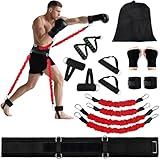
Consider resistance bands. While shadow boxing doesn’t provide significant resistance on its own, you can add resistance bands to increase the challenge. Loop a band around your wrists or ankles to create additional resistance during your punches and footwork drills. This can help to build strength and muscle endurance.
Focus on Core
Engage your core. Throughout your shadow boxing sessions, make a conscious effort to engage your core muscles. This will improve your balance, power, and stability. Think about keeping your abs tight and your spine straight. Proper core engagement is crucial for transferring power from your lower body to your punches.
Consistency Is Key
Be consistent. Like any form of exercise, the benefits of shadow boxing come with consistency. Aim to shadow box at least 2-3 times per week, even if it’s just for 20-30 minutes each time. Regular practice will improve your technique, endurance, and overall fitness.
By following these tips, you can effectively incorporate shadow boxing into your fitness routine to enhance your strength, conditioning, and boxing skills.
Common Mistakes to Avoid
To get the most out of shadow boxing, avoid these common mistakes:
- Poor Form: Always prioritize proper technique over speed or power. Bad form can lead to injuries and limit your progress. Focus on maintaining a good stance, keeping your hands up, and executing each punch correctly.
- Neglecting Footwork: Footwork is just as important as punching. Practice moving around, pivoting, and stepping in and out of range. Poor footwork can throw off your balance and reduce your effectiveness.
- Inconsistent Practice: Shadow boxing is most effective when done regularly. Aim for at least a few sessions per week to see consistent improvements.
- Ignoring Defense: Don’t just focus on punching. Practice slipping, rolling, and blocking to improve your defensive skills. This is crucial for both your technique and overall fitness.
- Overdoing It: While shadow boxing is generally low-impact, overtraining can lead to fatigue and injuries. Listen to your body and take rest days when needed.
- Lack of Visualization: Don’t just go through the motions. Visualize an opponent and react accordingly. This mental aspect is essential for developing your boxing skills.
By avoiding these mistakes, you can significantly enhance your shadow boxing experience and achieve better results.
Maximizing Your Shadow Boxing Workouts
Here are some advanced tips to elevate your shadow boxing sessions:
- Use a Mirror: A mirror is invaluable for checking your form and making adjustments. It helps you see what you’re doing and identify areas for improvement.
- Record Yourself: Record your shadow boxing sessions and review them later. This allows you to spot any flaws in your technique that you might not notice while you’re exercising.
- Vary Your Routine: Don’t do the same routine every time. Mix up your punches, footwork, and defensive moves to keep things interesting and challenge your body in new ways.
- Add Weights: Consider using light hand weights or wrist weights to increase the intensity of your workout. This will help to build more muscle endurance and strength.
- Practice Combinations: Learn and practice various punch combinations. This will improve your coordination, timing, and overall boxing skills.
- Focus on Speed and Power: Vary your pace during your shadow boxing sessions. Incorporate bursts of speed and power, followed by periods of controlled movements.
- Incorporate Footwork Drills: Practice specific footwork drills, such as the shuffle, pivot, and step-and-slide. This will help to improve your agility and coordination.
- Use Music: Create a playlist of upbeat music to keep you motivated and energized. Music can help you maintain a steady pace and make your workouts more enjoyable.
- Visualize Your Opponent: Imagine a specific opponent and visualize how you would react to their moves. This mental aspect is key to improving your boxing skills.
- Train with a Coach: If possible, work with a boxing coach. They can provide personalized feedback and help you refine your technique.
By incorporating these advanced tips, you can take your shadow boxing workouts to the next level and achieve even better results.
Final Thoughts
So, does shadow boxing build strength? While it may not be a primary strength-building exercise like weightlifting, shadow boxing plays a vital role in developing muscular endurance, improving technique, and enhancing core strength. It’s a fantastic tool for improving overall fitness, cardiovascular health, and boxing-specific skills.
By understanding the mechanics, incorporating it strategically into your routine, and avoiding common mistakes, you can harness the full potential of shadow boxing. It’s a versatile and accessible exercise that complements other strength training methods. Remember to focus on proper form, consistency, and incorporating variety to keep your workouts engaging and effective.
Shadow boxing is more than just throwing punches at the air; it’s a comprehensive workout that benefits both your body and your mind. Embrace it as part of your fitness journey, and you’ll undoubtedly see improvements in your strength, endurance, and overall boxing ability.