Ever wondered if you can sculpt a physique just by throwing punches at thin air? Shadow boxing, the art of boxing without a physical opponent, is a fantastic workout. It’s accessible – all you need is yourself and a little space. But does shadow boxing build muscle? That’s the million-dollar question for anyone looking to get fit without heavy equipment or a sparring partner.
We’ll explore the science behind shadow boxing, breaking down how it works your muscles and the types of muscle growth you can expect. This isn’t just about throwing punches; it’s about understanding the mechanics, the intensity, and the variations that make shadow boxing an effective tool. We’ll also cover the crucial elements of a good shadow boxing routine, from technique to duration, and how to maximize your results. Let’s get started!
The Science of Shadow Boxing and Muscle Growth
Shadow boxing, at its core, is a form of resistance training. While you’re not lifting weights, your muscles are still working against resistance – the resistance of your own body weight and the inertia created by your movements. When you throw a punch, your muscles contract to generate force, and when you retract, they work to control the movement. This constant tension is what stimulates muscle growth.
The type of muscle growth you experience from shadow boxing falls into two primary categories: hypertrophy and muscular endurance. Hypertrophy refers to the increase in muscle size due to the enlargement of muscle fibers. Muscular endurance is the ability of a muscle or group of muscles to perform repeated contractions against resistance for an extended period.
Shadow boxing leans more towards building muscular endurance, but it can also contribute to hypertrophy. The degree to which you build muscle depends on various factors, including the intensity of your workouts, the frequency, and your diet. We will examine these factors in detail.
Muscle Groups Targeted by Shadow Boxing
Shadow boxing is a full-body workout. It engages a wide array of muscle groups, from your core to your shoulders and legs. Here’s a breakdown of the key muscle groups involved:
- Shoulders (Deltoids): Essential for throwing punches and maintaining arm position.
- Chest (Pectorals): Involved in the pushing motion of punches.
- Back (Latissimus Dorsi, Trapezius): Stabilize your upper body and assist with pulling motions.
- Arms (Biceps, Triceps): Used for both throwing and retracting punches, and provide the power for each strike.
- Core (Abdominals, Obliques): Crucial for stability, rotation, and generating power.
- Legs (Quadriceps, Hamstrings, Calves): Used for footwork, balance, and transferring power from the ground.
Each punch, dodge, and step requires a coordinated effort from these muscle groups, contributing to overall strength and conditioning.
How Shadow Boxing Stimulates Muscle Growth
Shadow boxing stimulates muscle growth through a few key mechanisms:
- Muscle Fiber Recruitment: When you shadow box, you’re recruiting muscle fibers to generate force. The more fibers you recruit, the greater the potential for growth.
- Metabolic Stress: Intense workouts create metabolic stress, which can lead to muscle growth.
- Muscle Damage: Microscopic damage to muscle fibers during exercise is repaired and rebuilt bigger and stronger.
The intensity of your shadow boxing sessions is crucial. High-intensity intervals, where you alternate between periods of high-speed punching and rest, are particularly effective for stimulating muscle growth. This type of training helps recruit more muscle fibers and increase metabolic stress.
Building an Effective Shadow Boxing Routine
To maximize muscle growth from shadow boxing, it’s essential to structure your workouts effectively. A well-designed routine should incorporate various elements, including warm-up, technique drills, combinations, and cool-down.
Warm-Up
Before you start shadow boxing, it’s crucial to warm up your muscles to prevent injuries and prepare your body for exercise. A proper warm-up increases blood flow to your muscles and improves flexibility. Here’s a good warm-up routine:
- Jumping jacks: 2 minutes.
- Arm circles: 1 minute forward, 1 minute backward.
- High knees: 1 minute.
- Butt kicks: 1 minute.
- Dynamic stretching: Arm swings, leg swings, torso twists (5 minutes).
Technique Drills
Focus on perfecting your technique. Proper form is essential for maximizing muscle engagement and preventing injuries. Practice the basic punches – jab, cross, hook, and uppercut – slowly, focusing on proper form. Then, gradually increase the speed. Here are some tips: (See Also: Does Shadow Boxing Really Work )
- Stance: Maintain a balanced stance with your feet shoulder-width apart.
- Guard: Keep your hands up to protect your face.
- Footwork: Move around the “ring” with light, agile steps.
- Breathing: Exhale when you punch and inhale when you retract.
Punch Combinations
Once you’ve mastered the basics, incorporate punch combinations into your routine. This will challenge your muscles in new ways and improve your coordination. Here are some examples:
- Jab-cross
- Jab-cross-hook
- Jab-cross-hook-uppercut
- Cross-hook-cross
Mix up your combinations to keep your muscles guessing. Vary the speed and power of your punches during these combinations.
Shadow Boxing Workout Structure
Here’s a sample shadow boxing workout structure you can follow:
- Warm-up: (10 minutes) Dynamic stretching and light cardio.
- Technique Drills: (10 minutes) Focus on individual punches, working on form and speed.
- Punch Combinations: (15 minutes) Perform various combinations, focusing on power and accuracy.
- Footwork Drills: (10 minutes) Practice lateral movements, pivots, and other footwork patterns.
- Cool-down: (5 minutes) Static stretching, holding each stretch for 30 seconds.
Cool-Down
After your workout, cool down with static stretching. Hold each stretch for 30 seconds to improve flexibility and reduce muscle soreness. Focus on stretching the muscles you worked during your shadow boxing session, such as your shoulders, arms, chest, back, and legs. This helps to improve flexibility and reduce muscle soreness.
The Role of Intensity and Duration
The intensity and duration of your shadow boxing sessions are critical factors in muscle growth. High-intensity workouts, where you push yourself to your limits, are more effective for stimulating muscle fibers. Here’s how to optimize your sessions:
High-Intensity Interval Training (hiit)
HIIT is a great way to incorporate intensity into your shadow boxing. Alternate between high-speed punching intervals and rest periods. For example:
- 30 seconds of high-speed punching
- 30 seconds of rest
Repeat this cycle for 15-20 minutes. This type of training helps recruit more muscle fibers and increase metabolic stress.
Workout Duration
The duration of your shadow boxing sessions should gradually increase as your fitness improves. Start with shorter sessions (20-30 minutes) and gradually increase the duration to 45-60 minutes. Don’t overdo it, especially when you’re starting. Overtraining can lead to injuries and hinder muscle growth.
Frequency of Workouts
To see results, aim to shadow box 3-5 times per week. Allow for rest days to give your muscles time to recover and rebuild. Consistency is key.
Nutrition and Recovery for Muscle Growth
Shadow boxing can build muscle, but your diet and recovery are just as important. Think of it like this: your workouts are the stimulus, and your diet and rest are the building blocks. Here’s what you need to know:
Protein Intake
Protein is the building block of muscle. Consume enough protein to repair and rebuild muscle tissue after your workouts. Aim for about 0.8 to 1 gram of protein per pound of body weight per day. Good sources of protein include: (See Also: Are Boxing Classes Worth It )
- Lean meats: Chicken, turkey, beef.
- Fish: Salmon, tuna.
- Eggs: Whole eggs are a great source of protein and nutrients.
- Dairy: Milk, yogurt, cheese.
- Plant-based protein: Beans, lentils, tofu, tempeh.
Calorie Intake
To build muscle, you need to consume more calories than you burn. This is called a caloric surplus. However, avoid eating too many calories, as this can lead to excessive fat gain. Focus on consuming nutrient-dense foods.
Carbohydrates and Fats
Carbohydrates provide energy for your workouts. Choose complex carbohydrates like whole grains, fruits, and vegetables. Healthy fats are important for overall health and hormone production. Include sources of healthy fats in your diet, such as avocados, nuts, and olive oil.
Hydration
Drink plenty of water throughout the day, especially before, during, and after your workouts. Dehydration can hinder muscle growth and performance.
Recovery
Recovery is crucial for muscle growth. Get enough sleep (7-9 hours per night) to allow your muscles to repair and rebuild. Consider using foam rolling or massage to reduce muscle soreness and improve recovery.
Comparing Shadow Boxing with Other Forms of Exercise
Let’s compare shadow boxing with other popular forms of exercise to understand its strengths and weaknesses in relation to muscle growth.
Shadow Boxing vs. Weight Training
Weight training is generally more effective for building muscle mass because it directly targets muscle fibers with progressive overload. You can gradually increase the weight you lift, continually challenging your muscles. However, shadow boxing offers benefits that weight training doesn’t always provide, such as improved cardiovascular fitness, coordination, and agility. Here’s a table comparing the two:
| Feature | Shadow Boxing | Weight Training |
|---|---|---|
| Primary Goal | Cardiovascular fitness, muscular endurance, coordination | Muscle hypertrophy and strength |
| Equipment | None required | Weights, machines |
| Muscle Growth | Moderate, focuses on endurance | High, focuses on hypertrophy |
| Cardio | High | Can be incorporated |
| Full Body Workout | Yes | Can be, depending on the routine |
Shadow Boxing vs. Calisthenics
Calisthenics uses your body weight for resistance, similar to shadow boxing. Calisthenics can be a great way to build muscle. However, calisthenics exercises like push-ups, pull-ups, and squats often directly target specific muscle groups, allowing for more focused muscle growth. Shadow boxing is more of a full-body workout, which might be less efficient for targeting specific muscle groups for hypertrophy. However, it excels in improving overall fitness and coordination.
| Feature | Shadow Boxing | Calisthenics |
|---|---|---|
| Focus | Full-body, coordination | Targeted muscle groups |
| Muscle Growth | Moderate, full body | Can be high, depending on the exercise |
| Equipment | None required | None required, or minimal (e.g., pull-up bar) |
| Cardio | High | Moderate |
Shadow Boxing vs. Boxing with a Heavy Bag
Boxing with a heavy bag provides more direct resistance than shadow boxing. The impact of hitting a heavy bag increases muscle engagement and can lead to more significant muscle growth. However, shadow boxing is still valuable, especially for improving technique, footwork, and cardiovascular fitness. Also, heavy bag workouts require equipment and more space than shadow boxing.
| Feature | Shadow Boxing | Boxing with a Heavy Bag |
|---|---|---|
| Resistance | Bodyweight | Heavy bag |
| Muscle Growth | Moderate | Higher |
| Technique | Excellent for practicing technique | Good for power and technique |
| Equipment | None | Heavy bag, gloves, wraps |
Advanced Techniques and Variations
To keep things interesting and continue seeing results, try incorporating these advanced techniques and variations into your shadow boxing routine:
Adding Resistance
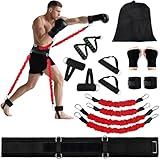
Use resistance bands or light dumbbells to increase the challenge. Loop a resistance band around your wrists or ankles to increase the resistance during punches or footwork drills. Light dumbbells can be held while punching, but be careful not to compromise your form.
Focus Mitts
If you have access to a partner, using focus mitts is a great way to practice your punches with resistance and improve your technique. This also adds an element of realism to your training. (See Also: Does Boxing Classes Help With Weight Loss )
Plyometrics
Incorporate plyometric exercises, such as jump squats, box jumps, and plyometric push-ups, into your routine to improve your explosive power and agility. This will translate into more powerful punches.
Vary Your Footwork
Experiment with different footwork patterns, such as lateral movements, pivots, and weaving, to improve your agility and coordination. This will also make your workouts more dynamic and engaging.
Shadow Boxing with Music
Listen to music with a fast tempo to keep your energy levels high and motivate you to push harder. Choose songs with a consistent beat to help you maintain your rhythm and timing.
Common Mistakes to Avoid
To get the most out of your shadow boxing workouts and prevent injuries, avoid these common mistakes:
Poor Form
Always prioritize proper form over speed or power. Incorrect form can lead to injuries and reduce the effectiveness of your workouts. Watch videos of professional boxers and practice your technique in front of a mirror.
Not Warming Up Properly
Always warm up before your shadow boxing session. A proper warm-up prepares your body for exercise and reduces your risk of injury.
Neglecting Your Core
Your core muscles are essential for generating power and maintaining balance. Make sure to engage your core throughout your shadow boxing sessions. Incorporate core exercises into your routine, such as planks, Russian twists, and bicycle crunches.
Overdoing It
Don’t overtrain. Overtraining can lead to injuries and hinder muscle growth. Allow your muscles time to recover between workouts.
Lack of Consistency
Be consistent with your shadow boxing workouts. Aim to shadow box 3-5 times per week to see results.
Ignoring Nutrition and Recovery
Remember that your diet and recovery are just as important as your workouts. Consume enough protein, calories, and carbohydrates to support muscle growth. Get enough sleep and rest to allow your muscles to recover.
Final Thoughts
So, does shadow boxing build muscle? The answer is a qualified yes. While it may not be as effective as weight training for building large amounts of muscle mass, shadow boxing is a fantastic way to build muscular endurance, improve your overall fitness, and develop a lean physique. The intensity of your workouts, your diet, and your recovery all play a role in your results.
By incorporating the right techniques, focusing on proper form, and staying consistent with your workouts, you can use shadow boxing to build muscle, improve your cardiovascular health, and become a more well-rounded athlete. Combine shadow boxing with a healthy diet and ample rest, and you’ll be well on your way to achieving your fitness goals. Embrace the sweat, perfect your form, and enjoy the journey!