Ever watched a boxer gracefully move, throwing punches at thin air? That’s shadow boxing. It’s a fundamental part of a boxer’s training, but does shadow boxing actually work for the average person? The short answer is a resounding yes! Shadow boxing is more than just a warm-up; it’s a comprehensive workout that builds skills and fitness.
It’s accessible to everyone, regardless of experience or equipment. You don’t need a heavy bag or a sparring partner to reap the rewards. This guide will explore the many benefits of shadow boxing, how to do it correctly, and how to incorporate it into your fitness routine. We’ll cover everything from stance and footwork to different punch combinations and workout routines. Get ready to learn how to transform yourself, one shadow punch at a time!
What Is Shadow Boxing?
Shadow boxing is essentially boxing against an imaginary opponent. It involves mimicking the movements of a boxing match, including punches, footwork, and defensive maneuvers, all without a physical opponent or target. It allows boxers to practice their technique, improve their form, and build muscle memory. It’s a solo exercise that can be done anywhere, anytime, making it a highly accessible and versatile training method.
The beauty of shadow boxing lies in its simplicity. All you need is yourself, some space, and a desire to improve. You can tailor your shadow boxing sessions to focus on specific areas of your boxing technique or use it as a full-body workout. Beginners can start with basic punches and footwork, while more experienced boxers can incorporate complex combinations and defensive strategies.
The Core Components of Shadow Boxing
To understand how shadow boxing works, let’s break down its essential components:
- Stance: The foundation of any good boxing technique. It involves proper foot placement, body positioning, and weight distribution.
- Footwork: Crucial for movement, agility, and setting up punches. Includes techniques like shuffling, pivoting, and cutting angles.
- Punches: The offensive aspect, including jabs, crosses, hooks, and uppercuts. Practicing these with correct form is key.
- Defense: Protecting yourself from imaginary attacks through techniques like slipping, rolling, and blocking.
- Rhythm and Timing: Developing a sense of flow and coordination, crucial for effective boxing.
The Benefits of Shadow Boxing
Shadow boxing offers a wide range of benefits that extend beyond just boxing skills. It’s a fantastic full-body workout with cardiovascular, muscular, and mental advantages. Let’s delve into the specifics:
1. Cardiovascular Health
Shadow boxing is an excellent cardiovascular workout. The continuous movement, combined with the explosive nature of the punches, elevates your heart rate, improving your cardiovascular fitness. Regular shadow boxing sessions can lead to:
- Increased Endurance: Your body becomes more efficient at delivering oxygen to your muscles.
- Lower Blood Pressure: Exercise helps regulate blood pressure, reducing the risk of heart disease.
- Improved Heart Health: Stronger heart muscles mean a healthier cardiovascular system.
2. Muscular Endurance and Strength
Shadow boxing works multiple muscle groups simultaneously. The constant punching, footwork, and defensive movements build muscular endurance and strength. Key muscle groups involved include: (See Also: Does Shadow Boxing Really Work )
- Shoulders and Arms: For punching power and endurance.
- Core: For stability, power generation, and balance.
- Legs: For footwork, power, and overall agility.
- Back: For posture and power transfer.
By regularly shadow boxing, you’ll see improvements in your overall strength and endurance, making everyday activities easier.
3. Technical Skill Development
Shadow boxing is invaluable for honing your boxing technique. It allows you to focus on the nuances of your form without the pressure of a live opponent. This leads to:
- Improved Punching Form: Practicing punches repeatedly helps you refine your technique, making your punches more efficient and powerful.
- Enhanced Footwork: Practicing footwork patterns improves your agility, balance, and ability to move around the ring.
- Better Defensive Skills: Practicing slipping, rolling, and blocking helps you develop defensive instincts.
- Muscle Memory: Repeated movements create muscle memory, making the techniques feel more natural and automatic.
4. Calorie Burning and Weight Loss
Shadow boxing is a high-intensity workout, making it an effective way to burn calories. The combination of cardio and strength training helps:
- Burn Calories: A 30-minute shadow boxing session can burn a significant number of calories.
- Boost Metabolism: Increased muscle mass from shadow boxing can boost your metabolism, helping you burn more calories even at rest.
- Aid in Weight Loss: Regular shadow boxing, combined with a healthy diet, can contribute to weight loss and body composition improvements.
5. Mental Benefits
Shadow boxing is not just a physical workout; it also offers significant mental benefits:
- Stress Relief: The repetitive movements and physical exertion can help reduce stress and release endorphins.
- Improved Focus: Concentrating on your technique and maintaining proper form enhances focus and concentration.
- Increased Confidence: As you improve your skills and fitness, your confidence naturally grows.
How to Shadow Box Effectively
To get the most out of your shadow boxing sessions, it’s essential to practice correctly. Here’s a step-by-step guide:
1. The Boxing Stance
The boxing stance is the foundation of everything. Here’s how to achieve a proper stance:
- Foot Placement: Stand with your feet shoulder-width apart, one foot slightly ahead of the other. If you are right-handed, your left foot should be forward (southpaw for lefties).
- Knee Bend: Slightly bend your knees to lower your center of gravity and improve balance.
- Weight Distribution: Distribute your weight evenly, with a slight bias towards the balls of your feet.
- Body Angle: Turn your body slightly to the side, protecting your chin with your shoulder.
- Hands Up: Keep your hands up near your face, ready to defend. Elbows should be tucked in to protect your body.
2. Footwork Drills
Footwork is crucial for agility and positioning. Practice these drills: (See Also: Are Boxing Classes Worth It )
- Shuffle: Slide your feet sideways, maintaining your stance.
- Pivot: Turn on the balls of your feet to change direction.
- Step and Slide: Move your lead foot, then slide the back foot to maintain your stance.
- Cutting Angles: Move around your imaginary opponent, creating different angles to set up your punches.
3. Basic Punches
Start with these fundamental punches:
- Jab: A straight punch thrown with your lead hand. Keep your elbow tucked in and snap your arm out.
- Cross: A straight punch thrown with your rear hand. Rotate your hips and shoulders for power.
- Hook: A punch thrown with a bent arm, targeting the side of your opponent’s head or body.
- Uppercut: A punch thrown upwards, targeting the chin or body.
4. Punch Combinations
Combine punches for more effective attacks. Start with simple combinations and gradually increase the complexity:
- Jab-Cross: A classic combination, delivering a quick jab followed by a powerful cross.
- Jab-Jab-Cross: Adding another jab to the mix for a quick one-two-three punch.
- Jab-Cross-Hook: Combining the straight punches with a hook for a more diverse attack.
- Practice these combinations with good form and speed.
5. Defensive Techniques
Learn these defensive moves to protect yourself:
- Slipping: Move your head to the side to avoid punches.
- Rolling: Duck under punches, rotating your body.
- Blocking: Use your gloves to block incoming punches.
6. Putting It All Together: A Sample Shadow Boxing Routine
Here’s a sample routine you can follow:
- Warm-up (3-5 minutes): Jumping jacks, high knees, arm circles.
- Stance and Footwork (5 minutes): Practice your stance, shuffle, pivot, and step-and-slide drills.
- Punch Combinations (10 minutes): Perform various punch combinations, focusing on form and speed.
- Defense Drills (5 minutes): Practice slipping, rolling, and blocking.
- Cool-down (3-5 minutes): Stretching and deep breathing.
7. Tips for Effective Shadow Boxing
- Focus on Form: Prioritize proper technique over speed.
- Visualize an Opponent: Imagine a real opponent and react to their movements.
- Maintain Rhythm: Keep a steady pace and flow.
- Use a Mirror: Watch yourself in a mirror to check your form.
- Vary Your Routine: Change up your combinations and footwork to keep things interesting.
- Time Your Rounds: Use rounds like a real boxing match (3 minutes on, 1 minute rest).
- Stay Consistent: Regular practice is key to seeing results.
Shadow Boxing Workouts for Beginners and Advanced Boxers
Here are some sample workouts tailored for different skill levels:
Beginner Shadow Boxing Workout
- Warm-up (3 minutes): Jumping jacks, arm circles, high knees.
- Stance and Footwork (5 minutes): Practice your stance, shuffle, and step-and-slide.
- Basic Punches (10 minutes): Jab, cross, hook, uppercut, focusing on form.
- Combination Practice (7 minutes): Jab-cross, jab-jab-cross.
- Cool-down (5 minutes): Stretching, deep breathing.
Intermediate Shadow Boxing Workout
- Warm-up (5 minutes): Jumping jacks, arm circles, high knees, dynamic stretching.
- Footwork Drills (5 minutes): Shuffle, pivot, cutting angles.
- Punch Combinations (15 minutes): Jab-cross, jab-jab-cross, jab-cross-hook, and other combinations.
- Defense Drills (5 minutes): Slipping, rolling, blocking.
- Cool-down (5 minutes): Stretching, deep breathing.
Advanced Shadow Boxing Workout
- Warm-up (5 minutes): Dynamic stretching, shadow boxing with light weights.
- Footwork and Agility (7 minutes): Complex footwork patterns, agility drills.
- Combination Drills (18 minutes): Long combinations, incorporating feints and head movement.
- Defense and Counter-Punching (10 minutes): Focus on countering imaginary attacks.
- Cool-down (5 minutes): Stretching, meditation.
Adding Variety and Intensity to Your Workouts
To keep your shadow boxing workouts challenging and engaging, try these techniques:
- Use Weighted Gloves: Increase the resistance to build more strength and endurance.
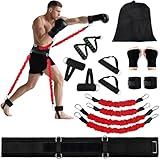
- Add Resistance Bands: Place resistance bands around your ankles or wrists to increase the difficulty of footwork and punches.
- Incorporate HIIT: Alternate between high-intensity intervals of shadow boxing and short rest periods.
- Use a Punching Bag: Integrate shadow boxing with bag work for a more comprehensive workout.
- Record Yourself: Analyze your form and identify areas for improvement.
- Listen to Music: Upbeat music can help you maintain a good rhythm and boost your motivation.
- Train with a Partner: Have a partner call out combinations or simulate punches for you to react to.
Common Mistakes to Avoid
To prevent injuries and maximize your results, avoid these common mistakes: (See Also: Does Boxing Classes Help With Weight Loss )
- Poor Form: Always prioritize proper technique over speed or power.
- Neglecting Footwork: Good footwork is essential for balance, agility, and power.
- Ignoring Defense: Practice defensive techniques to improve your overall boxing skills.
- Not Warming Up: Always warm up before starting your shadow boxing session.
- Overdoing It: Start slowly and gradually increase the intensity and duration of your workouts.
- Not Cooling Down: Always cool down and stretch after your workout to prevent muscle soreness and improve flexibility.
Integrating Shadow Boxing Into Your Fitness Routine
Shadow boxing is a versatile exercise that can be easily integrated into your existing fitness routine. Here are some ways to do it:
- As a Warm-up: Use shadow boxing for 5-10 minutes before your main workout to prepare your body.
- As a Standalone Workout: Dedicate 20-30 minutes to shadow boxing several times a week.
- In Combination with Other Exercises: Alternate shadow boxing rounds with other exercises like push-ups, squats, or burpees.
- As a Cool-down: Use shadow boxing for light activity after your main workout.
By incorporating shadow boxing into your fitness routine, you can improve your cardiovascular health, build strength and endurance, and develop your boxing skills. Remember to listen to your body, focus on proper form, and gradually increase the intensity of your workouts.
Shadow Boxing and Other Forms of Exercise
Shadow boxing complements other forms of exercise effectively. Here’s how it can fit in:
- Cardio: Combine shadow boxing with running, swimming, or cycling to improve your overall cardiovascular fitness.
- Strength Training: Incorporate shadow boxing into your strength training routine to build muscular endurance and burn more calories.
- Cross-Training: Use shadow boxing as a form of cross-training to improve your overall athleticism and prevent boredom.
The versatility of shadow boxing makes it a valuable addition to any fitness plan.
Nutrition and Shadow Boxing
Optimal nutrition is essential to fuel your shadow boxing workouts and maximize your results. Here are some tips:
- Eat a Balanced Diet: Consume a variety of fruits, vegetables, lean proteins, and whole grains.
- Stay Hydrated: Drink plenty of water before, during, and after your workouts.
- Time Your Meals: Eat a meal with carbohydrates and protein 1-2 hours before your workout.
- Consider Supplements: If needed, consider supplements like protein powder or creatine to support your fitness goals.
Proper nutrition will help you recover faster, build muscle, and maintain energy levels during your shadow boxing sessions.
Verdict
So, does shadow boxing actually work? Absolutely! It’s a fantastic exercise for anyone looking to improve their fitness, boxing skills, and overall well-being. From building cardiovascular health and muscular strength to enhancing technical skills and providing mental benefits, shadow boxing offers a comprehensive approach to fitness.
By understanding the fundamentals, practicing the correct techniques, and incorporating it into your routine, you can experience the transformative power of shadow boxing. Whether you are a beginner or an experienced athlete, shadow boxing provides a challenging and rewarding workout that can be done anywhere, anytime. Start shadow boxing today and see the difference it makes!