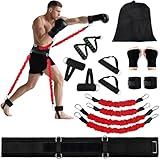
Ever wondered if your boxing workout is doing more than just building your biceps? You might be surprised to learn that it’s a fantastic way to target your hips! Boxing, with its dynamic movements and explosive power, is a full-body workout. It engages muscles you might not even realize you’re using, and the hips are a central player in almost every punch and movement.
In this comprehensive guide, we’re going to explore the fascinating connection between boxing and hip strength, flexibility, and overall conditioning. We’ll break down the specific boxing techniques that actively work your hips, the benefits you can expect, and how you can tailor your training to maximize hip engagement. Get ready to learn how boxing can transform your physique and improve your athletic performance.
We will also provide practical advice and workout examples that you can incorporate into your routine, whether you’re a seasoned boxer or just starting your fitness journey. Let’s get started and discover the power of boxing for your hips!
The Crucial Role of Hips in Boxing
Before diving into how boxing works the hips, it’s essential to understand why the hips are so critical in this sport. They’re not just passive participants; they are the power generators, the stability providers, and the key to efficient movement. Think of your hips as the engine of your boxing technique.
Power Generation
The hips are the primary source of power in boxing punches. When you throw a punch, the movement starts with your legs and core, which then transfer energy up through your hips, culminating in the force of your punch. Without strong and mobile hips, your punches will lack power and impact. The rotational force generated in the hips is what gives your punches their knockout potential. The greater the hip rotation, the more power you can generate.
Stability and Balance
Boxing involves constant movement – footwork, pivoting, dodging, and weaving. Your hips are responsible for maintaining your balance and stability throughout these movements. A strong hip girdle helps keep you grounded, preventing you from being easily knocked off balance by your opponent’s punches or your own powerful strikes. Think of your hips as the foundation upon which your boxing skills are built.
Mobility and Flexibility
Hip mobility and flexibility are essential for executing a wide range of boxing techniques. High mobility allows you to rotate your torso quickly and generate more power in your punches, while also enabling you to avoid your opponent’s strikes. Flexibility in your hips helps you maintain a good fighting stance, pivot effectively, and move fluidly around the ring. Tight hips can restrict movement and hinder your ability to react quickly.
Boxing Techniques That Work Your Hips
Several fundamental boxing techniques directly engage and strengthen your hips. Understanding these techniques is key to appreciating how boxing can be a comprehensive hip workout. Let’s break down some of the most effective movements:
The Jab
The jab, often considered the most basic punch, is a great example of hip involvement. While seemingly simple, a powerful jab requires a slight rotation of the hips to generate force. As you extend your arm, your hips subtly rotate forward, adding power and reach to the punch. You’ll feel a slight twist in your core and hips as you deliver the jab.
The Cross
The cross, or straight right (for a right-handed boxer), is where the hip power really shines. This punch involves a significant hip rotation. As you throw the cross, you pivot your back foot, transferring your weight and rotating your hips forward. This hip rotation is the primary source of power for the cross, generating a strong, impactful punch. Proper technique ensures that you pivot your foot and drive the hip into the punch. (See Also: Does Shadow Boxing Really Work )
The Hook
The hook, a punch delivered in a sideways arc, also relies heavily on hip movement. The hook involves a powerful rotation of the hips and torso, driving the fist towards the target. The hips initiate the movement, rotating towards the side you’re punching on. This rotational force, combined with the arm movement, creates a devastating punch. The hook’s effectiveness is directly linked to the boxer’s ability to generate explosive hip rotation.
The Uppercut
The uppercut, a punch that travels upwards, engages the hips in a different way. To throw an uppercut, you need to sink into your stance, bending your knees and driving upwards with your legs and hips. This upward drive, combined with the arm movement, creates the upward trajectory of the punch. The hips provide the power and lift needed to deliver a successful uppercut.
Footwork and Pivoting
Effective footwork is crucial in boxing, and it’s heavily reliant on hip mobility and control. Pivoting, which involves rotating on the balls of your feet, allows you to change angles and move around your opponent. The hips are directly involved in these pivoting movements, providing the rotational power and stability needed to move quickly and efficiently. Good footwork helps in setting up punches and avoiding your opponent’s attacks.
Defense and Evasion
Defensive movements such as slipping, rolling, and bobbing also engage the hips. Slipping punches involves quickly moving your head and torso to avoid an incoming strike. The hips are used to initiate and control these movements, helping you shift your weight and avoid the punch. Rolling under punches requires a combination of hip flexion and rotation to effectively evade your opponent’s blows. Bobbing and weaving are also dependent on hip flexibility and control.
Benefits of Boxing for Hip Health
Boxing offers a multitude of benefits for hip health, extending far beyond simply building strength. It enhances various aspects of hip function, contributing to overall well-being and athletic performance.
Increased Hip Strength
Boxing workouts involve repetitive movements that directly target the muscles surrounding the hips. The constant rotation, pivoting, and explosive punches strengthen the hip flexors, glutes, and other muscles in the hip region. This increased strength improves your ability to generate power, maintain balance, and perform dynamic movements.
Enhanced Hip Flexibility
The range of motion required in boxing, including the many rotational movements, helps increase hip flexibility. Regular boxing workouts can improve the flexibility of your hip flexors, allowing for a greater range of motion and reducing the risk of injuries. This enhanced flexibility also improves your overall athletic performance and mobility in daily life.
Improved Hip Mobility
Boxing promotes hip mobility by encouraging movement in various planes of motion. This constant movement can break down stiffness and improve the overall functionality of your hips. Improved hip mobility makes it easier to perform everyday activities and reduces the risk of age-related decline in movement.
Better Balance and Stability
The core engagement and dynamic movements in boxing workouts enhance your balance and stability. Strong hips are crucial for maintaining your center of gravity and preventing falls. Improved balance and stability are beneficial for athletes and in everyday life, reducing the risk of injuries and improving coordination. (See Also: Are Boxing Classes Worth It )
Reduced Risk of Injury
By strengthening the muscles around your hips and increasing flexibility and mobility, boxing can reduce the risk of hip-related injuries. A strong and flexible hip joint is more resistant to the stresses of physical activity. Regular boxing workouts can help prevent common hip injuries such as strains, sprains, and imbalances.
Increased Power and Explosiveness
The explosive movements in boxing, such as punches and footwork, improve your power and explosiveness. Stronger and more flexible hips are essential for generating and transferring power to your punches and movements. This increased power can benefit your performance in boxing and other sports.
How to Maximize Hip Engagement in Your Boxing Workout
To get the most out of your boxing workout for your hips, you can incorporate specific exercises and techniques. Here’s how to tailor your training to target your hip muscles effectively:
Focus on Proper Technique
Pay close attention to your form when throwing punches and performing footwork. Ensure that you are rotating your hips correctly and engaging your core. Poor technique can reduce the effectiveness of your workout and increase the risk of injury. Work with a qualified boxing coach to refine your technique and identify areas for improvement.
Incorporate Hip-Specific Exercises
Add exercises that directly target your hip muscles to your workout routine. This can include squats, lunges, hip thrusts, and glute bridges. These exercises will complement your boxing training by building strength and flexibility in your hips. Include these exercises in your warm-up and cool-down to prepare your body for the workout and promote recovery.
Increase Rotational Movements
Focus on rotational exercises to improve hip mobility and flexibility. This includes exercises like torso twists, Russian twists, and medicine ball throws. These movements will help you generate more power in your punches and improve your overall athletic performance. Perform these exercises with proper form to maximize their benefits and avoid injury.
Practice Shadowboxing with Emphasis on Hips
During shadowboxing, consciously focus on rotating your hips and engaging your core. This will help you develop muscle memory and improve your technique. Imagine you are throwing powerful punches, and visualize the hip rotation that is required. This practice will translate into more effective and powerful punches during sparring and in the ring.
Vary Your Training
Mix up your boxing workouts to target different muscle groups and keep your training interesting. This can include different types of punches, footwork drills, and sparring sessions. Varying your training will prevent your body from adapting and keep your workouts challenging. Experiment with different combinations of exercises to maximize the benefits of your workout.
Use Resistance Bands
Incorporate resistance bands into your training to provide additional resistance and challenge your muscles. Resistance bands can be used during various boxing exercises, such as punches, footwork drills, and hip-specific exercises. The added resistance will help build strength and improve your overall performance. Use resistance bands of varying strengths to tailor your workout to your fitness level. (See Also: Does Boxing Classes Help With Weight Loss )
Sample Boxing Workout for Hip Engagement
Here’s a sample boxing workout that emphasizes hip engagement. This workout includes a warm-up, boxing drills, and cool-down to target your hips effectively. Remember to adjust the intensity and duration of the workout based on your fitness level.
Warm-Up (5-10 Minutes)
- Jumping jacks
- High knees
- Butt kicks
- Arm circles
- Hip circles (forward and backward)
- Torso twists
Boxing Drills (25-30 Minutes)
- Shadowboxing: 3 rounds of 3 minutes each, focusing on proper technique and hip rotation.
- Heavy bag work: 3 rounds of 3 minutes each, focusing on power punches and hip rotation (Jab, Cross, Hook, Uppercut).
- Footwork drills: 3 rounds of 2 minutes each, incorporating pivoting, shuffling, and lateral movements.
- Pad work (optional): 3 rounds of 2 minutes each, working with a partner to practice combinations and hip-driven punches.
Hip-Specific Exercises (10-15 Minutes)
- Squats (3 sets of 10-12 reps)
- Lunges (3 sets of 10-12 reps per leg)
- Glute bridges (3 sets of 15-20 reps)
- Hip thrusts (3 sets of 10-12 reps)
Cool-Down (5-10 Minutes)
- Static stretches targeting hips and legs (e.g., hip flexor stretches, hamstring stretches, quad stretches)
- Breathing exercises
Common Mistakes to Avoid
While boxing is a fantastic workout for your hips, there are some common mistakes to avoid to prevent injuries and maximize the effectiveness of your training:
Poor Form
Always prioritize proper form over speed or power. Incorrect technique can lead to injuries and reduce the effectiveness of your workout. Work with a qualified coach to ensure that you are performing the techniques correctly.
Overdoing It
Start slowly and gradually increase the intensity and duration of your workouts. Overtraining can lead to injuries and fatigue. Listen to your body and take rest days when needed. Gradually increase your workload to avoid overexertion.
Ignoring Warm-Up and Cool-Down
Always warm up before your workout and cool down afterward. Warming up prepares your body for exercise, while cooling down helps with recovery. Skipping these essential steps can increase your risk of injury and reduce the benefits of your workout. Include dynamic stretches in your warm-up and static stretches in your cool-down.
Neglecting Other Muscle Groups
Boxing is a full-body workout, so don’t neglect other muscle groups. Focus on a balanced training program that includes exercises for your core, arms, shoulders, and legs. A balanced approach will improve your overall fitness and reduce the risk of imbalances and injuries. Include a variety of exercises to challenge different muscle groups.
Ignoring Pain
Pay attention to your body and stop if you experience any pain. Pushing through pain can lead to serious injuries. Rest and consult with a healthcare professional if you experience any discomfort. Don’t ignore signals from your body.
The Intersection of Boxing and Hip Health
Boxing and hip health are intrinsically linked. Boxing provides a dynamic, engaging, and effective way to strengthen, mobilize, and improve the overall function of your hips. The rotational movements, explosive punches, and constant footwork inherent in boxing provide a comprehensive hip workout. By understanding the techniques that work your hips, incorporating hip-specific exercises, and avoiding common mistakes, you can harness the power of boxing to achieve optimal hip health and performance. Remember to prioritize proper form, listen to your body, and enjoy the journey!
Verdict
Boxing offers a powerful and effective way to engage and strengthen your hips. From generating power in your punches to improving your balance and flexibility, the benefits are numerous. By incorporating specific techniques, focusing on proper form, and adding hip-specific exercises, you can transform your boxing workouts into a complete hip conditioning program. Whether you’re a seasoned boxer or just starting, understanding how boxing works the hips can significantly improve your performance and overall well-being.
Regular boxing workouts can contribute to increased hip strength, enhanced flexibility, and improved mobility, reducing the risk of injuries and increasing your power. So, lace up your gloves, step into the ring, and experience the transformative power of boxing for your hips. You’ll not only improve your boxing skills but also build a stronger, more resilient body. Boxing is a fantastic way to stay fit, have fun, and improve your overall athletic performance.