Ever wondered if you can get a serious workout in without needing any equipment or even a gym? The answer might surprise you! Shadow boxing, the art of throwing punches and combinations at an imaginary opponent, is a fantastic way to improve your fitness. It’s accessible to everyone, from seasoned athletes to complete beginners, and it’s a calorie-torching machine.
In this guide, we’ll explore the ins and outs of shadow boxing for calorie burning. We’ll look at the different techniques, the muscle groups involved, and how to structure your workouts for maximum impact. You’ll learn how to make the most of this versatile exercise, turning your living room or backyard into a personal training arena. Get ready to learn how shadow boxing can become your secret weapon for fitness!
Let’s get started. I’ll guide you through everything you need to know, from the basic stances to advanced training methods, so you can start burning calories and improving your overall fitness today.
The Calorie-Burning Power of Shadow Boxing
Shadow boxing is more than just throwing punches in the air; it’s a full-body workout that engages multiple muscle groups and elevates your heart rate. This combination makes it incredibly effective for burning calories. The exact number of calories burned varies depending on factors like your weight, intensity, and duration of the workout, but you can expect to burn a significant amount in a relatively short period.
Why Shadow Boxing Burns Calories
Several factors contribute to shadow boxing’s calorie-burning potential:
- Full-Body Engagement: Unlike exercises that isolate specific muscle groups, shadow boxing works your entire body. Your legs provide the power, your core stabilizes your movements, and your arms and shoulders deliver the punches.
- Cardiovascular Workout: The constant movement and rapid punching sequences elevate your heart rate, turning shadow boxing into a fantastic cardio exercise. This increased heart rate is key to burning calories and improving cardiovascular health.
- High Intensity: Shadow boxing can be performed at a high intensity, especially if you incorporate fast combinations and footwork drills. Higher intensity workouts lead to a greater calorie burn in a shorter time.
- Metabolic Boost: Exercise, including shadow boxing, can increase your metabolism. This means your body burns more calories even when you’re resting, contributing to overall weight management.
Estimating Calorie Burn
While an exact figure is difficult to pinpoint without specialized equipment, you can estimate the calories you burn during a shadow boxing session. A general guideline is that a 150-pound person can burn approximately 300-400 calories in a 30-minute shadow boxing workout. However, this is just an estimate. The actual calorie burn will vary based on individual factors.
To get a more accurate idea, consider using a heart rate monitor or fitness tracker. These devices can provide a more precise calculation of calories burned based on your heart rate and activity level. Remember that the more intense your workout, the more calories you’ll burn.
Breaking Down the Techniques: Punches and Footwork
To maximize your calorie burn and get the most out of shadow boxing, it’s essential to understand the basic punches and footwork techniques. Proper form not only helps prevent injuries but also ensures you’re engaging the correct muscle groups and maximizing your workout efficiency.
The Basic Punches
Here are the fundamental punches you’ll use in shadow boxing:
- Jab: A straight punch thrown from the lead hand. It’s a quick, snappy punch that’s often used to gauge distance and set up other punches.
- Cross: A straight punch thrown from the rear hand. It’s typically more powerful than the jab due to the added power generated by the rotation of your hips and core.
- Hook: A punch thrown with a bent arm, targeting the side of your opponent’s head or body. It’s a powerful punch that requires good technique to avoid injury.
- Uppercut: A punch thrown from a low position, rising upwards towards your opponent’s chin or body. This punch utilizes the power of your legs and core.
When throwing punches, focus on: (See Also: Does Shadow Boxing Really Work )
- Proper Stance: Stand with your feet shoulder-width apart, one foot slightly ahead of the other. Keep your knees slightly bent and your weight balanced.
- Hand Position: Keep your hands up near your face to protect your chin and jaw.
- Body Rotation: Rotate your hips and core with each punch to generate power.
- Breathing: Exhale as you punch and inhale as you return to your guard position.
Footwork Fundamentals
Footwork is crucial in shadow boxing; it helps you move around, set up punches, and evade imaginary attacks. Mastering these techniques will significantly boost your calorie burn and improve your overall coordination.
- Shuffle: A basic movement where you slide your feet along the ground without crossing them. Use it to move forward, backward, or sideways.
- Pivot: Turning on the ball of your foot to change your angle. This is essential for setting up punches and avoiding your opponent’s attacks.
- Footwork Drills: Practice drills like the “box step” (moving in a square pattern) and the “V-step” (moving forward and backward in a V-shape) to improve your agility and coordination.
Important Tip: Always stay light on your feet. Imagine you’re bouncing slightly, ready to move quickly in any direction. This will help you engage your leg muscles and burn more calories.
Creating Effective Shadow Boxing Workouts
To maximize calorie burn and achieve your fitness goals, it’s essential to structure your shadow boxing workouts effectively. A well-designed workout incorporates a warm-up, the main shadow boxing session, and a cool-down.
Warm-Up (5-10 Minutes)
A proper warm-up prepares your body for the workout, reducing the risk of injury and improving performance. Focus on dynamic stretches that mimic the movements of shadow boxing.
- Jumping Jacks: Get your heart rate up.
- Arm Circles: Warm up your shoulders and arms.
- Leg Swings: Prepare your legs for footwork.
- Shadow Boxing (Light): Throw some light punches and practice footwork to get your body moving.
The Main Shadow Boxing Session (20-30 Minutes)
This is where the calorie burning happens. Structure your session with rounds and rest periods, similar to a real boxing match. Here’s a sample structure:
- Rounds: 3-minute rounds of shadow boxing, alternating between different combinations and drills.
- Rest: 30-60 seconds of rest between rounds.
- Combinations: Vary your punches. Example: Jab-Cross-Hook, or Jab-Jab-Cross-Hook-Uppercut.
- Footwork Drills: Incorporate footwork drills between combinations or during rest periods to improve agility and burn more calories.
- Intensity: Vary the intensity. Include periods of high-intensity punching and footwork, followed by periods of active recovery.
Workout Example:
- Round 1: Jab-Cross-Jab-Cross (3 minutes)
- Rest (30 seconds)
- Round 2: Hook-Hook-Uppercut (3 minutes)
- Rest (30 seconds)
- Round 3: Footwork drills (box step, V-step) (3 minutes)
- Rest (30 seconds)
- Round 4: Jab-Cross-Hook-Uppercut (3 minutes)
- Rest (30 seconds)
- Round 5: Speed round – fast punches and combinations (3 minutes)
Cool-Down (5-10 Minutes)
The cool-down helps your body recover and reduces muscle soreness. Focus on static stretches, holding each stretch for 20-30 seconds.
- Shoulder Stretches: Reach across your body and hold your arm.
- Triceps Stretches: Reach your arm overhead and bend your elbow.
- Hamstring Stretches: Touch your toes.
- Quadriceps Stretches: Hold your foot towards your glutes.
- Cool-down shadow boxing: Light movements.
Advanced Techniques and Drills for Enhanced Calorie Burn
Once you’ve mastered the basics, you can take your shadow boxing workouts to the next level. Advanced techniques and drills can significantly boost your calorie burn and improve your boxing skills.
Adding Resistance
Increasing the resistance during your shadow boxing workouts can amplify your calorie burn. Here are some options: (See Also: Are Boxing Classes Worth It )
- Weighted Gloves: Wearing weighted gloves adds resistance to each punch, forcing your muscles to work harder. Start with lighter weights and gradually increase them as you get stronger.
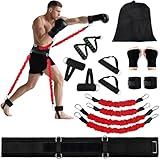
- Resistance Bands: Loop resistance bands around your wrists or ankles to add resistance to your punches and footwork.
- Light Dumbbells: Hold light dumbbells (2-5 pounds) while shadow boxing to increase the intensity of your arm movements.
Speed and Agility Drills
These drills improve your speed, agility, and coordination, all of which contribute to a higher calorie burn.
- Speed Bag: Practice hitting a speed bag to improve your hand speed and rhythm.
- Double-End Bag: Use a double-end bag to practice your punching accuracy and timing.
- Agility Ladder: Perform footwork drills on an agility ladder to improve your foot speed and coordination.
- Cone Drills: Set up cones and practice weaving, shuffling, and pivoting around them to improve agility.
Interval Training
Interval training involves alternating between high-intensity bursts and periods of rest or low-intensity activity. This method is highly effective for burning calories and improving cardiovascular fitness.
- High-Intensity Interval Training (HIIT): Perform 30-60 seconds of high-intensity shadow boxing, followed by 15-30 seconds of rest or light activity. Repeat for 15-20 minutes.
- Tabata Training: A specific type of HIIT where you perform 20 seconds of high-intensity exercise followed by 10 seconds of rest, repeated for 8 rounds (4 minutes total).
Focus Mitt Work
While not strictly shadow boxing, incorporating focus mitt work with a partner is a fantastic way to elevate your training. This enhances your punching technique, speed, and accuracy.
- Partner Drills: Work with a partner to practice combinations and defensive movements.
- Focus Mitts: Have your partner hold focus mitts for you to punch, providing feedback on your technique.
Maximizing Your Shadow Boxing Results
To get the most out of your shadow boxing workouts, consider these additional tips:
Consistency Is Key
The more you shadow box, the better your results will be. Aim for at least 3-4 shadow boxing sessions per week. Consistency is more important than the intensity of each workout.
Proper Nutrition and Hydration
Fuel your body with a balanced diet to provide the energy needed for your workouts. Drink plenty of water before, during, and after your shadow boxing sessions to stay hydrated and support your body’s functions.
Listen to Your Body
Pay attention to your body’s signals. If you’re feeling pain, stop and rest. Don’t push yourself too hard, especially when you’re starting. Gradually increase the intensity and duration of your workouts as you get fitter.
Vary Your Workouts
To avoid plateaus and keep things interesting, vary your shadow boxing routines. Try different combinations, footwork drills, and interval training methods. This will challenge your body in new ways and prevent boredom.
Record Your Progress
Keep track of your workouts, including the duration, intensity, and combinations you used. This will help you monitor your progress and stay motivated. You can also use a fitness tracker or heart rate monitor to measure your calorie burn and track your improvements. (See Also: Does Boxing Classes Help With Weight Loss )
Find a Training Partner (optional)
Having a training partner can add motivation and accountability to your workouts. You can shadow box together, practice focus mitt work, and provide each other with support and encouragement.
Shadow Boxing vs. Other Calorie-Burning Exercises
How does shadow boxing stack up against other popular exercises in terms of calorie burn?
The following table provides a comparison of estimated calorie burn for a 150-pound person during a 30-minute workout:
| Exercise | Estimated Calories Burned (30 minutes) |
|---|---|
| Shadow Boxing | 300-400 |
| Running (6 mph) | 300-350 |
| Swimming (Moderate Pace) | 250-300 |
| Cycling (12-14 mph) | 250-300 |
| Jumping Rope | 300-350 |
| Zumba | 250-350 |
As you can see, shadow boxing is competitive with other high-calorie-burning exercises like running and jumping rope. It offers a great alternative to these exercises, particularly if you’re looking for a workout that doesn’t require any equipment or specific space.
Advantages of Shadow Boxing
- Accessibility: Requires no equipment and can be done anywhere.
- Full-Body Workout: Engages multiple muscle groups.
- Cardiovascular Benefits: Elevates heart rate and improves cardiovascular health.
- Skill Development: Improves coordination, balance, and boxing technique.
- Stress Relief: Provides a great outlet for stress and frustration.
Considerations
- Proper Form: Important to avoid injury. Focus on technique.
- Motivation: Can be challenging to stay motivated without a partner or instructor.
- Progression: Requires consistent effort to improve and see results.
Troubleshooting Common Challenges
Even with the best intentions, you might encounter some challenges when you start shadow boxing. Here’s how to address some common issues:
Lack of Motivation
Solution:
- Set Realistic Goals: Start with short workouts and gradually increase the duration and intensity.
- Find a Training Partner: Work out with a friend or family member for accountability and support.
- Listen to Music: Create a playlist of upbeat music to keep you energized.
- Track Your Progress: Record your workouts and celebrate your achievements.
- Vary Your Routine: Try different combinations, footwork drills, and interval training methods to keep things interesting.
Boredom
Solution:
- Vary Your Combinations: Learn new punches and combinations to keep your mind engaged.
- Incorporate Footwork Drills: Add footwork drills like the box step and V-step to make your workouts more dynamic.
- Use a Mirror: Watching yourself in a mirror can help you improve your form and stay motivated.
- Try Interval Training: Incorporate HIIT or Tabata training to add variety and challenge.
Poor Form and Risk of Injury
Solution:
- Watch Tutorial Videos: Learn proper form from experienced boxers and trainers.
- Focus on Technique: Prioritize proper form over speed and power.
- Start Slowly: Begin with basic punches and gradually add more complex combinations.
- Warm-up and Cool-down: Always warm up before your workout and cool down afterward.
- Listen to Your Body: If you feel pain, stop and rest.
Difficulty with Footwork
Solution:
- Practice Slowly: Start by practicing footwork drills slowly and gradually increase your speed.
- Focus on Balance: Maintain a balanced stance and keep your weight centered.
- Use a Mirror: Watching yourself in a mirror can help you identify and correct any imbalances.
- Practice Regularly: Footwork takes practice. The more you do it, the better you’ll become.
Verdict
Shadow boxing is a fantastic way to burn calories, improve your fitness, and learn valuable boxing skills. It is accessible, versatile, and can be adapted to any fitness level. With a little dedication and the right techniques, you can transform your body and achieve your fitness goals.
Remember to focus on proper form, vary your workouts, and stay consistent. Whether you’re a seasoned athlete or a complete beginner, shadow boxing offers a challenging and rewarding workout. Embrace the power of shadow boxing, and watch as you burn calories, build strength, and improve your overall well-being. Start today, and experience the incredible benefits of this dynamic and effective exercise!