Ever wonder if you can ditch the treadmill and still sculpt a leaner physique? You’re not alone. Many people are searching for effective ways to shed those unwanted pounds, and the allure of at-home workouts is strong. Shadow boxing, with its promise of a full-body workout without any equipment, has gained significant traction. But does this dynamic exercise really deliver on its promise of burning belly fat? I’m here to break it down for you, exploring the science, the strategies, and the real-world results you can expect.
This isn’t just about throwing punches; it’s about understanding the mechanics of fat loss and how shadow boxing fits into the equation. We’ll examine the calorie burn, the impact on metabolism, and the best techniques to maximize your efforts. Get ready to learn how to turn your living room into a fat-burning zone.
The Science Behind Fat Loss
Before we delve into shadow boxing, let’s clarify the fundamentals of fat loss. It’s a simple equation: burn more calories than you consume. Your body stores excess calories as fat. To lose fat, you need to create a calorie deficit. This can be achieved through a combination of diet and exercise.
The type of exercise you choose matters. While any physical activity burns calories, some are more efficient than others at promoting fat loss. High-intensity interval training (HIIT) is particularly effective because it burns a significant number of calories in a short amount of time and boosts your metabolism, leading to increased calorie burn even after your workout is over.
Understanding Calorie Expenditure
Calorie expenditure varies based on several factors: your weight, the intensity of your workout, and your metabolism. Shadow boxing, being a dynamic and full-body workout, can burn a substantial number of calories. Let’s look at some estimated figures:
- Moderate Intensity: A 150-pound person might burn around 300-400 calories per hour.
- High Intensity: That same person could burn 500-700 calories or more in an hour, depending on the speed, power, and complexity of the punches and movements.
These are estimates, and your actual calorie burn will vary. Using a heart rate monitor can provide a more accurate reading.
Metabolism and Its Role
Your metabolism is the rate at which your body burns calories. Exercise, particularly strength training and HIIT, can boost your metabolism. This means your body will burn more calories even when you’re resting. Shadow boxing, when performed at a high intensity, can contribute to this metabolic boost.
How Shadow Boxing Contributes to Belly Fat Reduction
Now, let’s get to the heart of the matter: how shadow boxing can help you reduce belly fat. It’s not a magic bullet, but it’s a powerful tool when used correctly.
Full-Body Engagement
Shadow boxing is a full-body workout. It engages your:
- Core: Crucial for stability and power in your punches.
- Legs: Provide the base for your movements and generate power.
- Arms and Shoulders: The primary movers for your punches.
- Cardiovascular System: Keeps your heart rate elevated, burning calories.
This comprehensive engagement makes it an efficient calorie burner. (See Also: Does Shadow Boxing Really Work )
High-Intensity Potential
You can easily adjust the intensity of your shadow boxing workout. By increasing the speed, power, and complexity of your combinations, you can elevate your heart rate and burn more calories. This is where the HIIT aspect comes into play. Short bursts of high-intensity activity followed by brief rest periods can be incredibly effective for fat loss.
Cardiovascular Benefits
Shadow boxing is a fantastic cardiovascular workout. It strengthens your heart and lungs, improves circulation, and helps you become more efficient at burning calories. A healthy cardiovascular system is essential for overall health and supports fat loss.
Muscle Building
While shadow boxing isn’t primarily a muscle-building exercise like weightlifting, it does build lean muscle mass, especially in your shoulders, arms, and core. Muscle tissue burns more calories at rest than fat tissue, which can contribute to a higher metabolism and help you lose weight more effectively.
Creating an Effective Shadow Boxing Workout for Fat Loss
To maximize your belly fat-burning potential with shadow boxing, you need a structured workout plan. Here’s how to create one:
Warm-Up (5-10 Minutes)
Purpose: Prepare your body for exercise and reduce the risk of injury.
- Light Cardio: Jumping jacks, high knees, or jogging in place.
- Dynamic Stretching: Arm circles, leg swings, torso twists.
Shadow Boxing Drills (20-30 Minutes)
Purpose: The core of your workout, focusing on high-intensity intervals.
- Round Structure: Alternate between 2-3 minutes of high-intensity shadow boxing and 30-60 seconds of rest. Aim for 3-5 rounds.
- Punch Combinations: Use a variety of punches, such as jabs, crosses, hooks, and uppercuts. Combine them in different sequences.
- Footwork: Incorporate footwork drills, such as side steps, pivots, and slips, to enhance your movement and engage your core.
- Example Round: 2 minutes of fast-paced punch combinations (jab, cross, hook, jab, uppercut), 30 seconds rest, repeat.
Cool-Down (5-10 Minutes)
Purpose: Bring your heart rate down and improve flexibility.
- Static Stretching: Hold each stretch for 30 seconds, focusing on major muscle groups.
- Deep Breathing: Helps to calm your body and mind.
Sample Workout Routine
Here’s a sample shadow boxing routine you can try:
- Warm-up: 5 minutes of jumping jacks, high knees, and arm circles.
- Round 1: 2 minutes of jab-cross-hook-cross combinations, 30 seconds rest.
- Round 2: 2 minutes of jab-cross-hook-uppercut combinations, 30 seconds rest.
- Round 3: 2 minutes of speed punches (rapid jabs and crosses), 30 seconds rest.
- Round 4: 2 minutes of defensive drills (slipping, bobbing, weaving), 30 seconds rest.
- Cool-down: 5 minutes of static stretching (hamstrings, quads, shoulders).
Optimizing Your Results: Diet and Other Considerations
Shadow boxing is a powerful tool, but it’s most effective when combined with a healthy diet and other lifestyle factors. (See Also: Are Boxing Classes Worth It )
Dietary Adjustments
Nutrition is critical for fat loss. You need to create a calorie deficit by consuming fewer calories than you burn. Focus on:
- Whole Foods: Fruits, vegetables, lean proteins, and whole grains.
- Protein Intake: Adequate protein is essential for preserving muscle mass while you lose fat.
- Hydration: Drink plenty of water to stay hydrated and support your metabolism.
- Limit Processed Foods: Reduce your intake of sugary drinks, processed snacks, and unhealthy fats.
Consistency Is Key
Aim for regular workouts. Consistency is more important than intensity. Try to shadow box at least 3-4 times per week. Gradually increase the duration and intensity of your workouts over time.
Listen to Your Body
Rest and recovery are crucial. Don’t overtrain. Take rest days to allow your body to recover and rebuild muscle tissue. Pay attention to any pain signals and adjust your workouts accordingly.
Other Exercise Options
Combine shadow boxing with other forms of exercise. Strength training, such as weightlifting or bodyweight exercises, can help you build muscle and further boost your metabolism. Incorporating other cardio exercises, such as running or swimming, can also enhance your results.
Tracking Your Progress
Monitor your progress. Keep track of your workouts, diet, and measurements. This will help you stay motivated and make adjustments as needed. Consider taking progress photos to visualize your results.
Advanced Shadow Boxing Techniques
Once you are comfortable with the basics, you can add more advanced techniques to your shadow boxing routine to further increase the intensity and effectiveness of your workouts.
Advanced Punch Combinations
Combine punches in a variety of complex combinations. Here are some examples:
- The ‘Peek-a-Boo’ Combination: Jab, cross, slip to the outside, hook, uppercut.
- The ‘Haymaker’ Combination: Lead hook, cross, rear hook, uppercut.
- The ‘Counter Punch’ Combination: Slip a jab, counter with a cross, then a hook.
Footwork Drills
Incorporate more advanced footwork drills to improve your agility, coordination, and core strength:
- The ‘Shuffle’: Move laterally, keeping your feet in a wide stance, and shuffling your feet in the direction of movement.
- The ‘Pivot’: Rotate on the balls of your feet, changing your angle and direction.
- The ‘Slip Step’: Move your head and torso to avoid punches while stepping to the side.
Defensive Techniques
Include defensive techniques to improve your coordination, reaction time, and core strength: (See Also: Does Boxing Classes Help With Weight Loss )
- Slipping: Move your head to the side to avoid a punch.
- Bobbing and Weaving: Use a combination of head movement and torso rotation to evade punches.
- Blocking: Use your arms to block punches.
Adding Resistance
Increase the intensity of your workouts by adding resistance:
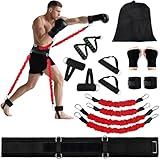
- Resistance Bands: Wrap resistance bands around your wrists or ankles to increase the resistance of your punches and footwork.
- Light Dumbbells: Hold light dumbbells while shadow boxing to increase the weight and resistance of your punches.
Training with a Partner
Training with a partner can help you refine your skills and increase the intensity of your workouts. You can practice:
- Pad Work: Use focus mitts to practice your punching combinations and footwork.
- Sparring: Sparring with a partner can help you develop your defensive skills and improve your reaction time.
Avoiding Common Mistakes
To maximize your results and avoid injury, it’s important to avoid common shadow boxing mistakes.
Poor Form
Maintaining proper form is essential to prevent injuries. Ensure that you:
- Keep your hands up: Protect your face.
- Rotate your hips: Generate power in your punches.
- Keep your core engaged: Maintain stability and power.
- Breathe properly: Exhale when punching, inhale when recovering.
Overdoing It
Don’t overtrain. Start slowly and gradually increase the intensity and duration of your workouts. Overtraining can lead to injuries and burnout.
Neglecting Diet
Diet is crucial for fat loss. Shadow boxing alone will not be enough to achieve your goals. Follow a balanced diet that includes whole foods and limits processed foods.
Lack of Consistency
Consistency is key. Make shadow boxing a regular part of your routine. Aim for 3-4 workouts per week to see results.
Ignoring Warm-Up and Cool-Down
Always warm up before your workout and cool down afterward. This will help prevent injuries and improve your flexibility.
Comparing Shadow Boxing to Other Fat-Burning Exercises
How does shadow boxing stack up against other popular exercises for burning belly fat?
| Exercise | Calories Burned (per hour, approx.) | Pros | Cons |
|---|---|---|---|
| Shadow Boxing | 300-700+ | Full-body workout, no equipment needed, improves coordination and cardiovascular health, accessible anywhere. | Requires proper form to avoid injury, can be repetitive, may not build significant muscle mass on its own. |
| Running | 500-1000+ | Excellent cardiovascular exercise, readily accessible, can be done outdoors. | Can be hard on joints, requires appropriate footwear, weather-dependent. |
| Swimming | 300-800+ | Low-impact, full-body workout, great for cardiovascular health. | Requires access to a pool, can be time-consuming. |
| Cycling | 200-800+ | Low-impact, good for cardiovascular health, can be done indoors or outdoors. | Requires a bike, weather-dependent if outdoors. |
| High-Intensity Interval Training (HIIT) | 400-800+ | Highly effective for fat loss, time-efficient, boosts metabolism. | Can be physically demanding, requires proper form to avoid injury. |
| Weight Training | 200-400+ | Builds muscle, boosts metabolism, improves strength and bone density. | Requires equipment (weights), can be time-consuming. |
Conclusion: Shadow boxing is a highly effective exercise for burning calories and can be a valuable part of a comprehensive fat-loss program. However, it’s not the only option. The best exercise for you is the one you enjoy and can stick with consistently. Combining shadow boxing with other forms of exercise, such as running, swimming, or weight training, can help you achieve even better results.
Final Verdict
So, can shadow boxing burn belly fat? The answer is a resounding yes, but it’s not a solo act. Shadow boxing is a fantastic tool for burning calories, improving cardiovascular health, and building lean muscle. It’s especially effective when you incorporate high-intensity intervals. To see the best results, combine shadow boxing with a balanced diet, consistent workouts, and adequate rest. Remember, consistency and a holistic approach are key. Embrace the journey, enjoy the process, and get ready to see those results. You’ve got this!