Ever watched a boxer gracefully moving, throwing punches at thin air, and wondered if that shadow boxing actually does anything? Specifically, does it build muscle? You’re not alone! It’s a common question, and the answer, as with many things fitness-related, is a bit nuanced.
Shadow boxing is more than just flailing your arms around. It’s a fundamental part of a boxer’s training regimen, a practice used to hone technique, improve stamina, and visualize fights. But can this solo exercise contribute to muscle growth? We’ll break down the science, the techniques, and the realities of shadow boxing to give you a clear understanding of its potential for building muscle.
Get ready to lace up your invisible gloves, because we’re about to explore the world of shadow boxing and its impact on your physique.
The Fundamentals of Shadow Boxing
Shadow boxing is essentially practicing boxing without an opponent or equipment. It involves mimicking the movements of a real fight, including punches, footwork, and defensive maneuvers. It’s a versatile exercise that can be done anywhere, anytime, making it a convenient training method for both professional fighters and fitness enthusiasts.
Key Components of Shadow Boxing
- Stance: The foundation of any good boxing workout. A proper stance involves a balanced weight distribution, guarding your face, and ready footwork.
- Punches: Jabs, crosses, hooks, uppercuts – all punches must be practiced with speed, power, and precision.
- Footwork: Agility is key. Practice moving forward, backward, and sideways, while maintaining balance and the ability to throw punches from any position.
- Defense: Slipping, rolling, blocking, and parrying are crucial to simulate the defensive elements of a fight.
- Rhythm and Timing: Shadow boxing is about creating a flow and timing your movements to simulate a real fight.
The Benefits Beyond Muscle Building
While we’re here to focus on muscle building, it’s worth noting the many other benefits of shadow boxing. These include:
- Improved cardiovascular health: Shadow boxing is a great cardio workout, increasing heart rate and improving endurance.
- Enhanced coordination and agility: The constant movement and hand-eye coordination required in shadow boxing improve your overall agility.
- Better hand-eye coordination: Shadow boxing helps you develop quicker reflexes and better hand-eye coordination.
- Increased stamina: Regular shadow boxing sessions can significantly boost your stamina.
- Mental toughness: Shadow boxing is an excellent way to relieve stress and build mental fortitude.
- Technique refinement: It allows you to focus on your technique and correct any flaws in your form.
Can Shadow Boxing Build Muscle? The Science
The short answer is: Yes, shadow boxing can contribute to muscle growth, but it’s not the primary way to build significant muscle mass. The extent of muscle building depends on several factors, including the intensity, duration, and frequency of your workouts.
Muscle Groups Targeted
Shadow boxing primarily engages the following muscle groups:
- Shoulders: The deltoids are heavily involved in throwing punches.
- Arms: The biceps and triceps work to deliver punches and maintain guard.
- Core: The abdominal muscles are essential for generating power and maintaining balance.
- Back: The back muscles provide stability and support during punches and defensive movements.
- Legs: The quadriceps, hamstrings, and calves are used for footwork and generating power.
The repetitive movements and resistance from punching the air create micro-tears in the muscle fibers, which, when repaired, lead to muscle growth. However, the resistance is relatively low compared to weightlifting.
The Role of Resistance
Muscle growth, or hypertrophy, primarily occurs when muscles are subjected to progressive overload. This means gradually increasing the stress placed on your muscles over time. Weightlifting is the gold standard for this, as you can continuously increase the weight you lift. Shadow boxing provides resistance, but it’s limited by the lack of external weights. The resistance comes from the air and your own bodyweight, making it less effective for substantial muscle growth compared to weightlifting. (See Also: Does Shadow Boxing Really Work )
Intensity and Volume
To maximize muscle building potential, shadow boxing sessions must be intense and of sufficient volume. This means:
- High-intensity intervals: Incorporate short bursts of high-speed punching with brief recovery periods.
- Longer durations: Aim for sessions lasting at least 30-45 minutes.
- Frequent workouts: Shadow box several times per week to stimulate muscle growth and improve stamina.
How to Maximize Muscle Growth with Shadow Boxing
While shadow boxing may not be the most efficient way to build muscle, it can still contribute to muscle growth if done correctly. Here’s how to maximize its effectiveness:
Use Proper Technique
Focus on proper form. Using correct technique ensures that you’re engaging the target muscle groups effectively and minimizing the risk of injury. Watch videos, get feedback from a coach or experienced boxer, and practice in front of a mirror to monitor your form.
Increase Intensity
Increase the speed and power of your punches. Throw punches as if you are hitting a heavy bag or an opponent. This will increase the resistance and the demand on your muscles. Incorporate plyometric exercises, such as jump squats and burpees, into your routine to boost power and explosiveness.
Add Resistance
Use equipment to increase the resistance.
- Weighted gloves: Increase the resistance during punches, stimulating muscle growth in the arms and shoulders.
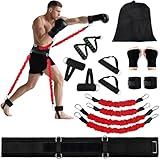
- Resistance bands: Wrap resistance bands around your wrists or ankles to add resistance to your punches and footwork.
- Ankle weights: Increase the demand on your leg muscles during footwork drills.
Incorporate Interval Training
Alternate between high-intensity bursts and recovery periods. For instance, you could shadow box for 3 minutes at a high intensity, followed by 1 minute of active recovery. This type of training is highly effective for both muscle growth and cardiovascular fitness.
Focus on Compound Movements
Incorporate compound movements that work multiple muscle groups simultaneously. This includes exercises such as squats, push-ups, and pull-ups. These exercises are highly effective for building overall strength and muscle mass.
Increase Volume
Increase the number of rounds and the duration of your shadow boxing sessions. Aim for at least 30-45 minutes per session, and consider doing multiple sessions per week to maximize muscle building potential. (See Also: Are Boxing Classes Worth It )
Nutrition and Rest
Nutrition is essential. Eat a balanced diet rich in protein, carbohydrates, and healthy fats. Protein is crucial for muscle repair and growth. Make sure you’re getting enough calories to support your training. Prioritize adequate rest. Your muscles grow during rest periods. Aim for 7-9 hours of sleep per night to allow your body to recover and rebuild muscle tissue.
Shadow Boxing vs. Other Muscle-Building Exercises
Let’s compare shadow boxing to other popular muscle-building exercises:
| Exercise | Muscle Building Potential | Equipment Needed | Cardio Benefits |
|---|---|---|---|
| Shadow Boxing | Moderate | None (optional: weighted gloves, resistance bands) | High |
| Weightlifting | High | Weights (dumbbells, barbells, weight machines) | Moderate |
| Bodyweight Exercises (push-ups, squats, pull-ups) | Moderate | None (optional: pull-up bar) | Moderate |
| High-Intensity Interval Training (HIIT) | Moderate | None (optional: equipment for specific exercises) | High |
Weightlifting
Weightlifting is the most effective way to build muscle. It involves lifting external weights to create progressive overload. This stimulates muscle fibers to adapt and grow. Weightlifting allows for precise control over the resistance, enabling you to target specific muscle groups and progressively increase the weight as you get stronger.
Bodyweight Exercises
Bodyweight exercises are a great alternative, especially if you don’t have access to weights. Exercises like push-ups, pull-ups, squats, and lunges can build muscle and improve overall strength. You can increase the difficulty by adding variations or increasing the number of repetitions.
Hiit
HIIT workouts are excellent for burning calories and improving cardiovascular fitness. They often involve bodyweight exercises performed at high intensity. While HIIT can contribute to muscle growth, it’s not as effective as weightlifting for building significant muscle mass. HIIT focuses more on improving your cardiovascular fitness and burning calories.
Integrating Shadow Boxing Into Your Routine
Shadow boxing can be a valuable addition to any fitness routine, regardless of your goals. Here are some ways to integrate it effectively:
As a Warm-Up
Shadow boxing is an excellent warm-up exercise. It elevates your heart rate, increases blood flow to your muscles, and prepares your body for more intense workouts. Do 5-10 minutes of shadow boxing before weightlifting or other exercises.
As a Cardio Workout
Shadow boxing is a great cardio workout. If your primary goal is to improve your cardiovascular fitness, make shadow boxing the focus of your workouts. Aim for 30-45 minutes of shadow boxing, 3-5 times per week. (See Also: Does Boxing Classes Help With Weight Loss )
As Part of a Comprehensive Workout Plan
Combine shadow boxing with weightlifting or bodyweight exercises for a well-rounded workout routine. For example, you could do 20 minutes of shadow boxing, followed by 30 minutes of weightlifting. This combination will give you the benefits of both cardio and strength training.
As a Cool-Down
Use shadow boxing as a cool-down exercise after weightlifting or other intense workouts. It helps to improve circulation and reduce muscle soreness. Focus on slower, controlled movements during your cool-down.
Sample Shadow Boxing Workout Routine
Here’s a sample workout routine that you can adapt to your fitness level:
- Warm-up: 5 minutes of light cardio (e.g., jumping jacks, jogging in place).
- Shadow Boxing: 3 rounds of 3 minutes of shadow boxing with 1-minute rest between rounds. Focus on different combinations of punches and footwork.
- Bodyweight Exercises: 3 rounds of the following exercises, with 1-minute rest between rounds:
- Push-ups: 10-15 reps
- Squats: 15-20 reps
- Lunges: 10-12 reps per leg
- Plank: 30-60 seconds
- Cool-down: 5 minutes of stretching.
Common Mistakes to Avoid
To get the most out of your shadow boxing workouts, avoid these common mistakes:
- Poor form: Always prioritize proper technique over speed or power. Incorrect form can lead to injuries and reduce the effectiveness of your workout.
- Insufficient intensity: Shadow boxing should be challenging. Push yourself to work at a high intensity to maximize muscle engagement and calorie burn.
- Lack of variety: Don’t stick to the same routine every time. Vary your punches, footwork, and defensive movements to keep your workouts engaging and challenging.
- Neglecting rest and recovery: Allow your body to rest and recover between workouts. Overtraining can lead to injuries and hinder muscle growth.
- Ignoring nutrition: Fuel your body with a balanced diet to support muscle growth and overall health.
The Bottom Line: Can Shadow Boxing Build Muscle?
Shadow boxing can contribute to muscle growth, especially when combined with other exercises and a proper diet. However, it’s not the most efficient way to build significant muscle mass on its own. It’s a fantastic exercise for improving cardiovascular fitness, coordination, and technique. To maximize muscle building, incorporate shadow boxing into a comprehensive workout plan that includes weightlifting, bodyweight exercises, and a balanced diet.
Verdict
So, can shadow boxing build muscle? Yes, it can, but it’s most effective when combined with other muscle-building strategies. It’s a brilliant addition to any fitness regimen for improving overall fitness, coordination, and boxing technique. Think of shadow boxing as a valuable tool in your fitness arsenal, not the ultimate solution for bulking up.
By understanding its strengths and limitations, and by combining it with other forms of exercise and proper nutrition, you can make shadow boxing a valuable part of your journey towards a stronger, fitter you. Remember to focus on intensity, proper form, and consistent effort to see the best results. Shadow boxing, when done right, is a powerful exercise that will improve your fitness and your overall well-being.