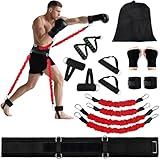
So, you’re intrigued by boxing? Maybe you’ve seen the incredible physiques of boxers or are just looking for a new, challenging way to get fit. Boxing is more than just throwing punches; it’s a full-body workout that builds strength, endurance, coordination, and mental toughness. It can be intimidating to start, but trust me, it’s accessible to everyone, regardless of experience or fitness level.
This guide will break down everything you need to know about starting a boxing workout, from the essential equipment to the fundamental techniques and the benefits you can expect. We’ll cover how to prepare, what to expect in your first few sessions, and how to stay motivated. Let’s get started and get you on your way to a fitter, stronger you!
Get ready to sweat, learn, and feel amazing! Boxing is a fantastic way to relieve stress and build confidence. Let’s get those gloves on!
Getting Started: Your Boxing Workout Essentials
Before you step into the ring (or even your living room), you’ll need some basic equipment. Don’t worry, you don’t need to break the bank to get started. Here’s what you need:
1. Boxing Gloves
This is the most crucial piece of equipment. Choose gloves that fit properly and offer adequate protection. Look for gloves made of durable materials like leather or synthetic leather. The weight of the gloves is important and is measured in ounces (oz). Generally, beginners should start with 12-14 oz gloves for bag work and sparring. Heavier gloves provide more padding and protection, while lighter gloves allow for faster hand speed. Here’s a quick guide:
- 12 oz: Recommended for beginners, especially for bag work and pad work.
- 14 oz: Good for general training and sparring, providing more hand protection.
- 16 oz: Often used for sparring, offering the most protection.
Make sure to try on gloves before buying them. They should fit snugly but not too tightly. Your knuckles should not touch the inside of the glove. Consider buying gloves from reputable brands like Everlast, Title Boxing, or Ringside. Don’t cheap out on gloves, as these are your primary protection.
2. Hand Wraps
Hand wraps are essential for protecting your wrists, knuckles, and hands. They absorb sweat, provide support, and prevent injuries. Choose wraps made of a durable, slightly stretchy material. They come in different lengths, typically ranging from 120 inches to 180 inches. A longer wrap provides more coverage. Here’s how to wrap your hands:
- Start by looping the thumb loop over your thumb.
- Wrap the wrap around your wrist several times, securing it.
- Wrap around your knuckles and then between your fingers.
- Continue wrapping until your hand is well-supported.
- Secure the wrap with the Velcro closure.
There are many instructional videos online that can show you the correct wrapping technique.
3. Boxing Shoes
Boxing shoes are designed for optimal footwork and ankle support. They have a flat, non-marking sole that allows for quick pivots and lateral movements. While not strictly necessary at the beginning, they can significantly improve your performance and reduce the risk of injury. If you don’t want to buy boxing shoes at first, wear athletic shoes with a flat sole.
4. Mouthguard
Protect your teeth! A mouthguard is crucial for protecting your teeth and preventing concussions. You can get a custom-fitted mouthguard from a dentist, or you can use a boil-and-bite mouthguard, which you can mold at home. Always wear a mouthguard during sparring and bag work. (See Also: Does Shadow Boxing Really Work )
5. Other Optional Gear
- Heavy Bag: A heavy bag is great for practicing your punches and building power.
- Speed Bag: A speed bag helps improve hand speed and coordination.
- Jump Rope: A jump rope is excellent for warming up and improving footwork.
- Training Clothes: Wear comfortable athletic clothing that allows for a full range of motion.
Warm-Up: Preparing Your Body
Never skip the warm-up! It’s crucial for preventing injuries and preparing your body for the workout. A proper warm-up increases blood flow to your muscles, improves flexibility, and prepares your cardiovascular system. Here’s a sample warm-up routine:
- Jump Rope (3-5 minutes): Start with a slow pace and gradually increase the speed.
- Dynamic Stretching (5-7 minutes): This includes exercises like arm circles, leg swings, torso twists, and high knees. Dynamic stretches involve movement and prepare your muscles for action.
- Shadow Boxing (3-5 minutes): Practice your punches in the air, focusing on your form and footwork.
- Light Cardio (2-3 minutes): Jogging in place or doing jumping jacks to further raise your heart rate.
Make sure to listen to your body and adjust the intensity of the warm-up based on your fitness level. The goal is to feel loose and ready to move.
Basic Boxing Techniques: Your First Steps
Boxing involves a variety of techniques, but let’s start with the fundamentals. Mastering these basic techniques will give you a solid foundation for your boxing journey.
1. The Stance
Your stance is the foundation of your boxing. It provides balance, power, and protection. Here’s how to set up your stance:
- Stand with your feet shoulder-width apart.
- If you’re right-handed (orthodox stance), place your left foot slightly forward and point it towards your opponent. Your right foot should be slightly behind, at about a 45-degree angle. If you’re left-handed (southpaw stance), reverse these positions.
- Bend your knees slightly, keeping your weight balanced.
- Keep your heels slightly off the ground, allowing for quick footwork.
- Protect your chin with your hands.
2. The Guard
Your guard is your defense. It protects your face and body from punches. Here’s how to hold your guard:
- Raise your hands to shoulder height, with your elbows close to your body.
- Keep your fists clenched loosely, with your knuckles facing your opponent.
- Tuck your chin down to protect your jaw.
- Use your guard to block punches and protect yourself.
3. The Jab
The jab is your most fundamental punch. It’s a quick, straight punch thrown with your lead hand (left hand for orthodox, right hand for southpaw). Here’s how to throw a proper jab:
- Step forward slightly with your lead foot as you punch.
- Extend your arm straight out, keeping your elbow slightly bent.
- Rotate your fist as you punch, so your palm faces down at the end of the punch.
- Snap your punch back quickly to your guard.
- Keep your non-punching hand up to protect your face.
The jab is used for range finding, setting up other punches, and disrupting your opponent’s rhythm.
4. The Cross (or Straight Right)
The cross is a powerful punch thrown with your rear hand (right hand for orthodox, left hand for southpaw). It’s often thrown after the jab. Here’s how to throw a proper cross:
- Pivot on your rear foot as you punch, transferring your weight.
- Extend your arm straight out, rotating your fist.
- Keep your elbow close to your body.
- Snap your punch back quickly to your guard.
- Keep your non-punching hand up to protect your face.
The cross is a powerful punch that can deliver significant force. (See Also: Are Boxing Classes Worth It )
5. The Hook
The hook is a powerful punch thrown with a bent arm. It’s typically aimed at the head or body. Here’s how to throw a proper hook:
- Bend your elbow and bring your hand towards your face.
- Pivot on your lead foot and rotate your hips.
- Swing your arm in a horizontal arc, aiming for the side of your opponent’s head or body.
- Snap your punch back quickly to your guard.
- Keep your non-punching hand up to protect your face.
The hook is a versatile punch that can be thrown from various angles.
6. The Uppercut
The uppercut is a powerful punch that is thrown upwards. It’s typically aimed at the chin or body. Here’s how to throw a proper uppercut:
- Bend your knees and drop your level slightly.
- Bring your hand up in a vertical arc, aiming for your opponent’s chin or body.
- Pivot slightly on your foot as you punch.
- Snap your punch back quickly to your guard.
- Keep your non-punching hand up to protect your face.
The uppercut is a devastating punch that can end a fight quickly.
7. Footwork
Footwork is crucial for boxing. It allows you to move around the ring, maintain your distance, and set up your punches. Here are some basic footwork techniques:
- Shuffle: Move your feet in small steps, keeping your weight balanced.
- Pivot: Rotate on the balls of your feet to change direction.
- Step: Take a step forward, backward, or sideways to adjust your position.
- Cutting off the ring: Moving your feet to prevent your opponent from circling away.
Workout Structure: A Sample Boxing Routine
Here’s a sample boxing workout routine you can follow. Remember to adjust the intensity and duration based on your fitness level. This is a general guide; you can modify it as you progress.
- Warm-up (10 minutes): Jump rope, dynamic stretching, shadow boxing.
- Shadow Boxing (3 rounds of 3 minutes with 1-minute rest): Focus on technique, footwork, and combinations.
- Heavy Bag Work (3 rounds of 3 minutes with 1-minute rest): Practice your punches and combinations on a heavy bag.
- Pad Work (3 rounds of 3 minutes with 1-minute rest): If you have a partner, work on your punches and combinations with them.
- Core Exercises (10 minutes): Crunches, planks, Russian twists, and other core exercises.
- Cool-down and Stretching (5-10 minutes): Static stretching to improve flexibility and reduce muscle soreness.
This routine focuses on the fundamental skills and techniques of boxing. As you get more experienced, you can add more rounds, incorporate sparring, and work on more advanced techniques.
Drills and Exercises: Elevating Your Skills
To improve your boxing skills, you need to practice drills and exercises regularly. These drills will help you refine your technique, improve your speed, and build your stamina. Here are some essential drills:
1. Shadow Boxing Drills
- Jab-Cross Drill: Practice throwing jabs and crosses, focusing on speed and accuracy.
- Hook-Uppercut Drill: Practice throwing hooks and uppercuts, focusing on power and technique.
- Combination Drills: Practice various combinations, such as jab-cross-hook, jab-cross-hook-uppercut.
- Footwork Drills: Practice shuffling, pivoting, and stepping to improve your footwork.
2. Heavy Bag Drills
- Straight Punch Drill: Focus on throwing straight punches with power and accuracy.
- Combination Drill: Practice various combinations on the heavy bag.
- Power Drill: Focus on generating maximum power with each punch.
- Speed Drill: Focus on throwing punches as fast as possible.
3. Pad Work Drills
Pad work is a great way to improve your technique and reaction time. You’ll need a partner to hold the pads. Here are some pad work drills: (See Also: Does Boxing Classes Help With Weight Loss )
- Combination Drill: Practice various combinations on the pads.
- Defense Drill: Practice blocking and slipping punches.
- Counter Punching Drill: Practice countering your partner’s punches.
- Focus Mitt Drill: Practicing punches on focus mitts for greater precision.
4. Conditioning Drills
Boxing is a physically demanding sport, so conditioning is crucial. Here are some conditioning drills:
- Sprints: Sprint for short bursts, followed by periods of rest.
- Burpees: A full-body exercise that combines squats, push-ups, and jumps.
- Mountain Climbers: A cardiovascular exercise that works your core and legs.
- Jump Rope: Continue to use a jump rope to build cardiovascular endurance.
Nutrition and Hydration: Fueling Your Body
Proper nutrition and hydration are essential for optimal performance and recovery. You need to fuel your body with the right nutrients to support your workouts and build muscle. Here’s what you need to know:
1. Hydration
Drink plenty of water throughout the day, especially before, during, and after your workouts. Dehydration can lead to fatigue, muscle cramps, and decreased performance. Aim to drink at least eight glasses of water per day, and more if you’re exercising intensely.
2. Macronutrients
- Protein: Consume enough protein to repair and build muscle tissue. Good sources of protein include lean meats, fish, eggs, dairy, and plant-based protein sources like beans and tofu.
- Carbohydrates: Carbohydrates provide energy for your workouts. Choose complex carbohydrates like whole grains, fruits, and vegetables.
- Fats: Healthy fats are important for overall health and hormone production. Include sources like avocados, nuts, and olive oil in your diet.
3. Meal Timing
- Pre-Workout Meal: Eat a meal that includes carbohydrates and protein 1-2 hours before your workout.
- Post-Workout Meal: Eat a meal that includes protein and carbohydrates within 1-2 hours after your workout to help your muscles recover.
4. Supplements (optional)
Supplements can help support your training, but they’re not a substitute for a healthy diet. Consider the following:
- Protein Powder: Can help you meet your daily protein needs.
- Creatine: Improves strength and power.
- BCAAs: Can reduce muscle soreness and promote recovery.
Consult with a healthcare professional or a registered dietitian before taking any supplements.
Recovery: Rest and Recuperation
Rest and recovery are just as important as your workouts. Your body needs time to repair and rebuild muscle tissue. Here’s how to prioritize recovery:
- Get Enough Sleep: Aim for 7-9 hours of sleep per night. Sleep is crucial for muscle recovery and overall health.
- Active Recovery: Engage in light activities like walking or stretching on your rest days.
- Eat a Balanced Diet: Consume a diet rich in protein, carbohydrates, and healthy fats.
- Stay Hydrated: Drink plenty of water throughout the day.
- Listen to Your Body: If you’re feeling sore or fatigued, take a rest day.
Staying Motivated: Making Boxing a Habit
Consistency is key to achieving your boxing goals. Here’s how to stay motivated:
- Set Realistic Goals: Start with small, achievable goals and gradually increase the intensity and duration of your workouts.
- Find a Training Partner: Training with a friend can make your workouts more enjoyable and help you stay accountable.
- Track Your Progress: Keep track of your workouts, weight, and measurements to see your progress.
- Vary Your Workouts: Mix up your workouts to prevent boredom. Try different drills, combinations, and exercises.
- Reward Yourself: Celebrate your achievements with small rewards.
- Join a Boxing Gym or Class: A structured environment with a coach can provide guidance and motivation.
- Watch Boxing Matches: Watching professional boxing matches can inspire you and help you learn new techniques.
Common Mistakes to Avoid
Here are some common mistakes beginners make. Avoiding these will help you progress faster and stay injury-free:
- Skipping the Warm-up: Always warm up before your workout.
- Poor Form: Focus on proper technique to prevent injuries.
- Over Training: Listen to your body and take rest days.
- Neglecting Nutrition: Eat a balanced diet to fuel your body and promote recovery.
- Not Using Hand Wraps: Always use hand wraps to protect your hands and wrists.
- Ignoring Defense: Defense is just as important as offense.
- Not Being Patient: Boxing takes time and practice. Be patient with yourself and enjoy the process.
Progression: Leveling Up Your Boxing
As you get more comfortable with the basics, you can start to incorporate more advanced techniques and drills. This will help you level up your boxing skills and achieve your fitness goals. Here are some ways to progress:
- Increase the Intensity: Add more rounds, increase the speed of your punches, and add more weight to your workouts.
- Learn New Combinations: Practice more complex combinations.
- Improve Your Footwork: Work on your footwork drills to improve your agility and movement.
- Sparring: Once you’re comfortable with the basics, you can start sparring with a partner.
- Join a Boxing Gym or Class: A structured environment with a coach can provide guidance and motivation.
- Compete: If you’re feeling ambitious, you can consider competing in amateur boxing matches.
Benefits of Boxing Workouts
Boxing workouts offer a wide range of benefits for your physical and mental health. Here are some of the key advantages:
- Full-Body Workout: Boxing works your entire body, building strength, endurance, and cardiovascular fitness.
- Improved Cardiovascular Health: Boxing workouts improve your heart health and reduce your risk of heart disease.
- Increased Muscle Strength and Endurance: Boxing builds both strength and endurance, making you stronger and more resilient.
- Improved Coordination and Agility: Boxing improves your hand-eye coordination, balance, and agility.
- Weight Loss: Boxing is a great way to burn calories and lose weight.
- Stress Relief: Boxing can be a great way to relieve stress and improve your mental well-being.
- Increased Confidence: Boxing can help you build confidence and self-esteem.
- Self-Defense Skills: Boxing teaches you valuable self-defense skills.
Conclusion
Starting a boxing workout can be a challenging but rewarding experience. By following this guide, you’ve got the essential knowledge to begin your boxing journey. Remember to prioritize safety, technique, and consistency. Start with the basics, focus on proper form, and gradually increase the intensity of your workouts. Be patient with yourself, enjoy the process, and celebrate your progress. With dedication and perseverance, you’ll see amazing results, both physically and mentally. Get ready to transform your fitness and feel the power of boxing!