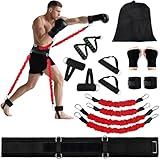
Shadow boxing. It’s the unsung hero of boxing training. Often overlooked, it’s where the magic truly happens. It’s not just about throwing punches into thin air; it’s a dynamic, multifaceted workout that builds the very foundation of your boxing prowess. This includes speed, technique, and, crucially, punching power.
You might be thinking, “How can I get stronger by punching nothing?” Well, that’s what we’re here to explore. Shadow boxing, when done correctly, is a powerful tool to develop the explosive force behind your punches. It allows you to refine your form, build muscle memory, and condition your body for the rigors of actual combat. Get ready to learn how to transform your shadow boxing sessions into a power-building powerhouse.
We’ll cover everything from the fundamental techniques to advanced drills, ensuring you get the most out of every workout. I’ll guide you through the process, providing actionable steps and insights to help you significantly increase your punching power through the art of shadow boxing.
The Science Behind Punching Power
Before we jump into the ‘how,’ let’s understand the ‘why.’ Punching power isn’t just about how big your muscles are; it’s a complex interplay of several factors. It’s about generating maximum force in a short amount of time, a concept known as rate of force development (RFD). This means how quickly you can apply force. Shadow boxing is an excellent way to train RFD.
Here’s a breakdown of the key elements that contribute to punching power:
- Technique: Proper form is paramount. This ensures efficient energy transfer from your feet to your fist.
- Speed: The faster your punch, the more power you generate.
- Muscle Strength and Endurance: Strong muscles are essential, but you also need the endurance to maintain power throughout a fight.
- Explosiveness: This is your ability to generate maximum force quickly.
- Timing and Coordination: Combining all the above elements in perfect sync.
Shadow boxing allows you to work on all these aspects simultaneously. It’s a holistic approach to boxing training.
Building the Foundation: Stance and Footwork
Your stance is the bedrock of your punching power. A stable and balanced stance allows you to generate force from the ground up, transferring it through your body into your punches. Think of it like a coiled spring, ready to unleash energy.
Here’s how to establish the correct stance:
- Feet: Stand with your feet shoulder-width apart, one foot slightly ahead of the other (typically your non-dominant foot).
- Angle: Your body should be at a slight angle to your opponent, providing a smaller target and allowing for better power generation.
- Knees: Slightly bend your knees to lower your center of gravity and improve balance.
- Weight Distribution: Distribute your weight evenly, but be ready to shift it for punches and footwork.
- Hands: Keep your hands up, guarding your face.
Footwork is just as important. It’s the engine that drives your punches and allows you to control distance. Good footwork helps you to move into the correct position to generate power.
Here are some essential footwork drills to incorporate into your shadow boxing:
- Shuffle: Move laterally, keeping your feet shoulder-width apart.
- Pivot: Rotate on your lead foot to change your angle.
- Step-and-Slide: Step with your lead foot and slide your rear foot to maintain your stance.
- In-and-Out: Move in and out of range, practicing your footwork with your punches.
Why is this important? Without a solid foundation, your punches will lack power and be easily countered. Your footwork will determine your ability to generate force and evade your opponent.
The Mechanics of Power: Punching Techniques
Now, let’s look at the specific punches and how to optimize them for maximum power. Each punch has its own mechanics, but the principles of power generation remain the same: proper technique, full body engagement, and explosive movement.
The Jab
The jab is the most fundamental punch, and it’s crucial to master it. It sets up other punches and controls distance.
How to Throw a Powerful Jab:
- Stance: Start in your boxing stance.
- Footwork: Step forward slightly with your lead foot as you punch.
- Rotation: Rotate your lead shoulder and hip forward as you extend your arm.
- Punch: Extend your arm straight out, keeping your elbow slightly bent.
- Impact: Make contact with the knuckles of your index and middle fingers.
- Return: Quickly retract your hand back to your guard.
Key Points: (See Also: Is Shadow Boxing Cardio )
- Snap: Don’t push the punch; snap it out.
- Full Extension: Extend your arm fully, but don’t lock your elbow.
- Body Rotation: Use your entire body to generate power.
The Cross
The cross is your power punch. It’s thrown from your rear hand and requires a full body rotation.
How to Throw a Powerful Cross:
- Stance: Start in your boxing stance.
- Footwork: Step forward slightly with your rear foot as you punch.
- Rotation: Rotate your rear shoulder and hip forward as you punch.
- Punch: Extend your arm straight out, rotating your fist as you make contact.
- Impact: Make contact with the knuckles of your index and middle fingers.
- Return: Quickly retract your hand back to your guard.
Key Points:
- Pivot: Pivot on your rear foot to generate more power.
- Hip Rotation: Use your hips to drive the punch.
- Chin Down: Keep your chin tucked to protect your jaw.
The Hook
The hook is a powerful punch that targets the side of your opponent’s head or body.
How to Throw a Powerful Hook:
- Stance: Start in your boxing stance.
- Footwork: Shift your weight to your lead foot.
- Rotation: Rotate your body, bringing your elbow up.
- Punch: Bend your arm at a 90-degree angle and swing your fist in a horizontal arc.
- Impact: Make contact with the knuckles of your index and middle fingers.
- Return: Quickly retract your hand back to your guard.
Key Points:
- Elbow Up: Keep your elbow up to protect your body.
- Body Rotation: Use your entire body to generate power.
- Short Arc: Keep the arc of the punch relatively short.
The Uppercut
The uppercut is a vertical punch that targets the chin or body.
How to Throw a Powerful Uppercut:
- Stance: Start in your boxing stance.
- Footwork: Shift your weight slightly.
- Punch: Bend your knees and bring your hand up in a vertical arc.
- Impact: Make contact with the knuckles of your index and middle fingers.
- Return: Quickly retract your hand back to your guard.
Key Points:
- Knee Bend: Use your knees to generate power.
- Upward Motion: Drive your punch upward.
- Chin Down: Keep your chin tucked to protect your jaw.
Shadow Boxing Drills for Power Development
Now, let’s get into specific drills to amp up your punching power during shadow boxing sessions. These drills focus on different aspects of power generation, from speed to explosiveness.
Speed Drills
These drills will help you increase the speed of your punches.
- Fast Jab: Focus on throwing jabs as quickly as possible. Aim for a high volume of punches.
- Double Jab-Cross: Throw a quick double jab followed by a powerful cross.
- Speed Bag Combination: Incorporate speed bag combinations into your shadow boxing.
Why Speed Matters: Faster punches are harder to block and land with more frequency. Speed is a critical component of power.
Explosiveness Drills
These drills are designed to improve your ability to generate force quickly.
- Power Punches: Throw each punch with maximum force, focusing on proper technique and full body engagement.
- Explosive Combinations: Practice short, explosive combinations, such as jab-cross-hook.
- Jump Punches: Incorporate jump punches to generate extra power from your legs.
Why Explosiveness Matters: Explosive power allows you to knock your opponent off balance or even knock them out. (See Also: Can Shadow Boxing Lose Weight )
Combination Drills
These drills will help you put it all together and improve your overall punching ability.
- 3-Minute Rounds: Shadow box for 3-minute rounds, focusing on a specific combination or technique.
- Combination Focus: Dedicate each round to a specific combination, such as jab-cross-hook-cross.
- Defensive Drills: Incorporate defensive movements, such as slips, bobs, and weaves, into your combinations.
Why Combination Drills Matter: Combinations are key in a real fight. You’re unlikely to knock someone out with just one punch. These drills help you put together fluid attacks.
Visualization and Mental Training
Shadow boxing is not just physical; it’s also mental. Visualization can significantly enhance your performance. Before you start your shadow boxing session, take a few moments to visualize yourself throwing powerful punches and executing your combinations flawlessly. Imagine the feeling of your punches connecting and the impact they have.
Mental Focus: Stay focused throughout your shadow boxing session. Concentrate on your technique, your movements, and your breathing. Avoid distractions and maintain a high level of intensity.
Why Visualization Matters: It helps to build confidence and prepare your mind for the physical demands of boxing. It helps train your brain to react quickly and precisely.
Advanced Shadow Boxing Techniques
Once you’ve mastered the basics, you can move on to more advanced techniques to further refine your punching power.
Adding Resistance
Incorporating resistance into your shadow boxing can significantly increase the strength and power of your punches. Here are a few methods:
- Resistance Bands: Wrap resistance bands around your wrists or ankles to add resistance to your punches and footwork.
- Light Dumbbells: Hold light dumbbells (2-5 lbs) while shadow boxing to increase the load on your muscles.
- Weighted Gloves: Wear weighted gloves to add resistance to your punches.
Important Note: Start with light resistance and gradually increase it as you get stronger. Focus on maintaining proper technique throughout your workout.
Why Resistance Training Matters: It helps build strength and endurance, which are essential for generating and sustaining power.
Partner Shadow Boxing
Partner shadow boxing involves shadow boxing with a partner, who can provide feedback and simulate different scenarios.
- Focus Mitts: Have your partner hold focus mitts and practice your combinations.
- Defensive Drills: Have your partner simulate punches and practice your defensive movements.
- Sparring Simulation: Simulate sparring by shadow boxing with your partner, focusing on footwork, distance control, and strategic combinations.
Why Partner Shadow Boxing Matters: It adds a real-world element to your training. It helps you to improve your timing and reactions.
Analyzing Your Technique
Recording your shadow boxing sessions can provide valuable insights into your technique. You can then analyze your form, identify areas for improvement, and track your progress.
- Video Recording: Record your shadow boxing sessions from different angles.
- Self-Analysis: Watch the videos and analyze your technique.
- Seek Feedback: Ask a coach or experienced boxer to review your videos and provide feedback.
Why Analysis Matters: It helps you to identify and correct any technical flaws that may be hindering your punching power.
Nutrition and Recovery for Power Development
Proper nutrition and recovery are essential for maximizing your punching power. Your body needs the right fuel and rest to build muscle, recover from workouts, and perform at its best. (See Also: Can You Spar At Boxing Gyms )
Nutrition
Here’s what you should focus on:
- Protein: Consume adequate protein to repair and build muscle tissue. Aim for around 0.8 to 1 gram of protein per pound of body weight.
- Carbohydrates: Carbohydrates provide energy for your workouts. Choose complex carbohydrates, such as whole grains, fruits, and vegetables.
- Healthy Fats: Healthy fats are essential for hormone production and overall health. Include sources like avocados, nuts, and olive oil in your diet.
- Hydration: Drink plenty of water throughout the day to stay hydrated.
Sample Meal Plan:
| Meal | Example |
|---|---|
| Breakfast | Oatmeal with berries and protein powder |
| Lunch | Chicken salad with whole-grain bread |
| Dinner | Salmon with quinoa and vegetables |
| Snacks | Greek yogurt, nuts, fruits |
Why Nutrition Matters: It fuels your workouts, supports muscle growth, and aids in recovery. Without proper nutrition, your progress will be significantly hindered.
Recovery
Recovery is just as important as training. Your body needs time to repair and rebuild muscle tissue.
- Sleep: Get at least 7-9 hours of sleep per night.
- Active Recovery: Engage in light activities, such as walking or stretching, to promote blood flow and reduce muscle soreness.
- Rest Days: Take rest days to allow your body to recover.
- Stretching: Stretch regularly to improve flexibility and reduce muscle tension.
Why Recovery Matters: It allows your body to adapt to the stress of training, preventing injuries and maximizing your progress.
Putting It All Together: A Sample Shadow Boxing Workout
Here’s a sample shadow boxing workout you can try. This workout incorporates various drills and techniques to help you increase your punching power. Remember to adjust the intensity and duration based on your fitness level.
- Warm-up (5 minutes): Jumping jacks, high knees, arm circles.
- Stance and Footwork Drills (5 minutes): Practice your boxing stance and footwork drills.
- Speed Drills (5 minutes): Fast jabs, double jab-cross combinations.
- Power Punches (5 minutes): Throw each punch with maximum force, focusing on proper technique.
- Combination Drills (5 minutes): Jab-cross-hook-cross combinations, focusing on speed and power.
- Defensive Drills (5 minutes): Practice slips, bobs, and weaves.
- Cool-down (5 minutes): Stretching.
Progression: Gradually increase the duration of each round and the intensity of your punches. You can also add resistance as you get stronger.
Remember: Consistency is key. Shadow box regularly, at least 3-4 times a week, to see significant improvements in your punching power.
Troubleshooting Common Issues
Even with the best training, you might encounter some common challenges. Here are some solutions to help you overcome them.
- Lack of Power: Focus on proper technique, full body engagement, and explosive movements.
- Slow Punches: Practice speed drills, such as fast jabs and double jab-cross combinations.
- Poor Technique: Record your shadow boxing sessions and analyze your form. Seek feedback from a coach or experienced boxer.
- Lack of Endurance: Improve your cardiovascular fitness and practice longer shadow boxing rounds.
- Boredom: Vary your workouts by incorporating different drills and combinations. Listen to music or use visualization techniques to stay motivated.
Why Troubleshooting Matters: Addressing these issues will help you to optimize your training and achieve your goals.
Maximizing Your Shadow Boxing Sessions
To get the most out of your shadow boxing, consider these tips:
- Focus on Technique: Prioritize proper form over speed or power.
- Vary Your Workouts: Incorporate different drills and combinations to keep things interesting.
- Stay Consistent: Shadow box regularly, at least 3-4 times a week.
- Listen to Your Body: Take rest days when needed and don’t push yourself too hard.
- Set Goals: Set specific goals for each shadow boxing session.
- Use a Mirror: Watching yourself in a mirror can help you to improve your technique.
- Record Your Sessions: Record your shadow boxing sessions to track your progress and identify areas for improvement.
Why These Tips Matter: These tips will help you to stay motivated, improve your technique, and maximize your results.
- Is Shadow Boxing Aerobic? Your Guide to Fitness & Boxing
- Will Shadow Boxing Help You Lose Weight? A Comprehensive Guide
- Are There Different Types of Boxing Gloves? Your Ultimate Guide
- Is Owning Kick Boxing Gym Profitable: Is Owning a Kick Boxing...
- How Do You Say Wrestling in Espanol: How Do You Say Wrestling
Verdict
Shadow boxing is a powerful tool for developing punching power. By focusing on proper technique, incorporating specific drills, and consistently practicing, you can significantly enhance your ability to generate force and improve your overall boxing performance. Remember that it’s a journey that requires dedication, consistency, and a willingness to learn and adapt. Start implementing these techniques today, and you’ll be well on your way to throwing more powerful punches.