Shadow boxing. It’s the cornerstone of boxing training, a ritual practiced by fighters of all levels, from seasoned professionals to wide-eyed beginners. But shadow boxing isn’t just about throwing punches at thin air; it’s a strategic workout designed to hone your technique, build stamina, and develop your mental game. Done right, it’s a powerful tool. Done poorly, it can reinforce bad habits.
This guide will show you how to do shadow boxing correctly, breaking down the fundamentals and providing you with the knowledge to make the most of this essential practice. We’ll cover everything from stance and footwork to punch combinations and defensive maneuvers. Prepare to transform your shadow boxing sessions from a casual warm-up into a focused, effective training regimen. Let’s get started!
The Fundamentals of Shadow Boxing: Building a Solid Foundation
Before you start throwing punches, you need to establish a solid foundation. This involves mastering your stance, footwork, and basic movement. These elements are the bedrock upon which all your boxing skills will be built. Think of it like building a house: without a strong foundation, the whole structure is vulnerable.
The Boxing Stance: Your Ready Position
Your boxing stance is your base of operation, the position from which you’ll launch your attacks and defend against your opponent. There are slight variations, but the core principles remain the same. Here’s how to set it up:
- Foot Placement: Stand with your feet shoulder-width apart, one foot slightly ahead of the other. If you’re right-handed (orthodox), your left foot should be forward; if you’re left-handed (southpaw), your right foot should be forward.
- Knee Bend: Bend your knees slightly, as if you’re about to sit down. This helps lower your center of gravity, making you more stable and agile.
- Weight Distribution: Distribute your weight evenly, with a slight emphasis on your front foot. This allows you to move quickly in any direction.
- Hand Position: Keep your hands up, near your face, to protect your chin and jaw. Your elbows should be tucked in to guard your ribs.
- Gaze: Focus your eyes forward, as if you’re looking at an opponent.
Why is this important? A good stance provides balance, power, and the ability to move freely. It protects you from punches and allows you to generate force when you throw your own. Practicing your stance regularly will make it feel natural, allowing you to react instinctively.
Footwork: Dancing Around the Ring
Footwork is the art of moving around the ring, positioning yourself for attack and defense. It’s about more than just walking; it’s about shifting your weight, pivoting, and gliding. Effective footwork makes you elusive and allows you to control the distance between you and your opponent.
Here are some key footwork techniques:
- The Shuffle: To move forward, slide your lead foot forward first, then bring your rear foot up to maintain your stance. To move backward, slide your rear foot back first, then bring your lead foot back. Side-to-side movement follows the same principle.
- The Pivot: Rotate on the ball of your foot to change direction. For example, to pivot to your right, push off your left foot and turn your body 90 degrees to the right.
- The Step-and-Slide: This combines the shuffle with a step. If you want to move quickly, step with your lead foot and then slide your rear foot.
- The Bounce: Maintain a slight bounce in your stance, keeping you light on your feet and ready to react.
Why is this important? Good footwork keeps you out of harm’s way, allows you to set up your punches, and helps you control the fight. It’s the key to controlling the distance and angle.
Basic Movements: Dodging and Weaving
Beyond footwork, shadow boxing requires basic defensive movements. These are crucial for building your reflexes and teaching your body to react to punches.
- The Slip: Move your head to either side of an imaginary punch. Imagine a punch coming at your head, and then move your head just enough to avoid it.
- The Bob and Weave: Bend your knees and dip your body, moving your head from side to side and under an imaginary punch.
- The Parry: Use your gloves to deflect an imaginary punch.
- The Block: Use your gloves to block an incoming punch.
Why is this important? These movements are essential for avoiding punches and preparing for counterattacks. They improve your reflexes and teach you to react quickly.
Punching Techniques: The Building Blocks of Offense
Now that you have a solid foundation, let’s move on to the punches. Boxing involves a variety of punches, each with its own purpose and technique. Mastering these punches is crucial for effective shadow boxing and, ultimately, success in the ring.
The Jab: The Foundation of Your Offense
The jab is the most fundamental punch in boxing. It’s a quick, straight punch thrown with your lead hand. It’s used for everything from measuring distance to setting up other punches.
Here’s how to throw a proper jab: (See Also: How Does Shadow Boxing Work )
- Stance: Start in your boxing stance.
- Footwork: As you throw the jab, shift your weight slightly forward onto your lead foot.
- Punch: Extend your lead arm straight out, turning your fist over as you make contact. Your fist should end up horizontal.
- Retract: Quickly retract your hand back to its guard position.
- Breathing: Exhale sharply as you punch.
Why is this important? The jab is your rangefinder, your setup punch, and your defensive weapon. It keeps your opponent at bay and allows you to control the pace of the fight.
The Cross: The Power Punch
The cross is a powerful punch thrown with your rear hand. It’s typically thrown after a jab or as a counterpunch. It generates power from the rotation of your hips and shoulders.
Here’s how to throw a proper cross:
- Stance: Start in your boxing stance.
- Footwork: As you throw the cross, pivot your rear foot and rotate your hips and shoulders into the punch.
- Punch: Extend your rear arm straight out, turning your fist over as you make contact.
- Retract: Quickly retract your hand back to its guard position.
- Breathing: Exhale sharply as you punch.
Why is this important? The cross is your power punch. It can deliver a knockout blow. It’s also a crucial counterpunch, allowing you to capitalize on your opponent’s mistakes.
The Hook: The Angle Punch
The hook is a powerful punch thrown with a bent arm, designed to hit the side of your opponent’s head. It’s a close-range punch that can be devastating.
Here’s how to throw a proper hook:
- Stance: Start in your boxing stance.
- Footwork: Pivot your lead foot (if throwing a left hook) or your rear foot (if throwing a right hook) to generate power.
- Punch: Bend your arm at a 90-degree angle and swing your fist in a horizontal arc towards your opponent’s head.
- Retract: Quickly retract your hand back to its guard position.
- Breathing: Exhale sharply as you punch.
Why is this important? The hook is a devastating punch that can be used to attack your opponent’s head or body. It’s a great punch for breaking an opponent’s guard.
The Uppercut: The Rising Attack
The uppercut is a powerful punch thrown upwards, designed to hit your opponent’s chin or body. It’s a close-range punch that can be very effective.
Here’s how to throw a proper uppercut:
- Stance: Start in your boxing stance.
- Footwork: Shift your weight slightly and bend your knees.
- Punch: Bend your arm at a 90-degree angle and swing your fist upwards, aiming for your opponent’s chin or body.
- Retract: Quickly retract your hand back to its guard position.
- Breathing: Exhale sharply as you punch.
Why is this important? The uppercut is a great punch for attacking your opponent’s chin or body. It can be used to disrupt their rhythm and create opportunities for other punches.
Punch Combinations: Putting It All Together
Once you’ve mastered the individual punches, it’s time to learn how to combine them into effective combinations. Punch combinations are sequences of punches designed to overwhelm your opponent and create openings for more powerful attacks. Remember to always return to your guard after each combination.
Common Punch Combinations
Here are some of the most common and effective punch combinations: (See Also: How Much Is Boxing Classes Per Month )
- Jab-Cross: The classic combination. The jab sets up the cross, creating an opening for a powerful shot.
- Jab-Jab-Cross: A quick jab to gauge distance followed by a second jab to distract, and then the power cross.
- Jab-Cross-Hook: A versatile combination that can be used to attack your opponent’s head or body.
- Jab-Cross-Hook-Cross: A more advanced combination that can be used to overwhelm your opponent.
- Hook-Uppercut: A close-range combination that is very effective for body shots.
- Body-Head Combinations: Mix up punches to the head and body to confuse your opponent and create openings.
Why is this important? Punch combinations are more effective than single punches. They allow you to overwhelm your opponent and create openings for more powerful attacks. They also improve your timing and coordination.
Shadow Boxing Drills: Techniques and Routines
Shadow boxing isn’t just about throwing punches; it’s about practicing specific techniques and routines. These drills will help you refine your skills and improve your overall performance.
The 3-Minute Round: Mimicking a Fight
This is the most basic shadow boxing drill. Set a timer for three minutes (the length of a typical boxing round) and shadow box continuously, focusing on your technique, footwork, and combinations. This drill helps you build stamina and practice your skills under pressure.
Focus Mitts: Adding Targets
Use focus mitts as targets and shadow box, imagining your opponent. This helps with hand-eye coordination and punch accuracy. It’s also an excellent way to practice combinations and defensive movements.
The Speed Bag: Improving Rhythm
The speed bag is a great tool for improving your hand speed, rhythm, and coordination. Practice hitting the speed bag in a continuous rhythm, focusing on your technique and speed.
The Heavy Bag: Power and Endurance
The heavy bag is a good tool for developing power and endurance. Practice throwing punches and combinations at the heavy bag, focusing on your technique and power. This will help you get used to connecting with a target.
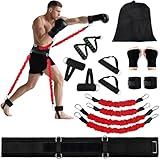
Shadow Boxing with Resistance Bands
Add resistance bands around your ankles or wrists to increase the difficulty of your shadow boxing routine. This helps build strength and endurance.
Shadow Boxing with Weights
Light dumbbells can be used to increase the intensity of your shadow boxing workout. Be careful not to use weights that are too heavy, as this can negatively affect your technique. Focus on controlled movements and proper form.
Visualization: Mental Training
Close your eyes and visualize yourself in the ring. Imagine your opponent, the fight, and your strategy. Visualize yourself throwing punches, defending, and winning. This is a powerful tool for improving your mental game and building confidence.
Mistakes to Avoid: Common Pitfalls
Even experienced boxers can fall into bad habits. Here are some of the most common mistakes to avoid during your shadow boxing sessions.
- Poor Technique: Focus on proper form at all times. Avoid throwing wild, sloppy punches.
- Lack of Focus: Stay focused on your technique and strategy. Don’t let your mind wander.
- Neglecting Footwork: Footwork is key to boxing. Make sure you’re constantly moving and adjusting your position.
- Ignoring Defense: Don’t just focus on offense. Practice your defensive movements and protect yourself.
- Rushing: Take your time and focus on quality over quantity. Don’t rush your punches.
- Not Varying Your Routine: Mix up your combinations, footwork, and defensive movements to keep your workouts challenging and engaging.
- Overlooking Breathing: Remember to breathe properly. Exhale sharply as you punch and inhale between punches.
Putting It All Together: A Sample Shadow Boxing Routine
Here’s a sample shadow boxing routine you can use as a starting point. Feel free to adjust it to fit your needs and preferences.
- Warm-up (3 minutes): Light cardio, such as jumping jacks and high knees, and dynamic stretching.
- Stance and Footwork (3 minutes): Practice your boxing stance, footwork, and basic movements.
- Jab Work (3 minutes): Focus on throwing jabs, varying the speed and distance.
- Combinations (3 minutes): Practice a variety of punch combinations.
- Defense (3 minutes): Practice slipping, bobbing and weaving, and parrying.
- Cool-down (3 minutes): Static stretching to improve flexibility.
Remember: This is just a sample routine. The most important thing is to find a routine that works for you and that you can stick to consistently. (See Also: Do Kick Boxing Gyms Have Weight Rooms )
Advanced Shadow Boxing: Taking Your Training to the Next Level
Once you’ve mastered the basics, you can start to incorporate more advanced techniques and strategies into your shadow boxing routine.
Sparring Simulation
Imagine a specific opponent and mimic their style, anticipating their moves and practicing your counters. This is a great way to prepare for a real fight.
Focus on Weaknesses
Identify your weaknesses and dedicate time to improving them during your shadow boxing sessions. For example, if you struggle with your defense, spend extra time practicing your defensive movements.
Add Mental Challenges
Challenge yourself mentally by shadow boxing with a specific goal in mind, such as maintaining a certain pace or throwing a specific number of punches. This will help improve your mental toughness.
Analyze Your Performance
Record your shadow boxing sessions and analyze your performance. Identify areas where you can improve and make adjustments to your routine. This will help you continuously refine your skills.
Partner Shadow Boxing
Shadow box with a partner. Have your partner call out combinations or call out specific movements. This will help you react quickly and improve your awareness. This simulates a real fight scenario.
Equipment You May Need: Gear Up for Success
While shadow boxing doesn’t require much equipment, certain items can enhance your training and help you stay safe.
- Boxing Gloves: Even though you’re not hitting anything, wearing gloves can help you get used to the feel of them and protect your hands.
- Hand Wraps: Essential for protecting your hands and wrists. They provide support and absorb sweat.
- Boxing Shoes: Provide good ankle support and grip.
- Jump Rope: A great warm-up tool.
- Focus Mitts: For practicing combinations and accuracy.
- Heavy Bag: For power and endurance.
- Speed Bag: For hand speed, rhythm, and coordination.
- Mouthguard: Always a good idea, even when shadow boxing.
- Athletic Tape: For taping your fingers or wrists for added support.
Integrating Shadow Boxing Into Your Overall Training Plan
Shadow boxing should be an integral part of your overall boxing training plan. It’s a versatile tool that can be used for warm-ups, cool-downs, and skill development. Here’s how to integrate it effectively:
- Warm-up: Use shadow boxing as a warm-up before your training sessions. This will help you prepare your body for exercise and improve your performance.
- Skill Development: Dedicate specific sessions to shadow boxing. This is where you can focus on refining your technique, practicing combinations, and developing your strategy.
- Cool-down: Use shadow boxing as a cool-down after your training sessions. This will help you recover and reduce muscle soreness.
- Frequency: Aim to shadow box at least 3-4 times per week.
- Variety: Vary your shadow boxing routine to keep it challenging and engaging.
Remember: Consistency is key. The more you shadow box, the better you’ll become.
Final Thoughts
Shadow boxing is a cornerstone of boxing training, offering a versatile and effective way to improve your skills, stamina, and mental game. By focusing on proper technique, footwork, and combinations, you can transform your shadow boxing sessions into a powerful tool for self-improvement. Remember to stay focused, practice consistently, and adapt your routine to meet your specific goals.
By incorporating shadow boxing into your training plan, you’ll not only enhance your boxing skills but also build a stronger, more resilient physique and a sharper, more focused mind. Embrace the discipline and dedication required, and you’ll be well on your way to achieving your boxing aspirations.