Ever wonder how many calories you torch during a shadow boxing session? You’re not alone! Shadow boxing is a fantastic workout, and a lot of people are using it to get fit. It’s a full-body exercise that combines cardio with strength training, making it an efficient way to burn calories and improve overall fitness.
This article will break down exactly how many calories you can expect to burn, the factors that influence calorie expenditure, and tips to maximize your calorie burn during your shadow boxing workouts. We’ll explore the science behind it, how to track your progress, and how to make shadow boxing a sustainable part of your fitness routine. Get ready to learn everything you need to know about the calorie-burning potential of shadow boxing!
Let’s get started and find out how much shadow boxing calorie burn you can achieve!
Understanding Shadow Boxing and Calorie Burn
Shadow boxing is essentially boxing without a partner or opponent. You’re mimicking the movements of a boxing match, throwing punches, weaving, bobbing, and footwork – all in the air. It’s a versatile workout that can be done anywhere, anytime, requiring minimal equipment. This accessibility is one of the main reasons for its popularity.
The Mechanics of Calorie Burning
The number of calories you burn during any exercise, including shadow boxing, depends on a few key factors. These include your weight, the intensity of your workout, and your metabolism. Generally, the more you weigh, the more calories you’ll burn. The harder you work, the more calories you’ll expend. And a faster metabolism will also contribute to a higher calorie burn.
Calorie burn is primarily determined by oxygen consumption. Your body needs oxygen to fuel the muscles during exercise. The more oxygen you consume, the more calories you burn. This process is complex, involving various metabolic pathways, but the underlying principle is straightforward: more effort equals more oxygen, which equals more calories burned.
Shadow Boxing vs. Other Workouts
How does shadow boxing stack up against other forms of exercise? It’s a highly effective way to burn calories compared to some activities. For example, shadow boxing often burns more calories than leisurely walking but perhaps less than high-intensity interval training (HIIT) or running at a fast pace, depending on the intensity. It offers a great balance of cardio and strength training, making it a well-rounded exercise option.
Factors Influencing Calorie Burn in Shadow Boxing
Several factors play a significant role in determining how many calories you burn during a shadow boxing session. Understanding these factors can help you tailor your workouts to maximize your calorie expenditure.
Weight and Body Composition
Your weight is a primary determinant of calorie burn. Heavier individuals generally burn more calories than lighter individuals doing the same activity. This is because it takes more energy to move a larger body mass. Body composition also matters; muscle tissue is more metabolically active than fat tissue, meaning that someone with more muscle mass will burn more calories at rest and during exercise.
Intensity of the Workout
Intensity is the key to calorie burn. The harder you work during shadow boxing, the more calories you’ll burn. This involves factors such as the speed of your punches, the power behind your movements, and the inclusion of more complex combinations. High-intensity workouts, where you’re working at a higher percentage of your maximum heart rate, will naturally result in a higher calorie burn.
You can increase intensity by:
- Increasing the speed of your punches
- Adding more power to your movements
- Incorporating plyometric exercises (e.g., jump squats, burpees)
- Using interval training (e.g., short bursts of high-intensity followed by periods of rest)
Duration of the Session
The longer you shadow box, the more calories you’ll burn. It’s a simple equation: more time spent exercising leads to more calorie expenditure. However, the intensity of your workout and your overall fitness level will also influence how long you can maintain a high level of effort. Aim for workouts that last at least 30 minutes to maximize calorie burn. (See Also: Does Shadow Boxing Really Work )
Fitness Level
Your current fitness level affects calorie burn. If you’re a beginner, you might burn more calories initially because your body is working harder to adapt to the movements. As you become more conditioned, your body becomes more efficient, and you may burn slightly fewer calories for the same level of effort. However, this also means you can sustain higher intensity for longer periods, ultimately leading to a higher total calorie burn over time.
Technique and Form
Proper technique and form are crucial for both effectiveness and safety. Correct form ensures that you’re engaging the right muscles and maximizing the efficiency of your movements. Poor form can lead to wasted energy and reduced calorie burn, and it increases the risk of injury. Focus on learning proper boxing techniques from a qualified trainer or by watching instructional videos.
Estimating Calorie Burn: A Practical Guide
Estimating calorie burn during shadow boxing can be tricky because it varies so much from person to person and workout to workout. However, we can use averages and guidelines to get a good idea.
Average Calorie Burn Estimates
On average, a person can burn between 300 to 500 calories per hour of shadow boxing. This range is based on a moderate intensity workout. However, as we’ve discussed, this can vary significantly based on the factors mentioned earlier. To give you a more concrete idea, here are some approximate figures based on body weight and workout intensity:
| Weight | Moderate Intensity (per hour) | High Intensity (per hour) |
|---|---|---|
| 130 lbs (59 kg) | 250-350 calories | 350-450 calories |
| 155 lbs (70 kg) | 300-400 calories | 400-500 calories |
| 185 lbs (84 kg) | 350-500 calories | 500-600 calories |
These are just estimates, and the actual number may differ.
Using Fitness Trackers and Apps
Fitness trackers and apps can provide a more personalized estimate of your calorie burn. Many wearable devices, such as smartwatches and fitness bands, use heart rate monitoring and algorithms to estimate calorie expenditure. These devices can give you a good starting point, but remember that their accuracy can vary.
When using fitness trackers, consider these points:
- Heart Rate Monitoring: Look for devices that accurately track your heart rate, as this is a key factor in estimating calorie burn.
- Data Accuracy: Calibrate your device with your personal information (weight, height, age, and sex) for more accurate results.
- Consistency: Use the same device consistently to track your progress over time.
Popular fitness apps and trackers to consider include:
- Apple Watch
- Fitbit
- Garmin
- MyFitnessPal (for calorie tracking and logging workouts)
Manual Calculation Methods
If you don’t have a fitness tracker, you can estimate calorie burn using formulas or online calculators. These methods typically consider your weight, the duration of your workout, and the intensity level. However, they are less accurate than using a heart rate monitor.
A basic formula to estimate calorie burn is:
Calories burned = (METs * body weight in kilograms * time in hours) (See Also: Are Boxing Classes Worth It )
Where:
- METs (Metabolic Equivalents of Task) represent the intensity of the activity. Shadow boxing has a MET value of around 6-8, depending on the intensity.
- Body weight in kilograms is your weight in pounds divided by 2.2.
- Time in hours is the duration of your workout in hours.
For example, a 155-pound person shadow boxing for 30 minutes (0.5 hours) at a moderate intensity (METs = 7) would burn approximately: (7 * 70 kg * 0.5 hours) = 245 calories.
Online calorie calculators are also readily available. Simply search for “calorie burn calculator” and input your data to get an estimate.
Maximizing Calorie Burn in Shadow Boxing Workouts
Want to get the most out of your shadow boxing sessions? Here are some strategies to amp up your calorie burn and improve your results.
Warm-Up and Cool-Down
Always start with a proper warm-up. This prepares your body for the workout and helps prevent injuries. A good warm-up includes light cardio, such as jumping jacks or jogging in place, and dynamic stretching, which involves movement. The warm-up should last for about 5-10 minutes.
Cooling down is equally important. After your shadow boxing session, cool down with static stretching, holding each stretch for 20-30 seconds. This helps your muscles recover and reduces soreness. A cool-down should also last about 5-10 minutes.
Incorporating Interval Training
Interval training is highly effective for maximizing calorie burn. Alternate between high-intensity bursts of shadow boxing and periods of rest or low-intensity activity. For example, you could shadow box at maximum effort for 30 seconds, followed by 30 seconds of rest or light movement. Repeat this cycle for 20-30 minutes. This method not only burns more calories during the workout but also can lead to a higher post-exercise oxygen consumption (EPOC), meaning you continue to burn calories even after you’re done.
Varying Your Routine
Keep your body challenged by varying your shadow boxing routine. This prevents plateaus and keeps your workouts engaging. Change the combinations you use, the speed of your punches, and the types of footwork drills you perform. You can also incorporate other exercises such as burpees, jump squats, or push-ups between rounds of shadow boxing. Mix it up!
Here are some examples of workout variations:
- Focus on different punch combinations (e.g., jab-cross-hook, uppercut combinations)
- Practice footwork drills (e.g., lateral shuffles, pivot steps)
- Incorporate plyometric exercises (e.g., jump squats, burpees, mountain climbers)
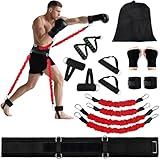
- Use resistance bands to add intensity to your punches and footwork
Using Equipment
Adding equipment can significantly increase calorie burn. Using hand wraps, boxing gloves, and a heavy bag, even if only for a portion of the workout, can increase resistance and intensity. If you have access to a speed bag or double-end bag, incorporating these into your routine will also add variety and challenge.
Here are some equipment suggestions: (See Also: Does Boxing Classes Help With Weight Loss )
- Hand Wraps: Protect your hands and wrists.
- Boxing Gloves: Protect your hands and add resistance.
- Heavy Bag: Provides a target for punches, increasing power and calorie burn.
- Speed Bag: Improves hand speed, coordination, and rhythm.
- Double-End Bag: Enhances timing, accuracy, and reflexes.
Proper Nutrition and Hydration
Fuel your body properly. What you eat and drink has a massive impact on your ability to perform and burn calories. Eat a balanced diet with adequate protein, carbohydrates, and healthy fats. Stay hydrated by drinking plenty of water before, during, and after your workouts. Dehydration can hinder your performance and reduce calorie burn.
Here are some nutrition tips:
- Pre-Workout: Eat a meal or snack with carbohydrates for energy and some protein to support muscle function.
- During Workout: Sip water to stay hydrated. If you’re working out for over an hour, consider a sports drink with electrolytes.
- Post-Workout: Consume protein and carbohydrates to replenish energy stores and aid in muscle recovery.
Tracking Your Progress and Staying Motivated
Tracking your progress is vital for staying motivated and achieving your fitness goals. It provides feedback on your efforts and helps you to make adjustments as needed.
Monitoring Your Workouts
Keep a workout log. Record the date, duration, intensity, and types of exercises you performed. This allows you to track your progress over time. Note any equipment used, punch combinations, and footwork drills you focused on.
Consider these points when monitoring your workouts:
- Frequency: How often are you shadow boxing each week?
- Duration: How long are your shadow boxing sessions?
- Intensity: How hard are you working during each session?
- Consistency: How consistent are you with your workouts?
Setting Realistic Goals
Set realistic goals. Start with achievable targets and gradually increase the intensity and duration of your workouts. For example, you might start by shadow boxing for 20 minutes three times a week and then gradually increase the duration or frequency. Setting SMART goals (Specific, Measurable, Achievable, Relevant, Time-bound) can help you stay on track.
Staying Consistent
Consistency is key to success. Make shadow boxing a regular part of your routine. Schedule your workouts in advance, treat them like important appointments, and stick to your plan as much as possible. Find a time of day that works best for you and make it a habit.
Finding a Workout Buddy or Community
Working out with a friend or joining a fitness community can provide support and motivation. Having someone to train with can make your workouts more enjoyable and help you stay accountable. Share your goals, celebrate your successes, and encourage each other when you face challenges.
Adjusting Your Routine
Don’t be afraid to adjust your routine. If you’re not seeing results, change things up. Experiment with different exercises, intensities, and durations. If you’re feeling bored or unmotivated, try new combinations, equipment, or workout environments. Listen to your body and make sure you’re getting adequate rest and recovery.
Final Thoughts
Shadow boxing is a fantastic way to burn calories, improve cardiovascular fitness, and build strength. The number of calories you burn depends on factors like your weight, workout intensity, and duration. By incorporating interval training, varying your routine, and using equipment, you can maximize your calorie burn and achieve your fitness goals. Remember to track your progress, stay consistent, and adjust your approach as needed. With dedication and the right strategies, shadow boxing can become a powerful tool in your fitness journey. Embrace the challenge, and enjoy the benefits of this dynamic and effective workout!