Ever wondered if you can actually build muscle just by throwing punches at the air? Shadow boxing is a fantastic workout, a staple for boxers, and a great way to get your heart rate up. But does it have what it takes to help you build noticeable muscle mass? That’s the million-dollar question we’re tackling today.
We’ll break down the science, explore the benefits, and look at how to structure your shadow boxing sessions to maximize muscle growth. We’ll also consider other factors that play a role, from your diet to your overall training plan. Get ready to learn everything you need to know about shadow boxing and its potential to shape your physique!
The Mechanics of Muscle Growth: A Quick Refresher
Before we get into shadow boxing, let’s quickly recap how muscles grow. Muscle hypertrophy, the scientific term for muscle growth, happens when your muscles are subjected to stress. This stress comes in the form of resistance, whether that’s lifting weights, using resistance bands, or even your own bodyweight. When your muscles are stressed, they experience tiny tears. Your body then repairs these tears, making the muscle fibers thicker and stronger. This process is fueled by adequate protein intake, rest, and recovery.
The key elements for muscle growth include:
- Progressive Overload: Gradually increasing the stress on your muscles over time.
- Sufficient Protein Intake: Providing the building blocks for muscle repair and growth.
- Adequate Rest and Recovery: Allowing your muscles to repair and rebuild.
Now, let’s see how shadow boxing fits into this equation.
Shadow Boxing: What Exactly Is It?
Shadow boxing is essentially practicing boxing techniques without an opponent or any equipment (except, potentially, hand wraps and boxing gloves). You’re mimicking punches, footwork, and defensive maneuvers in front of a mirror or in open space. It’s a fundamental part of a boxer’s training regime, used for honing technique, building stamina, and improving coordination.
Here’s a breakdown of the typical components:
- Punching: Practicing jabs, crosses, hooks, uppercuts, and other punches.
- Footwork: Moving around, simulating slips, ducks, and pivots.
- Defense: Practicing blocks, parries, and head movement to avoid imaginary punches.
- Rhythm and Timing: Focusing on the flow and coordination of movements.
Shadow boxing can be done anywhere, anytime, making it a highly accessible form of exercise. (See Also: Does Shadow Boxing Really Work )
Shadow Boxing and Muscle Engagement: What Muscles Are Involved?
Shadow boxing, while primarily a cardio-focused activity, does engage several muscle groups. The degree of engagement, however, is often less than what you would experience with traditional weightlifting or resistance training. The primary muscle groups involved include:
- Shoulders (Deltoids): Used extensively for punching movements.
- Chest (Pectorals): Involved in the power generation of punches, especially crosses and hooks.
- Back (Latissimus Dorsi, Trapezius): Stabilizing and supporting the punching motion.
- Arms (Biceps, Triceps): Involved in both the punching and defensive movements.
- Core (Abdominals, Obliques): Essential for stability, power transfer, and rotational movements.
- Legs (Quadriceps, Hamstrings, Calves): Used for footwork, power generation, and balance.
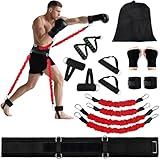
The intensity and muscle engagement can be increased by using hand weights or resistance bands, which adds extra resistance to the movements.
Can Shadow Boxing Build Muscle? The Verdict
The short answer is: yes, shadow boxing can contribute to muscle growth, but it’s not the most efficient method. Shadow boxing, on its own, is unlikely to lead to significant muscle hypertrophy compared to dedicated resistance training. Here’s why:
- Limited Resistance: Shadow boxing primarily relies on your bodyweight and the speed of your movements. This provides a relatively low level of resistance, especially compared to lifting weights.
- Cardio-Dominant: The high-repetition, fast-paced nature of shadow boxing makes it primarily a cardiovascular exercise. This means the primary focus is on burning calories and improving endurance.
- Muscle Fiber Recruitment: While shadow boxing activates muscle fibers, it might not recruit enough of them or provide sufficient stimulus to trigger substantial muscle growth in all muscle groups.
However, shadow boxing can still contribute to muscle development in several ways:
- Muscle Endurance: Shadow boxing can improve muscle endurance, allowing your muscles to work for longer periods.
- Toning: It can help tone your muscles, making them appear firmer and more defined.
- Increased Metabolism: The high-intensity nature of shadow boxing can boost your metabolism, which can help burn fat and reveal the muscles underneath.
How to Maximize Muscle Growth with Shadow Boxing
If you’re aiming to build muscle through shadow boxing, you need to adjust your approach. Here are some strategies to enhance muscle engagement and promote growth:
- Use Resistance: Incorporate hand weights (1-3 pounds), resistance bands, or weighted gloves to increase the resistance. This will force your muscles to work harder.
- Focus on Technique: Proper technique is critical. Maintain good form throughout your shadow boxing sessions to ensure all the target muscles are fully engaged.
- Vary Your Routine: Change your punches, footwork, and defensive maneuvers. This will challenge your muscles in different ways and prevent plateaus.
- Increase Intensity: Perform shadow boxing with high intensity. This means throwing punches with power and speed.
- Prioritize Volume: Increase the duration and frequency of your shadow boxing sessions.
- Include Compound Movements: Supplement your shadow boxing with compound exercises like push-ups, squats, and burpees to engage more muscle groups.
- Optimize Your Nutrition: Ensure you’re consuming enough protein to support muscle repair and growth. Aim for 0.8 to 1 gram of protein per pound of body weight per day.
- Prioritize Rest and Recovery: Allow your muscles to recover by getting adequate sleep.
Sample Shadow Boxing Workout for Muscle Building
Here’s a sample workout you can follow, incorporating some of the strategies we’ve discussed:
Warm-up (5 minutes): Jumping jacks, arm circles, high knees, and dynamic stretching. (See Also: Are Boxing Classes Worth It )
Workout (30 minutes):
- Round 1 (3 minutes): Jab-cross, focus on speed and power. Use hand weights if possible.
- Round 2 (3 minutes): Hook-uppercut combinations, emphasizing core engagement.
- Round 3 (3 minutes): Defensive drills: slipping, rolling, and blocking.
- Round 4 (3 minutes): Footwork drills: lateral movement, pivots, and quick steps.
- Round 5 (3 minutes): Full combination: jab-cross, hook-uppercut, slip, and repeat.
- Round 6 (3 minutes): Focus on power punches, using hand weights.
- Round 7 (3 minutes): Shadow boxing freestyle, focusing on speed and endurance.
- Round 8 (3 minutes): Burpees, push-ups and squats (30 seconds each).
- Round 9 (3 minutes): Cool down and static stretching.
Cool-down (5 minutes): Static stretching, holding each stretch for 30 seconds.
Important Considerations:
- Listen to your body. If you feel pain, stop and rest.
- Stay hydrated. Drink plenty of water before, during, and after your workout.
- Consistency is key. Aim to shadow box at least 3-4 times a week for best results.
Shadow Boxing vs. Other Forms of Exercise: A Comparison
Let’s compare shadow boxing to other popular forms of exercise to understand its strengths and weaknesses in relation to muscle growth.
| Exercise Type | Muscle Building Potential | Cardiovascular Benefits | Equipment Needed | Other Benefits |
|---|---|---|---|---|
| Shadow Boxing | Moderate (with modifications) | High | Minimal (hand wraps, gloves optional) | Improved coordination, agility, and boxing skills |
| Weightlifting | High | Moderate (can be improved with circuit training) | Weights, machines, or resistance bands | Increased strength, bone density, and muscle mass |
| Bodyweight Exercises | Moderate (can be increased with progressive overload) | Moderate | None | Improved functional strength, convenience |
| Running/Cardio | Low | High | Running shoes, treadmill | Improved cardiovascular health, endurance |
As you can see, weightlifting offers the highest potential for muscle building, while shadow boxing provides a good balance of cardiovascular benefits and moderate muscle development. Bodyweight exercises provide a convenient alternative, and running/cardio is great for overall cardiovascular health.
The Role of Diet and Nutrition
No matter how hard you shadow box, your diet plays a crucial role in muscle growth. Your body needs the right building blocks and fuel to repair and rebuild muscle tissue. Here’s what you need to focus on:
- Protein: Consume adequate protein to support muscle repair and growth. Aim for 0.8 to 1 gram of protein per pound of body weight per day. Good sources include lean meats, fish, eggs, dairy, and plant-based protein sources like beans, lentils, and tofu.
- Calories: Ensure you’re consuming enough calories to support your workouts. If you’re trying to build muscle, you might need to consume a slight calorie surplus.
- Carbohydrates: Carbs are your primary energy source. Choose complex carbohydrates like whole grains, fruits, and vegetables to fuel your workouts and support recovery.
- Healthy Fats: Include healthy fats in your diet, such as those found in avocados, nuts, and olive oil.
- Hydration: Drink plenty of water to stay hydrated and support muscle function.
Common Mistakes to Avoid
To maximize your results from shadow boxing, avoid these common pitfalls: (See Also: Does Boxing Classes Help With Weight Loss )
- Neglecting Proper Form: Poor technique can lead to injuries and limit muscle engagement.
- Insufficient Resistance: Relying solely on bodyweight without any added resistance will limit muscle growth.
- Ignoring Nutrition: Failing to eat enough protein and calories will hinder muscle growth.
- Lack of Consistency: Shadow boxing sporadically won’t yield significant results.
- Overlooking Recovery: Not getting enough rest and sleep will impede muscle repair and growth.
Advanced Techniques and Variations
Once you’ve mastered the basics, you can incorporate advanced techniques and variations to keep your workouts challenging and effective:
- Partner Drills: Work with a partner to practice combinations and defensive moves.
- Heavy Bag Work: Incorporate heavy bag training to improve power and technique.
- Speed Bag Training: Improve hand speed and coordination.
- Plyometric Exercises: Integrate plyometric exercises like jump squats and box jumps to improve explosiveness.
- Interval Training: Use interval training to vary the intensity of your workouts.
Combining Shadow Boxing with Other Exercises
To achieve optimal muscle growth, combine shadow boxing with other forms of exercise. Here are some effective combinations:
- Shadow Boxing + Weightlifting: This is an excellent combination. Use weightlifting to build muscle mass and strength, and shadow boxing to improve cardiovascular health, coordination, and boxing skills.
- Shadow Boxing + Bodyweight Exercises: Supplement your shadow boxing with bodyweight exercises like push-ups, pull-ups, squats, and lunges.
- Shadow Boxing + High-Intensity Interval Training (HIIT): Alternate between high-intensity shadow boxing rounds and other HIIT exercises like burpees and mountain climbers.
Shadow Boxing for Weight Loss
Shadow boxing is an effective way to burn calories and shed excess weight. The high-intensity nature of the exercise elevates your heart rate and boosts your metabolism, leading to increased calorie expenditure. To maximize weight loss through shadow boxing, focus on:
- High Intensity: Throw punches with power and speed.
- Duration: Extend the duration of your shadow boxing sessions.
- Consistency: Shadow box regularly, at least 3-4 times a week.
- Diet: Combine shadow boxing with a healthy, calorie-controlled diet.
Remember that weight loss is primarily driven by a calorie deficit. Shadow boxing can help you burn calories, but you also need to manage your food intake.
Shadow Boxing for Different Fitness Levels
Shadow boxing is adaptable to different fitness levels. Whether you’re a beginner or an experienced athlete, you can adjust the intensity and complexity of your workouts. Here’s how:
- Beginners: Start with shorter sessions (15-20 minutes) and focus on mastering the basic techniques. Gradually increase the duration and intensity as you get fitter.
- Intermediate: Increase the duration to 30-45 minutes and incorporate more complex combinations. Use hand weights or resistance bands to increase the challenge.
- Advanced: Perform longer sessions (45-60 minutes) and incorporate advanced techniques like partner drills, heavy bag work, and plyometric exercises.
The Psychological Benefits of Shadow Boxing
Beyond the physical benefits, shadow boxing offers several psychological advantages:
- Stress Relief: Shadow boxing can be a great way to relieve stress and tension.
- Improved Confidence: As you improve your skills and fitness, your confidence will increase.
- Mental Focus: Shadow boxing requires concentration and focus, which can improve your mental clarity.
- Discipline: Regular shadow boxing can help you develop discipline and consistency.
These psychological benefits can contribute to overall well-being and a positive mindset.
Final Verdict
So, can you build muscle from shadow boxing? Yes, but it’s not the primary method. It’s a fantastic cardio workout and can contribute to muscle toning and endurance. To see significant muscle growth, you’ll need to incorporate resistance training, optimize your nutrition, and prioritize rest. Shadow boxing is a great tool in a well-rounded fitness plan. If you’re looking to build muscle, combine shadow boxing with weightlifting and a protein-rich diet, and you’ll be well on your way to achieving your fitness goals!