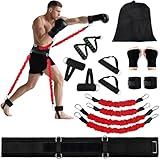
Ever dreamed of feeling like a boxing pro, but don’t have the time or money for a gym? I’ve been there! The good news is, you absolutely can get an amazing boxing workout at home. You don’t need fancy equipment or a huge space to start. In fact, many of the best boxing workouts can be done with minimal gear and in the comfort of your living room.
This guide breaks down everything you need to know to get started, from choosing the right equipment to crafting effective workout routines. We’ll cover the basics of boxing techniques, different types of workouts you can do, and how to stay motivated. We’ll also delve into nutrition and recovery, because a great workout is only half the battle. Get ready to build serious strength, improve your cardio, and feel amazing!
Whether you’re a complete beginner or have some experience, this guide will provide you with the knowledge and tools to transform your fitness journey. Let’s get started!
Essential Equipment for Your Home Boxing Gym
Before you start throwing punches, you’ll need a few essential pieces of equipment. The good news is, you don’t need to break the bank. Here’s a rundown of what’s crucial and what’s optional:
Must-Have Equipment:
- Boxing Gloves: This is the most important piece of equipment. Choose gloves based on your weight and the type of training you’ll be doing. For bag work, you’ll want heavier gloves (12-16 oz). For shadowboxing and mitt work, lighter gloves (10-12 oz) might be preferred. Consider gloves that offer good wrist support to prevent injuries.
- Hand Wraps: These are crucial for protecting your hands and wrists. They absorb sweat and provide extra support. Learn how to wrap your hands correctly before you start.
- Heavy Bag: A heavy bag is essential for practicing punches and combinations. Choose a bag that’s appropriate for your weight and skill level. A heavier bag (around 100 lbs or more) is good for experienced boxers, while a lighter bag (around 70 lbs) is a good starting point. Consider the hanging mechanism and ensure you have a secure place to hang it.
- Jump Rope: Jumping rope is an excellent way to warm up, improve cardio, and develop footwork.
Optional but Recommended Equipment:
- Focus Mitts: If you have a partner, focus mitts are excellent for practicing combinations and improving your accuracy and speed.
- Speed Bag: A speed bag helps improve hand-eye coordination, timing, and rhythm.
- Floor-to-Ceiling Ball (Double End Bag): This is a great tool for improving head movement, accuracy, and reflexes.
- Workout Mat: For floor exercises and to cushion your feet.
Where to Buy Your Equipment:
You can find boxing equipment at most sporting goods stores or online retailers like Amazon, Title Boxing, and Everlast. Look for starter kits that include gloves, hand wraps, and a heavy bag to save money.
Mastering Basic Boxing Techniques
Before you start throwing punches, it’s crucial to learn the correct form. This will help you avoid injuries and maximize the effectiveness of your workouts. Here’s a breakdown of the fundamental techniques: (See Also: Does Shadow Boxing Really Work )
The Stance:
- Foot Placement: Stand with your feet shoulder-width apart, your dominant foot slightly behind the other.
- Body Angle: Turn your body slightly to the side, with your lead shoulder pointing towards your opponent.
- Knee Bend: Bend your knees slightly to maintain a balanced and athletic stance.
- Weight Distribution: Distribute your weight evenly, with a slight forward lean.
- Heels: Keep your heels slightly off the ground, ready to move.
The Guard:
- Hands Up: Keep your hands up, with your fists near your cheekbones.
- Elbows In: Keep your elbows close to your body to protect your ribs.
- Chin Down: Tuck your chin to protect your jaw.
- Eyes Forward: Focus on your opponent’s chest or eyes.
The Punches:
- Jab: This is a quick, straight punch thrown with your lead hand. Extend your arm fully, rotating your fist slightly as you connect.
- Cross: This is a powerful punch thrown with your rear hand. Rotate your hips and shoulders as you punch, transferring your weight.
- Hook: This is a powerful, arcing punch thrown with either hand. Bend your elbow and rotate your body, aiming for the side of your opponent’s head or body.
- Uppercut: This is a punch thrown from a low position, upward. Bend your knees and drive upward, aiming for your opponent’s chin.
Footwork:
Footwork is essential for moving around the ring and setting up your punches. Learn to move your feet quickly and efficiently. Always maintain your stance, and don’t cross your feet.
- Shuffle: Move your feet in small steps, keeping your feet shoulder-width apart.
- Pivot: Turn on the balls of your feet to change direction.
- Slip: Move your head to avoid punches.
- Bob and Weave: Bend your knees and move your body to avoid punches.
Creating Your Home Boxing Workout Routine
Now that you know the basics, let’s create a workout routine. A well-rounded boxing workout should include a warm-up, shadowboxing, bag work, cardio, and cool-down.
Warm-Up (5-10 Minutes):
- Jumping Rope: Start with 2-3 minutes of jumping rope.
- Dynamic Stretching: Perform arm circles, leg swings, torso twists, and other dynamic stretches to prepare your muscles for exercise.
- Light Cardio: Do some high knees, butt kicks, or jumping jacks.
Shadowboxing (3-5 Rounds, 3 Minutes Each, with 1 Minute Rest):
Shadowboxing is practicing punches and combinations without a bag. Focus on proper form, speed, and footwork. Imagine you’re fighting an opponent. This is a great time to practice combinations. Here are a few examples:
- Jab-Cross
- Jab-Jab-Cross
- Jab-Cross-Hook
- Cross-Hook-Uppercut
Bag Work (3-5 Rounds, 3 Minutes Each, with 1 Minute Rest):
This is where you put your punches to the test! Focus on hitting the bag with power and accuracy. Vary your punches and combinations. Here are some tips:
- Maintain Good Form: Don’t sacrifice form for power.
- Breathe: Exhale as you punch.
- Vary Your Combinations: Don’t just throw the same punches over and over.
- Move Around the Bag: Practice your footwork and angles.
Cardio (20-30 Minutes):
Boxing is a cardio-intensive sport. Incorporate cardio exercises into your workout routine to improve your endurance. Choose from the following options: (See Also: Are Boxing Classes Worth It )
- Jumping Rope: Continue jumping rope for 10-15 minutes.
- Running: Go for a run, focusing on interval training.
- High-Intensity Interval Training (HIIT): Do a HIIT workout, alternating between high-intensity exercises (burpees, mountain climbers, etc.) and short rest periods.
- Shadowboxing with Cardio Bursts: Shadowbox for 1 minute, and then do a quick cardio burst (e.g., 30 seconds of burpees). Repeat.
Cool-Down (5-10 Minutes):
- Static Stretching: Hold each stretch for 30 seconds. Focus on stretching the muscles you used during your workout.
- Deep Breathing: Take deep breaths to relax your body and mind.
Sample Workout Routine (beginner):
Here’s a sample workout routine for beginners. Adjust the rounds and rest times as needed.
| Activity | Duration | Rounds/Sets | Rest |
|---|---|---|---|
| Warm-up (Jumping Rope, Dynamic Stretching) | 5-10 minutes | – | – |
| Shadowboxing | 3 minutes | 3 rounds | 1 minute |
| Bag Work | 3 minutes | 3 rounds | 1 minute |
| Cardio (Jumping Rope or Light Jogging) | 20 minutes | – | – |
| Cool-down (Stretching) | 5-10 minutes | – | – |
Sample Workout Routine (intermediate/advanced):
This routine is designed for those with more experience. Adjust the intensity and duration as needed.
| Activity | Duration | Rounds/Sets | Rest |
|---|---|---|---|
| Warm-up (Jumping Rope, Dynamic Stretching) | 5-10 minutes | – | – |
| Shadowboxing | 3 minutes | 5 rounds | 1 minute |
| Bag Work | 3 minutes | 5 rounds | 1 minute |
| Cardio (HIIT or Running Intervals) | 25-30 minutes | – | – |
| Core Work | 15 minutes | 3 sets of each exercise | 30 seconds |
| Cool-down (Stretching) | 5-10 minutes | – | – |
Advanced Techniques and Drills
Once you’ve mastered the basics, you can incorporate more advanced techniques and drills into your workouts. This will help you improve your skills and challenge yourself.
Advanced Punches:
- Feints: Use feints to trick your opponent and set up your punches.
- Body Shots: Throw punches to the body to wear down your opponent.
- Counter-Punching: Learn to counter your opponent’s punches.
Advanced Footwork:
- Cutting Angles: Learn to cut off your opponent’s escape routes.
- Footwork Drills: Practice footwork drills to improve your agility and coordination.
Drills:
- Mitt Work: If you have a partner, do mitt work to practice combinations and improve your speed and accuracy.
- Speed Bag: Practice on the speed bag to improve your hand-eye coordination and rhythm.
- Double End Bag: Use a double end bag to improve your head movement and reflexes.
Nutrition and Hydration for Boxing
Proper nutrition and hydration are essential for maximizing your performance and recovery. Here’s what you need to know:
Nutrition:
- Eat a Balanced Diet: Focus on eating a balanced diet that includes plenty of fruits, vegetables, lean protein, and complex carbohydrates.
- Fuel Your Workouts: Eat a small meal or snack before your workout to provide energy.
- Recover Properly: Eat a meal or snack after your workout to help your body recover. Focus on protein and carbohydrates.
- Stay Hydrated: Drink plenty of water throughout the day, especially before, during, and after your workouts.
- Consider Supplements: Some supplements, such as creatine and protein powder, may help improve your performance and recovery. However, talk to your doctor or a registered dietitian before taking any supplements.
Sample Meal Plan Ideas
Here are some examples of meal and snack ideas to fuel your boxing workouts: (See Also: Does Boxing Classes Help With Weight Loss )
- Pre-Workout:
- Oatmeal with berries and a scoop of protein powder
- Banana with peanut butter
- Small chicken breast and a sweet potato
- Post-Workout:
- Chicken breast with brown rice and vegetables
- Salmon with quinoa and asparagus
- Protein shake with fruit and a handful of nuts
- Snacks:
- Greek yogurt with fruit
- Hard-boiled eggs
- Trail mix
- Apple slices with almond butter
Injury Prevention and Safety
Boxing can be a demanding sport, so it’s important to take steps to prevent injuries. Here are some tips:
- Warm-up Properly: Always warm up before your workouts to prepare your muscles.
- Use Proper Form: Focus on using proper form to avoid injuries.
- Wear Protective Gear: Wear boxing gloves, hand wraps, and a mouthguard. Consider wearing headgear if you’re sparring.
- Listen to Your Body: Don’t push yourself too hard, especially when you’re starting out. Take rest days when needed.
- Gradually Increase Intensity: Gradually increase the intensity and duration of your workouts to avoid overtraining.
- Cool Down and Stretch: Cool down and stretch after your workouts to help your muscles recover.
- Consult a Professional: If you have any concerns or injuries, consult a doctor or a physical therapist.
Staying Motivated and Consistent
Staying motivated and consistent is key to achieving your fitness goals. Here are some tips:
- Set Realistic Goals: Set realistic goals that are achievable.
- Track Your Progress: Track your progress to stay motivated.
- Find a Workout Partner: Working out with a partner can help you stay motivated and accountable.
- Vary Your Workouts: Vary your workouts to keep things interesting.
- Listen to Music: Listen to music to help you stay motivated.
- Reward Yourself: Reward yourself for achieving your goals.
- Don’t Give Up: Don’t give up if you miss a workout. Just get back on track as soon as possible.
Troubleshooting Common Challenges
Even with the best planning, you might encounter some challenges. Here’s how to address them:
- Boredom: Mix up your workouts by trying different combinations, adding new exercises, or listening to new music. Consider taking an online boxing class or watching videos for inspiration.
- Lack of Space: If you have limited space, consider using a smaller heavy bag, a speed bag, or just shadowboxing. You can also move furniture around to create space.
- Lack of Motivation: Set specific, achievable goals. Track your progress. Find a workout buddy. Remind yourself of why you started.
- Injuries: Always prioritize safety. Warm up properly. Use correct form. Listen to your body and rest when needed. Consult a doctor if you have persistent pain.
- Time Constraints: Even a short 20-30 minute workout is beneficial. Schedule your workouts like important appointments. Break up your workouts into smaller chunks if necessary.
Boxing for All Fitness Levels
Boxing workouts are adaptable to all fitness levels. Whether you are a beginner looking to get in shape or an experienced athlete looking to refine your skills, boxing offers a challenging and rewarding workout. The intensity and complexity of the exercises can be easily adjusted to match your current fitness level.
- Beginners: Focus on the fundamentals. Start with shadowboxing and light bag work. Gradually increase the intensity and duration of your workouts.
- Intermediate: Add more complex combinations and drills. Increase the intensity of your cardio.
- Advanced: Incorporate advanced techniques and drills. Focus on refining your skills and pushing your limits.
The Benefits of Boxing Workouts
Boxing workouts offer a wide range of physical and mental benefits. They are a fantastic way to improve your overall fitness and well-being. Here’s what you can expect:
- Improved Cardiovascular Health: Boxing workouts are an excellent form of cardiovascular exercise, improving heart health and stamina.
- Increased Strength and Endurance: Boxing builds strength and endurance in multiple muscle groups.
- Weight Loss: Boxing burns a significant number of calories, helping with weight loss and body composition.
- Improved Coordination and Agility: Boxing requires precise movements, improving hand-eye coordination, agility, and reflexes.
- Stress Relief: Boxing can be a great way to relieve stress and improve your mood.
- Increased Confidence: Learning boxing techniques and improving your fitness can boost your confidence.
- Full-Body Workout: Boxing engages muscles throughout your entire body.
Final Verdict
Boxing workouts at home are a fantastic way to get fit, have fun, and learn valuable skills. By following the tips and routines in this guide, you can create effective workouts that will help you achieve your fitness goals. Remember to start slowly, focus on proper form, and listen to your body. With dedication and consistency, you’ll be well on your way to a stronger, fitter you. Embrace the challenge, enjoy the journey, and experience the incredible benefits of boxing!