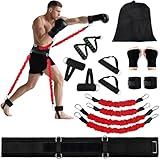
Shadow boxing. It’s the silent dance of a fighter, a solo performance where you’re both the choreographer and the star. It might seem simple – just throwing punches at the air – but shadow boxing is far more profound than that. It’s a cornerstone of any serious fighter’s training regimen, a practice that builds not just physical skills, but also mental fortitude and tactical awareness. In this guide, we’ll journey through the essentials, breaking down how to maximize your shadow boxing sessions and transform yourself into a more skilled and confident boxer.
Whether you’re a seasoned pugilist or a complete beginner, shadow boxing offers an unparalleled opportunity to refine your technique, improve your conditioning, and visualize your fights. It’s a versatile tool that can be adapted to any fitness level and can be done anywhere, anytime. We’ll cover everything from the fundamental stances and punches to advanced footwork drills and strategies. Get ready to step into your own personal ring and start honing your craft.
The Fundamentals: Building a Solid Foundation
Before you start throwing punches, you need a solid foundation. This includes your stance, guard, and basic punches. A good foundation ensures you’re training efficiently and minimizing the risk of injury. Let’s break down the essential elements.
The Stance: Your Fighting Posture
Your stance is the bedrock of your boxing. It’s the position from which you’ll generate power, move effectively, and defend yourself. There are slight variations, but the core principles remain the same:
- Foot Placement: Stand with your feet shoulder-width apart, one foot slightly ahead of the other (usually your non-dominant foot). Your lead foot should be angled slightly inward, and your rear foot angled slightly outward.
- Knee Bend: Bend your knees slightly to lower your center of gravity. This gives you better balance and allows for quicker movement. Don’t overdo it; you should be relaxed, not strained.
- Weight Distribution: Distribute your weight evenly, with a slight bias towards the balls of your feet. This allows for fluid movement in any direction.
- Body Alignment: Your body should be slightly sideways to your opponent (imaginary in shadow boxing). This minimizes the target area and allows you to generate power efficiently.
Experiment with different stances to find what feels most natural and comfortable for you. The key is to be balanced, relaxed, and ready to move.
The Guard: Protecting Yourself
Your guard is your shield. It’s the defensive posture you maintain to protect yourself from incoming strikes. A good guard is crucial for both offense and defense.
- Hand Placement: Keep your hands up, near your face. Your lead hand should be near your cheek, protecting your jaw. Your rear hand should be near your other cheek or your chin.
- Elbows: Keep your elbows tucked in close to your body to protect your ribs and torso.
- Chin Down: Keep your chin tucked down towards your chest to protect your jaw.
- Eyes Up: Always keep your eyes focused on your opponent (or the imaginary opponent in shadow boxing).
Practice maintaining your guard even when you’re not throwing punches. It should become second nature.
The Basic Punches: Your Offensive Arsenal
The jab, cross, hook, and uppercut are the cornerstones of boxing. Mastering these punches is essential before you progress to more complex combinations.
- The Jab:
- Technique: Extend your lead arm straight out from your face, snapping your fist forward. Rotate your fist slightly as you punch, turning your palm down at the end.
- Purpose: The jab is a range-finder, a defensive tool, and a setup punch. It helps you control the distance and set up your other punches.
- The Cross:
- Technique: Step forward with your rear foot as you rotate your hips and throw your rear hand straight towards your target. Transfer your weight from your rear foot to your front foot.
- Purpose: The cross is a power punch, often used to follow up the jab or to counter an opponent’s attack.
- The Hook:
- Technique: Bend your elbow and bring your fist across your body in a horizontal arc. Rotate your hips and pivot on your lead foot to generate power.
- Purpose: The hook is a powerful punch that can be thrown to the head or body.
- The Uppercut:
- Technique: Bend your knees and bring your fist up from the bottom in a vertical arc. Keep your elbow close to your body.
- Purpose: The uppercut is a close-range punch, effective for attacking the chin or body.
Practice each punch individually, focusing on proper technique. Then, start combining them into basic combinations, such as jab-cross, jab-jab-cross, or jab-cross-hook.
Shadow Boxing Drills: Refining Your Skills
Once you’ve grasped the fundamentals, it’s time to put them into practice. Shadow boxing drills are structured exercises designed to improve specific aspects of your boxing game. Here are some effective drills:
The 3-Minute Round: Building Endurance
Mimic a real boxing round. Set a timer for 3 minutes and go through a variety of punches, combinations, and footwork. Focus on maintaining good form and staying relaxed. This drill helps build endurance, improves your technique, and gets you used to the pace of a fight.
The Combination Drill: Stringing Punches Together
Choose a series of combinations and repeat them for a set time or number of repetitions. For example, practice jab-cross-hook-cross, or jab-cross-hook-uppercut. This drill improves your punch combinations and fluidity.
The Footwork Drill: Moving with Purpose
Footwork is crucial in boxing. Practice various footwork patterns, such as:
- The Shuffle: Moving forward, backward, or sideways while maintaining your stance.
- The Pivot: Rotating on your lead or rear foot to change your angle.
- The Step-and-Punch: Taking a step forward or backward while throwing a punch.
Focus on staying light on your feet and maintaining your balance.
The Defense Drill: Slipping and Weaving
Imagine your opponent throwing punches and practice slipping and weaving to avoid them. Slip to the left and right, and weave under punches. This drill improves your defensive skills and head movement.
The Power Drill: Maximizing Impact
Focus on generating power with each punch. Throw punches with full extension and hip rotation. Imagine hitting a heavy bag and put your weight behind each punch. This drill increases your punching power.
Advanced Techniques and Strategies
Once you’ve mastered the basics, you can start incorporating more advanced techniques and strategies into your shadow boxing routine. This will help you become a more versatile and effective boxer. (See Also: Does Shadow Boxing Really Work )
Adding Head Movement: Evading Punches
Head movement is a crucial defensive skill that allows you to avoid punches and create openings for your own attacks. Practice the following techniques:
- Slipping: Moving your head slightly to the left or right to avoid a straight punch.
- Weaving: Ducking under a punch, bringing your head below your opponent’s shoulder.
- Bobbing and Weaving: A combination of slipping and weaving, moving your head in a fluid motion to evade punches.
Practice these techniques while shadow boxing, imagining your opponent’s punches. Focus on keeping your chin tucked and your eyes on your opponent.
Incorporating Footwork: Controlling the Ring
Footwork is essential for controlling the distance, angles, and tempo of a fight. Here are some footwork drills to incorporate:
- Cutting off the Ring: Moving your feet to force your opponent towards the ropes or corners.
- Angle Shots: Moving around your opponent to create angles for your punches.
- Setting Traps: Using footwork to lure your opponent into a position where you can land a counter punch.
Footwork is about staying balanced and moving efficiently. Practice these movements without throwing punches to improve your coordination.
Creating Combinations: The Art of Offense
Shadow boxing is an ideal time to practice and refine your punch combinations. Here are some examples to try:
- The 1-2 (Jab-Cross): A fundamental combination that can be used to set up other punches.
- The 1-2-3 (Jab-Cross-Hook): A versatile combination that can be used to attack the head and body.
- The 3-2 (Hook-Cross): A powerful combination that can be used to finish an opponent.
- The 1-2-6 (Jab-Cross-Uppercut): Effective in close range.
Experiment with different combinations and find what works best for you. Practice transitioning smoothly between punches.
Visualizing Your Opponent: Mental Preparation
Shadow boxing is not just a physical exercise; it’s also a mental one. Use this time to visualize your opponent and simulate the dynamics of a real fight. Consider these points:
- Imagining Your Opponent: Picture your opponent’s style, strengths, and weaknesses.
- Anticipating Their Moves: Predict their next actions and prepare your counterattacks.
- Creating Scenarios: Visualize different fight situations and how you would react.
This mental preparation will help you stay calm and focused during a real fight.
Adding Speed and Power: Enhancing Your Performance
To further improve your shadow boxing, focus on increasing your speed and power. Here’s how:
- Speed Drills: Practice throwing punches as fast as possible while maintaining good form.
- Power Drills: Focus on generating power with each punch, visualizing hitting a heavy bag.
- Breathing Techniques: Control your breathing to maintain your stamina and stay relaxed.
Combining speed and power will make your punches more effective and improve your overall performance.
Integrating Shadow Boxing Into Your Training Regimen
Shadow boxing is most effective when integrated into a comprehensive training regimen. Here’s how to make the most of it:
Warm-Up and Cool-Down: Preparing and Recovering
Always warm up before your shadow boxing session and cool down afterward. This will help prevent injuries and improve your recovery. Your warm-up should include:
- Light Cardio: Jumping jacks, jogging in place, or skipping rope.
- Dynamic Stretching: Arm circles, leg swings, torso twists.
Your cool-down should include:
- Static Stretching: Holding stretches for 20-30 seconds.
Frequency and Duration: Consistency Is Key
Aim to shadow box at least 3-4 times per week, for 3-5 rounds each session (3 minutes per round with a 1-minute rest). Adjust the duration and frequency based on your fitness level and goals. Consistency is key to seeing results.
Monitoring Progress: Tracking Your Improvement
Keep track of your progress by:
- Recording Your Workouts: Note the drills you performed, the combinations you practiced, and any areas you struggled with.
- Filming Yourself: Regularly film your shadow boxing sessions to identify areas for improvement.
- Seeking Feedback: Ask a coach or experienced boxer to watch your shadow boxing and provide feedback.
This will help you stay motivated and track your progress over time. (See Also: Are Boxing Classes Worth It )
Avoiding Plateaus: Staying Challenged
To avoid plateaus and continue improving, vary your shadow boxing routine. Try these approaches:
- Changing the Pace: Alternate between speed rounds and power rounds.
- Adding Resistance: Wear resistance bands or light weights to increase the difficulty.
- Focusing on Weaknesses: Identify your weaknesses and dedicate time to improving them.
By constantly challenging yourself, you’ll continue to improve and avoid stagnation.
Shadow Boxing for Different Skill Levels
Shadow boxing can be adapted to suit different skill levels, allowing everyone to benefit from this versatile training method.
Beginner Shadow Boxing: Building the Foundation
Beginners should focus on mastering the basic techniques and building a solid foundation. Here’s a suggested approach:
- Focus on Form: Prioritize proper technique over speed or power.
- Start with Short Rounds: Begin with 1-2 rounds of 3 minutes each.
- Practice Basic Punches: Concentrate on the jab, cross, hook, and uppercut.
- Include Footwork: Practice shuffling, pivoting, and stepping forward.
- Focus on Defense: Practice keeping your guard up and moving your head.
Consistency and patience are key for beginners. Focus on building good habits from the start.
Intermediate Shadow Boxing: Refining Your Skills
Intermediate boxers should focus on refining their technique, increasing their speed and power, and developing more complex combinations. Here’s how:
- Increase Intensity: Add more speed and power to your punches.
- Practice Combinations: Learn and practice various punch combinations.
- Incorporate Head Movement: Practice slipping, weaving, and bobbing and weaving.
- Work on Footwork: Improve your footwork to control the distance and angles.
- Visualize Your Opponent: Start visualizing your opponent and practicing strategies.
At this level, you should be developing your own style and refining your strengths.
Advanced Shadow Boxing: Maximizing Your Potential
Advanced boxers should focus on maximizing their potential by incorporating advanced techniques, strategies, and mental preparation. Here’s what to do:
- Refine Your Style: Fine-tune your unique boxing style and identify your strengths.
- Practice Advanced Combinations: Develop complex combinations and transitions.
- Incorporate Advanced Footwork: Master cutting off the ring and creating angles.
- Develop Fight Strategy: Visualize your opponent and create a detailed fight plan.
- Focus on Mental Toughness: Practice staying calm and focused under pressure.
Advanced shadow boxing is about taking your skills to the highest level and preparing yourself for competition.
Common Mistakes and How to Avoid Them
Even experienced boxers can make mistakes during shadow boxing. Here are some common errors and how to avoid them:
Poor Form: The Foundation of Problems
Poor form can lead to injuries and limit your progress. Avoid these common mistakes:
- Dropping Your Guard: Always keep your hands up to protect your face.
- Punching with Your Arm: Use your legs and core to generate power.
- Not Rotating Your Hips: Rotate your hips to generate power with each punch.
- Looking Down: Keep your eyes on your imaginary opponent.
Focus on maintaining proper technique throughout your shadow boxing sessions.
Lack of Focus: A Distracted Mind
Shadow boxing requires focus and concentration. Avoid these distractions:
- Daydreaming: Stay focused on the task at hand.
- Rushing: Take your time and focus on proper technique.
- Not Visualizing: Imagine your opponent and practice different fight scenarios.
Concentration is key to maximizing the benefits of shadow boxing.
Ignoring Footwork: The Foundation of Movement
Good footwork is essential for boxing. Avoid these common footwork mistakes:
- Crossing Your Feet: Avoid crossing your feet, as this can lead to loss of balance.
- Moving Too Much: Move with purpose and efficiency.
- Not Pivoting: Use pivots to change your angle.
Practice footwork drills regularly to improve your agility and coordination. (See Also: Does Boxing Classes Help With Weight Loss )
Insufficient Variety: Stagnation
Vary your routine to keep challenging yourself. Avoid these common mistakes:
- Repeating the Same Drills: Try different drills and combinations.
- Not Varying the Pace: Alternate between speed rounds and power rounds.
- Not Challenging Yourself: Add resistance or try new techniques.
Keep your routine fresh and challenging to promote continuous progress.
Equipment and Environment: Setting the Stage
While you can shadow box anywhere, having the right equipment and environment can enhance your training.
Essential Gear: Protecting Yourself
The following gear is recommended:
- Boxing Gloves: Even for shadow boxing, wearing gloves can help you get used to the feel.
- Hand Wraps: Protect your hands and wrists.
- Boxing Shoes: Provide support and traction.
- Mouthguard: Protect your teeth.
Investing in quality gear is an investment in your safety and performance.
Ideal Training Environment: Maximizing Your Performance
Choose a training environment that meets your needs:
- Space: You need enough space to move freely.
- Surface: A flat, non-slip surface is ideal.
- Mirror: A mirror allows you to monitor your form.
- Music: Music can motivate and set the pace of your workout.
The right environment will help you stay focused and motivated.
Beyond Shadow Boxing: Complementary Training
While shadow boxing is a cornerstone of training, it’s most effective when combined with other exercises.
Strength and Conditioning: Building a Strong Body
Strength and conditioning exercises will improve your overall fitness. Consider these exercises:
- Weight Training: Focus on compound exercises like squats, deadlifts, and bench presses.
- Core Exercises: Strengthen your core with planks, crunches, and Russian twists.
- Cardio: Run, swim, or cycle to improve your cardiovascular fitness.
- Plyometrics: Include jumping exercises to improve your explosiveness.
A strong and conditioned body will improve your performance in the ring.
Bag Work: Practicing Your Skills
Hitting a heavy bag, speed bag, and double-end bag will improve your punching power, timing, and accuracy.
- Heavy Bag: Practice your punches, combinations, and power.
- Speed Bag: Improve your hand-eye coordination and rhythm.
- Double-End Bag: Develop your timing, accuracy, and head movement.
Bag work will help you translate your shadow boxing skills into real-world applications.
Sparring: Testing Your Skills
Sparring with a partner is the ultimate test of your skills. It allows you to practice your techniques in a live environment. Always spar under the supervision of a coach and wear appropriate protective gear.
Sparring will help you develop your fight IQ and learn how to react to different opponents.
Nutrition and Rest: Fueling Your Body
Proper nutrition and rest are essential for recovery and performance. These should be a priority:
- Balanced Diet: Eat a diet rich in protein, carbohydrates, and healthy fats.
- Hydration: Drink plenty of water.
- Sleep: Get at least 7-8 hours of sleep per night.
Fueling your body properly will allow you to train harder and recover faster.
Conclusion
Shadow boxing is a powerful tool for boxers of all levels. By consistently practicing the techniques and strategies outlined in this guide, you can significantly improve your skills, conditioning, and mental game. Remember to focus on proper form, vary your routine, and integrate shadow boxing into a comprehensive training program. Stay consistent, stay focused, and enjoy the journey of becoming a better boxer. The ring, whether real or imagined, awaits.
Embrace the challenge, stay disciplined, and watch as your skills transform. Shadow boxing isn’t just about throwing punches; it’s about building a better you, one round at a time. So, step into your personal ring, throw your first punch, and begin your journey to becoming a more skilled and confident boxer. The dedication you put in during shadow boxing will pay off handsomely in the ring.