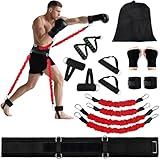
Shadow boxing, the silent art of combat, might seem simple at first glance: just throwing punches and moving around. But believe me, there’s a lot more to it than meets the eye! It’s an incredibly effective way to hone your boxing skills, improve your fitness, and build confidence – all without needing a partner or equipment.
Whether you’re a seasoned fighter looking to sharpen your technique or a complete beginner taking your first steps into the world of boxing, shadow boxing is your secret weapon. It allows you to focus on the fundamentals, refine your form, and develop a feel for the sweet science. I’m excited to guide you through everything you need to know to get started and to maximize your shadow boxing sessions.
In this guide, we’ll explore the benefits, the essential techniques, and how to structure your workouts. We’ll cover everything from stance and footwork to punching combinations and defensive maneuvers. Get ready to transform your boxing game from the comfort of your own space!
The Benefits of Shadow Boxing
Shadow boxing is more than just throwing punches at the air; it’s a comprehensive training tool that offers a multitude of benefits for boxers of all levels. It’s a fantastic way to develop your skills, improve your physical conditioning, and boost your mental game.
Technical Development
Shadow boxing is the perfect platform for refining your boxing technique. When you’re not facing an opponent, you can focus entirely on your form, ensuring that each punch is thrown correctly, with proper technique and power. This helps to build muscle memory, making your punches more efficient and effective in the ring. You can concentrate on keeping your hands up, your chin tucked, and your elbows in – all essential for good defense.
- Perfecting Punch Form: Shadow boxing allows you to concentrate on the mechanics of each punch.
- Building Muscle Memory: Repeated practice solidifies correct techniques.
- Improving Punch Speed and Power: Focus on generating force from your core and legs.
Physical Conditioning
Shadow boxing is a fantastic cardiovascular workout that can significantly improve your fitness levels. The constant movement, punching, and footwork elevate your heart rate, helping you burn calories and build endurance. It’s also a great way to improve your coordination, agility, and balance. The constant pivoting and shifting of weight strengthens your core and legs, which are critical for both offense and defense.
- Cardiovascular Fitness: Increases heart rate and improves endurance.
- Muscle Toning: Engages multiple muscle groups.
- Coordination and Agility: Enhances overall body control.
Mental Toughness
Shadow boxing is not just a physical exercise; it’s also a mental workout. It requires focus, discipline, and self-motivation. Practicing alone can be challenging, but it helps you build mental toughness and the ability to stay focused under pressure. It also allows you to visualize your fights, plan your strategies, and build confidence in your abilities.
- Focus and Concentration: Improves your ability to concentrate.
- Self-Discipline: Builds the habit of regular practice.
- Confidence Building: Helps you visualize success and build belief in your skills.
Getting Started: Your Shadow Boxing Essentials
Before you jump into shadow boxing, it’s essential to have a solid foundation. This includes understanding the correct boxing stance, footwork, and basic punching techniques. Let’s break down the essentials:
The Boxing Stance
Your boxing stance is the foundation of everything else you do. It provides a stable base from which to generate power and move effectively. Here’s how to achieve the perfect stance:
- Feet Placement: Stand with your feet shoulder-width apart, one foot slightly ahead of the other (if you’re right-handed, your left foot should be forward).
- Knee Bend: Bend your knees slightly, keeping your weight balanced.
- Weight Distribution: Distribute your weight evenly, with a slight bias towards the balls of your feet.
- Body Angle: Turn your body slightly to the side, protecting your chin.
- Hands Up: Keep your hands up, protecting your face, with your elbows in.
Why It Matters: A proper stance provides balance, power, and protection. It allows you to move quickly and efficiently while minimizing your vulnerability to punches.
Footwork Fundamentals
Footwork is crucial for moving in and out of range, setting up punches, and defending against attacks. Here are some key footwork drills: (See Also: Does Shadow Boxing Really Work )
- The Shuffle: Slide your feet along the ground, always keeping your feet shoulder-width apart and maintaining your stance.
- The Pivot: Rotate on the balls of your feet to change direction.
- The Step-In/Step-Out: Take a small step forward or backward to close or create distance.
- The Angle: Move to the side of your opponent to create an advantageous angle.
Why It Matters: Good footwork allows you to control the distance, set up your punches, and avoid your opponent’s attacks. It’s the key to controlling the fight.
Basic Punching Techniques
There are four basic punches in boxing: the jab, the cross, the hook, and the uppercut. Mastering these punches is the first step towards developing a well-rounded boxing skillset. Let’s look at each one:
- The Jab: A straight punch thrown with your lead hand. It’s used for setting up other punches, controlling distance, and scoring points.
- The Cross: A straight punch thrown with your rear hand. It’s a powerful punch that generates force from your hips and legs.
- The Hook: A punch thrown with a bent arm, targeting the side of the head or body.
- The Uppercut: A punch thrown upwards, targeting the chin or body.
Why It Matters: These are the foundational punches. They are the building blocks of all boxing combinations and strategies. Mastering them is essential.
Shadow Boxing Drills and Combinations
Once you’ve mastered the basics, it’s time to put them into practice with drills and combinations. This is where shadow boxing becomes truly dynamic and effective.
Warm-Up Routine
Before you start shadow boxing, it’s important to warm up your muscles to prevent injuries. Here’s a suggested warm-up routine:
- Jumping Jacks: 1 minute.
- Arm Circles: 1 minute forward, 1 minute backward.
- High Knees: 1 minute.
- Butt Kicks: 1 minute.
- Shadow Boxing Lightly: 2-3 minutes of easy punches and footwork.
Why It Matters: Warming up increases blood flow to your muscles, making them more flexible and reducing the risk of injury. It also prepares your body for the intensity of the workout.
Punching Combinations
Punching combinations involve throwing multiple punches in a sequence. Here are some basic combinations to get you started:
- Jab-Cross: A classic combination for setting up power shots.
- Jab-Jab-Cross: Adding a second jab to control distance and open up your opponent.
- Jab-Cross-Hook: A versatile combination that can be used to attack the head or body.
- Jab-Cross-Hook-Uppercut: A more advanced combination that combines punches to the head and body.
How to Practice: Start slowly, focusing on technique. Gradually increase the speed and power as you become more comfortable. Visualize your opponent and the target areas.
Footwork Drills
Integrating footwork into your shadow boxing is crucial for realistic movement and effective combat. Here are some drills to improve your footwork:
- The Circle Drill: Imagine you are circling an opponent. Practice moving around the ‘opponent’, stepping left, right, forward, and backward while maintaining your stance and throwing punches.
- The In-and-Out Drill: Practice moving in and out of range by stepping forward with your lead foot (jab range) and then stepping back to safety. Combine this with jabs and crosses.
- The Angle Drill: Practice moving to the side of your imaginary opponent, creating angles to land punches and avoid attacks.
How to Practice: Focus on smooth transitions and maintaining your balance. Imagine an opponent and react to their movements. (See Also: Are Boxing Classes Worth It )
Defense Drills
Defense is just as important as offense in boxing. Here are some defensive drills you can incorporate into your shadow boxing:
- The Slip: Practice moving your head to the side to avoid punches.
- The Bob and Weave: Practice bending your knees and moving your head up and down and from side to side to avoid punches.
- The Block: Practice raising your gloves to block punches.
- The Parry: Practice using your gloves to deflect your opponent’s punches.
How to Practice: Visualize punches coming at you and react accordingly. Focus on keeping your hands up and your chin tucked.
Round Structure and Time Management
Structuring your shadow boxing sessions into rounds can help you improve your endurance and focus. Here’s a sample structure:
- Warm-up: 5 minutes.
- Shadow Boxing Rounds: 3-5 rounds of 3 minutes each, with 1-minute rest periods.
- Cool-down: 5 minutes of light stretching.
Tips: Use a timer to keep track of the rounds and rest periods. Vary the intensity and combinations during each round. Listen to your body and take breaks when needed.
Advanced Shadow Boxing Techniques
Once you’ve mastered the basics, you can take your shadow boxing to the next level with advanced techniques. These techniques will help you become a more versatile and effective boxer.
Integrating Head Movement
Head movement is crucial for avoiding punches and setting up your own attacks. Here’s how to integrate head movement into your shadow boxing:
- The Slip: Practice slipping punches by moving your head to the side.
- The Bob and Weave: Practice bending your knees and moving your head up and down and from side to side.
- The Shoulder Roll: Use your shoulder to deflect punches.
How to Practice: Visualize punches coming at you and react accordingly. Focus on keeping your chin tucked and your eyes on your imaginary opponent.
Adding Power and Speed
Increasing the power and speed of your punches is essential for becoming a more effective boxer. Here’s how to do it:
- Engage Your Core: Use your core muscles to generate power.
- Rotate Your Hips: Rotate your hips to transfer power from your legs to your punches.
- Focus on Speed: Practice throwing punches as fast as possible while maintaining good form.
- Use Explosive Movements: Incorporate plyometric exercises like jump squats and medicine ball throws to improve power.
How to Practice: Start slowly, focusing on technique. Gradually increase the speed and power as you become more comfortable. Use a heavy bag or focus mitts to develop power.
Developing Ring Iq
Ring IQ refers to your ability to think strategically and make smart decisions during a fight. Here’s how to develop your ring IQ through shadow boxing: (See Also: Does Boxing Classes Help With Weight Loss )
- Visualize Your Fights: Imagine different scenarios and plan your strategies.
- Analyze Your Opponent: Imagine your opponent’s strengths and weaknesses and plan how to exploit them.
- Adapt to Changing Circumstances: Practice adapting your strategy based on the situation.
- Practice Sparring: Sparring is crucial for applying your skills and learning how to think under pressure.
How to Practice: Focus on making smart decisions and adapting to different scenarios. Practice with a partner to simulate the pressure of a real fight.
Common Mistakes to Avoid
To maximize the effectiveness of your shadow boxing sessions, it’s important to avoid common mistakes that can hinder your progress. Here are some pitfalls to watch out for:
- Poor Form: Neglecting proper technique can lead to bad habits and injuries.
- Lack of Focus: Letting your mind wander can diminish the effectiveness of your workout.
- Rushing: Trying to go too fast before mastering the basics.
- Ignoring Defense: Focusing solely on offense can leave you vulnerable.
- Insufficient Warm-up: Skipping your warm-up can increase your risk of injury.
How to Avoid Them: Focus on technique, stay present, start slow and build up gradually, balance offense and defense, and always warm up properly.
Using Shadow Boxing for Specific Goals
Shadow boxing can be tailored to help you achieve specific goals, whether it’s improving your technique, increasing your fitness, or preparing for a fight.
Improving Technique
If your goal is to improve your technique, focus on the fundamentals. Concentrate on your stance, footwork, and punching form. Use a mirror to check your form and make sure you’re doing everything correctly. Practice drills and combinations slowly, focusing on precision and accuracy. Record yourself shadow boxing and review the footage to identify areas for improvement.
Increasing Fitness
To increase your fitness, focus on the intensity and duration of your workouts. Increase the number of rounds, the speed of your punches, and the complexity of your combinations. Incorporate plyometric exercises and other conditioning drills. Use a heart rate monitor to track your progress and make sure you’re pushing yourself. Remember to stay hydrated.
Preparing for a Fight
If you’re preparing for a fight, shadow boxing is a crucial part of your training. Simulate the fight by visualizing your opponent and the fight plan. Practice the combinations you plan to use in the fight. Increase the intensity and duration of your workouts to match the demands of the fight. Work on your defense and footwork to be prepared to evade your opponent’s attacks. Sparring sessions are also crucial in this phase of training.
Equipment and Resources
While shadow boxing requires minimal equipment, having a few essential items can enhance your training. Here’s what you might need:
- Boxing Gloves: Protect your hands and wrists.
- Hand Wraps: Provide additional support and protection.
- Boxing Shoes: Provide good support and traction.
- Mirrors: Allow you to check your form.
- Timer: To track your rounds.
- Music: Helps you stay motivated.
There are also many resources available to help you improve your shadow boxing skills. Here are some suggestions:
- Boxing Coaches: Can provide personalized instruction and feedback.
- Online Tutorials: YouTube and other platforms offer a wealth of instructional videos.
- Boxing Books: Provide detailed information on technique, strategy, and training.
- Boxing Gyms: Offer a supportive environment and access to equipment and training partners.
Conclusion
Shadow boxing is a versatile and effective training tool that can significantly improve your boxing skills, fitness, and mental toughness. By focusing on proper technique, incorporating various drills, and staying consistent with your practice, you can transform your boxing game. Remember to warm up, focus on your form, and push yourself to improve with each session. With dedication and practice, you’ll see a noticeable improvement in your boxing abilities.
Shadow boxing is a fantastic method for developing boxing skills, increasing fitness, and building mental toughness. It’s a versatile tool suitable for everyone, from beginners to seasoned fighters. Remember to focus on the basics, practice consistently, and enjoy the process.
By incorporating the techniques and drills discussed, you’ll be well on your way to improving your boxing skills. Stay consistent, and you’ll see a significant improvement in your skills and fitness. Now, go out there, put on your gloves, and get shadow boxing!