Ever wondered if you could pack a punch without even hitting a bag? Shadow boxing, the art of fighting an invisible opponent, is a cornerstone of boxing training. It’s a practice that’s been around for ages, used by everyone from seasoned pros to beginners just starting out. But does this solo practice actually make you stronger? The simple answer is yes, but the real magic lies in understanding how and why.
Shadow boxing is more than just throwing punches in the air. It’s a dynamic workout that engages your entire body, from your toes to your fingertips. It’s a chance to refine your technique, build stamina, and develop a mental toughness that’s crucial in the ring. I’ve spent years immersed in boxing, and I’ve seen firsthand how shadow boxing can transform a fighter. This article will break down exactly how shadow boxing contributes to strength gains, and how you can maximize its benefits.
The Fundamentals: What Is Shadow Boxing?
Shadow boxing is essentially practicing boxing without an opponent or a heavy bag. You’re alone, using your imagination to visualize a challenger. This could involve throwing punches, weaving, slipping, and moving around as if you were in an actual fight. It’s a versatile tool that can be adapted to any skill level. The core principle involves focusing on technique, footwork, and overall movement.
Shadow boxing is often the first step in a boxer’s training regime. It allows you to focus on the basics without the added pressure of sparring or the impact of hitting a heavy bag. It’s a great way to warm up, improve your coordination, and build muscle memory. Think of it as a moving meditation, where you can refine your movements and develop a rhythm. You’re building a foundation for everything else.
Key Components of Effective Shadow Boxing:
- Proper Form: Maintaining correct posture, hand positioning, and footwork is essential.
- Footwork: Consistent movement, including pivots, slips, and lateral steps, is crucial.
- Visualization: Imagining a real opponent and reacting accordingly makes the training more effective.
- Rhythm and Timing: Develop a smooth flow and accurate timing in your punches and movements.
- Breathing: Controlled breathing is important for stamina and power generation.
How Shadow Boxing Contributes to Strength Gains
While shadow boxing might seem like a light workout, it offers several pathways to strength development. It’s not about bulking up, but about building functional strength that translates directly to boxing performance. Here’s a breakdown of how it works:
Muscular Endurance and Stamina
Shadow boxing is primarily an endurance exercise. You’re constantly moving, throwing punches, and maintaining a high level of activity for a sustained period. This continuous effort builds muscular endurance, which is the ability of your muscles to perform repeated contractions over time without fatigue. This is crucial in boxing, where you need to maintain power and speed throughout multiple rounds.
Think about throwing hundreds of punches during a shadow boxing session. Each punch, each movement, demands energy. This constant demand helps your muscles become more efficient at using oxygen and removing waste products, which directly increases stamina. The more you shadow box, the longer you can maintain a high level of performance.
Functional Strength and Coordination
Shadow boxing focuses on functional strength – the type of strength that helps you perform real-world movements efficiently. It’s about how your muscles work together, not just how strong they are individually. As you shadow box, you are training your muscles to work in a coordinated manner, improving your overall athleticism and ability to generate power.
The act of throwing a punch, for example, involves a complex sequence of muscle contractions, starting from your legs and core, moving through your torso, and culminating in the arm and fist. Shadow boxing helps you synchronize these movements, making your punches faster, more powerful, and more accurate. This improved coordination is a key aspect of functional strength.
Core Strength and Stability
The core is the powerhouse of boxing. It provides the stability needed to generate power in your punches and the balance to avoid being knocked off your feet. Shadow boxing heavily engages your core muscles. Every punch, every movement, requires core activation to maintain balance and transfer force effectively.
As you twist, turn, and throw punches during shadow boxing, your core muscles (including the abs, obliques, and lower back) are constantly working to stabilize your body. Over time, this constant engagement strengthens your core, which in turn leads to more powerful punches, improved defensive maneuvers, and greater overall stability in the ring.
Muscle Activation and Definition
Shadow boxing, while not a primary muscle-building exercise like weightlifting, does contribute to muscle activation. The constant movement and repeated contractions stimulate muscle fibers, leading to increased muscle tone and definition. Although you won’t experience significant muscle hypertrophy (growth), you will notice improved muscle definition over time.
The specific muscles targeted depend on the type of punches and movements you perform. For example, throwing jabs and crosses activates your shoulders, triceps, and chest, while hooks and uppercuts engage your biceps, deltoids, and back muscles. The constant engagement of these muscles, even without external resistance, leads to improved muscle activation and a more toned physique. (See Also: Does Shadow Boxing Really Work )
Techniques and Drills to Maximize Strength Benefits
To get the most out of shadow boxing for strength, you need to incorporate specific techniques and drills. Here are some effective strategies:
Adding Resistance
While shadow boxing is typically done without equipment, adding light resistance can significantly boost strength gains. This can be achieved through:
- Using Light Hand Weights: Holding small dumbbells (1-3 pounds) during shadow boxing increases the load on your muscles, making each punch and movement more challenging.
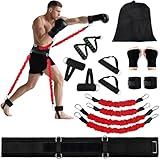
- Wearing Resistance Bands: Loop resistance bands around your wrists or ankles to add resistance to your punches and footwork.
- Shadow Boxing with a Weighted Vest: A weighted vest adds overall bodyweight, increasing the demand on your muscles and improving endurance.
Remember to start with light resistance and gradually increase it as you get stronger. Focus on maintaining proper form throughout the entire session.
Focusing on Punch Variations
Varying your punches engages different muscle groups and prevents your workouts from becoming monotonous. Experiment with:
- Power Punches: Throwing your punches with maximum speed and power for short bursts, focusing on explosive movements.
- Combination Drills: Practicing specific punch combinations (e.g., jab-cross-hook, slip-jab-cross) to improve coordination and technique.
- Speed Drills: Focusing on throwing punches as fast as possible, improving hand speed and reflexes.
By incorporating different punch variations, you can target a wider range of muscles and make your shadow boxing sessions more effective.
Incorporating Footwork Drills
Footwork is the foundation of boxing. It’s crucial for defense, offense, and overall movement. Integrating footwork drills into your shadow boxing routine will enhance your strength and agility.
- Lateral Movement: Practicing side-to-side steps improves your lateral agility and core stability.
- Pivots: Pivoting on your feet allows you to change angles and generate power in your punches.
- Footwork Combinations: Combining different footwork techniques with your punches improves your coordination and footwork efficiency.
Footwork drills also improve your cardiovascular fitness, which contributes to increased stamina and overall strength.
Visualizing and Engaging Your Core
The mental aspect is important. Visualize an opponent, and imagine the resistance you’d encounter in a real fight. This mental engagement will help you to:
- Focus Your Energy: Concentrate on each punch, visualizing its impact.
- Activate Your Core: Consciously tighten your core muscles throughout the session.
- Maintain Proper Form: Stay focused on technique to prevent injuries and maximize efficiency.
By engaging your mind and body simultaneously, you can enhance the effectiveness of your shadow boxing workout.
Creating a Shadow Boxing Routine for Strength
Here’s a sample shadow boxing routine designed to build strength. Remember to adjust the duration and intensity based on your fitness level.
Warm-Up (5 Minutes)
Start with light cardio, such as jumping jacks, high knees, and arm circles, to warm up your muscles and increase blood flow. Then, do some dynamic stretching, such as arm swings, torso twists, and leg swings, to prepare your body for the workout.
Shadow Boxing (20-30 Minutes)
- Round 1-3: Technique Focus (3 minutes per round)
- Round 4-6: Combination Drills (3 minutes per round)
- Round 7-9: Power and Speed (3 minutes per round)
- Round 10: Cool-down (3 minutes)
Focus on basic punches (jab, cross, hook, uppercut) and footwork. Practice each punch with proper form, paying attention to your stance, hand positioning, and footwork. Visualize an opponent and react accordingly. (See Also: Are Boxing Classes Worth It )
Practice punch combinations, such as jab-cross, jab-cross-hook, and slip-jab-cross. Focus on speed, accuracy, and power. Vary your combinations to target different muscle groups.
Focus on throwing punches with maximum speed and power. Incorporate explosive movements and quick footwork. Use hand weights or resistance bands to increase the challenge.
Focus on light punches and footwork. Slow down your movements and gradually reduce the intensity. Practice controlled breathing and focus on relaxing your muscles.
Cool-Down (5 Minutes)
Finish with static stretching, holding each stretch for 30 seconds. Focus on stretching the muscles you worked during the shadow boxing session, such as your shoulders, triceps, chest, and core.
Shadow Boxing vs. Other Strength Training Methods
While shadow boxing contributes to strength, it’s not a complete strength training program on its own. It’s most effective when combined with other methods. Let’s compare it to some alternatives:
Shadow Boxing vs. Weightlifting
Weightlifting is the gold standard for building pure strength and muscle mass. It involves lifting heavy weights to challenge your muscles and stimulate growth. Shadow boxing, on the other hand, is more focused on functional strength, muscular endurance, and coordination.
Benefits of Weightlifting:
- Increased Muscle Mass: Weightlifting is the most effective way to build muscle mass.
- Maximum Strength Gains: It allows you to lift progressively heavier weights, leading to significant strength improvements.
- Targeted Muscle Development: You can target specific muscle groups with exercises like squats, bench presses, and deadlifts.
Benefits of Shadow Boxing:
- Improved Boxing Skills: Shadow boxing directly translates to better boxing technique, footwork, and coordination.
- Enhanced Cardiovascular Fitness: Shadow boxing is a great cardio workout, improving your stamina and endurance.
- Low Impact: It’s easier on your joints compared to weightlifting.
Conclusion: Both are great. Weightlifting is superior for building raw strength and muscle mass, but shadow boxing is more specific to boxing skills and offers unique benefits.
Shadow Boxing vs. Calisthenics
Calisthenics involves using your bodyweight for resistance. Exercises like push-ups, pull-ups, squats, and planks build strength, endurance, and coordination. Shadow boxing shares some similarities with calisthenics, especially in terms of functional strength and body control.
Benefits of Calisthenics:
- Functional Strength: Calisthenics exercises often mimic real-life movements, improving functional strength.
- Full-Body Workouts: Many calisthenics exercises engage multiple muscle groups simultaneously.
- Convenience: Calisthenics can be done anywhere, anytime, without equipment.
Benefits of Shadow Boxing: (See Also: Does Boxing Classes Help With Weight Loss )
- Boxing-Specific Skills: Shadow boxing focuses on boxing techniques, footwork, and coordination.
- Cardiovascular Benefits: It’s an excellent cardio workout, improving stamina and endurance.
- Mental Toughness: Shadow boxing can help to develop mental focus and discipline.
Conclusion: Calisthenics is a great full-body workout that complements shadow boxing. Combining the two offers a well-rounded fitness regimen.
Shadow Boxing vs. Sparring
Sparring involves fighting with a partner, which is crucial for developing real-world boxing skills. It allows you to test your techniques, improve your reflexes, and learn to react under pressure. Shadow boxing is a valuable tool for preparing for sparring.
Benefits of Sparring:
- Real-World Experience: Sparring provides experience fighting against a live opponent.
- Improved Reflexes: It helps you to develop your reflexes, timing, and reaction speed.
- Strategic Thinking: Sparring teaches you to think strategically and make quick decisions.
Benefits of Shadow Boxing:
- Technique Refinement: Shadow boxing allows you to focus on your technique without the pressure of a live opponent.
- Coordination and Stamina: It improves your coordination, footwork, and stamina.
- Preparation for Sparring: Shadow boxing is an excellent way to warm up and prepare for sparring sessions.
Conclusion: Sparring is essential for developing boxing skills. Shadow boxing is an excellent training tool that helps you to prepare for sparring.
Possible Drawbacks and Considerations
While shadow boxing is a beneficial exercise, it’s important to be aware of potential drawbacks and considerations:
Risk of Overuse Injuries
Repeated movements, particularly if performed with poor form, can lead to overuse injuries. Pay attention to your body and avoid overtraining. Rest and recovery are essential. Common issues include shoulder pain, wrist strain, and knee problems. Always warm up properly and focus on technique to minimize risk.
Not a Substitute for Strength Training
Shadow boxing is great for endurance, coordination, and functional strength, but it’s not a replacement for traditional strength training. If your goal is to build significant muscle mass or maximize strength, you’ll need to incorporate weightlifting or other strength training methods into your routine.
Technique Is Crucial
Poor technique can lead to injuries and limit the effectiveness of your workout. It’s essential to focus on proper form, especially when starting out. Consider working with a boxing coach or experienced trainer to ensure you’re using correct techniques.
Requires Consistent Practice
Like any training regimen, consistency is key. The benefits of shadow boxing become more apparent with regular practice. Aim to shadow box several times a week to see noticeable improvements in your strength, stamina, and boxing skills.
Final Thoughts
Shadow boxing is a powerful tool for building strength, improving boxing skills, and enhancing overall fitness. While it may not be a substitute for traditional strength training, it offers unique benefits that complement other exercises. By focusing on proper form, incorporating resistance, and practicing consistently, you can unlock the full potential of shadow boxing. It builds muscular endurance, functional strength, and core stability, all crucial for success in the ring. Remember to combine shadow boxing with other training methods, such as weightlifting or sparring, for a well-rounded fitness program. By integrating shadow boxing into your routine, you’ll be well on your way to becoming a stronger, more skilled, and more resilient fighter. Embrace the practice, and watch your boxing abilities flourish.