Ever wondered if those light dumbbells you see boxers using during shadow boxing actually make a difference? It’s a common sight in gyms, and the question of whether it boosts punching power is a popular one. The appeal is clear: who wouldn’t want to pack more punch into their strikes? Shadow boxing with weights seems like a straightforward way to build strength and conditioning, but does it truly translate into a more powerful knockout blow?
We’re going to break down the science, the practical applications, and the potential pitfalls of incorporating weights into your shadow boxing routine. This isn’t just about throwing punches; it’s about understanding how your body works, how to train it effectively, and what to expect in terms of results. Get ready to learn about the benefits, risks, and best practices for using weights in your shadow boxing sessions to improve your punching power.
Whether you’re a seasoned fighter or just starting to learn the sweet science, this guide will provide you with the information you need to make informed decisions about your training. We’ll explore the pros and cons, the right way to do it, and the things you should absolutely avoid. Let’s get started!
The Science Behind Punching Power
Before we dive into the specifics of shadow boxing with weights, let’s understand the fundamental principles of punching power. Punching power isn’t just about brute strength; it’s a complex interplay of several factors, including strength, speed, technique, and coordination. Understanding these elements is crucial for effective training.
Strength vs. Power
It’s important to distinguish between strength and power. Strength is the ability to exert force, while power is the ability to exert force quickly. In boxing, power is paramount. A punch is a rapid, explosive movement. This means you need to generate force in a very short amount of time. You could be incredibly strong, able to lift heavy weights, but if you can’t translate that strength into a fast, powerful punch, your effectiveness in the ring will be limited.
The Role of Muscle Fiber Types
Your muscles are composed of different types of fibers: slow-twitch and fast-twitch. Slow-twitch fibers are built for endurance activities, while fast-twitch fibers are responsible for explosive movements. To maximize punching power, you need to develop your fast-twitch muscle fibers. This is where training methods like plyometrics and speed-focused exercises come into play.
Technique and Biomechanics
Proper technique is absolutely critical. Even the strongest person can’t generate significant power if their technique is flawed. A well-executed punch involves a chain of movements, starting from the ground and transferring force through your legs, core, and into your arm and fist. Understanding and refining your biomechanics is essential.
Coordination and Timing
Boxing requires exceptional coordination and timing. You need to be able to synchronize your movements perfectly to generate maximum power and speed. This is where shadow boxing, with or without weights, plays a vital role. It allows you to practice and refine your technique, improving your coordination and timing.
How Shadow Boxing with Weights Works
Shadow boxing with weights involves performing shadow boxing exercises while holding light dumbbells or wearing weighted gloves. The idea is to increase the resistance your muscles have to work against, leading to increased strength and, potentially, punching power. But how does this translate to the ring?
The Principle of Overload
The primary training principle at play here is overload. This means gradually increasing the demands placed on your muscles over time. By adding resistance (in the form of weights), you force your muscles to work harder, leading to adaptations such as increased muscle fiber recruitment and improved neuromuscular efficiency. The body adapts to the stress placed upon it.
Muscle Fiber Recruitment
When you use weights during shadow boxing, you recruit more muscle fibers to perform the movement. This is because the added resistance requires your muscles to work harder to generate the necessary force. Over time, this can lead to increased muscle size (hypertrophy) and strength. (See Also: Does Shadow Boxing Really Work )
Neuromuscular Efficiency
Your nervous system plays a critical role in generating punching power. Shadow boxing with weights can improve neuromuscular efficiency, which is the ability of your nervous system to activate your muscles quickly and effectively. This means your brain can send signals to your muscles faster, resulting in more explosive movements.
The Benefits of Shadow Boxing with Weights
There are several potential benefits to incorporating weights into your shadow boxing routine, including:
- Increased Muscle Strength and Endurance: The added resistance helps build both strength and endurance in the muscles used for punching.
- Improved Punching Speed: While it might seem counterintuitive, training with lighter weights can actually improve punching speed by enhancing neuromuscular efficiency.
- Enhanced Shoulder Stability: The act of holding weights while punching can strengthen the muscles around the shoulder joint, improving stability and reducing the risk of injury.
- Better Technique Refinement: The controlled movements required when shadow boxing with weights can help you focus on and refine your technique.
- Increased Cardiovascular Endurance: Shadow boxing with weights can be a great cardio workout, helping improve your overall fitness.
How to Shadow Box with Weights Effectively
To get the most out of shadow boxing with weights, you need to do it correctly. Here’s a step-by-step guide:
Choosing the Right Weights
This is crucial. Start with very light weights. Most experts recommend using dumbbells that are between 1 and 3 pounds (0.5 to 1.5 kg). The goal isn’t to lift heavy weights; it’s to provide a slight increase in resistance. Overloading too much can lead to incorrect form and potential injury.
Proper Form and Technique
Maintain perfect form at all times. If your technique starts to break down, you’re using too much weight. Focus on fluid, controlled movements. Imagine you’re throwing punches without any weight at all, and the weights are just a slight addition.
Warm-Up and Cool-Down
Always warm up before shadow boxing with weights. This could include light cardio, dynamic stretching, and shadow boxing without weights to prepare your muscles for the workout. After your workout, cool down with static stretching to improve flexibility and reduce muscle soreness.
Workout Structure
Here’s a sample workout structure:
- Warm-up: 5-10 minutes of light cardio (jumping jacks, high knees) and dynamic stretching (arm circles, torso twists).
- Shadow Boxing with Weights: 3-5 rounds, 2-3 minutes per round, with 1-minute rest between rounds.
- Focus: During each round, focus on different punches or combinations (jabs, crosses, hooks, uppercuts, etc.).
- Cool-down: 5-10 minutes of static stretching, holding each stretch for 20-30 seconds.
Variety and Progression
Don’t just stick to the same routine. Vary your combinations, and gradually increase the weight as you get stronger. But remember, progression should be gradual. Don’t add weight every session. Listen to your body and give it time to adapt. For instance, you could increase the weight by half a pound every 2-3 weeks, depending on your progress.
Weighted Gloves vs. Dumbbells
Both weighted gloves and dumbbells can be used for shadow boxing. Weighted gloves add resistance directly to your hands, while dumbbells allow for a wider range of motion. Choose the option that feels most comfortable and effective for you. Some fighters like to alternate between the two.
Potential Risks and Considerations
While shadow boxing with weights can be beneficial, it’s important to be aware of the potential risks: (See Also: Are Boxing Classes Worth It )
Risk of Injury
Incorrect form is the biggest risk factor. Adding weight can exacerbate poor technique, leading to shoulder, elbow, or wrist injuries. Always prioritize proper form over weight.
Muscle Imbalances
Focusing solely on punching movements can lead to muscle imbalances. Make sure to incorporate exercises that work the opposing muscle groups (e.g., back muscles) to maintain a balanced physique and reduce the risk of injury.
Overtraining
Overtraining can lead to fatigue, decreased performance, and increased risk of injury. Don’t overdo it. Listen to your body and allow for adequate rest and recovery. This is as important as the training itself.
Focus on Speed and Technique
Remember that the primary goal is to improve punching power and speed. If the weights are slowing down your movements or causing you to sacrifice technique, it’s time to lighten the load or adjust your approach.
The Debate: Does It Really Translate to Punching Power?
The effectiveness of shadow boxing with weights in directly translating to increased punching power is a subject of debate. While it can build strength and potentially improve speed, the impact on actual punching power in a fight isn’t always clear-cut.
The Argument For
Proponents argue that shadow boxing with weights can lead to:
- Increased Muscle Strength and Endurance: Stronger muscles can generate more force.
- Improved Neuromuscular Efficiency: Faster muscle activation can translate to faster punches.
- Enhanced Shoulder Stability: A stable shoulder joint is crucial for generating and delivering power.
The Argument Against
Opponents argue that:
- It May Slow Down Punching Speed: If the weights are too heavy, they can hinder speed, which is a key component of power.
- It Can Reinforce Bad Habits: If form is compromised, it can lead to inefficient punching mechanics.
- Specificity of Training: Power in boxing is highly specific. Training with weights might not directly translate to the explosive movements required in the ring.
The Importance of Context
The effectiveness of shadow boxing with weights depends on several factors, including the individual’s training goals, experience level, and technique. It’s often best used as a supplement to other forms of training, such as heavy bag work, speed drills, and strength training. It’s also more beneficial for fighters who have already established a solid foundation in boxing technique.
Alternative Training Methods for Punching Power
If you’re looking to boost your punching power, shadow boxing with weights is just one piece of the puzzle. Here are some other effective training methods:
Heavy Bag Work
This is crucial. Hitting a heavy bag allows you to practice your punches with resistance and develop the necessary power and technique. Focus on proper form, speed, and accuracy. Vary your combinations and the intensity of your punches. (See Also: Does Boxing Classes Help With Weight Loss )
Speed Drills
Speed drills, such as shadow boxing without weights, focus on improving punching speed. Concentrate on quick, explosive movements, and maintain proper technique. This helps in developing fast-twitch muscle fibers.
Plyometrics
Plyometric exercises, such as jump squats, box jumps, and medicine ball throws, are designed to improve explosive power. These exercises train your muscles to generate maximum force in short intervals of time. This is key to punching power.
Strength Training
Strength training is essential for building the foundation of power. Focus on compound exercises like squats, deadlifts, bench presses, and overhead presses. These exercises work multiple muscle groups simultaneously, leading to overall strength gains.
Core Training
A strong core is the foundation of punching power. Core exercises, such as planks, Russian twists, and medicine ball exercises, help stabilize your body and transfer force from your legs to your punches.
Agility Training
Boxing requires agility and quick footwork. Agility exercises, such as ladder drills and cone drills, can improve your footwork, balance, and coordination, all of which contribute to punching power.
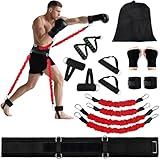
Resistance Band Training
Resistance bands can be used to add resistance to your punches and improve your speed and power. They’re also a great way to warm up and activate your muscles before a workout.
Focus Mitts
Focus mitts allow you to work on your technique, speed, and combinations with a partner. This is a great way to improve your reaction time and coordination.
Nutrition and Recovery
Proper nutrition and recovery are just as important as training. Make sure you’re eating a balanced diet, getting enough sleep, and allowing your body to recover between workouts. This is when your muscles repair and grow stronger.
Putting It All Together: A Comprehensive Approach
The most effective approach to increasing punching power involves a combination of training methods. Here’s a sample plan:
- Strength Training: 2-3 times per week, focusing on compound exercises.
- Heavy Bag Work: 2-3 times per week, focusing on technique and power.
- Shadow Boxing: 3-4 times per week, incorporating speed drills and weight training.
- Plyometrics: 1-2 times per week.
- Core Training: 2-3 times per week.
- Cardio: 3-4 times per week (running, jump rope, etc.)
- Rest and Recovery: Ensure adequate sleep and rest days.
- Nutrition: Maintain a balanced diet with sufficient protein, carbohydrates, and healthy fats.
Remember to listen to your body and adjust your training plan as needed. Consistency and proper technique are key to achieving your goals.
Final Verdict
So, does shadow boxing with weights increase punching power? The answer is nuanced. While it can contribute to increased strength and potentially improve punching speed, it’s not a magic bullet. The effectiveness depends on proper execution, the weight used, and the overall training program. Used correctly, it can be a valuable tool in your training arsenal. However, it shouldn’t be the only method you employ. A comprehensive approach that includes strength training, heavy bag work, speed drills, and proper technique is the most effective way to improve your punching power. Always prioritize form, listen to your body, and gradually increase the intensity to avoid injury and maximize your results. With dedication and the right training plan, you can definitely pack more power into your punches!