Ever wonder if you can sculpt a stronger physique without hitting a heavy bag or sparring partner? Shadow boxing, the art of boxing against an imaginary opponent, might seem like a solo act, but it packs a powerful punch when it comes to fitness.
You see it in gyms around the world, people moving, jabbing, and weaving with nothing but air to fight. But is it just a warm-up, or can this dynamic exercise actually help you build muscle? The answer, as you’re about to find out, is a resounding yes. Let’s explore how shadow boxing can be a fantastic tool in your muscle-building arsenal.
We’ll break down the science, the techniques, and the strategies to maximize your results. Get ready to lace up your invisible gloves and learn how to get the most out of every shadow boxing session.
The Mechanics of Shadow Boxing: More Than Just Air Punches
Shadow boxing is more than just throwing punches into thin air. It’s a comprehensive workout that engages numerous muscle groups and demands a surprising amount of energy. The effectiveness of shadow boxing for muscle development lies in understanding the underlying mechanics and how to optimize your movements.
The Muscle Groups at Play
When you shadow box, you’re not just working your arms. It’s a full-body workout. Let’s break down the primary muscle groups involved:
- Shoulders (Deltoids): The deltoids are crucial for throwing punches, especially in the jab, cross, and hook. The constant repetition and resistance of your own body weight build shoulder strength and definition.
- Chest (Pectorals): During punches like the cross and hook, your pectoral muscles contract to generate power and drive your fist forward.
- Back (Latissimus Dorsi, Trapezius, Rhomboids): Your back muscles stabilize your body, control the movement of your arms, and provide the force for powerful punches.
- Arms (Biceps, Triceps): The biceps flex your arm, and the triceps extend it. These muscles are essential for throwing and retracting punches. They also help control the speed and precision of your strikes.
- Core (Abdominals, Obliques): Your core is the powerhouse of your boxing. It stabilizes your torso, rotates your body for powerful punches, and helps you maintain balance.
- Legs (Quadriceps, Hamstrings, Glutes, Calves): Your legs provide the foundation for your punches and the agility for your footwork. They generate the power that travels up through your body, contributing to the force of your punches.
The Role of Resistance and Form
While you’re not lifting weights, your body provides its own resistance. Every punch, every movement, and every defensive maneuver works against gravity, creating a form of resistance training. Proper form is critical. Maintaining correct posture, using your core, and executing each punch with precision maximizes muscle engagement and minimizes the risk of injury.
Here’s how to maximize the resistance:
- Speed and Power: The faster and more powerful your movements, the more your muscles work.
- Controlled Movements: Avoid sloppy, rushed punches. Focus on precision and control.
- Full Range of Motion: Extend your punches fully and retract them completely. This maximizes muscle activation.
Cardiovascular Benefits and Calorie Burn
Shadow boxing is an excellent cardiovascular workout. The continuous movement elevates your heart rate, improving cardiovascular health and burning calories. This is important because a calorie deficit is essential for revealing muscle definition. The more calories you burn, the more likely you are to see the results of your strength training.
How Shadow Boxing Contributes to Muscle Growth
Now, let’s delve into how shadow boxing directly contributes to muscle growth. It’s not just about throwing punches; it’s about the principles of muscle development at play.
Progressive Overload
Progressive overload is a fundamental principle of muscle building. It means gradually increasing the demands on your muscles over time. While you can’t add weight to your punches directly, you can progressively overload your muscles in several ways:
- Increasing Speed: Throw punches faster.
- Increasing Repetitions: Add more rounds or increase the number of punches per round.
- Improving Form: Perfecting your technique makes each punch more efficient and challenging.
- Adding Resistance: Consider using light hand weights or resistance bands to increase the load.
- Varying Your Routine: Introducing new combinations and footwork patterns keeps your muscles guessing.
Muscle Fiber Recruitment
Shadow boxing recruits both fast-twitch and slow-twitch muscle fibers. Fast-twitch fibers are responsible for explosive movements, like punches, and are crucial for building muscle size and strength. Slow-twitch fibers support endurance and help you maintain form during longer rounds. By varying your pace and combinations, you can effectively target different muscle fibers.
Hormonal Response
High-intensity exercise, like shadow boxing, can stimulate the release of hormones that support muscle growth, such as testosterone and growth hormone. These hormones play a crucial role in muscle protein synthesis, the process by which your body repairs and builds muscle tissue.
The Importance of Calorie Deficit (or Surplus)
While shadow boxing helps build muscle, remember that nutrition is also key. To see visible muscle growth, you need to either be in a slight calorie surplus (eating more calories than you burn) or, at the very least, consuming enough protein to support muscle repair and growth. If you are in a calorie deficit (burning more calories than you consume), you will likely see improved muscle definition as you lose body fat.
Optimizing Your Shadow Boxing Routine for Muscle Building
To maximize your muscle-building results, you need a structured and well-planned shadow boxing routine. Here’s how to create an effective workout: (See Also: Does Shadow Boxing Really Work )
Warm-Up
Always start with a proper warm-up to prepare your muscles for exercise and reduce the risk of injury. A good warm-up should include:
- Light Cardio: Jumping jacks, high knees, or jogging in place for 3-5 minutes.
- Dynamic Stretching: Arm circles, torso twists, leg swings, and shadow boxing at a low intensity.
Workout Structure
A typical shadow boxing workout should consist of rounds of 2-3 minutes, with a 30-60 second rest between rounds. Beginners can start with 3-5 rounds and gradually increase the number as they get fitter. Here’s a sample routine:
- Round 1-2: Focus on basic punches (jab, cross, hook, uppercut) with good form.
- Round 3-4: Combine punches into combinations (e.g., jab-cross-hook, jab-cross-hook-uppercut).
- Round 5-6: Incorporate footwork and defensive movements (e.g., slipping, bobbing and weaving).
- Round 7-8: Increase the speed and power of your punches.
Technique and Form Drills
Dedicate time to technique drills to improve your form. These drills help you refine your punches and make them more effective. Here are a few examples:
- Jab Drill: Focus on a quick, straight jab, keeping your guard up.
- Cross Drill: Practice the cross with proper hip and shoulder rotation.
- Hook Drill: Work on your hook, ensuring your elbow is bent and your fist is at eye level.
- Uppercut Drill: Practice the uppercut, driving upward from your legs and core.
Footwork and Defense
Footwork is crucial in boxing. Practice these drills to improve your agility and defensive skills:
- Shadow Sparring: Simulate fighting an opponent, moving around the “ring” and practicing defensive maneuvers.
- Slipping Drill: Practice slipping punches by moving your head to the side.
- Bobbing and Weaving Drill: Practice moving your head and torso to avoid punches.
Cool-Down and Stretching
Cool down with light cardio and static stretching to improve flexibility and reduce muscle soreness. Hold each stretch for 20-30 seconds.
Here’s a sample cool-down routine:
- Light Cardio: Walk around for 3-5 minutes.
- Static Stretching: Stretch your shoulders, chest, back, arms, and legs.
Advanced Techniques and Variations
Once you’ve mastered the basics, you can add more advanced techniques and variations to your shadow boxing routine to continue challenging your muscles and improving your results.
Adding Resistance
Hand Weights: Use light hand weights (1-3 lbs) to increase the resistance. This will challenge your muscles more. Focus on controlled movements, not speed, when using weights.
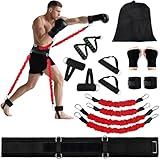
Resistance Bands: Loop resistance bands around your wrists or ankles to add resistance to your punches and footwork. This is a great way to build strength and endurance.
Weighted Vest: Wearing a weighted vest will increase the overall load on your body, making every movement more challenging. Start with a light vest and gradually increase the weight.
Incorporating Plyometrics
Plyometric exercises involve explosive movements that help build power and speed. Include these exercises in your routine:
- Jump Squats: Perform squats and then jump explosively.
- Burpees: Combine a squat, push-up, and jump.
- Box Jumps: Jump onto and off a box.
Shadow Sparring with a Partner
Shadow sparring with a partner can add a new dimension to your training. Your partner can call out combinations, forcing you to react and practice your defense. This is a great way to improve your reaction time and coordination.
Varying Your Routine
To prevent plateaus and keep your muscles challenged, vary your routine regularly. Try these strategies: (See Also: Are Boxing Classes Worth It )
- Change the Order of Exercises: Mix up the order of your punches and combinations.
- Alter the Rest Periods: Experiment with shorter or longer rest periods.
- Increase the Number of Rounds: Add more rounds to your workout.
- Try Different Training Styles: Explore different boxing styles to add variety and challenge your body in new ways.
Nutrition and Recovery for Muscle Growth
Your shadow boxing workout is only one part of the equation. To maximize muscle growth, you need to focus on nutrition and recovery.
Protein Intake
Protein is essential for muscle repair and growth. Aim to consume 0.8 to 1 gram of protein per pound of body weight per day. Good sources of protein include:
- Lean Meats: Chicken, turkey, beef.
- Fish: Salmon, tuna.
- Eggs: Whole eggs and egg whites.
- Dairy: Milk, yogurt, cheese.
- Plant-Based Sources: Beans, lentils, tofu, tempeh, quinoa.
Carbohydrate Intake
Carbohydrates provide energy for your workouts. Choose complex carbohydrates, such as:
- Whole Grains: Brown rice, oats, quinoa.
- Fruits and Vegetables: Provide essential vitamins and minerals.
Fat Intake
Healthy fats are important for hormone production and overall health. Include sources of healthy fats in your diet, such as:
- Avocados
- Nuts and Seeds
- Olive Oil
- Fatty Fish
Hydration
Drink plenty of water throughout the day, especially before, during, and after your workouts. Dehydration can impair performance and hinder muscle growth.
Recovery
Give your muscles time to recover by getting enough sleep (7-9 hours per night). Consider incorporating active recovery methods, such as light stretching or foam rolling, on your rest days.
Sample Shadow Boxing Workout Plans
Here are a few sample shadow boxing workout plans, tailored for different levels of experience.
Beginner Workout
Warm-up: 5 minutes of light cardio and dynamic stretching.
Workout:
- Round 1: Jab, Cross (2 minutes)
- Round 2: Jab, Cross, Hook (2 minutes)
- Round 3: Jab, Cross, Hook, Uppercut (2 minutes)
- Round 4: Footwork and Slipping (2 minutes)
- Round 5: Basic combinations at a faster pace (2 minutes)
Rest: 30 seconds between rounds.
Cool-down: 5 minutes of static stretching.
Intermediate Workout
Warm-up: 5 minutes of light cardio and dynamic stretching.
Workout: (See Also: Does Boxing Classes Help With Weight Loss )
- Round 1: Jab, Cross, Slip, Jab (3 minutes)
- Round 2: Jab, Cross, Hook, Uppercut (3 minutes)
- Round 3: Bob and Weave, then 3-punch combo (3 minutes)
- Round 4: Jab, Cross, Hook, Uppercut, then footwork (3 minutes)
- Round 5: Focus on speed and power (3 minutes)
- Round 6: Incorporate light hand weights or resistance bands (3 minutes)
Rest: 45 seconds between rounds.
Cool-down: 5 minutes of static stretching.
Advanced Workout
Warm-up: 5 minutes of light cardio and dynamic stretching.
Workout:
- Round 1: Jab, Cross, Slip, Jab, then footwork (3 minutes)
- Round 2: Jab, Cross, Hook, Uppercut, then slip and counter (3 minutes)
- Round 3: Combination of your choice, then a defensive sequence (3 minutes)
- Round 4: Focus on speed and power, incorporating plyometrics (3 minutes)
- Round 5: Shadow Sparring with a partner (3 minutes)
- Round 6: Use hand weights or resistance bands, focusing on control (3 minutes)
- Round 7: Full-body workout incorporating plyometrics and shadow boxing (3 minutes)
Rest: 60 seconds between rounds.
Cool-down: 5 minutes of static stretching.
Common Mistakes to Avoid
To maximize your results and prevent injuries, it’s important to avoid these common mistakes:
- Poor Form: Always prioritize proper form. If your form is off, you risk injury and reduce the effectiveness of your workout.
- Over-Training: Allow your muscles to recover. Don’t shadow box every day. Incorporate rest days into your routine.
- Neglecting Warm-Up and Cool-Down: Always warm up before your workout and cool down afterward. This helps prevent injuries and improves flexibility.
- Ignoring Nutrition: You can’t out-train a bad diet. Eat a balanced diet with enough protein, carbohydrates, and healthy fats.
- Not Varying Your Routine: Your body adapts. Change your workout regularly to keep challenging your muscles.
Shadow Boxing vs. Other Muscle-Building Exercises
How does shadow boxing stack up against other popular muscle-building exercises?
| Exercise | Pros | Cons |
|---|---|---|
| Shadow Boxing | Full-body workout; Improves cardiovascular health; Requires no equipment; Great for coordination and agility; Burns a significant amount of calories. | May not build as much muscle mass as weight training; Requires good technique to be effective; Can be monotonous for some. |
| Weight Training | Highly effective for building muscle mass; Allows for progressive overload; Can target specific muscle groups; Versatile and adaptable. | Requires equipment; Can be time-consuming; Requires proper form to prevent injuries; Can be expensive (gym membership). |
| Calisthenics | Requires no equipment; Can be done anywhere; Improves functional strength and mobility; Full-body workout. | Can be difficult to progressively overload; Can be limited in building maximum muscle mass; Requires a good level of fitness. |
In short, shadow boxing is a great supplementary exercise for building muscle, especially when combined with a well-rounded fitness program that includes weight training. It’s an excellent option for improving your overall fitness, burning calories, and increasing your strength and endurance.
Is Shadow Boxing Right for You?
Shadow boxing offers a fantastic way to improve your fitness, build muscle, and develop your boxing skills. But is it the right choice for everyone? Consider these factors:
- Fitness Level: Shadow boxing is suitable for all fitness levels. Beginners can start with shorter rounds and less intense workouts.
- Goals: If your primary goal is to build muscle, shadow boxing can be a valuable addition to your routine. If you’re looking for maximum muscle mass, combine it with weight training.
- Time and Resources: Shadow boxing requires no equipment and can be done anywhere. It’s a time-efficient workout.
- Enjoyment: Do you enjoy boxing? If you find shadow boxing fun and engaging, you’re more likely to stick with it.
If you’re looking for a fun, effective, and accessible way to build muscle, improve your fitness, and enhance your boxing skills, then shadow boxing is definitely worth a try.
Final Verdict
Shadow boxing can be a powerful tool in your muscle-building journey. By understanding the mechanics, optimizing your routine, and combining it with proper nutrition and recovery, you can build significant muscle and improve your overall fitness. Remember to focus on your form, progressively overload your muscles, and listen to your body.
Shadow boxing may not be the sole method for building muscle, but it offers a fantastic way to supplement other forms of exercise. The dynamic movements, full-body engagement, and cardiovascular benefits make it a great addition to any workout plan. So, lace up your imaginary gloves, step into your own “ring,” and start punching your way to a stronger you.