Ever wondered if you can sculpt a physique just by throwing punches at thin air? The allure of shadow boxing is undeniable: it’s convenient, requires minimal equipment, and seems like a great way to get a workout in. But the burning question remains: can you actually build muscle shadow boxing? The short answer is yes, but it’s more nuanced than you might think.
Shadow boxing, at its core, is a form of cardiovascular exercise combined with strength and conditioning. It’s an excellent way to improve your boxing technique, coordination, and endurance. However, to understand if it can contribute to muscle growth, we need to delve deeper into the science of muscle building and how shadow boxing fits into the equation. We’ll explore the key elements, strategies, and considerations to help you optimize your shadow boxing routine for muscle development.
This article will break down everything you need to know, from the types of muscle fibers engaged to the importance of progressive overload. We’ll also cover specific exercises, training methodologies, and dietary considerations to maximize your gains. Let’s get started and uncover the potential of shadow boxing for building muscle!
The Science Behind Muscle Growth
Before we determine if shadow boxing can build muscle, it’s crucial to understand the fundamentals of muscle hypertrophy. Muscle growth, or hypertrophy, occurs when your muscles are subjected to stress and adapt by increasing in size and strength. This process is driven by several key factors:
- Mechanical Tension: This is the primary driver of muscle growth. It’s the force placed on the muscle fibers during exercise. Lifting heavy weights creates significant mechanical tension, stimulating muscle protein synthesis.
- Muscle Damage: Exercise, especially resistance training, causes microscopic tears in muscle fibers. The body repairs these tears, leading to muscle growth.
- Metabolic Stress: This involves the build-up of metabolic byproducts like lactate and the recruitment of fast-twitch muscle fibers. This can contribute to muscle growth, especially when combined with mechanical tension.
These factors trigger a cascade of events, including the activation of satellite cells, which fuse with muscle fibers and contribute to growth. The body also increases protein synthesis, the process of building new muscle proteins.
Muscle Fiber Types and Shadow Boxing
Muscles are composed of different types of muscle fibers. Understanding these fiber types helps determine how shadow boxing can influence muscle growth. There are two main types:
- Type I (Slow-Twitch) Fibers: These fibers are fatigue-resistant and suited for endurance activities. They’re not as prone to hypertrophy.
- Type II (Fast-Twitch) Fibers: These fibers are responsible for explosive movements and have a high potential for growth. They are further divided into Type IIa and Type IIx fibers.
Shadow boxing, particularly when performed with intensity, primarily engages fast-twitch muscle fibers. These fibers are the ones that are most receptive to hypertrophy. However, the extent of their engagement depends on the intensity, duration, and specific exercises performed during shadow boxing.
The Role of Progressive Overload
Progressive overload is a fundamental principle of muscle building. It means gradually increasing the demands placed on your muscles over time. This could involve:
- Increasing the number of repetitions.
- Increasing the number of sets.
- Increasing the speed or intensity of your punches.
- Adding resistance (e.g., using resistance bands or light weights).
Without progressive overload, your muscles will adapt to the current stress and growth will plateau. This is why consistently challenging your body is critical for continued muscle development. This is a very important point to remember when shadow boxing.
How Shadow Boxing Contributes to Muscle Growth
Shadow boxing, when done correctly, can indeed contribute to muscle growth, though the extent of growth may vary compared to traditional weightlifting. Here’s how:
Increased Muscle Activation
Shadow boxing involves a wide range of movements that activate various muscle groups. The core muscles are engaged to maintain balance and generate power. The shoulder muscles are used to throw punches. The legs are used for footwork and generating power. This full-body engagement can lead to increased muscle activation and, eventually, growth. (See Also: Does Shadow Boxing Help Build Muscle )
High-Intensity Intervals
Shadow boxing can be structured as a form of high-intensity interval training (HIIT). HIIT workouts involve short bursts of intense exercise followed by brief recovery periods. This type of training is effective for:
- Boosting metabolism: HIIT can increase your metabolic rate for hours after the workout, helping you burn more calories.
- Improving cardiovascular health: HIIT is excellent for improving your heart health.
- Stimulating muscle growth: The intense bursts of activity can recruit fast-twitch muscle fibers, which are crucial for hypertrophy.
By incorporating HIIT principles into your shadow boxing routine, you can maximize its muscle-building potential.
Enhanced Neuromuscular Coordination
Shadow boxing improves neuromuscular coordination, which is the ability of your nervous system to coordinate your muscles. This leads to more efficient movement patterns and the ability to generate more power. While not directly causing muscle growth, improved coordination can allow you to recruit more muscle fibers during each punch, increasing the stimulus for growth.
Calorie Expenditure and Body Composition
Shadow boxing is a high-calorie-burning activity. This can help you create a calorie deficit if you are trying to lose weight. Losing fat can make it easier to see the muscle you are building. It also helps to improve your body composition.
Optimizing Your Shadow Boxing Routine for Muscle Growth
To maximize muscle growth from shadow boxing, consider the following strategies:
Focus on Proper Form
Prioritize proper form over speed and quantity. Maintaining good technique ensures that you’re engaging the correct muscles and minimizing the risk of injury. Watch videos of professional boxers or consider getting guidance from a coach to refine your technique.
Vary Your Exercises
Don’t stick to the same punches and combinations. Vary your routine to target different muscle groups. This includes:
- Jab: Works the shoulders, triceps, and core.
- Cross: Targets the shoulders, triceps, and core.
- Hook: Engages the shoulders, biceps, and core.
- Uppercut: Works the shoulders, biceps, and core.
- Footwork drills: Improves leg strength and endurance.
By changing your routine, you can keep your muscles challenged and prevent plateaus.
Incorporate Resistance
Adding resistance to your shadow boxing can dramatically increase its muscle-building potential. Here are some options:
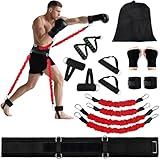
- Resistance bands: Attach resistance bands to your wrists or ankles to increase the resistance during your punches and footwork drills.
- Light dumbbells: Hold light dumbbells (2-5 lbs) while shadow boxing to add resistance to your punches.
- Weighted vests: Wearing a weighted vest can increase the overall intensity of your workout.
Remember to start with light resistance and gradually increase it as you get stronger. (See Also: Do Boxing Classes Get You In Shape )
Structure Your Workouts
Structure your workouts to optimize muscle growth. Consider the following:
- Warm-up: Start with 5-10 minutes of light cardio, such as jumping jacks or jump rope, and dynamic stretching to prepare your muscles for exercise.
- Main workout: Alternate between rounds of high-intensity shadow boxing (e.g., 2-3 minutes) with short rest periods (e.g., 30-60 seconds).
- Cool-down: Finish with 5-10 minutes of static stretching to improve flexibility and reduce muscle soreness.
You can also incorporate different workout structures like:
- Interval training: This is excellent for building both endurance and muscle.
- Circuit training: Combine shadow boxing with bodyweight exercises for a full-body workout.
Track Your Progress
Keep track of your workouts, including the types of exercises, sets, reps, and any resistance used. This will help you monitor your progress and make adjustments to your routine as needed. You can use a workout journal, a spreadsheet, or a fitness tracking app.
Prioritize Recovery
Muscle growth occurs during recovery. Ensure you get adequate rest and sleep (7-9 hours per night) to allow your muscles to repair and rebuild. Also, incorporate rest days into your training schedule to prevent overtraining and allow your body to recover.
Dietary Considerations for Muscle Growth
Nutrition plays a crucial role in muscle building. Here are some dietary considerations to support your shadow boxing workouts:
Protein Intake
Protein is the building block of muscle. Aim to consume 0.7 to 1 gram of protein per pound of body weight per day. Good sources of protein include:
- Lean meats (chicken, turkey, beef)
- Fish (salmon, tuna)
- Eggs
- Dairy products (milk, yogurt, cheese)
- Legumes (beans, lentils)
- Protein supplements (whey, casein, soy)
Distribute your protein intake throughout the day to maximize muscle protein synthesis.
Calorie Intake
To build muscle, you need to consume enough calories to support muscle growth. This typically involves consuming slightly more calories than you burn (a calorie surplus). However, excessive calorie intake can lead to unwanted fat gain. Start with a small calorie surplus (e.g., 250-500 calories per day) and adjust as needed.
Carbohydrate Intake
Carbohydrates provide energy for your workouts. Choose complex carbohydrates, such as:
- Whole grains (brown rice, quinoa, oats)
- Fruits (berries, bananas, apples)
- Vegetables (broccoli, spinach, sweet potatoes)
Time your carbohydrate intake to support your workouts. Consume carbohydrates before your workouts to fuel your performance and after your workouts to replenish glycogen stores. (See Also: Does Shadow Boxing Cause Sore Chest )
Fat Intake
Healthy fats are essential for hormone production and overall health. Include healthy fats in your diet, such as:
- Avocados
- Nuts and seeds
- Olive oil
- Fatty fish (salmon)
Limit your intake of saturated and trans fats.
Hydration
Drink plenty of water throughout the day. Hydration is crucial for muscle function, energy levels, and overall health. Dehydration can hinder your performance and recovery.
Supplementation (optional)
Certain supplements can support muscle growth, but they are not essential. Consider these supplements:
- Creatine: Has been shown to increase muscle mass and strength.
- Whey protein: Provides a convenient source of protein to support muscle protein synthesis.
- Branched-chain amino acids (BCAAs): Can help reduce muscle soreness and fatigue.
Always consult with a healthcare professional before taking any supplements.
Sample Shadow Boxing Workout for Muscle Growth
Here’s a sample shadow boxing workout you can try:
Warm-Up (5 Minutes)
- Light cardio (jumping jacks, jump rope)
- Dynamic stretching (arm circles, leg swings)
Main Workout (25-30 Minutes)
- Round 1 (3 minutes): Jab-cross combinations, focusing on speed and power.
- Rest (30 seconds)
- Round 2 (3 minutes): Hook and uppercut combinations, focusing on engaging core and rotating the body.
- Rest (30 seconds)
- Round 3 (3 minutes): Footwork drills (lateral movement, forward and backward steps), focusing on agility and balance.
- Rest (30 seconds)
- Round 4 (3 minutes): Incorporate resistance bands or light dumbbells into punch combinations. Focus on controlled movements.
- Rest (30 seconds)
- Round 5 (3 minutes): High-intensity round, alternating between various punches and footwork.
- Rest (60 seconds)
- Repeat rounds 1-5, 2-3 times.
Cool-Down (5 Minutes)
- Static stretching (holding each stretch for 30 seconds)
Remember to adjust the intensity and duration of the rounds based on your fitness level. This is just a sample workout, feel free to customize it to your personal needs. Make sure to progressively increase the difficulty over time.
Comparing Shadow Boxing with Other Forms of Exercise
To understand the place of shadow boxing in a muscle-building regimen, it’s helpful to compare it with other forms of exercise:
| Exercise Type | Muscle Growth Potential | Pros | Cons |
|---|---|---|---|
| Shadow Boxing | Moderate | Full-body workout, improves cardiovascular health, enhances coordination, requires minimal equipment. | May not provide sufficient mechanical tension for significant muscle growth, limited by the lack of external resistance. |
| Weightlifting | High | Provides high mechanical tension, allows for progressive overload, targets specific muscle groups. | Requires equipment, can be time-consuming, higher risk of injury if form is not correct. |
| Bodyweight Exercises | Moderate | Requires no equipment, can be performed anywhere, improves functional fitness. | Limited by body weight, may not provide enough resistance for advanced lifters. |
| HIIT (High-Intensity Interval Training) | Moderate | Burns a lot of calories, improves cardiovascular health, can be performed anywhere. | Can be very demanding, may not be suitable for beginners. |
Shadow boxing is a great addition to your fitness plan. However, for significant muscle growth, it’s best combined with other forms of resistance training, such as weightlifting or bodyweight exercises.
Common Mistakes to Avoid
To get the most out of your shadow boxing workouts, avoid these common mistakes:
- Poor form: Always prioritize proper technique over speed and quantity.
- Insufficient intensity: Make sure you are pushing yourself during each round.
- Lack of progressive overload: Gradually increase the intensity, duration, or resistance of your workouts.
- Neglecting recovery: Get enough sleep and rest to allow your muscles to rebuild.
- Inconsistent training: Regular training is key to seeing results.
By avoiding these mistakes, you can optimize your shadow boxing routine for muscle growth and achieve your fitness goals.
Final Thoughts
So, can you build muscle shadow boxing? The answer is a qualified yes. While shadow boxing may not be as effective as traditional weightlifting for building significant muscle mass, it can certainly contribute to muscle growth, especially when combined with proper nutrition, progressive overload, and a focus on intensity. Shadow boxing is an excellent way to improve your overall fitness, enhance your cardiovascular health, improve coordination, and burn calories. By incorporating the strategies discussed in this article, you can harness the potential of shadow boxing to build muscle and achieve a well-rounded physique. Remember, consistency, proper form, and a well-rounded approach are key to success. Incorporate shadow boxing into a broader fitness routine that includes resistance training, proper nutrition, and adequate rest to see the best results. Shadow boxing can be a valuable tool in your fitness arsenal, helping you build a stronger, more athletic body, all while enjoying a fun and engaging workout.